Best Crypto to Buy Now Before Tether Goes Public in Potential $500B Raise

bitcoinistPublicado a 2025-09-24Actualizado a 2025-09-24

Resumen

Crypto heavyweight Tether is reportedly in early-stage discussions to raise between $15-20B in a private equity round, offering about 3%...

Trusted Editorial content, reviewed by leading industry experts and seasoned editors. Ad Disclosure

Crypto heavyweight Tether is reportedly in early-stage discussions to raise between $15-20B in a private equity round, offering about 3% of its equity.

If successful, the deal could peg the company’s valuation at nearly $500B, placing it among the world’s most valuable private firms alongside names like OpenAI and SpaceX, and joining elite company at a stroke.

This would likely raise crypto adoption and investor interest in the industry, creating hype.

It should be high time you paid attention to the best cryptos to buy (like Bitcoin Hyper) if you don’t want to miss this speeding train.

Fundraise Reveals the Scale of Tether’s Ambition

Tether’s deal would involve new equity issuance, rather than existing shareholders selling down their stakes, according to the source.

Cantor Fitzgerald is reported to be the lead advisor; the company owns roughly a 5% stake in Tether already, a share worth $25B if Tether’s IPO achieved the upper range of its valuation.

That’s speculative, of course – the final terms and valuation of the IPO may differ substantially.

Still, the proposed terms indicate just how ambitious Tether’s plans are. Tether issues the $USDT stablecoin, the largest such crypto, with a circulating supply of $173B. That supply has increased steadily over the past year, as demand for stablecoins has grown.
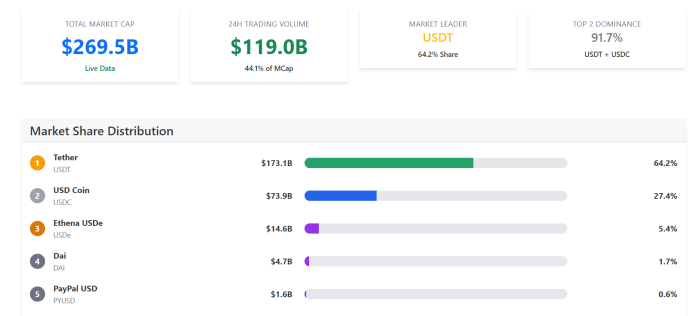
Stablecoin market overview.


More growth means more profits in Tether’s case; the company reported exceptionally strong profitability of $4.9B in Q2 2025 alone. That financial strength gives Tether a powerful base for any IPO plans.

U.S. Push and Regulatory Context

Part of those plans include a move into the U.S. market. Tether appointed Bo Hines, a former U.S. crypto policy official, as strategic adviser, and plans to launch a U.S.-oriented $USAT stablecoin.

USAT presentation page.

Why now? Regulatory headwinds that historically restrained its U.S. operations largely vanished earlier this year with the passing of the GENIUS stablecoin act.

That has created an opportunity for Tether – currently headquartered in South America – to expand and cater its operations to the US market.

Despite the hype, there are several uncertainties. The deal is still preliminary, so the valuation, stake dilution, and raise amount could all shift materially.

There’s also a bigger question; with Tether already highly profitable, why go public at all? Possible reasons include accelerating U.S. expansion, regulatory compliance, product diversification, or building reserves, but investors will want transparency over how the funds are deployed.

Regardless of how this plays out, even rumors of Tether’s move are enough to surge investors’ interest. Here are three of the best cryptos under $1 that could explode soon.

1. Bitcoin Hyper ($HYPER) – Faster, Cheaper, Better Bitcoin Layer 2

Bitcoin’s big, bad, and beautiful, with a $2.2T+ market cap and constant predictions of $150K, $200K, or even $1.5M.

But it’s also slow, with an average of 7 TPS, and has a low throughput; add a lot of traffic, and congestion can cause transaction speeds to drop and fees to jump. That’s where Bitcoin Hyper ($HYPER) comes in.

Leveraging a Canonical Bridge on the Solana Virtual Machine, Bitcoin Hyper introduces a Layer 2 that allows investors to bridge Bitcoin and create wrapped Bitcoin.

On the Hyper Layer 2, that wrapped Bitcoin can be swapped, traded, and deployed across the full range of decentralised finance in a way Bitcoin couldn’t be before now.

dApps, smart contracts, DAOs, NFT marketplaces, even GameFi applications: they could all come alive on Bitcoin through Bitcoin Hyper’s L2.
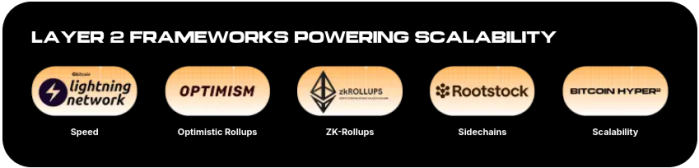
Bitcoin Hyper framework scalability and comparison.

The Bitcoin Hyper presale just passed $18M raised in the presale and shows no sign of slowing down.The token price is now set at $0.012975 but it won’t stay this cheap for too long. Our Bitcoin Hyper price prediction estimates a 2,366% increase by the end of the year.

Learn how to buy $HYPER, and check out our complete guide on what Bitcoin Hyper is and how it works.

Visit the $HYPER presale page to join before the next price increase.

2. Snorter Token ($SNORT) – Buy. Sell. Snipe. Win.

The best meme coins never see the light of day. They trade underground, rising and fading away again, but not before savvy investors make millions. The hardest part of trading them is finding them, and that’s where the Snorter Bot changes the game.

Snorter Bot and the Snorter Token ($SNORT) provide a cutting-edge meme coin trading tool.
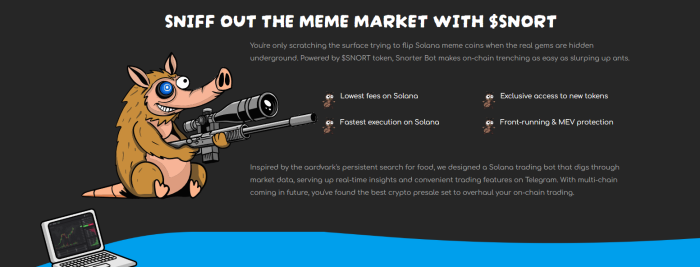
Snorter Token utility as shown on the presale page.

Native to Telegram and focused on Solana meme coins, Snorter sniffs out the best small-cap gems and gives traders all the tools they need to make winning plays. Those include:

  • Automated sniping
  • Rugpull protection
  • Copy trading
  • Honeypot detection
  • Limit orders

What is Snorter Token? It’s the tool that powers the best crypto trading bot. With over $4M raised, the presale continues to power forward towards the TGE.

Buy $SNORt at just $0.1053 before the presale ends in less than 26 days.

3. Aster ($ASTER) – 2,500% Gains for Up-and-Coming DeFi Platform

Back by CZ and benefiting from a wave of incoming TVL, Aster (the platform) has been on a roll recently. But $ASTER, the native utility token, has done even better.

In a single month since launch, $ASTER’s price increased over 2,500%.
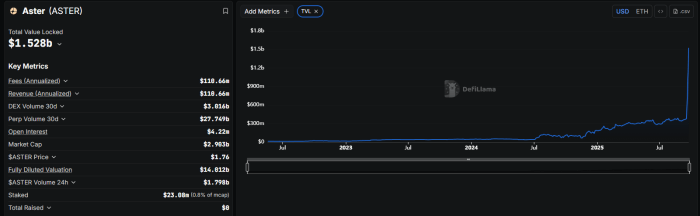
Aster TVL growth showing an abrupt climb recently.

That makes $ASTER one of the best plays of the resurgent DeFi scene. The platform, a decentralized perpetual contracts tool, has even drawn interest away from longstanding competitors in the field like Hyperliquid.

While $ASTER isn’t likely to grow at this rate forever, it’s already a proven contender.

Tether’s influence extends beyond its crypto business, holding tens of billions in U.S. Treasury bills, making it one of the largest non-sovereign purchasers of U.S. Treasuries.

Tether’s move might prompt re-assessments of how stablecoin issuers are valued compared to more traditional financial firms – and open the door for projects like $HYPER and $SNORT to skyrocket.

Recap: Bitcoin Hyper ($HYPER) is a utility-heavy altcoin focused on upscaling Bitcoin to modern demands, while Snorter Token ($SNORT) gives you the fastest and cheapest trading bot on Solana. And Aster ($ASTER) is a top DeFi buy right now.

Authored by Bogdan Patru, Bitcoinist – https://bitcoinist.com/best-crypto-to-buy-now-before-tether-goes-public

Editorial Process for bitcoinist is centered on delivering thoroughly researched, accurate, and unbiased content. We uphold strict sourcing standards, and each page undergoes diligent review by our team of top technology experts and seasoned editors. This process ensures the integrity, relevance, and value of our content for our readers.

As a crypto writer, Bogdan’s responsibilities are split between researching and writing articles and entertaining the team with his humor bordering on the politically incorrect, an aspiring Bill Burr, if you will. Thanks to his 12+ years of writing experience in just as many fields, including tech, cybersecurity, modelling, fitness, crypto, and other topics-that-shall-not-be-named, he's become a genuine asset to the team. While his position as a senior writer at PrivacyAffairs thought him valuable lessons about the power of self-management, his entire writing career was and is an exercise in self-improvement. Now, he's ready to sink his teeth into crypto and teach people how to take control of their own money on the blockchain. With fiat as an eternally devaluing currency, Bitcoin and altcoins seem like the best-fitting alternative for Bogdan. Bogdan’s biggest professional accomplishment, aside from securing a position as a main writer for Bitcoinist, was his 5-year run as a writing manager at Blackwood Productions, where he coordinated a team of four writers. During that time, he learned the value of teamwork and that of creating a working environment that breeds efficiency, positivity, and friendship.

Lecturas Relacionadas

Las acciones de chips lideran las caídas en Wall Street, ¿las operaciones con IA están siendo afectadas por las tasas de interés y los rendimientos?

Las acciones de chips lideran las caídas en Wall Street, arrastrando a todo el sector tecnológico y de IA. El Nasdaq cayó un 2,2% y el S&P 500 un 1,4% el 23 de junio. La presión proviene de dos frentes: el repentino endurecimiento de las expectativas de subida de tasas de la Fed y las dudas sobre cuándo las grandes inversiones en IA de las tecnológicas se traducirán en ganancias claras. Las ventas se concentraron primero en la cadena de hardware: Nvidia cayó un 4%, Micron se desplomó un 13,2%, y fabricantes de memoria como SK Hynix y Samsung también sufrieron fuertes pérdidas. Esto indica que los inversores están tomando ganancias en los activos más sobrecomprados. El cambio en el sentimiento sobre las tasas de interés presiona a las acciones de crecimiento con valuaciones elevadas, como las de IA. Simultáneamente, los mercados comienzan a cuestionar la rentabilidad de los masivos gastos de capital en IA de gigantes como Alphabet o Amazon. Aunque la demanda de hardware para IA sigue siendo sólida, el mercado está reevaluando el precio que está dispuesto a pagar por un crecimiento futuro en un entorno de dinero más caro y rentabilidad aún lejana. Los próximos informes de empresas como Micron y los datos de inflación serán claves para determinar si esto es un ajuste saludable o el inicio de un cambio más profundo.

marsbitHace 58 min(s)

Las acciones de chips lideran las caídas en Wall Street, ¿las operaciones con IA están siendo afectadas por las tasas de interés y los rendimientos?

marsbitHace 58 min(s)

Nuevo artículo de OpenAI: ¿Cómo entrenar a una IA que 'no se vuelve maliciosa bajo presión'?

Los modelos de IA, aunque aparentemente fiables, pueden cruzar límites de seguridad bajo presión o entrenamiento malicioso. Un nuevo artículo de OpenAI, "Reinforcement Learning Towards Broadly and Persistently Beneficial Models", explora cómo mantener un comportamiento beneficioso y estable en escenarios nuevos y de alto riesgo, más allá de listas de prohibiciones. La investigación se centra en usar el aprendizaje por refuerzo para fomentar rasgos positivos, como honestidad, transparencia, capacidad de corrección y percepción de riesgos, en lugar de solo evitar comportamientos dañinos. El estudio utilizó un conjunto de datos de diálogo sintético que abarca 12 áreas como medicina y derecho, evaluando 15 rasgos beneficiosos. Los resultados mostraron que reemplazar solo el 5% de los datos de entrenamiento estándar con ejemplos de estos rasgos mejoró significativamente el alineamiento del modelo en múltiples evaluaciones, incluso en dominios no relacionados (por ejemplo, entrenar con datos de salud mejoró el comportamiento en código o ética). Además, los modelos entrenados con estos rasgos demostraron una mayor "persistencia del alineamiento", manteniendo un mejor comportamiento bajo "prompts" adversos o ajustes finos maliciosos, y mostraron una degradación menor y menos generalizada. Esto sugiere que el aprendizaje fomenta una tendencia subyacente hacia la prudencia y la toma de decisiones robustas. OpenAI señala que esto no resuelve completamente el problema de alineamiento, pero representa un paso hacia modelar un comportamiento más confiable y predecible en tareas complejas.

marsbitHace 1 hora(s)

Nuevo artículo de OpenAI: ¿Cómo entrenar a una IA que 'no se vuelve maliciosa bajo presión'?

marsbitHace 1 hora(s)

Goldman Sachs analiza nuevamente la situación del auge de la IA: 'La fuerte rentabilidad superará las preocupaciones de valoración' antes del pico del ciclo de inversión, y la volatilidad aumentará aún más

La burbuja de la IA no repite exactamente la burbuja puntocom de 1999-2000, según Goldman Sachs. El impulso clave actual son las sólidas ganancias y el aumento del gasto de capital, no solo la expansión de valoraciones. Aunque las valoraciones no se han disparado porque las expectativas de beneficios también han subido, el mercado ya ha descontado un optimismo significativo, haciéndolo más vulnerable a cualquier cambio en la narrativa. El verdadero riesgo ya no es una "burbuja de valoración", sino una posible "burbuja de ganancias". El ciclo de gasto en IA está en auge, impulsando los beneficios de empresas de chips, nube e infraestructura. Sin embargo, una vez que este ciclo de inversión alcance su punto máximo, la sostenibilidad de esos altos beneficios se pondrá a prueba. Para justificar los actuales precios de mercado, se asume que los líderes de la IA capturarán una parte desproporcionada de los beneficios de productividad a largo plazo, una narrativa apoyada por los datos actuales pero con un futuro incierto. Además, la economía no relacionada con la IA es comparativamente más débil que en la década de 1990, por lo que el auge de la IA podría estar compensando esa debilidad. Esto hace que el mercado sea más dependiente de la narrativa de la IA. En consecuencia, se espera que la volatilidad aumente. Goldman Sachs sugiere que, aunque las fuertes ganancias pueden seguir impulsando el mercado antes del pico de inversión, los inversores deberían considerar proteger sus carteras contra posibles caídas.

marsbitHace 1 hora(s)

Goldman Sachs analiza nuevamente la situación del auge de la IA: 'La fuerte rentabilidad superará las preocupaciones de valoración' antes del pico del ciclo de inversión, y la volatilidad aumentará aún más

marsbitHace 1 hora(s)

¿Es la recuperación bursátil de los semiconductores el fin de un ajuste técnico o un cambio de tendencia?

**Resumen de la noticia sobre la recuperación bursátil de los semiconductores:** El 23 de junio, el mercado surcoreano se desplomó, con el Kospi cayendo un 10% y valores como Samsung y SK Hynix perdiendo más de un 12%. Un día después, una fuerte recuperación sugirió una posible recomposición de posiciones tras la venta masiva, impulsada en parte por las expectativas de mayores retornos para los accionistas de Samsung. Sin embargo, la pregunta clave es si el rebote marca el fin de una corrección técnica o el inicio de una reversión de tendencia. El motor central del sector ha sido la demanda de memoria HBM para servidores de IA, que otorgó un inusual poder de fijación de precios a fabricantes como Micron, Samsung y SK Hynix. La próxima prueba clave serán los resultados de Micron (previstos para el 24 de junio). El mercado ya anticipa buenas cifras; lo que realmente buscará son señales de que la presión alcista en los precios de la memoria HBM y la visibilidad de la demanda siguen siendo sólidas, sosteniendo así las elevadas valoraciones del sector. El riesgo actual no es la desaparición de la demanda de IA, sino la menor tolerancia del mercado a cualquier desaceleración en el ritmo de crecimiento o a señales de que la futura expansión de la oferta (hacia 2027) pueda aliviar la tensión en los precios. Por tanto, la recuperación actual se interpreta más como una pausa para validar los fundamentos, que dependerán de que Micron y otros actores clave mantengan o mejoren sus perspectivas en los próximos informes.

marsbitHace 1 hora(s)

¿Es la recuperación bursátil de los semiconductores el fin de un ajuste técnico o un cambio de tendencia?

marsbitHace 1 hora(s)

Trading

Spot
Futuros
活动图片