Helius Takes First Step In Solana Treasury With $175 Million Purchase

bitcoinistPublicado a 2025-09-24Actualizado a 2025-09-24

Resumen

Helius Medical Technologies has officially kick-started its Solana (SOL) treasury strategy with an initial acquisition of 760,190 tokens. Helius Has...

Trusted Editorial content, reviewed by leading industry experts and seasoned editors. Ad Disclosure

Helius Medical Technologies has officially kick-started its Solana (SOL) treasury strategy with an initial acquisition of 760,190 tokens.

Helius Has Started Buying Solana With Its $500 Million Raise

As announced in a press release, Helius Medical Technologies has completed its first Solana purchase for its digital asset treasury strategy. In total, the company has acquired 760,190 SOL at an average price of $231 per token, spending about $175 million.

Originally a neurotech company, Helius Medical Technologies adopted a strategy focused on accumulating SOL earlier this month. Just a few days ago, the firm revealed that it had raised over $500 million for its digital asset treasury through a private placement offering.

Among the key backers were Pantera Capital, an American venture capital and hedge fund specializing in blockchain and digital assets, and Summer Capital, a Hong Kong-headquartered investment firm.

Joseph Chee, Executive Chairman at Helius, said:

It has been gratifying to receive shows of support from multiple stakeholders across the Solana ecosystem, including staking providers, DeFi protocols and others. We take our responsibility to maximize shareholder value seriously and are eager to execute against our plan.

With the latest purchase, Helius has begun deploying the raised capital into Solana. The company still has $335 million sitting in cash reserves for further treasury expansions, along with the potential to raise another $750 million if the stapled warrants from its private placement are exercised.

The press release noted that, besides SOL being among the top coins in on-chain activity-related metrics, it’s also financially productive by design, thanks to its 7% native staking yield.

Helius added:

As an independent treasury company, HSDT’s mission is to support the growth and security of tokenized networks by serving as a long-term holder of $SOL, in addition to continuing the development of its neurotech and medical device operations

The NASDAQ-listed neurotech firm isn’t the only one to pivot to a Solana treasury this month. Forward Industries, a company focused on design and manufacturing, also adopted a SOL strategy and closed a private investment in public equity (PIPE) earlier in September, raising $1.65 billion.

The financing was led by three key players in Galaxy Digital, Multicoin Capital, and Jump Crypto. Last Monday, the firm executed its first purchase worth $1.58 billion, instantly becoming the largest SOL treasury holder in the world.

In some other news, analytics firm Santiment has shared an update on how projects in the Solana ecosystem compare against each other in terms of the Development Activity metric.
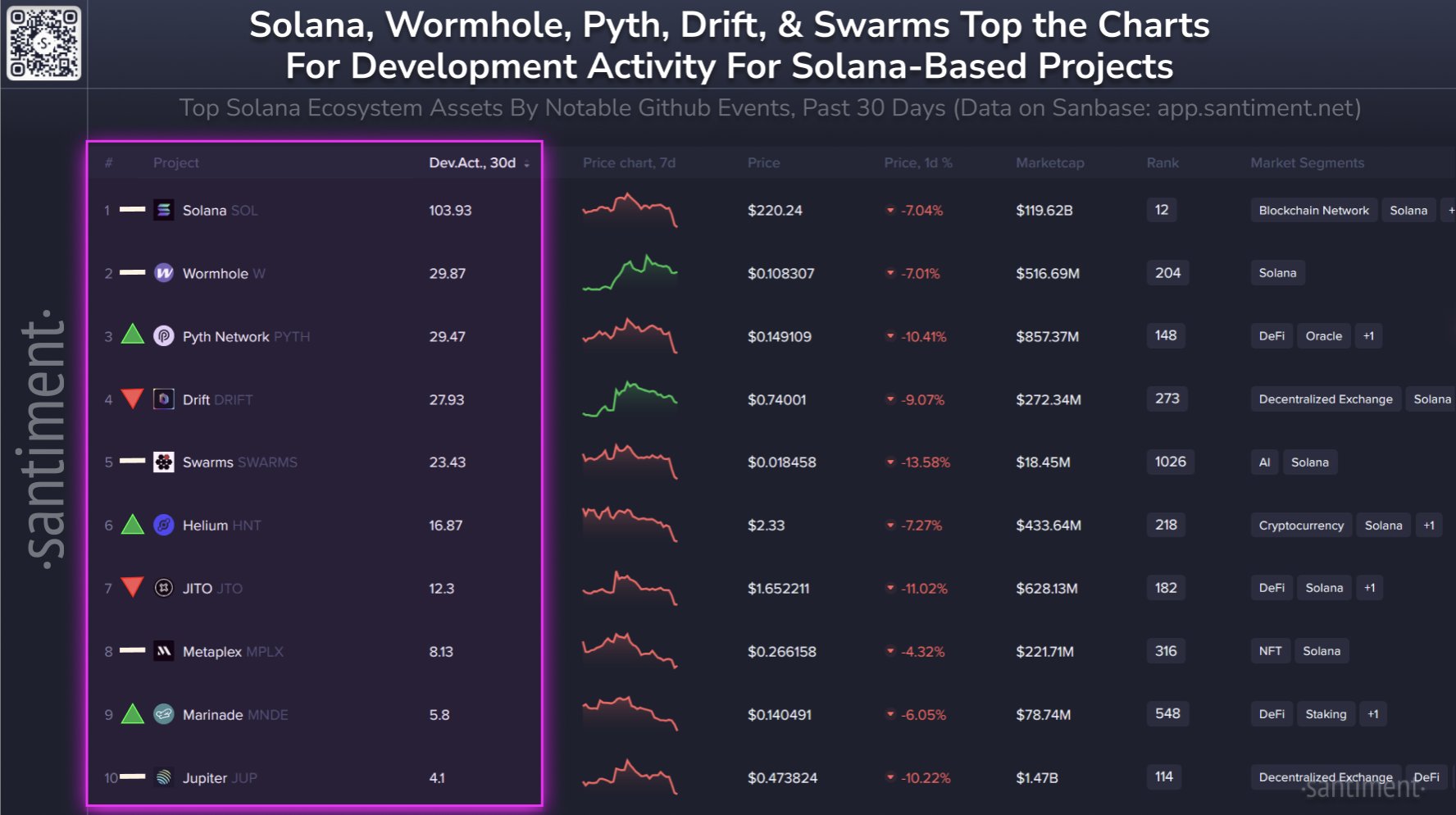
Solana Development Activity

The ranking of the SOL ecosystem projects on the basis of 30-day Development Activity | Source: Santiment on X

From the table, it’s visible that SOL continues to be the top-ranked coin with its developers putting in the most work on the project’s public GitHub repositories. Wormhole (W) and Pyth Network (PYTH) follow in second and third, respectively.

SOL Price

At the time of writing, Solana is trading around $218, down over 7% in the last week.

Solana Price Chart

Looks like the price of the coin has slipped down over the last few days | Source: SOLUSDT on TradingView
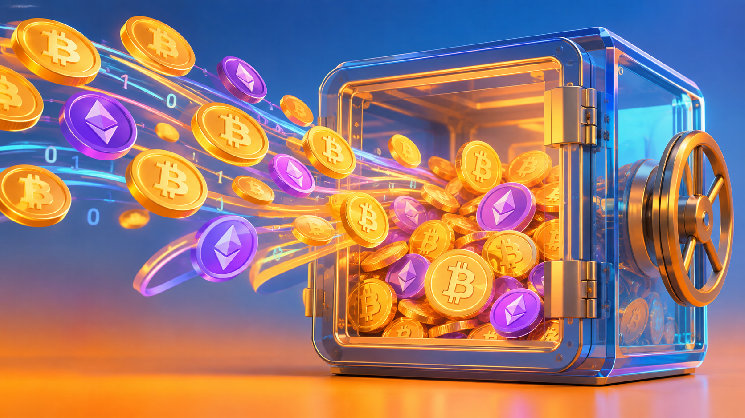
Featured image from Dall-E, Santiment.net, chart from TradingView.com
Editorial Process for bitcoinist is centered on delivering thoroughly researched, accurate, and unbiased content. We uphold strict sourcing standards, and each page undergoes diligent review by our team of top technology experts and seasoned editors. This process ensures the integrity, relevance, and value of our content for our readers.

Keshav is a Physics graduate who has been employed as a writer with Bitcoinist since June 2021. He is passionate about writing and through the years, he has gained experience working in a variety of niches. Keshav holds an active interest in the cryptocurrency market, with on-chain analysis being an area he particularly likes to research and write about.

Lecturas Relacionadas

Interpretación de Informe de Investigación: El Sector Semiconductores Subió un 155%, Bernstein Dice que NVDA y AVGO Siguen "Absurdamente Baratas"

Análisis del informe: El sector de semiconductores subió un 155%, y Bernstein dice que NVDA y AVGO siguen "absurdamente baratas" Bernstein publicó una revisión trimestral del sector el 23 de junio. Su tesis central es que la IA es ahora el "único juego" que impulsa al sector, con fundamentales sólidos, aunque las valoraciones y la concentración de inversión están en máximos históricos. El índice SOX ha subido un 155,6% en el último año, impulsado principalmente por un crecimiento de los beneficios (EPS) del 75%, no por una burbuja de valoración. Bernstein recomienda **NVDA y AVGO** (calificación: "Outperform"), considerándolas los principales beneficiarios de la cadena de suministro de IA. A pesar del fuerte desempeño del sector, estas acciones han tenido un rendimiento relativamente atrasado este año. El analista Stacy Rasgon las describe como "absurdamente baratas", señalando que NVDA cotiza a un P/E de 25x para 2027 frente al 34x del sector, y que AVGO tiene un camino claro hacia los 100.000 millones de dólares en ingresos relacionados con la IA para 2030. **AMD** fue actualizada a "Outperform" debido a su oportunidad dual en GPU para IA y CPU. Por el contrario, **QCOM** mantiene una calificación "Market-Perform" debido a la debilidad persistente en el mercado de smartphones, que presiona su negocio principal. Los fabricantes de equipos semiconductores (como AMAT, LRCX, KLAC) siguen siendo favorecidos ("Outperform") por la fuerte demanda de construcción de capacidad. Sin embargo, Bernstein es cauteloso con los chips analógicos (ADI, TXN, calificación "Market-Perform"), cuyas valoraciones parecen elevadas. El informe advierte sobre dos riesgos clave: 1) La **congestión** del sector está en niveles históricamente altos. 2) Los niveles de **inventario** siguen siendo elevados, lo que podría generar presión si la demanda flaquea. La conclusión es que, en este entorno, la selección de acciones individuales es más crucial que nunca.

marsbitHace 44 min(s)

Interpretación de Informe de Investigación: El Sector Semiconductores Subió un 155%, Bernstein Dice que NVDA y AVGO Siguen "Absurdamente Baratas"

marsbitHace 44 min(s)

Entrevista de 10,000 palabras con el CEO de Anthropic: Cuando la IA se convierte en un arma súper potente, ¿cómo encontrar el equilibrio entre negocios y seguridad?

**Fuente:** Bloomberg **Resumen de la entrevista al CEO de Anthropic, Dario Amodei** Dario Amodei, CEO de Anthropic, habla sobre la trayectoria de su empresa en el centro del universo de la IA. Explica que su enfoque en aplicaciones empresariales (como Claude Code y Claude Cowork) se debe a su compatibilidad con sus valores de seguridad y responsabilidad, a diferencia de los modelos de negocio orientados al consumo. Reconoce que la IA podría eliminar muchos trabajos de cuello blanco junior, pero subraya la necesidad de una transición manejada y de que las empresas busquen una "suma positiva" utilizando las ganancias de eficiencia para nuevas tareas. Amodei aborda su salida de OpenAI, citando diferencias en valores y una falta de confianza. Aunque compite con empresas como OpenAI y Google, enfatiza la importancia de la colaboración en seguridad entre actores confiables para elevar los estándares de la industria. En cuanto a la seguridad nacional, justifica el trabajo de Anthropic con el Departamento de Defensa de EE. UU. como una necesidad para contrarrestar amenazas de regímenes autoritarios, pero establece límites claros, como no participar en vigilancia masiva o armas autónomas. También explica la decisión de no lanzar públicamente el potente modelo "Mythos", considerado un "súper arma" cibernética, hasta que existan salvaguardias defensivas más robustas. Finalmente, Amodei discute los riesgos a largo plazo de la IA y la necesidad de un equilibrio de poder entre el sector privado y la regulación gubernamental para gestionar esta tecnología transformadora de manera segura.

marsbitHace 55 min(s)

Entrevista de 10,000 palabras con el CEO de Anthropic: Cuando la IA se convierte en un arma súper potente, ¿cómo encontrar el equilibrio entre negocios y seguridad?

marsbitHace 55 min(s)

Trading

Spot
Futuros
活动图片