Gemini Picks 3 Best Crypto Presales to Weather the Market Crash

bitcoinistPublicado a 2025-09-23Actualizado a 2025-09-23

Resumen

Crypto markets are on shaky ground right now, with the latest pullback stirring fresh talk of a wider crash. The...

Trusted Editorial content, reviewed by leading industry experts and seasoned editors. Ad Disclosure

Crypto markets are on shaky ground right now, with the latest pullback stirring fresh talk of a wider crash.

The Fear & Greed Index sits at 40, a level that screams caution but also hints at plenty of room for upside if sentiment flips. Historically, these oversold zones often lay the groundwork for the next big leg up.

Crypto Fear and Greed Index.
Source: CoinMarketCap

Macro factors add fuel to the debate. The Fed is expected to deliver more rate cuts, a shift that usually lifts risk assets. Q4 has also earned a reputation for fireworks in past crypto cycles, and big players like VanEck are still targeting $BTC at 180K in 2025.

That kind of projection keeps long-term conviction alive, even while short-term volatility shakes weak hands out.

The best crypto presales, meanwhile, offer a different kind of shelter in stormy markets. Unlike listed tokens that swing with every headline, presale prices only move upward – and in set stages. That incremental growth makes them attractive in downturns.

Gemini has spotlighted three it believes can thrive: Bitcoin Hyper ($HYPER), Snorter Token ($SNORT), and Nexchain ($NEX). Here’s why they’re drawing attention.

1. Bitcoin Hyper ($HYPER) – Bitcoin’s Layer-2 Solution To Unleash Its Potential

Bitcoin remains the market’s anchor, but it still moves like a dinosaur when it comes to usability. High fees and slow block times make $BTC great for holding – but clunky for anything else. That gap is exactly what Bitcoin Hyper ($HYPER) will aim to close.

Integrating Solana’s Virtual Machine (SVM), Bitcoin Hyper will create a Layer-2 environment for Bitcoin – not a sidechain, but a parallel execution layer that inherits Bitcoin’s security while running at Solana speed.
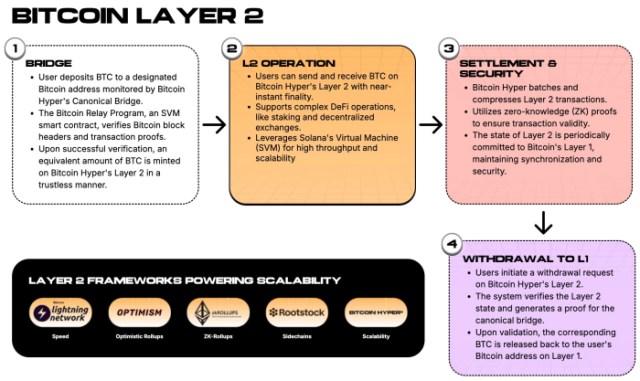
Bitcoin Hyper ($HYPER) Layer-2 for powering $BTC scalability.

The process is straightforward: bridge $BTC in, mint in on Hyper’s Layer-2, use it instantly for trading, staking, and DeFi, then bridge back out when needed. Transactions settle back to the Bitcoin Layer-1 via zero-knowledge proofs, keeping the system trustless and synced.

The upgrade unlocks use cases long out of reach for Bitcoin: the best meme coins, dApps, and cross-chain DeFi. Sub-second transactions and near-zero fees mean $BTC can finally power culture as well as capital.

Investors are already paying attention: the presale has pulled in $17.7M, with $HYPER priced at $0.012965 and staking yields of up to 65% APY. Check out our guide on how to buy Bitcoin Hyper before you head to the presale.

If ETFs and institutional inflows push $BTC higher, Gemini says Bitcoin Hyper stands to capture the upside as Bitcoin’s long-awaited execution layer.

Visit the Bitcoin Hyper presale website today.

2. Snorter Token ($SNORT) – Telegram Bot Meets Meme Utility

Telegram trading bots have gone from niche tools to a full-blown sector on Solana, with names like BONKBot and Trojan Bot pulling in serious volume.

The bot market itself is currently valued at $47.43B, and forecast to surge to $200B+ by 2035, fueled by retail traders looking for faster, cheaper ways to snipe new launches.

Snorter Token ($SNORT) plans to carve out a spot by merging meme coin branding with powerful bot utility. Built to run natively inside Telegram, Snorter aims to make the chat app a one-stop trading suite.

You’ll be able to swap, snipe, set stop-losses, copy top wallets, and track your portfolio in real time – all without leaving Telegram.
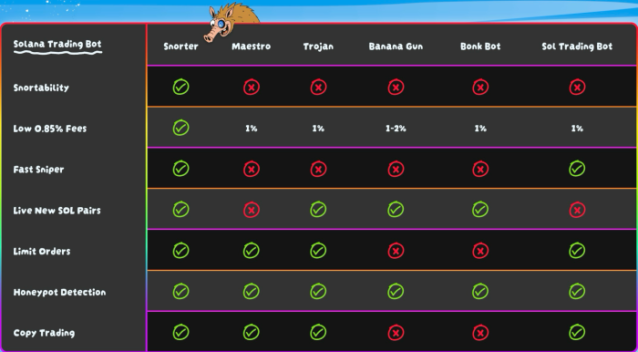
Snorter Bot ($SNORT) vs other top trading bots.Speed and cost are its main weapons. Sub-second swaps fire through Solana’s custom RPC infrastructure, while $SNORT holders can cut trading fees to just 0.85%, cheaper than rival bots (1.5%).

Security also plays a big part in this trading bot. Closed beta tests showed an 85% success rate in flagging rug pulls and honey pots.

So far, Snorter’s presale has raised $4M+. Tokens are sat at $0.1053 with 116% APY staking available, and just 27 days remain before the presale ends. Discover how to buy Snorter Token in our step-by-step guide.

By blending Solana meme coin culture with trading infrastructure, Gemini claims $SNORT is positioning itself for both hype and utility.

Ready to jump in? Join the Snorter Token presale today.

3. Nexchain ($NEX) – AI-Built Layer-1 With Daily Rewards

AI has become one of crypto’s fastest-growing verticals, with VanEck forecasting crypto AI revenues to reach a base case of $10.2B by 2030. Nexchain ($NEX) is leaning into that narrative by building the first blockchain designed entirely by AI.

The chain runs on a hybrid consensus model that merges Proof-of-Stake with AI-driven algorithms, giving it both speed and adaptability. Benchmarks show throughput at 400K transactions per second, with average fees of just $0.001. And unlike older chains, Nexchain’s infrastructure is engineered to be eco-friendly from day one.
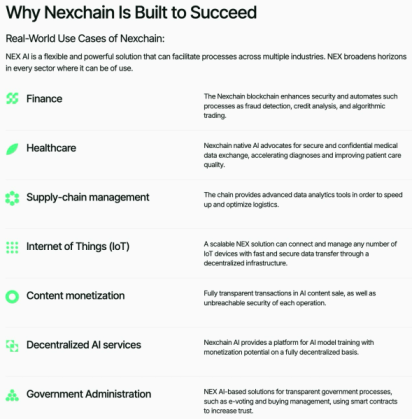
The real-world use cases of NexchainUtility spans the full Web3 stack: smart contracts, staking, payments for AI services, and cross-chain interoperability. But the standout feature is tokenomics. $NEX holders earn a daily share of 10% of all gas fees collected across the network, creating a built-in revenue stream that rewards long-term holding.

So far, the presale has raised $10.4M+. At a current price of $0.108, early buyers are looking at a 278% spread against the $0.30 listing price.

For investors chasing the AI wave while securing real yield, Nexchain offers a unique blend of hype and fundamentals. Gemini points to how that mix has made $NEX a presale to watch closely this year.

Want to discover more? Take a look at the Nexchain ($NEX) whitepaper.

Recap: We asked, and Gemini answered. If you’re on the hunt for the best crypto presales to weather the market crash, take a look at Bitcoin Hyper ($HYPER), Snorter Token ($SNORT), and Nexchain ($NEX).

As always, this article is not financial advice. Crypto and presales carry inherent risks. Please do your own research and never invest more than you can afford to lose.

Authored by Aidan Weeks, Bitcoinist – https://bitcoinist.com/gemini-best-crypto-presales

Editorial Process for bitcoinist is centered on delivering thoroughly researched, accurate, and unbiased content. We uphold strict sourcing standards, and each page undergoes diligent review by our team of top technology experts and seasoned editors. This process ensures the integrity, relevance, and value of our content for our readers.

Aidan Weeks, a Master's graduate in Mechanical Engineering, has thrived as a content writer for over four years. Specializing in crypto, tech, engineering, AI, and B2B sectors, Aidan adeptly crafts web copy, blog posts, buying guides, manuals, product pages, and more, making complex concepts accessible and engaging. His transition from academia to full-time writing reflects his passion for bridging technical expertise with clear, informative content. Since joining Bitcoinist, Aidan has written extensively about DeFi, dApps, AI, and meme coins, solidifying his grasp on emerging blockchain technologies. An early adopter, he began investing in Solana in 2020, further deepening his insights into crypto markets and innovation. Today, he combines hands-on experience with a sharp editorial instinct to help readers cut through hype, spot real trends, and make sense of a fast-moving space.

Lecturas Relacionadas

a16z: En la era de la IA, la lucha por el talento comienza con la denominación de puestos

El concepto de "ingeniero desplegado en campo" (FDE) demuestra cómo el nombre de un puesto puede redefinir y elevar el valor de un rol tradicionalmente subestimado, como la implementación técnica en el sitio del cliente. Palantir popularizó este término, transformando la percepción de un trabajo de soporte en una capacidad estratégica clave. Esto ejemplifica el "arbitraje de títulos": crear nuevas denominaciones cuando una habilidad gana importancia, pero la terminología organizacional aún no refleja su valor. Un título no es solo una etiqueta, sino un lenguaje organizacional que otorga legitimidad, atrae talento y señala un cambio en la importancia estratégica del trabajo. En la era de la IA, este enfoque es crucial. La transformación con IA no solo se trata de herramientas más inteligentes, sino de crear nuevos roles de alto impacto, como el "ingeniero legal" o el "ingeniero de estrategia comercial". Para las empresas de IA que venden a otras empresas, nombrar estos nuevos puestos dentro de las organizaciones cliente es una estrategia que facilita la adopción, construye identidad y, en última instancia, crea ventajas competitivas. El resurgimiento del debate sobre el FDE refleja la naturaleza difusa de los productos de IA empresarial, donde los límites entre producto, servicio e implementación se desdibujan. El reto no es eliminar los servicios, sino identificar y renombrar las partes más valiosas y cercanas al cliente para integrarlas en el núcleo del aprendizaje y desarrollo del producto. Quien logre definir y organizar primero estas nuevas capacidades ganará una ventaja decisiva.

marsbitHace 45 min(s)

a16z: En la era de la IA, la lucha por el talento comienza con la denominación de puestos

marsbitHace 45 min(s)

CBRS: Ingresos duplican en primer informe tras salida a bolsa, pero pronóstico de margen bruto cae drásticamente; ruta de ejecución del gran contrato de OpenAI es demasiado larga

Cerebras (CBRS) presentó sus primeros resultados trimestrales tras su OPI, con ingresos centrales del Q1 de 1.913 millones de dólares, un aumento interanual del 92%, superando las expectativas. Sin embargo, la guía de margen bruto para el Q2 cayó bruscamente del 46,5% a un rango del 36-38%, lo que hizo que las acciones cayeran más de un 10% en operaciones extrabursátiles. La compañía, que fabrica chips a partir de obleas de silicio completas y apuesta por la IA para inferencia, tiene un contrato de más de 20.000 millones de dólares con OpenAI y un marco de colaboración con AWS. Su guía de ingresos anuales es de 855-865 millones de dólares. El informe revela una transición en su modelo de negocio: de vender hardware a vender potencia de cálculo en la nube. Esto explica en parte la presión sobre los márgenes, atribuida a la escasez temporal de capacidad en centros de datos. Aunque los ingresos superaron las expectativas, la concentración de clientes sigue siendo alta (dos entidades relacionadas de Emiratos Árabes Unidos representaron el 86% de los ingresos en el año fiscal 2025). Los grandes contratos con OpenAI (que comenzará a contribuir en 2026) y AWS (previsto para 2027) son prometedores pero de ejecución larga. Los analistas son mayoritariamente optimistas, con un precio objetivo medio de 300 dólares, apostando por la ventaja de velocidad de Cerebras en la inferencia de IA y el potencial de sus grandes acuerdos. Los escépticos señalan los desafíos en los márgenes, la intensa competencia (especialmente de NVIDIA) y la dependencia continua de pocos clientes. La valoración actual, cercana a los 50.000 millones de dólares, anticipa un crecimiento significativo que depende de la ejecución exitosa de estos contratos a largo plazo.

marsbitHace 45 min(s)

CBRS: Ingresos duplican en primer informe tras salida a bolsa, pero pronóstico de margen bruto cae drásticamente; ruta de ejecución del gran contrato de OpenAI es demasiado larga

marsbitHace 45 min(s)

Entrevista al CEO de Strategy: Después de vender Bitcoin, ¿puede STRC recuperarse?

Entrevista con Phong Le, CEO de MicroStrategy: Tras la venta de 32 bitcoins, ¿puede recuperarse el STRC? La venta de 32 bitcoins (unos 2,5 millones de dólares) por parte de MicroStrategy generó una amplia reacción en el mercado. El CEO Phong Le explica que la decisión, tomada con transparencia y disciplina, tenía dos objetivos principales: demostrar a los tenedores de deuda la capacidad de liquidez de los activos en Bitcoin y probar los procesos internos de venta. Asegura que la medida no fue una respuesta a los temores de un "espiral de muerte" relacionado con el producto de acciones preferentes STRC, ya que menos del 10% de este está en protocolos DeFi. Le destaca que MicroStrategy, el mayor tenedor corporativo de Bitcoin, opera con un riguroso proceso de decisión que involucra a la junta directiva y análisis de datos, lejos de ser una decisión unilateral. Reitera la estrategia a largo plazo de la compañía y su firme creencia en el valor subyacente de Bitcoin. Frente a la volatilidad, enfatiza la opción estratégica de "no hacer nada", como se hizo durante el mercado bajista de 2022. Sobre el STRC, un producto con apenas 10 meses, Le confía en que recuperará su valor nominal de 100 dólares, respaldado por el mecanismo de pago de dividendos que comienza el 30 de junio y la sólida sobrecolateralización del producto. Finalmente, aclara que la venta de Bitcoin sí ocurrió en la semana previa al 31 de mayo, tal como se reportó en los documentos oficiales 8-K de la compañía.

marsbitHace 1 hora(s)

Entrevista al CEO de Strategy: Después de vender Bitcoin, ¿puede STRC recuperarse?

marsbitHace 1 hora(s)

Trading

Spot
Futuros
活动图片