Key Takeaways
What triggered the recent price decline for PUMP?
The price drop was primarily driven by heavy selling from whales and a negative Funding Rate, with short positions dominating the market.
Could PUMP experience a rebound despite the current bearish sentiment?
Yes, there is potential for a rebound if it reaches lower liquidity zones, which could serve as demand areas and push the price higher.
In the past 24 hours, Pump.fun [PUMP] recorded one of the steepest outflows, with liquidity draining fast and forcing an 11% squeeze that brought its press-time value to $0.007.
Market analysis revealed that derivative investors played the central role in the decline. AMBCrypto reviewed the data to uncover what is happening.
Whales at the center of the decline
Whales have been the main contributors to the price slump witnessed in the market over the past day, according to fresh insights from CoinGlass.
Hyperliquid’s Whale Tracker shows that derivative selling volume made up the largest share of overall trading activity.
Short whales represented over 52% of the market’s trading volume at the time, while longs held a smaller share of 47%, according to the report.
With this imbalance, long whales now face potential liquidation as selling pressure builds and bears maintain control of the market.

Source:CoinGlass
One whale with an $18 million long position has already come under heavy pressure. The position still remains in profit, but it could face steep losses if PUMP continues to fall.
Retail traders add to bearish sentiment
The bearish mood is not limited to whales, retail investors have also turned negative on PUMP.
CoinGlass data shows that the Funding Rate turned negative in the past day, dropping sharply to -0.0056, at press time.
A negative Funding Rate means short traders are driving the majority of capital flows needed to maintain the balance between long and short positions.
However, this short-dominated inflow has been shrinking, while overall outflows have risen significantly over the past 24 hours.

Source:CoinGlass
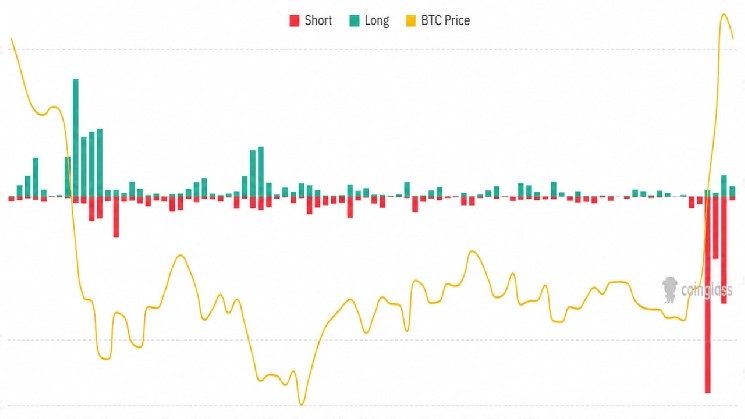
Approximately $20.59 million worth of contracts in the perpetual market were closed, as Open Interest declined, reflecting broader bearish sentiment.
With the majority of capital still concentrated in shorts, continued downward pressure could trigger an even sharper plunge for PUMP.
Direction remains split
Despite the heavy selling, the liquidation chart indicates that PUMP’s direction is still two-sided, with the asset either likely to extend its drop or stage a rally.
AMBCrypto analysis shows that PUMP could first slide toward the lower liquidity clusters visible on the chart.
However, these zones may serve as demand areas, which could drive a rebound and push the token higher once again.

Source:CoinGlass
For now, the overall market sentiment remains bearish, with both whales and retail traders aligned on the likelihood of more downside pressure.