UK and US Move to Align Crypto Regulations as the Best Crypto Presales Heat Up

bitcoinistPublicado a 2025-09-17Actualizado a 2025-09-17

Resumen

With Donald Trump in the United Kingdom for a state visit, the UK and the US are poised to forge...

Trusted Editorial content, reviewed by leading industry experts and seasoned editors. Ad Disclosure

With Donald Trump in the United Kingdom for a state visit, the UK and the US are poised to forge closer regulatory ties on key issues.

One of those issues is crypto regulations – in particular, stablecoins. The move could reshape the landscape for stablecoins, investor protection, and cross-border financial innovation. Along the way, it could also send a handful of the best crypto to buy into the stratosphere as markets heat up.

A Shift Towards Cooperation

High-level talks between UK Chancellor Rachel Reeves and US Treasury Secretary Scott Bessent formed the starting point for the whole discussion. Trump himself may get involved later in the week.

Major crypto firms like Coinbase, Circle, and Ripple, as well as leading banks, were part of discussions aimed at synchronizing oversight of the digital-asset sector.

What’s driving the sudden shared interest?
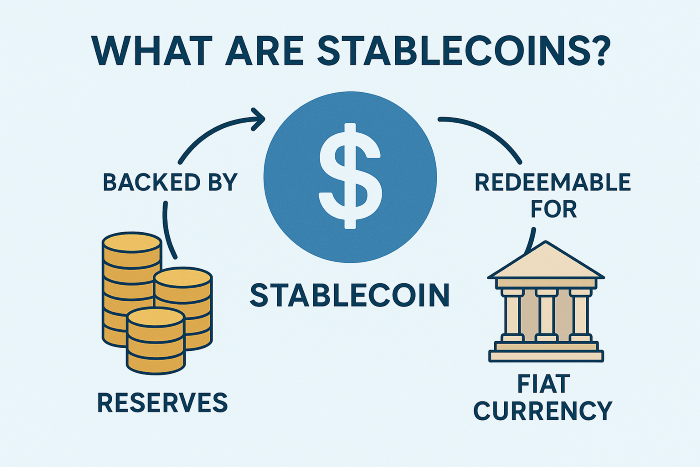
In a word, stablecoins.

Stablecoin illustration

Stablecoins, pegged to traditional currencies, have emerged as popular payment instruments and stores of value. For now, they currently exist under varying regulatory regimes in different countries– and that’s why the UK is keen to align more closely with US regulation.

What Alignment Might Look Like

Several areas are expected to be part of the UK-US regulatory alignment:

  • Stablecoin regulation: Clearer rules governing issuance, backing, and oversight.
  • Combatting financial crime: Unifying anti-money laundering (AML) and know-your-customer (KYC) standards.
  • Market conduct: Strengthened supervision of digital asset markets to ensure fair practices and consumer protection.
  • Joint innovation sandboxes: Regulatory test environments where firms can trial blockchain-based solutions or new financial products in both jurisdictions under regulatory oversight.

Why It Matters

The UK has publicly acknowledged a risk of being left behind in global crypto regulatory advance. Former Conservative Chancellor George Osborne warned in an op-ed that on stablecoins and broader digital asset policy, other countries are passing the UK by.

And there’s a strong desire on the part of both countries to use regulatory clarity to attract business investment, maintain competitiveness, and support innovation in the financial sector.

Additionally, the timing of these moves is significant. Talks coincide with heightened diplomatic and trade conversations, including the US-UK relationship under President Trump’s pro-crypto bent and the UK’s efforts to position itself as a global hub in digital finance.

With alignment on the horizon, the crypto presales could be among the best projects to buy.

Bitcoin Hyper ($HYPER) – Fastest and Cheapest Bitcoin Layer 2 Enables Everyday Bitcoin Transactions

Bitcoin Hyper ($HYPER) aims to solve a couple of long-standing Bitcoin problems. Sure, Bitcoin has a $2.2T market cap, and may not look like it has many weaknesses at all. But the Bitcoin Layer 1 blockchain emphasizes simple smart contracts for security and reliability, rather than speed or scalability.
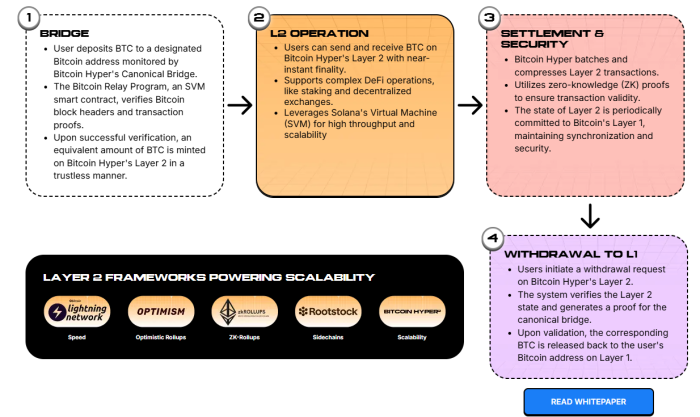
Bitcoin hyper architecture

To achieve the latter, Bitcoin Hyper integrates the Solana Virtual Machine (SVM) through the use of a Canonical Bridge. Deposit $BTC on the canonical bridge, mint wrapped $BTC on the Hyper Layer 2.

On Hyper, investors can leverage the SVM’s speed to transact $BTC at Solana’s speeds – several thousand transactions per second. That utility explains why our $HYPER price prediction shows the token price reaching $0.32 by the end of this year.

Learn more about what Bitcoin Hyper is and jump into the presale at the official website.

PepeNode ($PEPENODE) – Mine-to-Earn Gamifies Meme Coin Yield

What if you could meme and game at the same time?

PepeNode ($PEPENODE) makes it possible with an innovative Mine-to-Earn mechanic. Buy $PEPENODE and use the token to upgrade your virtual mining server room. The more nodes you purchase and the more you upgrade your rig, the more $PEPENODE you’ll earn.

PepeNode presale

You can earn rewards in other tokens, including $PEPE, $FARTCOIN, and more. There’s also a leaderboard where miners can see whose rig is performing the best.

The $PEPENODE presale has passed $1.2M, with tokens priced at $0.0010617 — but our price prediction sees the token climbing to $0.0023 by the end of the year.

Check out the presale page for the latest info.

BlockDag ($BDAG) – Massive Crypto Presale Offers Endless Blockchain Interconnectivity

BlockDag has an incredibly ambitious vision – a proof-of-work consensus with Directed Acrylic Graph (DAG) technology.
Blockdag presale

If BlockDag finds the success it hopes for, it could be the foundation for an entirely new standard for blockchain networks. BlockDag wants to build a more transparent blockchain with full DeFi capabilities, including:

  • Stablecoins
  • Staking
  • Lending & borrowing
  • Swaps
  • Cross-chain bridging

The solidity and reliability of a proof-of-work blockchain would back all of those features. And with over $400M raised in a massive presale so far, BlockDag is well-positioned to succeed.

While US-UK regulatory alignment promises benefits, there are obstacles to overcome. Regulatory systems differ in structure, legal tradition, and risk tolerance. The UK and US may diverge in consumer protection standards, enforcement priorities, or industry oversight.

Ensuring alignment without stifling innovation will be a delicate balancing act.

But if negotiators can pull it off, look for hot crypto presales like $HYPER, $PEPENODE, and $BDAG to explode into the newly defined space.

Authored by Bogdan Patru for Bitcoinist — https://bitcoinist.com/best-crypto-presales-to-buy-as-uk-and-us-start-crypto-cooperation

Editorial Process for bitcoinist is centered on delivering thoroughly researched, accurate, and unbiased content. We uphold strict sourcing standards, and each page undergoes diligent review by our team of top technology experts and seasoned editors. This process ensures the integrity, relevance, and value of our content for our readers.

As a crypto writer, Bogdan’s responsibilities are split between researching and writing articles and entertaining the team with his humor bordering on the politically incorrect, an aspiring Bill Burr, if you will. Thanks to his 12+ years of writing experience in just as many fields, including tech, cybersecurity, modelling, fitness, crypto, and other topics-that-shall-not-be-named, he's become a genuine asset to the team. While his position as a senior writer at PrivacyAffairs thought him valuable lessons about the power of self-management, his entire writing career was and is an exercise in self-improvement. Now, he's ready to sink his teeth into crypto and teach people how to take control of their own money on the blockchain. With fiat as an eternally devaluing currency, Bitcoin and altcoins seem like the best-fitting alternative for Bogdan. Bogdan’s biggest professional accomplishment, aside from securing a position as a main writer for Bitcoinist, was his 5-year run as a writing manager at Blackwood Productions, where he coordinated a team of four writers. During that time, he learned the value of teamwork and that of creating a working environment that breeds efficiency, positivity, and friendship.

Lecturas Relacionadas

Huang Renxun: El Prompt está quedando obsoleto, Loop es el nuevo paradigma

En el mundo de la IA, se está produciendo un cambio de paradigma: el "prompt" (instrucción directa) pierde relevancia frente al "loop" (bucle o ciclo). Según expertos como Jensen Huang (fundador de NVIDIA), Peter, Boris Cherny (creador de Claude Code) y Andrew Ng, la nueva tarea clave no es escribir prompts detallados, sino diseñar y gestionar loops. ¿Qué es un loop? Es un sistema automatizado donde la IA recibe un objetivo general, ejecuta tareas, las verifica automáticamente y, si no cumple los criterios, reintenta de forma independiente hasta completarlo o alcanzar un límite. Esto libera al humano de supervisar cada paso, transformándolo de "instructor" a "diseñador de reglas". Un loop no es lo mismo que un agente de IA: el agente ejecuta, mientras que el loop es el mecanismo que orquesta y automatiza su trabajo continuo sin intervención constante. Productos como Claude Code y OpenAI Codex ya implementan esta idea. Claude Code ofrece funciones como `/goal` (ejecución orientada a objetivos) y `/schedule` (tareas programadas), utilizando modelos separados para generar código (modelo principal) y para validarlo (modelo más pequeño como Haiku), asegurando una verificación objetiva. Codex emplea una "línea de ensamblaje automatizada" con múltiples subagentes que trabajan en paralelo. Boris Cherny describe cómo dirige cientos de pequeños agentes en loops automatizados que manejan desde issues de GitHub hasta fallos en CI, interviniendo solo en casos excepcionales. Para implementar loops efectivos, se recomienda: 1) Evaluar si la tarea es repetitiva, verificable automáticamente, con presupuesto de tokens viable y con herramientas adecuadas. 2) Comenzar con un loop mínimo viable (disparador, habilidad/Skill, archivo de estado STATE.md y compuerta/Gate de verificación). 3) Separar siempre la generación de código de su validación, usando agentes o modelos independientes para evitar sesgos. 4) Evitar errores comunes: establecer condiciones de parada claras (límites de tokens, iteraciones), persistir el estado en archivos, asignar solo tareas con criterios objetivos verificables por máquina (como corrección de Lint) y revisar los cambios (diffs) para mantener la comprensión del código. 5) Medir el éxito por el "costo promedio por modificación aceptada"; una tasa de aceptación inferior al 50% indica ineficiencia. Este enfoque representa la evolución natural en la ingeniería de IA: desde el "Prompt Engineering" (2023-2024, enfocado en redactar instrucciones), pasando por el "Context Engineering" (2024-2025, organizar la información de fondo), luego el "Harness Engineering" (2025-2026, crear entornos de ejecución con herramientas), hasta el actual "Loop Engineering". El nivel de control humano asciende desde frases específicas hacia el diseño de sistemas autónomos. Conceptos académicos como el marco ReAct (Reason+Act, 2022) de Shunyu Yao, que integra razonamiento y acción en un ciclo, sentaron las bases teóricas. A pesar del entusiasmo, expertos como Addy Osmani (Google) advierten sobre la etapa temprana de esta tecnología y los costos de tokens. Andrej Karpathy subraya una reflexión crucial: aunque la IA puede externalizar la ejecución, la comprensión profunda del problema sigue siendo responsabilidad humana. El loop marca un paso hacia una automatización más autónoma, pero su adopción requiere cuidado y criterio.

marsbitHace 1 hora(s)

Huang Renxun: El Prompt está quedando obsoleto, Loop es el nuevo paradigma

marsbitHace 1 hora(s)

GPT diseña GPT

OpenAI ha presentado su primer chip, Jalapeño, un cambio estratégico que va más allá de competir con Nvidia. La empresa busca controlar todo el proceso de producción de inteligencia artificial, desde los modelos hasta el hardware, la energía y los centros de datos. La brecha entre modelos líderes se está reduciendo, mientras que la ventaja competitiva se desplaza a capas más profundas: suministro de computación, costes de inferencia y eficiencia de sistemas. Cada token generado implica un costo, y OpenAI, con productos de gran consumo como ChatGPT, necesita reducir esta "tasa de inferencia" para fortalecer su rentabilidad y defensa competitiva a largo plazo. Jalapeño, un chip ASIC optimizado para inferencia de modelos de lenguaje, fue desarrollado en solo nueve meses con Broadcom. Este plazo résubevela la ventaja clave de OpenAI: utiliza su propio conocimiento interno sobre cómo se ejecutan sus modelos masivos en producción para guiar el diseño del hardware. Esencialmente, GPT ayuda a diseñar las máquinas que ejecutarán la próxima generación de GPT, creando un ciclo de retroalimentación potente. El enfoque en la inferencia es crucial porque, a diferencia del entrenamiento (una inversión puntual enorme), la inferencia consume el flujo de caja diario. Al optimizarla, OpenAI reduce costes operativos fundamentales para su escalabilidad comercial, especialmente con futuros agentes de IA que realizarán cadenas largas de razonamiento. Este movimiento refleja una ambición mayor: OpenAI no quiere ser solo un proveedor de modelos, sino construir un ecosistema integrado al estilo de Apple, donde el software, el hardware y la infraestructura se optimizan mutuamente en un ciclo cerrado. A corto plazo depende de Nvidia, pero al trazar su propia hoja de ruta de chips, emerge como un nuevo tipo de actor en la infraestructura de IA. En resumen, OpenAI ya no aspira solo a crear la inteligencia más avanzada, sino a controlar los medios completos de su producción.

marsbitHace 1 hora(s)

GPT diseña GPT

marsbitHace 1 hora(s)

Trading

Spot
Futuros
活动图片