Best Presales & Coins to Watch in July – Grok AI Points to 3 High-Upside Tokens That Could Explode

bitcoinistPublicado a 2025-07-25Actualizado a 2025-07-25

Resumen

Grok, the AI bot on X, has been meme’d to death. But being integrated straight into X, arguably one of...

Trusted Editorial content, reviewed by leading industry experts and seasoned editors. Ad Disclosure

Grok, the AI bot on X, has been meme’d to death. But being integrated straight into X, arguably one of the biggest crypto hubs online, has also helped it develop a weird knack for spotting trends before they go mainstream.

This week, the bot flagged some of the best crypto presales gaining serious traction across X and Discord. And yes, it’s got range.

Retail appetite is back with the market flipping into the greed zone. And meme coins are mutating into real infrastructure plays. The appetite for early-stage tokens, especially ones with a unique spin or actual utility, is heating up fast.

CoinMarketCap’s crypto fear and greed index.

So what made Grok’s shortlist?

One project is dragging Bitcoin out of the Stone Age. Another is embedding a full trading terminal inside Telegram. And the third is training AI models directly on-chain.

Whether you’re here for the best meme coins or the mechanics, these picks are worth a serious look.

Let’s break down what Grok’s watching.

1. Bitcoin Hyper ($HYPER) – Solana Speed Meets Bitcoin Security

Bitcoin Hyper ($HYPER) is exactly what it sounds like: Bitcoin, but juiced. It’s the first meme-centered Layer-2 for Bitcoin that integrates the Solana Virtual Machine (SVM).

Thanks to this, Hyper is bringing smart contracts, lightning-fast transactions, and meme-fueled dApps compatible with the oldest coin in crypto.

If Bitcoin was the dinosaur, $HYPER is the asteroid; except this time, it builds instead of destroys.

By integrating with Solana’s high-speed execution layer, Bitcoin Hyper gives $BTC the upgrade it never had. You can now send, stake, and build with wrapped Bitcoin at Solana speeds, without sacrificing L1 security.
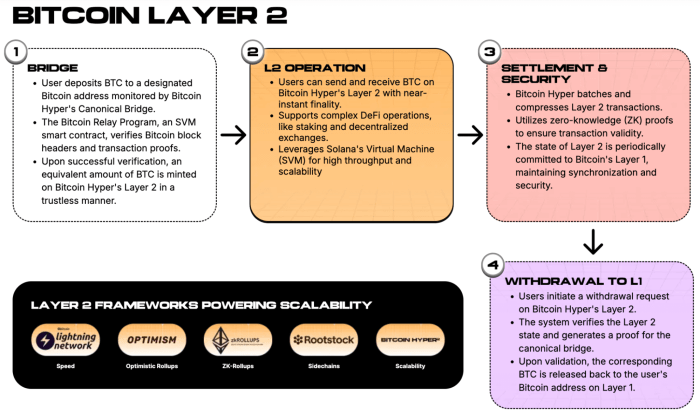
Bitcoin Hyper ($HYPER) layer 2 framework for powering scalability.

The Canonical Bridge handles trustless swaps between Bitcoin and Hyper’s L2, removing the middlemen and delays.

The presale has already raised over $4.7M, and early buyers can stake their $HYPER at a whopping 204% APY.

It’s a full-blown programmable ecosystem for Bitcoin, opening the door to everything from DeFi to meme coins, all settled back to Bitcoin. If Satoshi would be building in 2025, this is what it would look like.

Learn more with our guide to Bitcoin Hyper and our $HYPER price prediction.

If you want to get in early, join the Hyper presale now while the token sells for just $0.0124.

2. Snorter Bot ($SNORT) – Meme Bot That Actually Trades For You

Snorter Bot ($SNORT) isn’t just another Telegram token; it’s a full-blown trading suite stuffed inside your favorite group chat.

Built natively for Telegram, Snorter Bot lets you snipe tokens at launch, mirror top wallets, set dynamic stop-losses, and track your entire portfolio, all without leaving the app.

It’s lightning fast too. Thanks to a custom Solana RPC routing engine, Snorter executes trades in under a second, dodging MEV bots and front-runners in the process.

If you’ve ever missed a meme pump because your browser lagged or your wallet failed to confirm, Snorter is the antidote.

Comparison table of Snorter Bot vs numerous top Telegram trading bots.

The $SNORT token fuels it all. Hold it to unlock lower fees (just 0.85% vs 1.5% for other competing bots), premium features, staking perks (currently with 174% APY), and governance access.

This is what happens when memes meet actual infrastructure. And yes, the mascot is an aardvark with a snout for alpha.

Although it has already raised over $2.3M, you can still buy $SNORT for $0.0991 using $SOL, $ETH, $BNB, $USDT, $USDC, or even a debit card.

Our Snorter Token price prediction sees the coin hitting $0.9 after listing in Q4 this year. Learn all about $SNORT to get the facts before the official launch.

3. Lightchain AI ($LCAI) – Blockchain Infrastructure Meets AI Computation

Lightchain AI ($LCAI) is what happens when blockchain stops wasting energy and starts doing something useful.

Instead of burning electricity on pointless hash puzzles, Lightchain’s Proof-of-Intelligence (PoI) rewards nodes for completing real AI work – think model training, inference, and optimization.

At the core is the AIVM, or AI Virtual Machine: a programmable layer designed specifically for AI workloads. It’s built for privacy-first, federated learning, where data stays local but insights get shared. That means smarter models without the creepy surveillance or centralized control.

How Lightchain AI transforms blockchain and AI virtual machine.

The $LCAI token powers everything: gas, governance, rewards, and developer incentives. It’s priced at just $0.007125, with plenty of upside left in the presale.

And with features like decentralized governance, an AI memecoin launchpad, and a developer grant system, the project is clearly playing long-term.

If you’re betting on AI becoming the next crypto megatrend, Lightchain AI is where infrastructure meets narrative, before it goes mainstream.

Final Thoughts

Grok might be cracking jokes, but these presales are no punchline. $HYPER, $SNORT, and $LCAI are each carving out serious lanes – reviving Bitcoin, retooling Telegram, and rebuilding AI infra from the ground up.

The common thread? Utility. Projects with real-world use cases and early traction are dominating presale season, especially as retail chases the next wave of high-upside narratives.

Just remember: Grok is smart, but it’s still just a chatbot.

As usual, please do your own research (DYOR). Presales are high risk and volatile. Never invest more than you’re willing to lose. This is not investment advice.

Editorial Process for bitcoinist is centered on delivering thoroughly researched, accurate, and unbiased content. We uphold strict sourcing standards, and each page undergoes diligent review by our team of top technology experts and seasoned editors. This process ensures the integrity, relevance, and value of our content for our readers.

Aidan Weeks, a Master's graduate in Mechanical Engineering, has thrived as a content writer for over four years. Specializing in crypto, tech, engineering, AI, and B2B sectors, Aidan adeptly crafts web copy, blog posts, buying guides, manuals, product pages, and more, making complex concepts accessible and engaging. His transition from academia to full-time writing reflects his passion for bridging technical expertise with clear, informative content. Since joining Bitcoinist, Aidan has written extensively about DeFi, dApps, AI, and meme coins, solidifying his grasp on emerging blockchain technologies. An early adopter, he began investing in Solana in 2020, further deepening his insights into crypto markets and innovation. Today, he combines hands-on experience with a sharp editorial instinct to help readers cut through hype, spot real trends, and make sense of a fast-moving space.

Lecturas Relacionadas

Doubao y Qianwen retirarán la función de agentes inteligentes el 15 de julio

El 4 de julio, Doubao y Tongyi Qianwen anunciaron la eliminación de sus funciones de "agentes inteligentes". Doubao confirmó que la funcionalidad se desactivará el 15 de julio, redirigiendo a los usuarios hacia la app MaoXiang. Ese mismo día, Tongyi Qianwen notificó que sus agentes de interacción personalizada y aquellos creados por usuarios dejarán de funcionar el 10 de julio, con un cese total de servicios el 15 de julio, tras lo cual el acceso a configuraciones y historiales se perderá. Esta medida afecta escenarios clave de uso personalizado como juegos de rol, asistentes especializados y herramientas verticales. La fecha elegida, 15 de julio, coincide con la entrada en vigor del "Reglamento Provisional para la Gestión de Servicios de Interacción Personalizada de IA", que impone estrictas normas para prevenir adicciones, verificar la edad de usuarios menores y auditar contenidos. Previo a esto, una campaña regulatoria en Shanghai resultó en la eliminación de más de 14,000 agentes ilegales. La decisión es vista como un movimiento proactivo para mitigar riesgos de cumplimiento normativo. Ambas plataformas ofrecen un período de transición para que los usuarios guarden sus datos mediante capturas de pantalla o exportación de texto. Doubao permitirá el acceso hasta el 15 de octubre. Tras la presión regulatoria, la insostenibilidad comercial es otro factor clave. Los agentes de conversación casual consumen muchos recursos computacionales pero generan bajo valor comercial. En la actual fase de validación del valor de la IA, estos ecosistemas de contenido generado por el usuario (UGC) resultan difíciles de monetizar. Qianwen ya muestra un giro estratégico hacia el mercado empresarial (B2B), abriendo sus plataformas de Agente y Habilidad a terceros como Luckin Coffee y China Eastern Airlines. Esto indica un cambio de enfoque desde el UGC de bajo valor hacia escenarios de servicio empresarial de mayor valor.

marsbitHace 43 min(s)

Doubao y Qianwen retirarán la función de agentes inteligentes el 15 de julio

marsbitHace 43 min(s)

¿Por qué se fusionaron Codex y ChatGPT? ¿Qué depara el futuro para Codex? Los líderes clave de OpenAI responden a todo

Si preguntas qué producto de IA tuvo el crecimiento más destacado en 2026, "Codex" encabeza la lista. Desde enero, sus usuarios activos semanales crecieron más de 5 veces, alcanzando 5 millones, con una adopción entre trabajadores del conocimiento tres veces mayor que entre desarrolladores. Un catalizador clave fue el lanzamiento de la aplicación de escritorio en febrero, que redujo barreras de entrada. Andrew Ambrosino, responsable de la app de Codex, analiza esta evolución. Señala un cambio fundamental: la implementación ya no es la parte costosa; ahora lo caro es el "gusto" o la capacidad de curar y decidir entre múltiples ideas y prototipos generados fácilmente con IA. Explica por qué la IA aún lucha con el diseño: es más difícil de evaluar que el código, depende del contexto cultural y requiere comprensión de capas abstractas profundas. También destaca que el éxito de un producto de IA depende críticamente del momento de las capacidades del modelo, no solo del diseño de la interfaz. Sobre los roles en su equipo, observa que los límites entre ingenieros, diseñadores y gerentes de producto se están difuminando, pero las habilidades especializadas siguen siendo cruciales. En el desarrollo asistido por IA, la pregunta ya no es cuánto código escribe el humano, sino si la generación fue supervisada o no, y destaca la necesidad de que los modelos mejoren en simplificar código, no solo en crearlo. La fusión de Codex con ChatGPT responde a la observación de que la herramienta, inicialmente para desarrolladores, era ampliamente usada para todo tipo de trabajo intelectual. La visión futura no es un "súper app" que haga todo, sino un "home base" o base central desde la que los usuarios gestionen tareas, automatizen flujos y, crucialmente, donde Codex/ChatGPT interactúe y utilice herramientas profesionales externas (como Excel o Premiere Pro) para realizar trabajos complejos, en lugar de reemplazarlas.

marsbitHace 51 min(s)

¿Por qué se fusionaron Codex y ChatGPT? ¿Qué depara el futuro para Codex? Los líderes clave de OpenAI responden a todo

marsbitHace 51 min(s)

Trading

Spot
活动图片