Bitcoin Supply In Loss Reaches 50% As BTC Drops Below $20k

newsbtcPublicado a 2022-06-19Actualizado a 2022-06-19

Resumen

On-chain data shows the percentage of the Bitcoin supply in loss has surged to almost 50% now as the crypto's price tumbles below $20k. 49.94% Of The Total Bitcoin Supply...

On-chain data shows the percentage of the Bitcoin supply in loss has surged to almost 50% now as the crypto’s price tumbles below $20k.

49.94% Of The Total Bitcoin Supply Is Now Holding Some Loss

As pointed out by an analyst in a CryptoQuant post, the drop below $20k has now put almost 50% of the supply underwater.

The “percent supply in loss” is an indicator that measures what part of the total Bitcoin supply is currently in the red.

The metric works by checking the transfer history of each coin on the chain to see what price it was last moved at.

If the previous selling price of a coin was more than the current BTC price, then that particular coin is being held at some loss right now.

On the other hand, if the coin was last moved at a lower price than now, then the coin is in profit instead. The supply in loss naturally only counts the former type of coins.

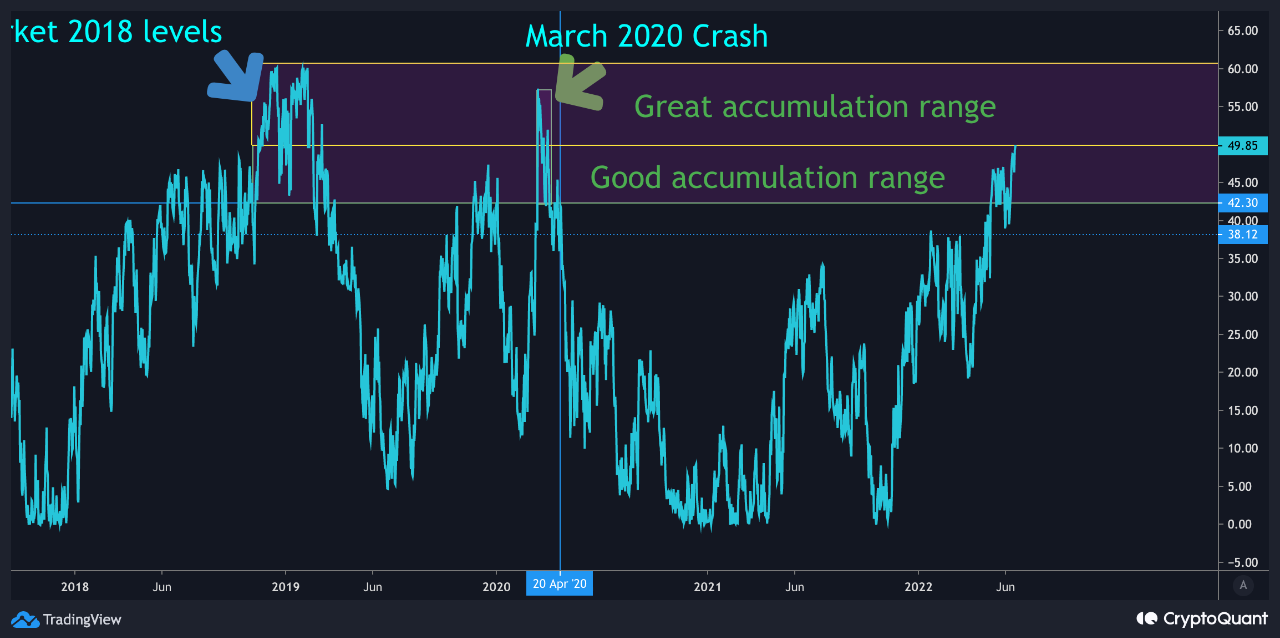
Now, here is a chart that shows the trend in the Bitcoin supply in loss over the last few years:
Bitcoin Supply In Loss

Looks like the value of the indicator has been rising up recently | Source: CryptoQuant

As you can see in the above graph, the percentage of the Bitcoin supply in loss has been going up in recent weeks as the price has been crashing down.

The latest drop in the value of the crypto, which has now taken it below the $20k level, has pushed a further amount of supply underwater.

Now, the total percentage of the supply in the red has reached very nearly 50%. Historically, periods with value of the indicator between 50% to 60% have been when the coin has observed bottoms before.

Because of this, the range may be ideal for accumulating Bitcoin. However, a real bottom may still have some ways to go as the supply in loss has only just now reached the 50% mark.

During the last two bottoms, the value of the metric was at least 55%. If a similar pattern follows now as well, then the crypto may have potential for more downtrend before the bottom is finally in.

BTC Price

At the time of writing, Bitcoin’s price floats around $19.2k, down 33% in the last seven days. Over the past month, the crypto has lost 37% in value.

The below chart shows the trend in the price of the coin over the last five days.

Bitcoin Price Chart

The value of the crypto seems to have plunged down over the past day | Source: BTCUSD on TradingView


Lecturas Relacionadas

94.000 millones de yuanes, la mayor financiación de este año para robots humanoides ha aparecido

La empresa de robótica humana Neura, con sede en Múnich, ha completado una ronda de financiación Serie C de 14.000 millones de dólares (unos 94.900 millones de RMB), lo que supone la mayor inversión del año en este sector. Tras la operación, su valoración alcanza los 70.000 millones de dólares. La relevancia de esta ronda radica en la participación de inversores industriales como Schaeffler y Bosch, lo que señala un cambio estratégico: el foco pasa de la demostración tecnológica a la implementación práctica en fábricas. Neura, fundada por el experto en robótica industrial Armin Zeher, ha priorizado desde el inicio la aplicabilidad en entornos de producción real, contando ya con BMW como cliente. Otros inversores como NVIDIA, Amazon y Qualcomm aportan perspectivas complementarias en infraestructura de computación, logística y tecnología. El sector de la robótica humana está experimentando una afluencia masiva de capital, impulsada por dos factores clave: los avances en modelos de IA de gran escala, que mejoran la percepción y la toma de decisiones de los robots, y la creciente presión por la escasez y el encarecimiento de la mano de obra en la manufactura global. Actualmente, las empresas siguen dos caminos principales: los robots humanoides de propósito general (como Figure AI), con un horizonte comercial a más largo plazo, y los enfocados en escenarios industriales verticales y específicos (como Neura), que ofrecen una ruta de comercialización más rápida y definida. El campo de batalla real para estos robots ya no es el laboratorio, sino el suelo de la fábrica. Los escenarios de manufactura industrial, por su entorno estructurado y tareas repetitivas, se consideran los primeros en permitir una adopción a escala. Los entornos de trabajo peligrosos también tienen un gran potencial. Sin embargo, los principales retos para la adopción masiva ya no son puramente técnicos, sino de ingeniería y modelo comercial. Destacan los elevados costes de adaptación a cada línea de producción específica y la necesidad de desarrollar sistemas de mantenimiento y servicio locales robustos para garantizar la operación continua. La entrada de gigantes industriales históricos como inversores y la presencia inicial de robots en fábricas como las de BMW marcan un punto de inflexión: la confianza del sector se consolida y la pregunta central evoluciona de "si es posible" a "cómo hacerlo mejor, más rápido y de forma más estable".

marsbitHace 12 hora(s)

94.000 millones de yuanes, la mayor financiación de este año para robots humanoides ha aparecido

marsbitHace 12 hora(s)

Trading

Spot
Futuros
活动图片