Crypto Mines Busted: Authorities Uncover Underground Mining Farms In Russia

bitcoinistPublicado a 2024-09-25Actualizado a 2024-09-25

Resumen

Amid the new legislation for crypto mining in Russia, local authorities have uncovered illegal crypto mining farms in the southern...

Amid the new legislation for crypto mining in Russia, local authorities have uncovered illegal crypto mining farms in the southern Republic of Dagestan. The regional prime minister urged law enforcement to increase their efforts to tackle unlawful mining operations as the region struggles with electricity consumption.

 Underground Crypto Mining Centers Busted

On Tuesday, news media outlet Reuters reported that Dagestan authorities have called out for stronger actions against illegal crypto mining centers in the region. Abdulmuslim Abdulmuslimov, Dagestan’s prime minister, asked law enforcement to pay more attention to the evolving methods miners continuously develop to operate.

At a meeting to discuss preparations for energy, housing, and utilities facilities for winter, the regional leader uncovered the new hiding methods of unregistered mining farms, revealing that several mining centers have been discovered under the ground:

 The owners of illegal cryptocurrency mining installations are coming up with new methods of ‘circumventing’ the law – they install mining farms underground.

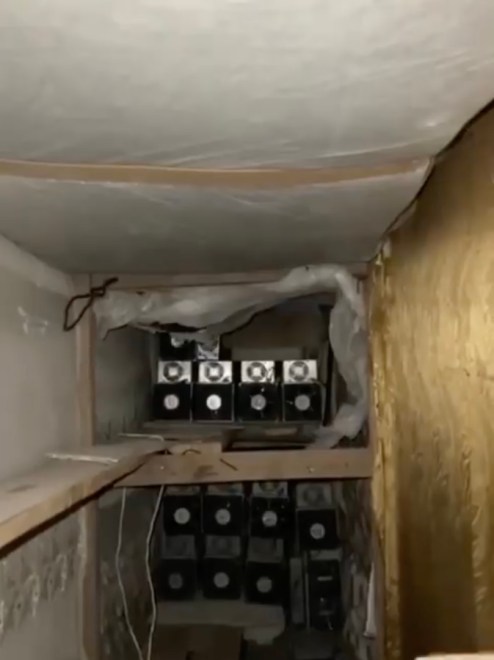
Per the report, authorities showed a video of a makeshift underground cavern in the Sergokalinsky district. It shows that the entry is a narrow square at ground level, which can be easily disguised, with a ladder leading to the cave. After descending, authorities found over 15 mining machines with dozens of fans cooling the computers.
Crypto

Inside of the underground cave used for illegal crypto mining. Source: Mario Nawfal on X

Abdulmuslimov pointed out this was one of several underground crypto mining farms in the region. Moreover, he shared that miners also use “mobile installations” for their farms, allowing them to move more easily.

Russia’s New Mining Era

As reported by Bitcoinist, crypto mining was recently legalized in Russia. In August, Russia’s President Vladimir Putin signed a new law to give the sector a legal status within the country, attempting to be at the forefront of innovation and tackle illegal operations.

The new legislation will go into effect on November 1, 2024, allowing registered companies and individuals to operate legally. Under the new law, crypto miners and mining companies will have the “exclusive rights” to mine in the country.

However, individuals who do not exceed the energy consumption limits set by the Russian government will have the right to mine without registering.  It’s worth noting that the crackdown on crypto mining farms has been an ongoing issue in the Republic of Dagestan.

A report by The Insider detailed that police raids on mining centers had become more frequent in the region since late 2023. The investigation claims that Dagestan “is most likely first in all of Russia when it comes to the number of detected electricity thefts” used for crypto mining, and authorities consider that mining operations are responsible for the electrical problems due to their high consumption.

Ultimately, Dagestan’s prime minister ordered law enforcement to toughen the measures, alleging that the illegal mining centers have caused electrical outages, including the recent fire at a substation that left several districts without power over a week ago.
Crypto, Bitcoin, BTC, BTCUSDT

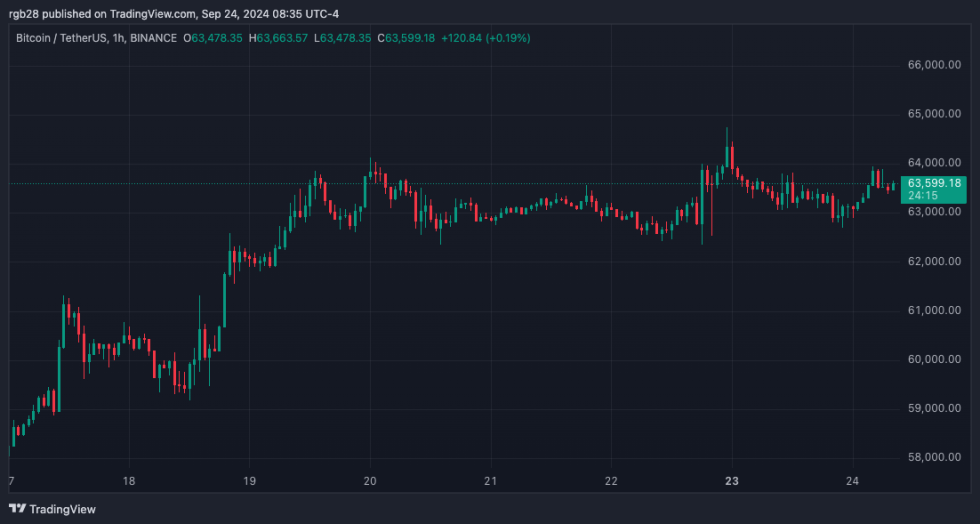
Bitcoin is trading at $63,599 in the weekly chart. Source: BTCUSDT on TradingView
Featured Image from Unsplash.com, Chart from TradingView.com
Rubmar Garcia

Rubmar Garcia

Rubmar is a crypto enthusiast who likes learning and improving constantly. She enjoys reporting on the latest news and developments in the crypto industry. Rubmar also enjoys scrapbooking, crafting, simulation games, and watching football.

Lecturas Relacionadas

Shenzhen se prepara para otra "campanada" en robótica

La oleada de cotizaciones en Bolsa de los robots de Shenzhen está en marcha. Recientemente, la empresa de robótica Yuejiang Technology, con sede en el distrito de Nanshan, vio aceptada su solicitud de IPO en el ChiNext de la Bolsa de Shenzhen, entrando en fase de consultas. Fundada en 2015 por Liu Peichao y varios compañeros de la Universidad de Shandong, Yuejiang comenzó desarrollando brazos robóticos colaborativos de sobremesa para entornos industriales. Su éxito, que incluye una cotización en la Bolsa de Hong Kong en 2024 y una capitalización que supera los 100 mil millones de HKD, ejemplifica el camino típico de Shenzhen: aprovechar la densa cadena de suministro local y el ecosistema de fabricación para iterar rápidamente desde el prototipo hasta el producto. Este impulso forma parte de un auge más amplio. Compañías de robótica de Shenzhen, conocidas como los "Ocho Diamantes" —incluyendo a UB Tech, Zhi Ping Fang, Zi Bian Liang y otras— están atrayendo una intensa atención e inversión. La escena se concentra en zonas como el "Valle de los Robots" de Nanshan, un corredor industrial de 15 km que alberga desde gigantes cotizados hasta nuevas startups. Espacios como el "X-Day" del Lago Xili en Nanshan facilitan este ecosistema, conectando proyectos emergentes con capital y recursos industriales. La tendencia muestra una evolución: desde robots para automatización industrial y eficiencia hacia aplicaciones más cercanas a la vida diaria y la economía emocional. Shenzhen se consolida así como un centro neurálgico, donde la proximidad entre I+D, fabricación y demanda del cliente acelera la innovación, preparando el terreno para la próxima generación de empresas tecnológicas líderes.

marsbitHace 36 min(s)

Shenzhen se prepara para otra "campanada" en robótica

marsbitHace 36 min(s)

Aave sube un 30% en una semana, ¿vuelve a estar en forma?

La semana pasada, el precio de AAVE subió más del 30%, pasando de unos 70 dólares a casi 100 dólares. Esta subida coincidió con rumores de una posible inversión por parte de Kraken en Aave Labs, que fueron desmentidos por el fundador Stani Kulechov. Sin embargo, Kulechov confirmó conversaciones con otros actores del mercado sobre la compra de tokens AAVE e informó sobre nuevos avances en el protocolo, como una revisión de la tokenómica (versión 3.0) que incluiría un mecanismo de recompra automática y planes para expandirse hacia activos del mundo real (RWA). A pesar del repunte del precio, el valor total bloqueado (TVL) de Aave sigue bajo tras el incidente de seguridad de Kelp DAO. No obstante, Aave mantiene su liderazgo en el sector de préstamos DeFi, con un TVL casi el doble que su competidor más cercano, Morpho, y superando en métricas clave como préstamos activos y ingresos. Morpho, respaldado por una gran ronda de financiación, se presenta como un fuerte competidor, con argumentos sobre mayor eficiencia de capital. Algunos analistas ven a ambos protocolos sirviendo a nichos diferentes: Aave atrae a grandes actores por su profundidad de liquidez, mientras que Morpho se enfoca en flexibilidad y mercados personalizados. Instituciones como Standard Chartered y Grayscale son optimistas sobre el futuro de AAVE, citando el potencial de DeFi y la tokenización de RWA. A pesar de los desafíos recientes, la posición de mercado consolidada de Aave tras años de operación sugiere una resiliencia significativa.

Foresight NewsHace 2 hora(s)

Aave sube un 30% en una semana, ¿vuelve a estar en forma?

Foresight NewsHace 2 hora(s)

Trading

Spot
活动图片