‘Anti-American’ Crypto Crackdown: Former Presidential Candidate Slams US Regulators

bitcoinistPublicado a 2024-09-06Actualizado a 2024-09-06

Resumen

Former Republican Presidential Candidate Vivek Ramaswamy recently criticized the US regulators for the crackdown on the crypto sector. The industry-friendly...

Former Republican Presidential Candidate Vivek Ramaswamy recently criticized the US regulators for the crackdown on the crypto sector. The industry-friendly politician shared his thoughts on the unclear regulation of digital assets during the Biden-Harris administration, the state of the US economy, and Republican candidate Donald Trump’s financial approach.

Ex-Presidential Candidate Slams US Regulators’ Crypto Stance

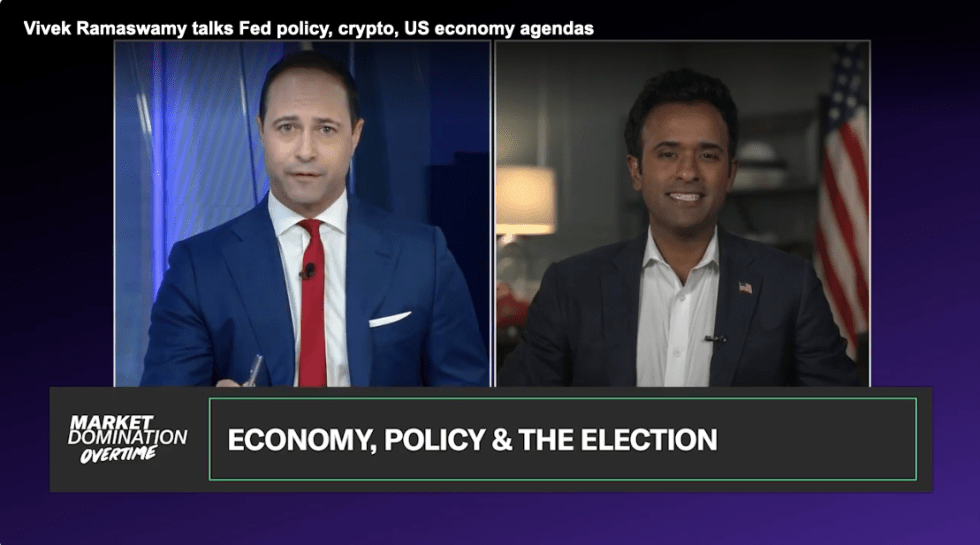
Vivek Ramaswamy recently joined Yahoo Finance’s Market Domination Overtime to discuss the US economy, digital assets’ regulations, and the upcoming elections. During the interview, the pro-crypto former presidential candidate criticized the US Federal Reserve’s “unsustainable” effort to hit unemployment and inflation “with one arrow” as it often “badly” misses both targets.
crypto

Ramaswamy discusses the US economy, crypto policies, and the election with Brian Sozzi. Source: Yahoo Finance

To the republican politician, market actors’ focus on the Fed is not based on the institution’s “special knowledge,” but rather on the curiosity to see that they “screw up next.”

Similarly, the former hedge fund manager slammed the US’s regulatory stance. Ramaswamy considers the US “regulation by enforcement” approach a problem for the country’s technological development, emphasizing the need for clear policies.

He explained that industry players discover the real rules once regulators like the Securities and Exchange Commission (SEC) enforce them based on the alleged violations. To Ramaswamy, this is “anti-American at its core” and has created an unfair and hostile environment for crypto firms.

Ramaswamy asserted that US investors and companies deserve clarity since that’s “the American way” the country was founded on:

That’s not how this country is supposed to work. Whether it’s crypto or financial services more broadly, we deserve greater clarity rather than ambiguity. Ambiguity is the friend of the tyrant.

Donald Trump, The Industry’s “Friend”?

The former presidential candidate also declared that former US president Donald J. Trump would be a “friend” to the crypto industry. He suggested that Trump’s reelection would be a positive development for the country’s regulatory stance.

I know he would be a friend. I’ve had many conversations with him about this (…) He’s been very public about it.

As reported by Bitcoinist, Ramaswamy influenced Trump’s position against a Central Bank Digital Currency (CBDC) in the US and the crypto industry earlier this year. The entrepreneur has repeatedly praised the Republican Candidate’s “open mind” and willingness to learn about the emerging sector.

To Yahoo Finance, Ramaswamy emphasized that Trump is someone “who favors financial freedom” like him, adding that the former president has evolved his view on digital assets and the necessary regulatory clarity that the crypto sector lacks:

Donald Trump is someone who favors financial freedom. I know that’s important to him, as it is important to me (…) He’s developed his views on financial freedom; on the ability to self-custody your own assets; on what some leadership changes look like in the regulatory state;(…) and the importance of regulatory clarity.

The ex-candidate referred to Trump’s speech at the Bitcoin 2024 Conference as evidence of his friendly approach to the industry. During his appearance as a keynote speaker, the former president pledged to end the Biden-Harris administration’s “anti-crypto crusade.” The Republican candidate also promised to fire SEC’s chair Gary Gensler if reelected president.

Conversely, Ramaswamy said that the Biden-Harris administration’s decisions were “undoubtedly responsible” for the struggle of the average American with inflation. He also expressed concern about Vice President Kamala Harris’ proposed capital gains tax policies.

Ultimately, the entrepreneur considers that “in the name of addressing that problem, we’re going to get even worse solutions that actually leave those everyday Americans worse off.”
crypto, BTC, BTCUSDT

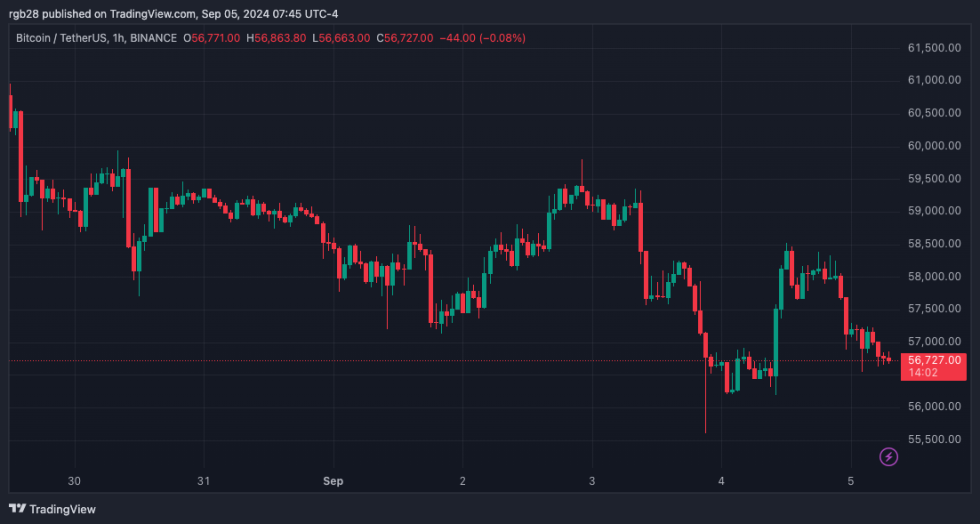
Bitcoin (BTC) is trading at $56,727 in the weekly chart. Source: BTCUSDT on TradingView
Featured Image from Unsplash.com, Chart from TradingView.com
Rubmar Garcia

Rubmar Garcia

Rubmar is a crypto enthusiast who likes learning and improving constantly. She enjoys reporting on the latest news and developments in the crypto industry. Rubmar also enjoys scrapbooking, crafting, simulation games, and watching football.

Lecturas Relacionadas

2028, llega la RSI

[Resumen en español] La cuenta atrás para la IA autorreplicante ya tiene fecha: 2028. Jack Clark, cofundador de Anthropic, estima con un 60% de probabilidad que para finales de 2028 la Inteligencia Artificial logrará la Mejora Recursiva Autónoma (RSI), creando sistemas más inteligentes que ella misma sin intervención humana directa. Esta predicción no es aislada. Demis Hassabis, CEO de Google DeepMind, confirma que todos los laboratorios líderes trabajan intensamente en RSI. Los datos muestran una aceleración alarmante: en Anthropic, más del 80% del código ya lo escribe Claude, multiplicando por 8 la productividad de los ingenieros. Pruebas como MirrorCode demuestran que IA como Claude Opus pueden reconstruir software complejo en horas, un trabajo que lleva semanas a humanos, e incluso programar de forma autónoma durante 19 días seguidos. La curva es exponencial. Si en 2024 un modelo manejaba tareas de 4 minutos, hoy supera tests de 16 horas, agotando la capacidad de medición humana. Sam Altman, de OpenAI, considera la RSI el mayor desafío de seguridad de la próxima década y sugeriría retrasar su mega-OPV de billones de dólares si la autonomía IA se acelera. El consenso entre los líderes de IA es claro: la mejora recursiva ya está en marcha, impulsando una carrera imparable. La pregunta clave ya no es *si* ocurrirá, sino cómo estará preparada la humanidad cuando, hacia 2028, la IA empiece a reescribir su propia evolución.

marsbitHace 37 min(s)

2028, llega la RSI

marsbitHace 37 min(s)

La 'Caída Abrupta' del CPO: ¿Cómo Opera Exactamente Glass Bridge? Explicación Oficial de Corning

El 26 de junio, el sector CPO en el mercado A chino cayó abruptamente, con múltiples acciones como ZTT, FiberHome y Yongding tocando límite de pérdidas. La caída fue provocada por el lanzamiento de la plataforma de interconexión óptica "Glass Bridge" de Corning, presentada en una conferencia en Seúl. La tecnología utiliza guías de onda de vidrio fabricadas a nivel de oblea para lograr el acoplamiento pasivo entre fibras ópticas y chips fotónicos, simplificando significativamente la compleja alineación activa requerida en la arquitectura CPO tradicional. Esto generó preocupación en el mercado sobre una posible reducción futura en la demanda de componentes como las unidades de matriz de fibras (FAU), afectando a fabricantes intermedios. Mientras el sector CPO caía, acciones relacionadas con sustratos de vidrio, como China Glass, Dyer Laser y Red Star Development, subían fuertemente, lo que indica un desplazamiento del capital hacia la cadena de valor de materiales avanzados. Según documentos técnicos de Corning, Glass Bridge opera basándose en tres características principales: fabricación a nivel de oblea para consistencia en producción masiva, una interfaz de contacto físico TMT estandarizada y una arquitectura de conector desmontable de alta densidad. La empresa aclara que esta tecnología complementa, no reemplaza por completo, las soluciones FAU existentes, aunque está diseñada para escenarios de densidad extremadamente alta. Analistas señalan que los sustratos de vidrio son vistos como un material clave para el empaquetado avanzado de próxima generación, especialmente ante la creciente demanda de chips de IA. El evento ha desencadenado una revaluación de la cadena de valor en la interconexión óptica para IA, con el foco de la industria desplazándose gradualmente hacia los materiales especializados aguas arriba.

marsbitHace 42 min(s)

La 'Caída Abrupta' del CPO: ¿Cómo Opera Exactamente Glass Bridge? Explicación Oficial de Corning

marsbitHace 42 min(s)

Trading

Spot
活动图片