Starknet has implemented AI agent transaction verification

cryptonews.ruPublished on 2026-08-10Last updated on 2026-08-10

Abstract

Starknet, an L2 network for scaling Ethereum, has integrated Chance, a verification system for AI agents that monitors trading operations before execution. The system first models a proposed transaction and compares its outcome with the conditions the user authorized for the agent. If the operation does not meet these conditions, Chance blocks the fund transfer. The solution operates on Starknet's programmable custodial wallets. AI agents can propose deals, but the assets remain under the wallet's control until the operation aligns with the user-defined constraints, creating an additional verification layer between the AI agent's decision and the actual transfer. Chance also utilizes Starknet's STRK20 privacy framework to protect agent authorization data and transaction calculations. The system enables selective disclosure of transaction information, allowing users to provide necessary data without revealing the entire operation context.

Starknet — an L2 network for scaling Ethereum, has integrated Chance — an AI agent verification system that controls trading operations before their execution. First, the system models the proposed transaction and compares its outcome with the conditions that the user has authorized the agent to follow. If the operation does not comply with these conditions, Chance blocks the funds transfer.

The solution operates on the basis of Starknet's programmable custodial wallets. AI agents can propose deals, but the assets remain under the wallet's control until the operation meets the user-defined constraints. This creates an additional verification layer between the AI agent's decision and the actual funds transfer.

Chance also uses the STRK20 privacy framework in Starknet to protect data on agent authorizations and transaction calculations. The system allows for selective disclosure of transaction information, enabling the user to provide necessary data without revealing the entire context of the operation.

Image: Magnific

end-content
Trending Cryptos

Related Questions

QWhat is the primary function of the Chance system integrated into Starknet?

AThe primary function of the Chance system is to verify AI agent trading transactions before execution. It simulates a proposed deal and checks if the outcome matches the user-defined permissions. If the transaction violates these conditions, Chance blocks the fund transfer.

QOn what type of Starknet infrastructure does the Chance solution operate?

AThe Chance solution operates on Starknet's programmable custodial wallets. While AI agents can propose transactions, the assets remain under the control of the wallet until the operation aligns with the user's specified constraints.

QHow does the Chance system create an additional layer of security for transactions initiated by AI agents?

AIt creates an additional verification layer between the AI agent's decision and the actual fund transfer. The system simulates and validates the transaction against user permissions before allowing the custodial wallet to execute it, preventing unauthorized actions.

QWhat privacy framework does Chance utilize to protect authorization and transaction data, and what is its benefit?

AChance utilizes the STRK20 privacy framework in Starknet. Its benefit is that it allows for selective disclosure of transaction information, enabling users to share necessary data without revealing the full context of the operation, thus protecting sensitive details.

QWhat is Starknet's primary role in the Ethereum ecosystem, as mentioned in the article?

AStarknet is an L2 (Layer 2) network designed for scaling Ethereum. It provides a solution to increase transaction throughput and reduce costs while leveraging Ethereum's security.

Related Reads

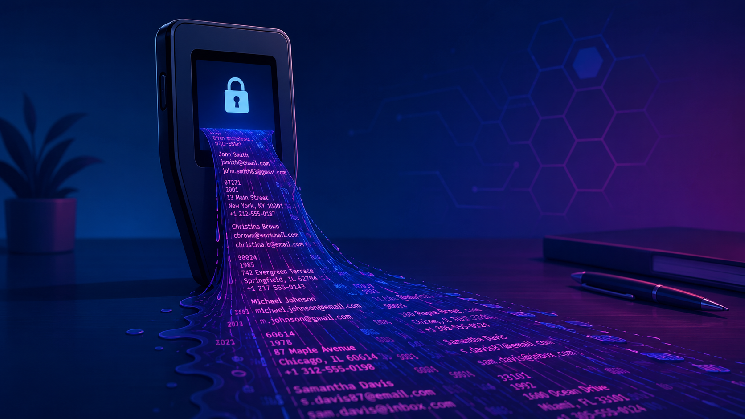
Trezor Customer Data Leak: Coins Are Safe, But Phishing Is Inevitable

Trezor, a hardware cryptocurrency wallet manufacturer, reported a data breach at its logistics partner, ShipMonk, affecting around 13,689 customers. The incident, confirmed on August 13, 2026, involved unauthorized access to ShipMonk's systems, which stored order information from May 10 to August 8, 2026. Trezor's own systems and user crypto assets were not compromised. The leaked data varies: for 11,742 customers, full names, email addresses, phone numbers, and delivery addresses were exposed. For 1,947 others, only name, city, and email were leaked. The breach was limited to customers in the US, UK, Sweden, Colombia, Brazil, Italy, and Portugal. Trezor warns affected users of an increased risk of phishing attacks, where malicious actors may use the stolen contact details to impersonate Trezor, banks, or exchanges to steal wallet recovery phrases. All impacted customers have been notified via email. In response, Trezor announced a planned "Anonymous Delivery" feature for the EU (September 2026) and the US (end of 2026), aiming to anonymize logistics data. ShipMonk has not yet issued a public statement on its official website. The analysis highlights this as a recurring industry pattern where third-party logistics vendors become weak links in the supply chain, storing data longer than necessary. Similar incidents, like the 2020 Ledger breach, led to prolonged phishing campaigns. A key question remains whether hardware wallets can ever fully decouple from external logistics risks.

cryptonews.ru2h ago

Trezor Customer Data Leak: Coins Are Safe, But Phishing Is Inevitable

cryptonews.ru2h ago

Trading

Spot

Hot Articles

Discussions

Welcome to the HTX Community. Here, you can stay informed about the latest platform developments and gain access to professional market insights. Users' opinions on the price of ETH (ETH) are presented below.

活动图片