Decentralized Futures Exchange Lighter Announces Launch of Its Own Token Burn Program!

cryptonews.ruPublished on 2026-07-28Last updated on 2026-07-28

Abstract

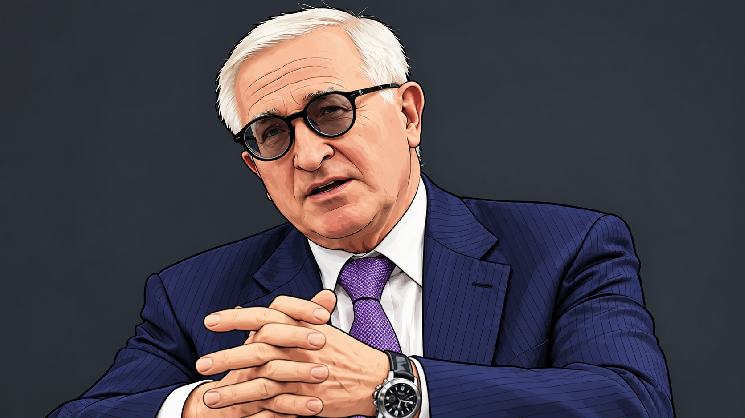
Decentralized perpetual futures exchange Lighter has announced major steps to strengthen its tokenomics. In a statement on X, founder Vladimir Novakovskiy revealed that over 16 million LIT tokens have been repurchased to date, and a regular quarterly token burn program has been officially launched. Novakovskiy stated these initiatives are part of a long-term strategy to reduce the circulating supply of LIT tokens and support ecosystem sustainability. He also emphasized that Lighter's token distribution structure has remained unchanged since its Token Generation Event (TGE), noting that most existing investors chose to hold their positions, which he cited as a key indicator of trust in the project. Furthermore, Novakovskiy commented on anticipated U.S. regulatory changes, specifically mentioning the CLARITY Act currently before Congress. He believes that once such rules for digital assets are finalized by the SEC, blockchain-based fundraising and stock tokenization could rapidly gain traction. This transformation, he stated, would create a stronger bridge between traditional finance and crypto markets, with significant growth expected for blockchain-based capital markets in the coming years.

The decentralized perpetual futures exchange Lighter ($LIT) has announced significant steps to strengthen its tokenomics. In a statement published on the social media platform X, the exchange's founder, Vladimir Novakovskiy, reported that over 16 million $LIT tokens have been bought back to date and that a regular quarterly token burn program has recently been officially launched.

Novakovskiy stated that the token buyback program is part of a long-term strategy to reduce the number of $LIT tokens in circulation. He added that regular token burns will also be conducted for the same purpose, noting that this mechanism is intended to support ecosystem sustainability.

The CEO of Lighter also emphasized that the company's token issuance structure has not changed, either before or after the Token Generation Event (TGE). Novakovskiy noted that while existing investors were given the opportunity to sell their shares or tokens, most chose to maintain their positions. He stated that this is an important indicator of trust in the project.

In his statement, Novakovskiy addressed not only Lighter's token economics but also regulatory changes in the US. He said that the anticipated changes in the US Securities and Exchange Commission (SEC) regulatory framework regarding digital assets, outlined in the CLARITY Act bill currently under consideration in Congress, are critical for the sector.

According to the founder, once the development of these rules is completed, blockchain-based fundraising methods and the tokenization of shares could quickly become widespread. Novakovskiy stated that such a transformation would create a more robust bridge between traditional finance and cryptocurrency markets, and he expects significant growth in blockchain-based capital markets in the coming years.

*This is not investment advice.

end-content

Trending Cryptos

Related Questions

QWhat major announcement did decentralized futures exchange Lighter make regarding its tokenomics?

ALighter announced the launch of its own regular quarterly token burn program and revealed that over 16 million $LIT tokens had been repurchased to date.

QAccording to founder Vladimir Novakovskiy, what is the primary goal of Lighter's token buyback and burn programs?

AThe goal is to reduce the number of $LIT tokens in circulation as part of a long-term strategy to support the sustainability of the ecosystem.

QWhat did Vladimir Novakovskiy say about Lighter's token issuance structure and investor confidence?

AHe stated that the company's token issuance structure remained unchanged before and after the Token Generation Event (TGE). He noted that while existing investors were given the opportunity to sell, most chose to hold, which is an important indicator of trust in the project.

QWhich upcoming regulatory change in the US did Novakovskiy mention as critical for the sector?

AHe mentioned the anticipated changes to the U.S. SEC's regulatory framework for digital assets outlined in the CLARITY Act, which is currently before Congress.

QWhat future development does Novakovskiy expect following the finalization of the new U.S. regulations for digital assets?

AHe expects that blockchain-based fundraising methods and stock tokenization could rapidly gain popularity, creating a stronger bridge between traditional finance and crypto markets and leading to significant growth of blockchain-based capital markets in the coming years.

Related Reads

Stripe’s 16-Year Chronicle: From 7 Lines of Code to a $100 Billion Valuation

Stripe's 16-year journey began with a simple promise: "7 lines of code to accept payments." Founded by Patrick and John Collison, the company started by hiding the complexity of bank integrations and merchant accounts behind a clean API, initially targeting developers at startups. This early focus on user experience and technical simplicity fueled rapid adoption. A key early milestone was establishing vital bank partnerships, a challenge overcome by hiring Billy Alvarado, who brought crucial institutional relationship skills. From this foundation, Stripe systematically expanded its product boundaries. It launched Connect for platform payments, Atlas for company formation, Radar for fraud prevention, and Billing for subscriptions. This transformed Stripe from a payment processor into a broader financial infrastructure suite for internet businesses. The COVID-19 pandemic accelerated growth but also led to over-hiring. A 14% layoff in 2022 marked a period of organizational correction. Subsequently, Stripe shifted its growth strategy towards strategic acquisitions to enter new domains quickly. It acquired Bridge (stablecoin infrastructure), Privy (wallet infrastructure), Metronome (usage-based billing), and agreed to buy OpenRouter (AI model routing). These moves signal Stripe's ambition to build a "programmable money system" for the emerging AI and agent-based economy, managing not just currency flows but also the measurement and pricing of computational resources like AI tokens. Internally, Stripe leverages AI agents (like "Minions") to boost engineering productivity. Despite scaling to nearly 8,000 employees and processing $1.9 trillion in payment volume annually, the company remains private. A recent employee tender offer valued it at $159 billion. The core question for Stripe's future is whether it can successfully integrate its expanding product matrix—spanning payments, crypto, and AI infrastructure—into a cohesive platform, positioning itself as the foundational economic layer for autonomous software agents.

marsbit25m ago

Stripe’s 16-Year Chronicle: From 7 Lines of Code to a $100 Billion Valuation

marsbit25m ago

Treasury Secretary's Move to Suppress Treasury Yields Ignites 'Currency Debasement Trade'! Gold Hits Three-Month High, Bitcoin Surges Over 25% in a Single Week

US Treasury Secretary Besant's efforts to lower long-term Treasury yields by announcing expanded buybacks had only a brief market impact. However, this move fueled a "currency devaluation trade," weakening the US dollar while boosting both gold (to a three-month high) and Bitcoin (up over 25% for the week). Analysts attribute this reaction to deepening market concerns over the massive US fiscal deficit and structural pressures keeping long-term rates elevated, including fierce competition for capital from global government borrowing and massive AI sector financing. Despite the Treasury's actions, fundamental forces like growth, inflation, and capital demand are seen as limiting its ability to sustainably suppress yields. Bitcoin's strong positive correlation with gold has reinforced its narrative as a hedge against devaluation. While equity markets have shown resilience, some strategists warn that Treasury yields nearing 5% increase pressure on the dollar and high-leverage assets. Figures like Ray Dalio have advised reducing bond exposure in favor of gold and some Bitcoin, citing US debt risks. Market opinions are divided on the sustainability of the devaluation trade, with some noting the lack of a near-term catalyst for its next leg higher. The underlying tension between the Treasury's desire for lower borrowing costs and the Federal Reserve's focus on inflation and reducing market intervention remains a key theme. Upcoming events like Nvidia's earnings and the Jackson Hole symposium will test whether AI profits can continue supporting stocks and if the Fed aligns more with Washington's preference for easier financial conditions.

华尔街日报2h ago

Treasury Secretary's Move to Suppress Treasury Yields Ignites 'Currency Debasement Trade'! Gold Hits Three-Month High, Bitcoin Surges Over 25% in a Single Week

华尔街日报2h ago

Alexander Shokhin: Business Needs an Interest Rate Below 10% and the Dollar at 90-95 Rubles

Alexander Shokhin, head of the Russian Union of Industrialists and Entrepreneurs (RSPP), has advocated for potentially using "non-market" tools to keep the ruble within a target exchange rate corridor. This, he argues on August 21, would help avoid excessive volatility, though he called the topic a separate discussion. Shokhin had previously raised the idea of a currency corridor in late May, noting the ruble's current exchange rate is not fully market-driven due to a limited currency segment and reduced foreign currency demand. He stated that many business community colleagues propose fixing a corridor, even through non-market methods, to ensure predictability. The business community's key targets, as outlined by Shokhin in late December 2025, are a Central Bank key rate of 12%, inflation of 4–5%, and a US dollar exchange rate of 90–95 rubles by the end of 2026. A turning point for investment, he said, would be lowering the rate to 12% with 6% inflation, though truly comfortable business conditions would require a rate below 10%. He stressed the critical importance of currency predictability for corporate investment decisions. From a data analysis perspective, the idea of a ruble corridor is not new. A similar mechanism was used in Russia from 1995 to 1998, where the central bank held the dollar within fixed boundaries through regular interventions. This regime lasted three years before ending abruptly during the 1998 default, illustrating the fragility of rigid targets under external shocks. The macro-economic link is clear: stricter corridors require more reserves to defend against currency pressure. The key unresolved technical aspect is the specific sources and volume of such interventions given the current market's limited liquidity. Whether this discussion remains theoretical or leads to concrete corridor parameters will be seen in the coming months.

cryptonews.ru4h ago

Alexander Shokhin: Business Needs an Interest Rate Below 10% and the Dollar at 90-95 Rubles

cryptonews.ru4h ago

Trading

Spot

Hot Articles

How to Buy LIT

Welcome to HTX.com! We've made purchasing Lighter (LIT) simple and convenient. Follow our step-by-step guide to embark on your crypto journey.Step 1: Create Your HTX AccountUse your email or phone number to sign up for a free account on HTX. Experience a hassle-free registration journey and unlock all features.Get My AccountStep 2: Go to Buy Crypto and Choose Your Payment MethodCredit/Debit Card: Use your Visa or Mastercard to buy Lighter (LIT) instantly.Balance: Use funds from your HTX account balance to trade seamlessly.Third Parties: We've added popular payment methods such as Google Pay and Apple Pay to enhance convenience.P2P: Trade directly with other users on HTX.Over-the-Counter (OTC): We offer tailor-made services and competitive exchange rates for traders.Step 3: Store Your Lighter (LIT)After purchasing your Lighter (LIT), store it in your HTX account. Alternatively, you can send it elsewhere via blockchain transfer or use it to trade other cryptocurrencies.Step 4: Trade Lighter (LIT)Easily trade Lighter (LIT) on HTX's spot market. Simply access your account, select your trading pair, execute your trades, and monitor in real-time. We offer a user-friendly experience for both beginners and seasoned traders.

5.1k Total ViewsPublished 2026.01.15Updated 2026.06.02

How to Buy LIT

Discussions

Welcome to the HTX Community. Here, you can stay informed about the latest platform developments and gain access to professional market insights. Users' opinions on the price of LIT (LIT) are presented below.

活动图片