The AI Stock Genius Who Made 60x Bets $7.7 Billion on Nvidia Topping Out

链捕手Published on 2026-05-20Last updated on 2026-05-20

Abstract

An AI-focused hedge fund named Situational Awareness LP, known for its 60x returns, has taken a significant bearish stance on semiconductor stocks in Q1 2026. Its 13F filing reveals a massive 148% quarterly increase in nominal exposure to $13.677 billion, with over 60% of the new exposure directed towards put options on major chip players. Key bearish bets include $2.04 billion in puts on the VanEck Semiconductor ETF (SMH) and $1.56 billion on NVIDIA, alongside positions against Broadcom, Oracle, AMD, and others. The fund simultaneously increased its long equity holdings in AI infrastructure and compute providers like CoreWeave and Bitcoin mining companies repurposing for compute. The core thesis behind this positioning is a shift in the primary constraint for AI expansion. The fund argues that while GPU supply was the critical bottleneck in previous years, the new limiting factors for large-scale AI cluster deployment are physical infrastructure: electrical grid access (with multi-year backlogs in the US), power availability, land, and data center construction timelines. The fund is not betting against AI's success but rather hedging against potential valuation corrections in semiconductor stocks whose prices may have run ahead, while directly investing in the downstream physical bottlenecks—power and data center capacity—it believes will capture value next. This move translates a previously theoretical narrative about infrastructure constraints into a concrete, high-convic...

Author: BiBi News

On May 18, 2026, Situational Awareness LP submitted its 13F filing for the first quarter of 2026.

The fund's nominal exposure to U.S. stocks and options expanded from $5.52 billion at the end of 2025 to $13.677 billion, a single-quarter growth of 148%.

However, what caught market attention was not the size, but the structure: over 60% of the new nominal exposure was entirely placed in put options on the semiconductor sector.
What Q1 Did

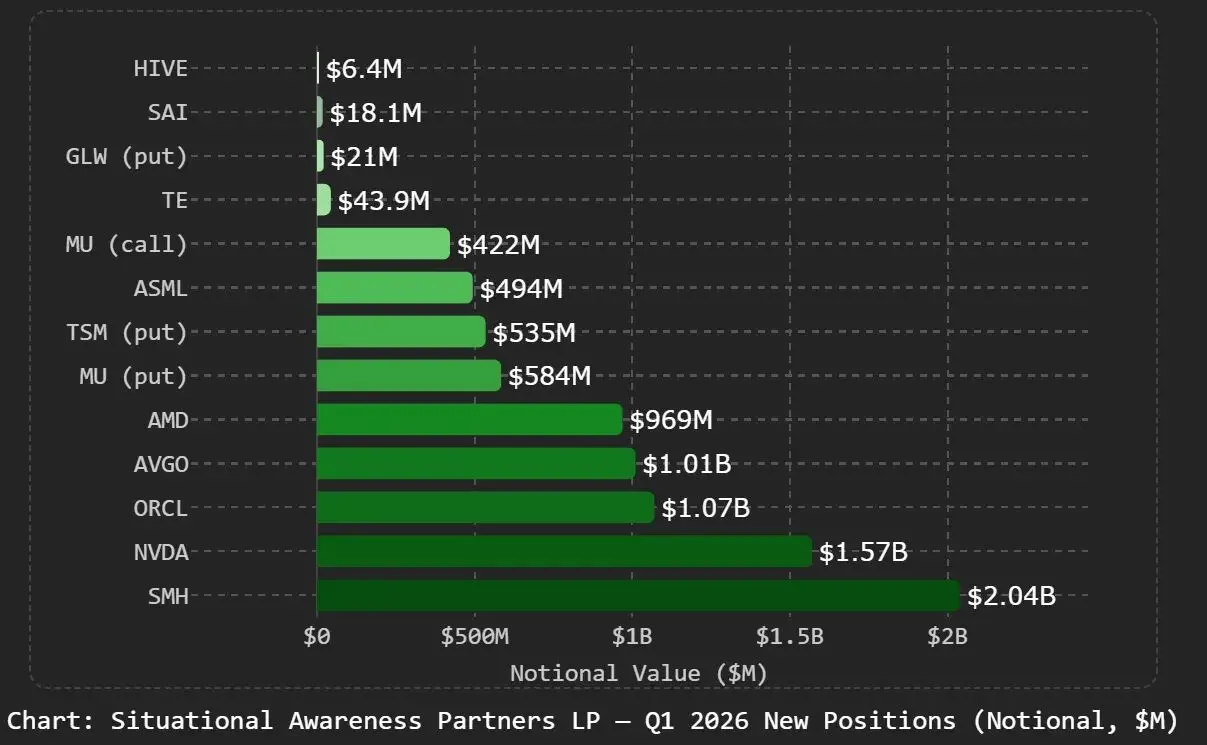
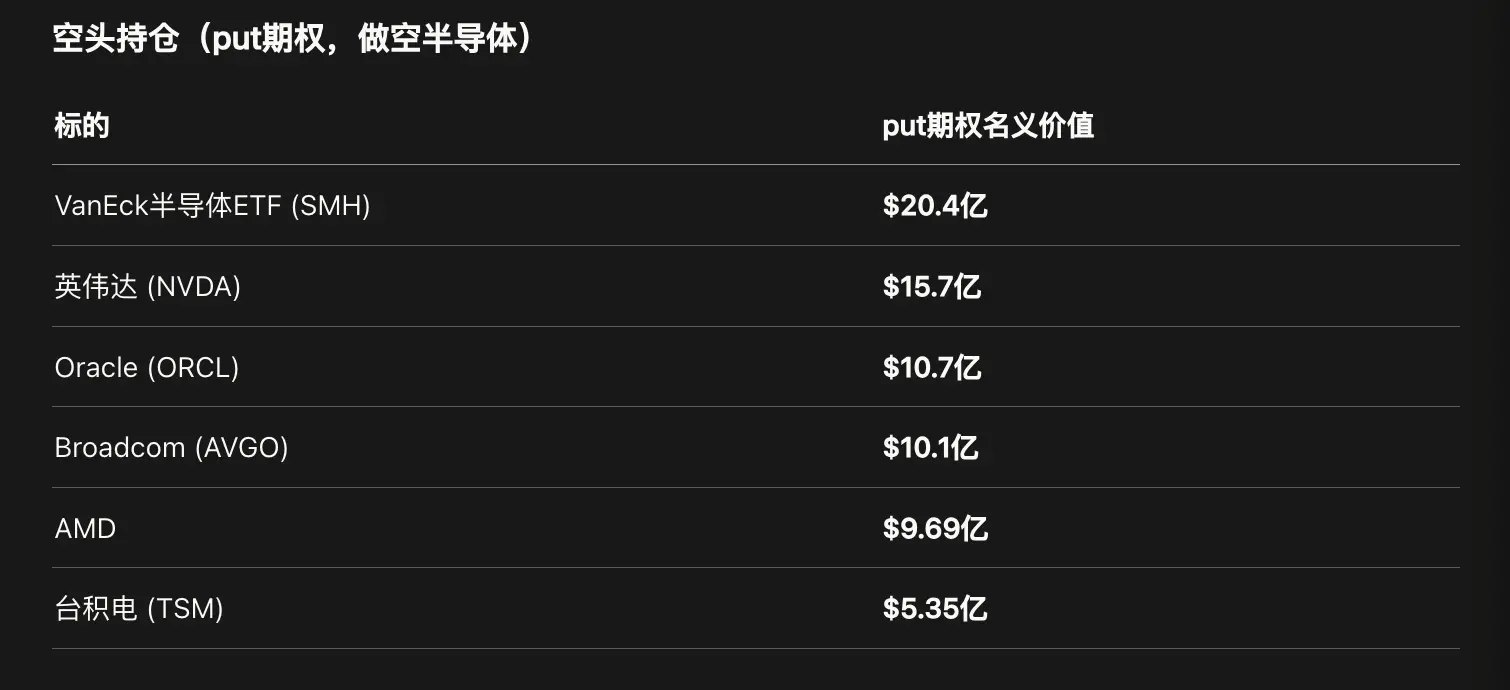
The put options cover nine targets: VanEck Semiconductor ETF (SMH), NVIDIA, Broadcom, Oracle, AMD, Micron, TSMC, ASML, Intel.

Among them, SMH has the largest put nominal size at $2.04 billion, followed by NVIDIA at $1.56 billion. Micron and TSMC hold both call and put options, indicating a bet on volatility rather than a one-sided short.

It should be noted that the 13F filing only discloses the nominal value of options, making it impossible to directly determine the net short size. These put positions could be active shorting or could be hedging protection purchased while holding long positions.

The full intent cannot be reconstructed from the filing alone.
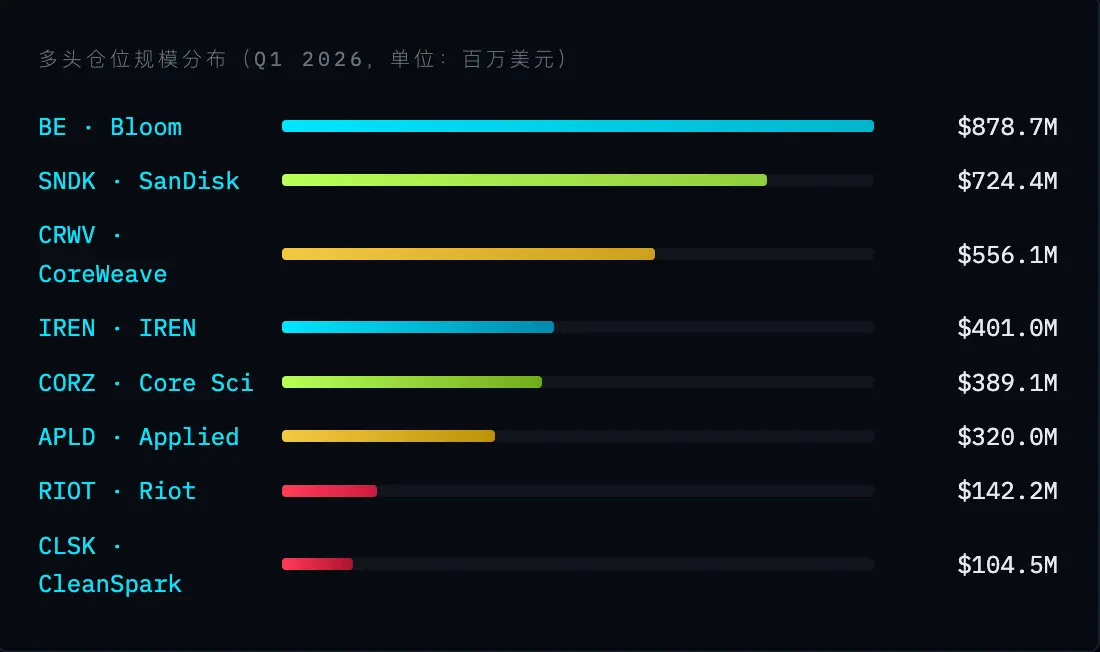
In the stock direction, the fund continued to bet on computing infrastructure.

CoreWeave holdings increased from 6.1 million shares to 7.18 million shares; IREN and Applied Digital were similarly increased;

The expansion was most pronounced in the miner direction: Bitfarms (now renamed Keel Infrastructure) increased from 6.9 million shares to 19.88 million shares, CleanSpark increased from 1.64 million shares to 12.28 million shares, Riot Platforms increased from 6.17 million shares to 11.5 million shares.

Bloom Energy reduced holdings by 3.59 million shares but still holds about $879 million in market value, while retaining 408.5 thousand call options. This is profit-taking, not a change in direction.

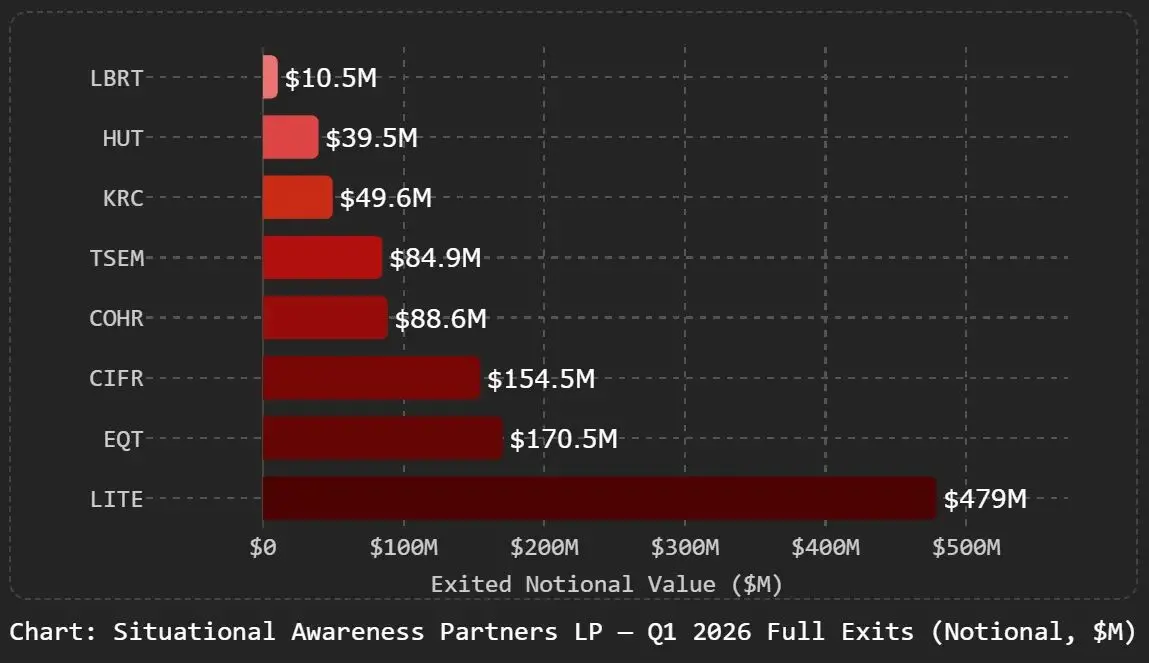
Exits were concentrated in the optical communication direction.

Lumentum and Coherent were completely liquidated; last quarter, Lumentum's position accounted for as much as 8.68%, this quarter it is zero.

Intel's operation deserves separate attention: last quarter held about 20 million call options, all liquidated this quarter, while establishing new put option positions.

Not a flat position, but a complete reversal in direction, from bullish to bearish.
Where the Bottleneck Is, the Money Is

The logic behind this 13F is a specific judgment on supply and demand: the constraints on AI expansion are shifting.

Over the past two years, the core constraint limiting AI scale was GPU shortage, so the market persistently traded NVIDIA, HBM memory, advanced manufacturing, and optical communication. During this phase, the semiconductor sector as a whole received a significant premium.

However, as computing clusters scale towards hundreds of thousands or even millions of GPUs, new constraints are emerging.

Grid connection applications in the US currently have a backlog exceeding 2TW, with an average wait time of over five years; transformer capacity is limited, and new data center construction cycles are measured in years; chips can continue to expand production, but the electricity, land, and construction capabilities needed to support their operation cannot keep pace.
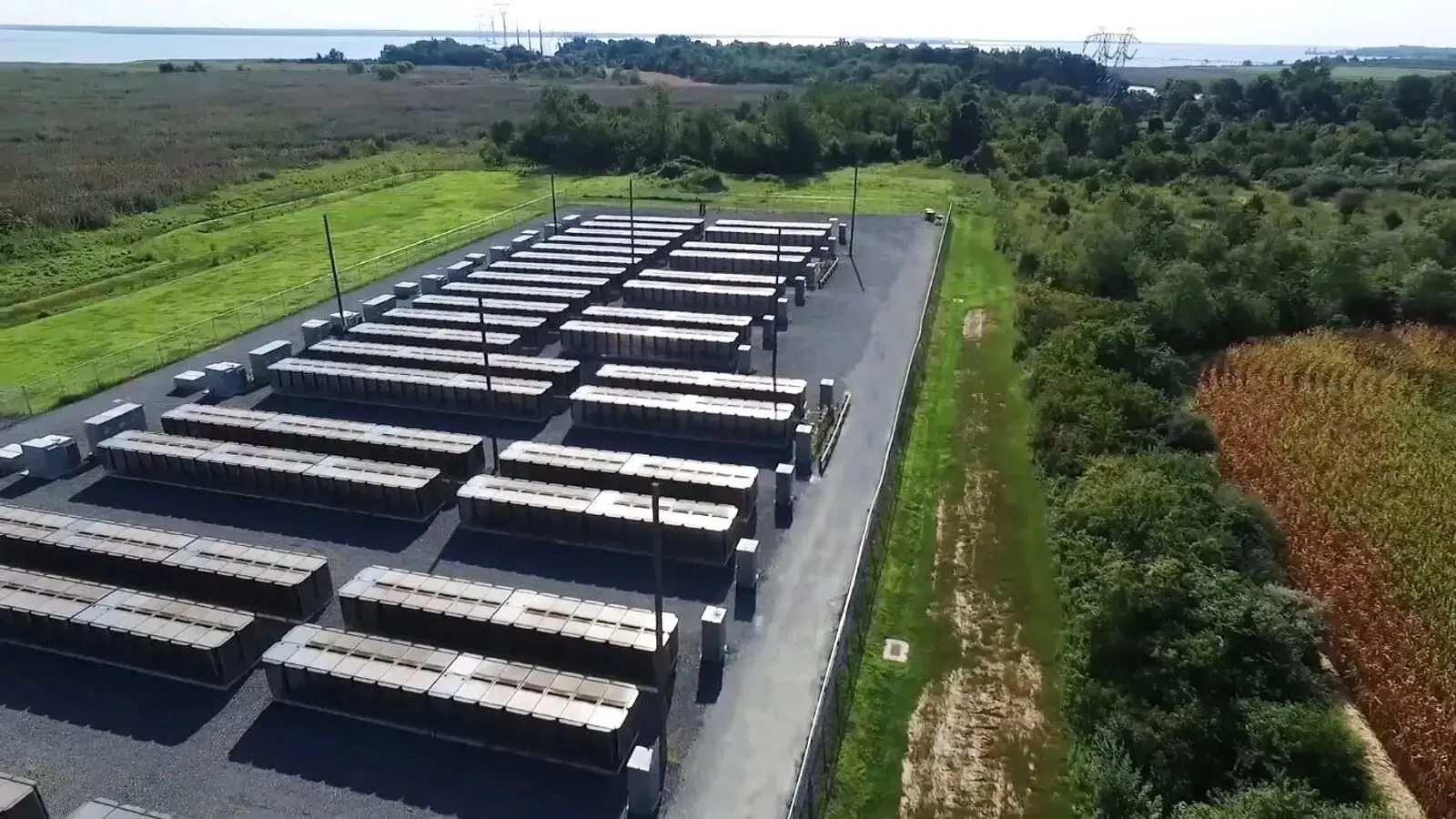
Under this judgment, the logic of shorting the semiconductor sector is not the belief that AI will fail, but that valuations in the chip sector have already priced in expectations, and value is migrating to downstream physical infrastructure.

Buying puts on SMH and NVIDIA hedges against potential valuation corrections in the chip sector; continuing to hold CoreWeave, transformed miner companies, Bloom Energy, is betting on the real bottlenecks: electricity and data center capacity.

CoreWeave's operation also confirms this thinking: call options were slashed from 10.81 million to 1.81 million, while common shares increased from 6.1 million to 7.18 million shares.

The direction hasn't changed, only the high-leverage option positions were swapped for common stock to reduce portfolio volatility impact.
From $225 Million to $13.677 Billion

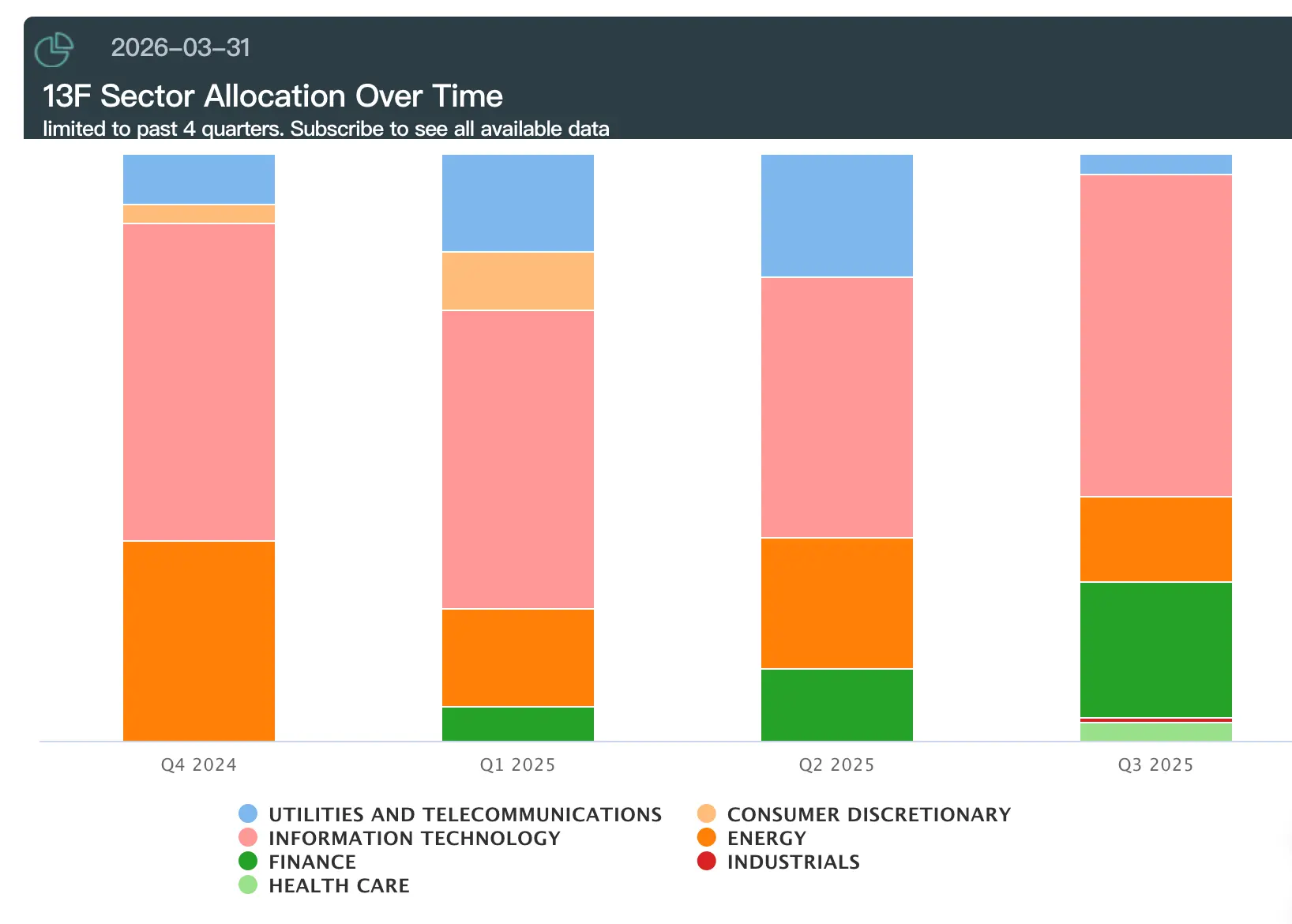
This fund was founded in September 2024; its first 13F disclosed U.S. stock exposure of about $225 million. By the end of 2025, this number had grown to $5.52 billion; as of March 31, 2026, the nominal exposure reached $13.677 billion.

In the first half of 2025, the fund achieved a return of about 47%, while the S&P 500 rose only about 6%; for the full year, it outperformed the S&P 500 by about 12.5 percentage points.
Before founding the fund, this 24-year-old German published a 165-page paper titled "Situational Awareness: The Decade Ahead," outlining judgments on the AGI timeline and that power and computing infrastructure would become the biggest bottlenecks. The fund's early capital came from Nat Friedman, Daniel Gross, and Stripe co-founders Patrick and John Collison.

The significance of this quarterly report is that it translates a judgment that was previously more narrative into concrete portfolio structure.

Chips are merely the entry point for expansion; what truly determines the speed of AI expansion is whether, in the real world, power can be connected, data centers can be built, and grid connection approvals can be obtained within five years.

If this judgment holds, the keywords for AI investment over the past two years were GPU and models; in the coming years, they may be electricity, land, and construction time.


Related Questions

QWhat was the most significant action taken by Situational Awareness LP in Q1 2026, as revealed by its 13F filing?

AOver 60% of the fund's new nominal exposure was placed in put options on the semiconductor sector, signaling a major directional bet against or a hedge for the chip industry. This includes significant put positions on VanEck Semiconductor ETF (SMH) and NVIDIA.

QWhich physical infrastructure sectors did Situational Awareness LP increase its long positions in, and why?

AThe fund increased long positions in power and data center infrastructure companies like CoreWeave, IREN, Applied Digital, and bitcoin miners transitioning to data centers (e.g., Bitfarms, CleanSpark, Riot Platforms). This was based on the belief that constraints for AI expansion are shifting from GPU shortages to bottlenecks in electricity, land, and construction capacity.

QWhat was Situational Awareness LP's specific action regarding Intel in Q1 2026, and what does it indicate?

AThe fund completely closed its approximately 20 million call option positions on Intel from the previous quarter and simultaneously established new put option positions. This indicates a complete reversal in view, from bullish to bearish on the company.

QAccording to the article's analysis, what is the core logic behind the fund's seemingly contradictory moves of holding puts on chips while being long on infrastructure?

AThe core logic is that the valuation for chip companies has already priced in high expectations, while the real constraint for future AI growth is the availability of physical infrastructure like power grids and data centers. Therefore, the fund is hedging potential chip valuation pullbacks while betting on the rising value of the downstream infrastructure bottlenecks.

QHow has Situational Awareness LP's performance been since its inception, and who were its notable early backers?

ASince its founding in September 2024, the fund's nominal exposure grew from $225 million to $13.677 billion by Q1 2026. It significantly outperformed the S&P 500, delivering ~47% returns in H1 2025 versus the index's ~6%. Early backers included prominent figures like Nat Friedman, Daniel Gross, and Stripe co-founders Patrick and John Collison.

Related Reads

Uncovering the Truth About Agent Commerce, Payments, and Infrastructure

Decoding Agent Commerce, Payments, and Infrastructure: The Reality Over the past year, I've been building infrastructure for the Agent economy, engaging with major players like Stripe, Visa, Coinbase, Google, and dozens of startups. A clear conclusion emerges: true, large-scale demand does not yet exist. Startups face structural challenges. Data points illustrate this gap. Stripe's Agent commerce platform has over 1,000 merchants but only single-digit transacting agents. Visa's Agent payment token requires 9-month KYC and a $250M revenue threshold, accessible only to giants like Amazon. On-chain analysis reveals actual daily Agent transaction volume is around $17k, half of which are test transactions. The article analyzes four potential markets: **1. Agent-to-Merchant (A2M):** Current AI shopping UX is often inferior to traditional e-commerce for visual, comparison-heavy purchases (clothing, electronics). Chat interfaces are a step back. Real merchant interest is defensive "Agent Engine Optimization," fearing future obsolescence, not current demand. Potential exists in high-frequency, low-decision purchases (e.g., food delivery) or simplifying terrible UX (complex checkouts, non-native shoppers), but these require massive consumer distribution channels dominated by giants like DoorDash and Amazon. **2. Agent-to-API (A2A):** Developers already have subscriptions and billing for core APIs (compute, data). The argument for micro-payments via crypto for sub-dollar API calls is addressed by pre-paid balances today. The deeper issue is supplier resistance; major SaaS firms rely on enterprise contracts, not fractional cent pricing. Opportunity lies in the long tail of niche services, but this is a smaller market catering to developers, a historically low-paying group. **3. Agent-to-Agent (A2A):** This remains a theoretical long-term vision with near-zero current transaction volume. It involves unique challenges: discovery, trust, negotiation, dispute resolution. When it materializes, it will require a fundamentally new settlement infrastructure for high-speed, variable-value, multi-party transactions. It's a real long-term bet, but not the current market. **4. Agent-to-Finance (A2F):** This is the only category with existing, paying demand. Integrating AI into financial workflows (trading, portfolio management) is a natural evolution and enables new capabilities like autonomous rebalancing. However, competition favors incumbents with regulatory licenses, compliance infrastructure, and existing client relationships. **The Real Issue:** Why is infrastructure still being built? Incumbents can afford long-term bets, and payment companies see every problem as a nail for their payment hammer. However, payment is just one piece. The core challenge is *coordination*—orchestrating work between Agents and humans, verifying outcomes, and settling results. Payment is part of settlement, which is part of coordination. Companies that solve the coordination problem will subsume payments, not the other way around. Startups lack the infinite runway of giants and must find today's real market, which, after a year of exploration, lies outside these four categories—in an area with real, growing, and underserved activity.

marsbit13m ago

Uncovering the Truth About Agent Commerce, Payments, and Infrastructure

marsbit13m ago

Kalshi, MTS, and a16z's Ambition

The article "Kalshi, MTS, and a16z's Ambition" explores prediction markets as a focal point of excitement in 2025 for investors, crypto enthusiasts, and media. It traces their intellectual lineage from Friedrich Hayek's ideas on dispersed knowledge and market coordination to Robin Hanson's Logarithmic Market Scoring Rule (LMSR), which incentivizes truthful information sharing. The piece argues that a16z's significant investment in prediction market platform Kalshi (valued at $220B) transcends mere financial speculation. a16z frames prediction markets as a new form of "media" that provides "presence"—a way for individuals to actively engage with and influence world events through financial stakes, countering postmodern detachment. By wagering on outcomes, users become "super observers," and the market's aggregated probabilities gain authoritative power to define event truth and importance. The article uses media company MTS ("Monitoring The Situation") as a case study of a16z's "new media" strategy: rapidly producing high-intensity, multi-format content to "take over the timeline." However, prediction markets like Kalshi are presented as the ultimate piece in this media empire. Their real-money, crowd-sourced probabilities possess a unique "reality distortion field" and perceived objectivity, potentially swaying public opinion and granting a private company unprecedented interpretive power over reality. Ultimately, Kalshi's immense valuation is attributed not just to its exchange model, but to its role as a foundational component in a16z's envisioned new media landscape, where prediction markets define narrative and truth.

链捕手13m ago

Kalshi, MTS, and a16z's Ambition

链捕手13m ago

US Stocks Suffer Worst Plunge Since 2025: Three Triggers Ignite Tech Stock Valuation Reset

The US stock market experienced its most severe sell-off since the 2025 tariff crisis on June 5th, 2025. The Nasdaq Composite plummeted 4.18%, the S&P 500 fell 2.64%, and the Dow Jones dropped 695 points. The panic stemmed from three converging factors. First, Broadcom's earnings report ignited fears of a slowdown in AI growth. While its AI chip revenue surged 143% YoY to $10.8B, its Q3 AI revenue guidance of $16B fell short of the $17.2B consensus. This triggered a massive sector-wide sell-off, with the Philadelphia Semiconductor Index crashing 10.26% and semiconductor stocks losing roughly $1.3 trillion in market value in a single day. Second, a shockingly strong May jobs report crushed hopes for Federal Reserve rate cuts. Non-farm payrolls added 172,000 jobs, doubling expectations. This robust data, combined with persistently high oil prices above $92/barrel due to the ongoing Iran war and blockade of the Strait of Hormuz, drastically increased market expectations for a potential Fed rate hike instead of a cut. Higher interest rates compress the valuations of growth-heavy tech stocks. Third, the prolonged Iran conflict continues to fuel inflationary pressures, complicating the Fed's policy decisions and undermining the "inflation is tamed" narrative. Together, these events challenged the twin pillars of the market rally: the "limitless AI growth" story and expectations for imminent monetary easing. The sell-off spread globally, impacting Asian and European markets and cryptocurrencies. The article posits this is likely a severe "valuation repricing" rather than the end of the AI story. The underlying demand for AI remains strong, but investor expectations for growth speed and the prices they are willing to pay are being recalibrated. Key upcoming factors include the June FOMC meeting, future AI company earnings, and developments in the Iran conflict.

marsbit4h ago

US Stocks Suffer Worst Plunge Since 2025: Three Triggers Ignite Tech Stock Valuation Reset

marsbit4h ago

Trading

Spot
Futures

Hot Articles

How to Buy GENIUS

Welcome to HTX.com! We've made purchasing Genius (GENIUS) simple and convenient. Follow our step-by-step guide to embark on your crypto journey.Step 1: Create Your HTX AccountUse your email or phone number to sign up for a free account on HTX. Experience a hassle-free registration journey and unlock all features.Get My AccountStep 2: Go to Buy Crypto and Choose Your Payment MethodCredit/Debit Card: Use your Visa or Mastercard to buy Genius (GENIUS) instantly.Balance: Use funds from your HTX account balance to trade seamlessly.Third Parties: We've added popular payment methods such as Google Pay and Apple Pay to enhance convenience.P2P: Trade directly with other users on HTX.Over-the-Counter (OTC): We offer tailor-made services and competitive exchange rates for traders.Step 3: Store Your Genius (GENIUS)After purchasing your Genius (GENIUS), store it in your HTX account. Alternatively, you can send it elsewhere via blockchain transfer or use it to trade other cryptocurrencies.Step 4: Trade Genius (GENIUS)Easily trade Genius (GENIUS) on HTX's spot market. Simply access your account, select your trading pair, execute your trades, and monitor in real-time. We offer a user-friendly experience for both beginners and seasoned traders.

2.8k Total ViewsPublished 2026.04.29Updated 2026.06.02

How to Buy GENIUS

Discussions

Welcome to the HTX Community. Here, you can stay informed about the latest platform developments and gain access to professional market insights. Users' opinions on the price of GENIUS (GENIUS) are presented below.

活动图片