Off to a Strong Start! USDD TVL Surpasses $1 Billion Mark, Embarking on a Powerful Journey in 2026

marsbitPublished on 2026-01-16Last updated on 2026-01-16

Abstract

USDD, a decentralized stablecoin, has achieved a significant milestone at the beginning of 2026 by surpassing $1 billion in Total Value Locked (TVL). This growth reflects strong market confidence in its decentralized mechanism, value stability, and sustainable model. Key drivers include its innovative yield-generating mechanism, multi-chain ecosystem, and robust risk management. USDD functions as an "interest-bearing USDT" through its Smart Allocator system, which dynamically allocates reserve funds to vetted on-chain projects, generating over $8.34 million in actual returns. The introduction of sUSDD allows users to easily earn passive yield with auto-compounding features. USDD has expanded across major blockchains like TRON, Ethereum, and BNB Chain. A collaboration with Binance Wallet’s Yield+ campaign attracted over 3,000 users in its first week, boosting sUSDD TVL by 867% to $295 million. The stablecoin uses an over-collateralized debt model with strict minimum collateral ratios, ensuring transparency and 1:1 redeemability with major stablecoins. In 2026, USDD aims to shift from incentive-driven growth to real-use-case adoption, focusing on deeper integration with DeFi protocols, exchanges, and payment tools. Its decentralized, non-freezable, and yield-bearing features position it as a compelling alternative to centralized stablecoins. Breaking the $1 billion TVL mark is just the beginning of its upward trajectory.

At the beginning of 2026, the decentralized stablecoin USDD has achieved a significant milestone—its Total Value Locked (TVL) has officially surpassed the $1 billion mark! This accomplishment not only marks a new phase in the development of the USDD ecosystem but also demonstrates the market's high recognition of its decentralized mechanism, stable value support, and sustainable development model.
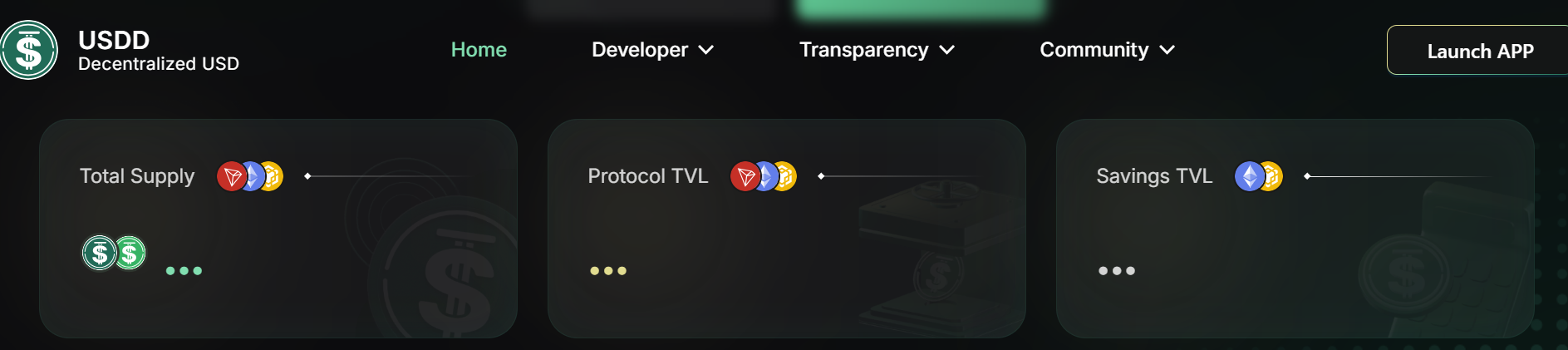
At a time when the DeFi industry is still undergoing structural differentiation and continuous reshuffling, USDD's "strong start" carries significant symbolic meaning. It not only validates USDD's long-term value logic but also injects new growth confidence into the decentralized stablecoin sector, setting a positive tone for the industry's development in 2026.

The Underlying Logic of Counter-Trend Growth: Synergistic Efforts in Mechanism, Ecosystem, and Risk Management

USDD's achievement of this milestone growth is primarily attributed to its three core advantages: an innovative sustainable yield mechanism, a robust multi-chain ecosystem layout, and an exceptional risk management system.

In terms of the yield mechanism, USDD has been positioned as an "interest-bearing version of USDT" since its inception. Through the Smart Allocator yield distribution mechanism, the protocol dynamically allocates a portion of reserve funds to rigorously vetted high-quality on-chain projects, generating diversified returns such as interest, protocol incentives, and platform rewards. According to disclosures, this mechanism has already generated over $8.34 million in actual returns.

Building on this, USDD introduced the interest-bearing token sUSDD, allowing users to seamlessly convert USDD to sUSDD with one click, enabling passive yield generation and automatic compounding without complex operations. This design significantly lowers the barrier to entry for users and extends USDD's utility from a mere value-pegging tool to a capital efficiency tool with yield attributes, enhancing its appeal within the DeFi ecosystem.

In terms of ecosystem layout, USDD has completed the critical transition from a single chain to a multi-chain framework, demonstrating strong user adoption and capital retention during its expansion. For example, during the recent Yield+ campaign launched in collaboration with Binance Wallet, the first week attracted over 3,000 participants, with sUSDD's TVL surging by over 867% in a short period, exceeding $295 million and becoming the fastest-growing stablecoin product during the same period.

Currently, USDD is natively deployed on mainstream public chains such as TRON, Ethereum, and BNB Chain, gradually building a cross-chain synergistic stablecoin infrastructure.

In terms of risk management, USDD adopts an over-collateralized debt position model with strict minimum collateral ratio requirements, ensuring that every USDD is backed by sufficient and transparent assets. Additionally, its stable peg module allows users to exchange USDD for mainstream stablecoins at a 1:1 ratio with zero slippage, providing dual guarantees for liquidity and price stability. It is this series of mechanism designs that enable USDD to maintain its price peg even during market volatility, continuously earning user trust.

Growth Driven by Real-World Adoption: Multi-Chain Ecosystem and Real-World Use Case Deployment in 2026

Looking ahead to 2026, USDD's development roadmap is becoming clearer and more long-term oriented. The team has explicitly stated its intention to gradually shift the ecosystem from "incentive-driven" to "real-use-driven." This means that USDD will increasingly focus on building application scenarios based on genuine demand, gradually reducing reliance on short-term subsidies and external incentives, and instead creating distributable value through endogenous mechanisms like the Smart Allocator.

Simultaneously, USDD plans to further deepen cooperation with on-chain exchanges and core DeFi protocols, exploring a dual-drive model that synergizes on-chain and off-chain activities. On one hand, it aims to expand the native use of USDD in scenarios such as trading, lending, and yield strategies; on the other hand, it seeks to enhance user reach and capital retention through wallets, payment systems, and aggregation tools, forming a positive feedback loop between the protocol, partners, and users.

Facing increasingly fierce competition in the stablecoin market, USDD has also established a clear differentiated positioning. Compared to centralized stablecoins, which offer ample liquidity but pose risks such as freezing and opaque yields, USDD provides a more attractive alternative through its decentralized architecture, anti-freezing characteristics, and mechanisms that reward holders. As the industry demands higher levels of transparency and sustainability, USDD's advantages are expected to become even more pronounced.

Surpassing $1 billion in TVL is just the beginning. In the opening phase of 2026, USDD has already charted a clear and steady upward trajectory, making its future growth potential and industry influence increasingly promising.


Related Questions

QWhat major milestone did USDD achieve at the beginning of 2026?

AUSDD's Total Value Locked (TVL) surpassed the $1 billion mark.

QWhat are the three core advantages that contributed to USDD's growth?

AThe three core advantages are its innovative sustainable yield mechanism, robust multi-chain ecosystem layout, and excellent risk management system.

QWhat is the purpose of the sUSDD token introduced by USDD?

AThe sUSDD token allows users to convert USDD to sUSDD to participate in passive yield generation and automatic compounding with low entry barriers.

QWhich major blockchains has USDD been natively deployed on?

AUSDD has been natively deployed on TRON, Ethereum, and BNB Chain.

QHow does USDD ensure price stability and liquidity for its users?

AUSDD uses an over-collateralized debt model with strict minimum collateral requirements and a stable peg module that allows 1:1, no-slippage swaps between USDD and major stablecoins.

Related Reads

Can SK Hynix's Stock Double Again in This Rally?

The article discusses the highly optimistic price target of approximately $3,500 for SK Hynix stock, set by Aletheia Capital. This target is significantly above the consensus range of $2,000-$2,520 from major brokerages. The core debate is whether SK Hynix deserves a fundamental re-rating beyond its traditional cyclical discount, based on the long-term impact of AI-driven demand. The $3,500 target hinges on three key assumptions holding simultaneously until at least 2027: 1) Continued shortage and high pricing for HBM (High Bandwidth Memory), a critical component for AI chips; 2) Sustained high prices for standard DRAM, as HBM production consumes capacity and constrains general supply; and 3) Strong AI server demand generating substantial, above-expectation free cash flow. SK Hynix's leading ~58% market share in HBM and its early certification with key clients like Nvidia provide a competitive advantage, allowing it to capture significant supply chain premiums. The HBM shortage is seen not just as a niche growth driver but as a catalyst that amplifies profitability across the entire memory business by tightening overall DRAM supply. However, the article cautions that this target represents an optimistic "tail scenario." Key risks include potential supply increases from competitors (Samsung, Micron) by 2027, a possible slowdown in HBM price growth, and high capital expenditures that could erode the projected free cash flow. The divergence in analyst targets reflects the market's uncertainty over whether the current AI-driven boom will temporarily elevate earnings or permanently raise the memory industry's profit baseline.

marsbit1m ago

Can SK Hynix's Stock Double Again in This Rally?

marsbit1m ago

Has the Cryptocurrency Market Hit Bottom? Here's What Institutions Think

"Has the crypto market bottomed out? Major institutions are divided on the outlook, according to a recent analysis by Matt Hougan, Chief Investment Officer of Bitwise. Three prominent research firms published in-depth reports on the topic with differing conclusions. Galaxy Digital argues Bitcoin has not yet found its bottom, pointing to only 4 out of 13 historical bottoming indicators being met. Their analysis suggests a potential bottom range of $30,000 to $54,000. NYDIG adopts a more cautious stance, noting that while metrics are close to historical bear market lows, a classic panic-selling capitulation event is missing. They acknowledge the possibility of a bottom but consider it unlikely, citing structural changes from institutional adoption. In contrast, Standard Chartered Bank asserts the bottom is already in at around $59,000. Their revised bullish view, predicting a year-end target of $100,000, hinges on anticipated reductions in ETF selling pressure linked to events like a potential SpaceX IPO. Despite the surface-level disagreement on the exact price floor, the reports share significant common ground crucial for long-term investors. All three institutions agree that a market bottom will likely form within the current year, that current prices are closer to the bottom than to previous cycle highs, and that Bitcoin is poised for another major bull cycle in the future. The core takeaway is that while the precise bottom level remains debated, the long-term value proposition for Bitcoin remains strong and may even be strengthening. Key supportive trends include rising global debt, persistent inflation, declining trust in traditional institutions, accelerating digitization, and improving market infrastructure. Therefore, for investors with a long-term horizon, the focus should shift from pinpointing the exact bottom to recognizing that the cycle's peak is likely still ahead, making current levels an attractive entry point for substantial potential upside."

Foresight News22m ago

Has the Cryptocurrency Market Hit Bottom? Here's What Institutions Think

Foresight News22m ago

2029 Finale Prediction: When Cryptocurrency Completely "Vanishes", Who Can Remain in This Financial Upheaval?

By 2029, the crypto industry will have transformed into a largely invisible but foundational layer for traditional finance. This timeline outlines the key shifts from now until then. By mid-2026, the most sought-after assets on-chain will not be traditional tokens, but synthetic perpetual contracts for private, high-growth companies (like SpaceX, OpenAI). These become primary price discovery tools, highlighting the market's craving for real-world asset value. Most altcoins enter a sustained bear market as their fundamental lack of asset-backed value is exposed. In late 2026, the "AI + Crypto" narrative largely fades as AI giants prove they don't need crypto infrastructure, except for prediction markets betting on model performance. Simultaneously, a quiet but significant wave of tokenization for institutional assets (money market funds, private credit) begins. The industry splits into a noisy speculative economy and a silent institutional one. Throughout 2027, major public blockchain foundations pivot decisively to serve institutional clients, building compliance toolkits and sales teams. However, key sectors hit growth ceilings: private perpetual contracts are legally restricted from public promotion, stable币 growth is capped by looming political uncertainty, and tokenization projects remain cautious. In 2028, following a U.S. election assumed to maintain a regulatory (not prohibitive) stance, a pivotal change occurs. After a major liquidation crisis exposes the flaws of synthetic contracts lacking a real-asset anchor, new regulations allow the *public solicitation* of private security sales (secondary market shares) to accredited investors. This creates a legitimate, direct on-ramp for retail capital into previously illiquid private equity. By 2029, the resulting bull market is driven by trading in real, innovative company shares (biotech, robotics, AI labs), not speculative tokens. "Crypto" as a distinct asset class recedes; it becomes the mundane, unseen plumbing for this new global private markets infrastructure. Tokens that survive are those capturing real cash flows from this infrastructure. Speculation persists but is marginalized. The core questions posed at the start are answered: token value is tied to legally enforceable claims on real assets, frontier tech adoption happens via private market channels, and crypto's absorption into traditional finance is marked by its becoming boring and invisible. The key validation for this entire thesis is whether, by late 2028, a legal pathway exists for ordinary accredited investors to access private assets directly.

marsbit1h ago

2029 Finale Prediction: When Cryptocurrency Completely "Vanishes", Who Can Remain in This Financial Upheaval?

marsbit1h ago

Trading

Spot
Futures

Hot Articles

HTX Learn: Learn USDD to Share 1000 USDT​

To enhance your understanding of USDD, we are rolling out various rewarding events. Join them now and bring home generous rewards through learning and trading.

27.7k Total ViewsPublished 2026.05.25Updated 2026.05.25

HTX Learn: Learn USDD to Share 1000 USDT​

Discussions

Welcome to the HTX Community. Here, you can stay informed about the latest platform developments and gain access to professional market insights. Users' opinions on the price of USDD (USDD) are presented below.

活动图片