CARV Deep Dive: Cashie 2.0 Integrates x402, Transforming Social Capital into On-Chain Value

深潮Published on 2025-12-10Last updated on 2025-12-10

Abstract

CARV's Cashie 2.0 integrates x402 protocol to bridge social interactions with on-chain value, enabling AI agents and users to transform social capital into verifiable economic incentives. Built on CARV's modular AI infrastructure—including CARV ID (ERC-7231), Model Context Protocol, and Shielded Mind privacy—Cashie 2.0 automates reward distribution based on authenticated social behaviors like retweets and engagements, eliminating bots and manual processes. Its three core pillars are: x402 Payment for gasless pledge commitments, CARV ID as a social-to-economic identity oracle, and ERC-8004 Agent for trustless execution. The system supports AI-native APIs, allowing agents to programmatically initiate campaigns, and offers ERC-20 compatibility via txHash verification. Cashie 2.0 launches with a $45,000 campaign, enabling creators to set up automated giveaways while participants earn rewards without gas fees or wallet暴露. Future upgrades include self-hosted facilitators, AI-driven campaigns, and enterprise SDKs, positioning Cashie as key infrastructure for programmable social economies and CARV’s Sovereign AI Beings vision.

In CARV's exploration of Sovereign AI Beings, we have gradually come to realize a crucial fact: future value stems not only from data and computing power, but even more so from every real individual.

The AI Being roadmap outlined by CARV depicts a future vision:

AI will no longer be just a tool, but will become an autonomous extension of the individual in the digital world—driven by verifiable identity and private context, capable of participating in real economic activities on behalf of the user.

To achieve this, AI must connect two previously separate systems:

The Social Ledger and the Economic Ledger.

Cashie is the product born from the process of bridging these two worlds.

Cashie was initially built as a "social-native on-chain payment tool," but its capabilities have far exceeded the original vision. Today, Cashie has evolved into a programmable execution layer, enabling AI agents, creators, and communities not only to participate in markets but also to proactively initiate and drive the construction and growth of markets.

Within CARV's more complete modular agent infrastructure—including CARV ID (ERC-7231), Model Context Protocol (MCP), and the new Shielded Mind privacy upgrade—Cashie 2.0 can transform social behaviors into verifiable, automatically executable, and privacy-preserving on-chain incentives.

It is no longer just a tool, but a protocol.

Core Pain Point: The Insurmountable Gap Between Social Ecosystems and On-Chain Ecosystems

Over the past decade, Web3 teams have consistently attempted to convert attention into genuine action through airdrops, quests, incentives, and other methods. However, most attempts fail to be simultaneously precise, scalable, and trustworthy:

  • Airdrops often reward bots, not genuine supporters.

  • On-chain operations cannot capture real influence, which remains off-chain.

  • Manual distribution lacks automation, complicating developer workflows and creating opportunities for Sybil attacks.

The two systems have always spoken different languages:

  • Social Ledger: Recorded through likes, reposts, follows—full of authentic human signals, yet confined within Web2 platforms.

  • Economic Ledger: Transparent and programmable blockchains, yet disconnected from real-world context.

Cashie is the bridge connecting the two.

Cashie's Position in the CARV AI Being Tech Stack

In CARV's AI Being architecture, an agent's capability depends on the context it can access and the environment in which it can execute tasks. Through the Shielded Mind mainnet upgrade, AI agents have gained private inference capabilities; relying on CARV ID (ERC-7231), they possess verifiable identities; and with Cashie, they can finally execute truly meaningful, socially-grounded actions on-chain.

This unlocks new capabilities:

  • AI Beings can monitor social sentiment in real-time and trigger community incentives programmatically.

  • Users can link their Twitter/X accounts to CARV ID to receive automatically distributed on-chain rewards.

  • Projects can build communities based on verifiable activities, rather than relying on guesswork or broad predictions.

Cashie elevates AI from a "passive responder" to a true "economic participant."

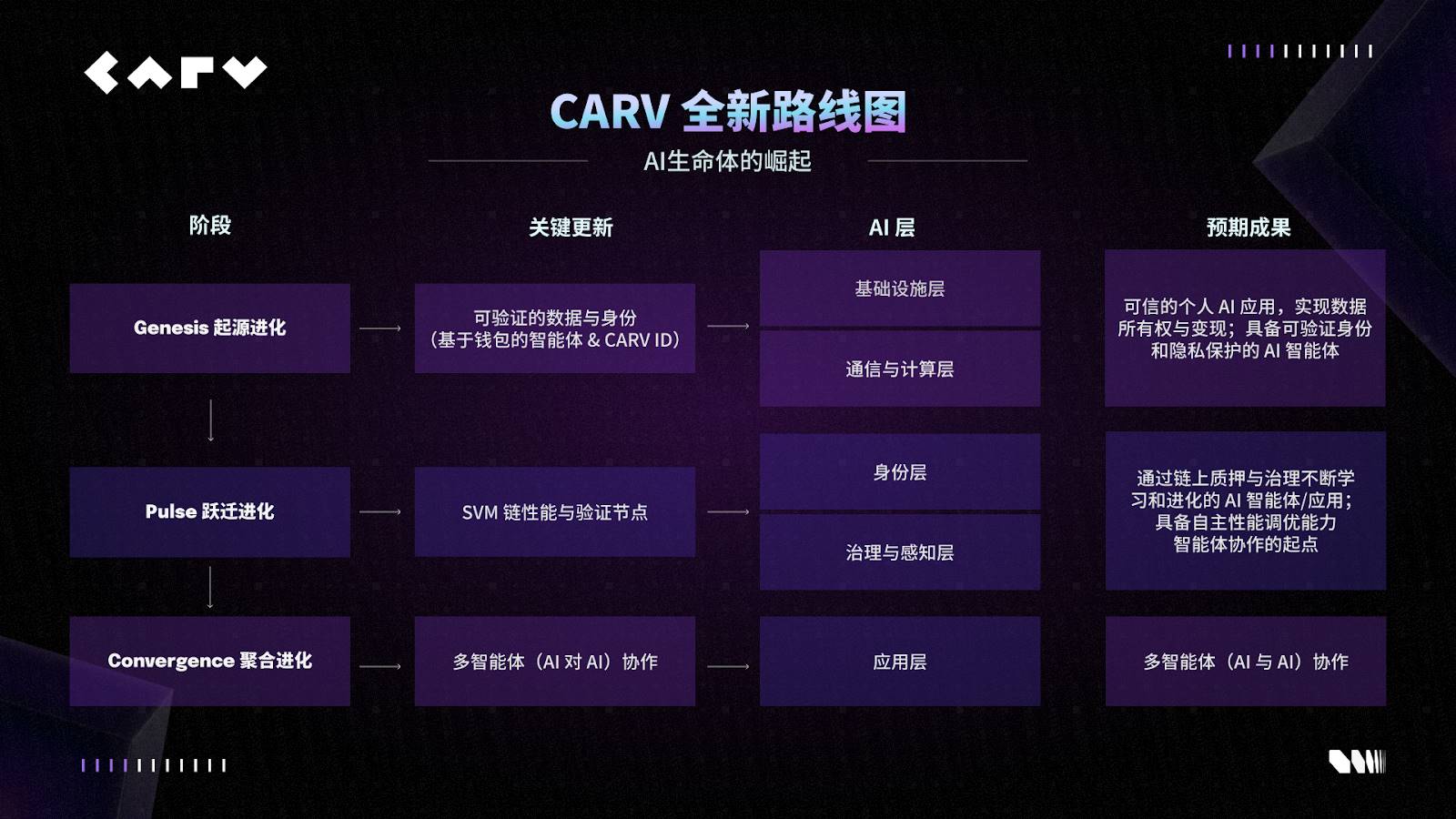
This marks a critical step forward on CARV's roadmap to creating Sovereign AI Beings, holding milestone significance especially in the Genesis Evolution phase.
How Cashie 2.0 Works: Three Core Pillars
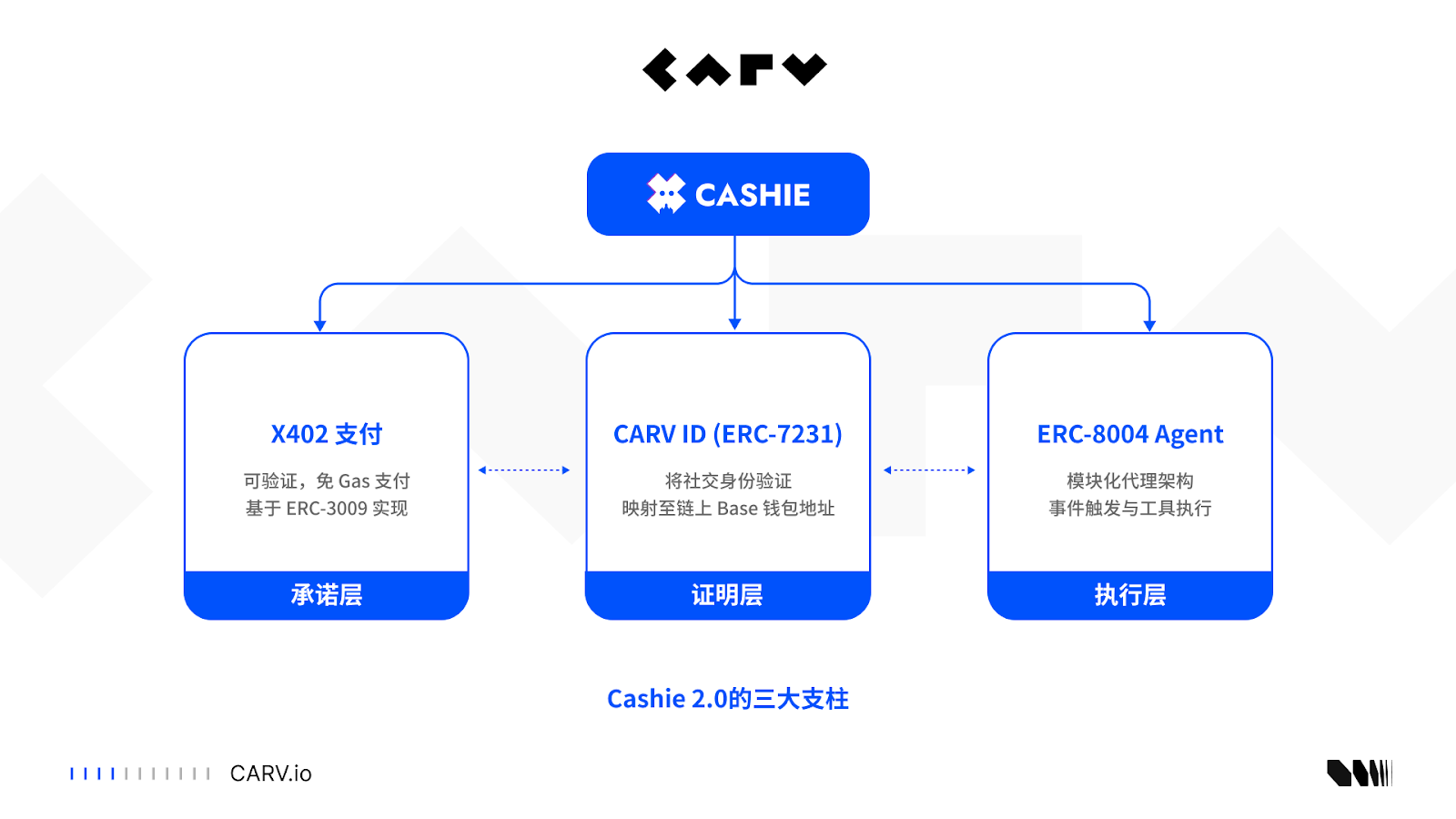
The architecture of Cashie 2.0 consists of three core pillars:

  1. x402 Payment — The Pledge Mechanism

Every Cashie activity begins with an ERC-3009 signature, where a project or KOL pledges funds for the activity. This signature serves as the "X-Payment" proof and is verified on-chain. Gasless, no manual transfers required—it ensures funds are locked and enables a fully automated distribution process later.

  1. CARV ID — The Proof

How do you reward a repost or other social interaction? Traditional wallets cannot recognize a @username on social media, making it difficult to correlate on-chain incentives with off-chain behavior.

Cashie solves this with CARV ID: it can map social behaviors (e.g., a repost by @user) to on-chain identities (e.g., 0xABC). CARV ID is the identity oracle connecting the Social Ledger and the Economic Ledger.

  1. ERC-8004 Agent — The Executor

Cashie is not a single-function bot, but an AI execution agent composed of various modular tools, including:

  • Payment Tool: Used to verify fund pledges and automatically execute fund transfers.

  • Twitter Tool: Used to monitor and analyze interaction behaviors on Twitter/X in real-time.

  • Raffle / Quest Tool: Used to automatically draw winners or check if users have completed tasks.

  • Distribution Tool: Used to automatically distribute on-chain rewards to eligible users.

All processes are completed under a trustless, fully automated mechanism, requiring no manual intervention and effectively preventing abuse like Sybil attacks.

Developer Breakthrough: Fueling the Rise of the Agents-to-Agents Autonomous Economy

To truly unleash the potential of Sovereign AI Beings and promote decentralized collaboration, the underlying infrastructure must evolve quietly, yet thoroughly. While external attention focuses more on AI agents and social activities, it is the innovation deep in the underlying layers that makes everything work.

With the release of Cashie 2.0, CARV introduces a new developer stack:

An infrastructure that is not only programmable but is agent-native.

  1. CARV x402 Facilitator: Protocol Enhancement Layer

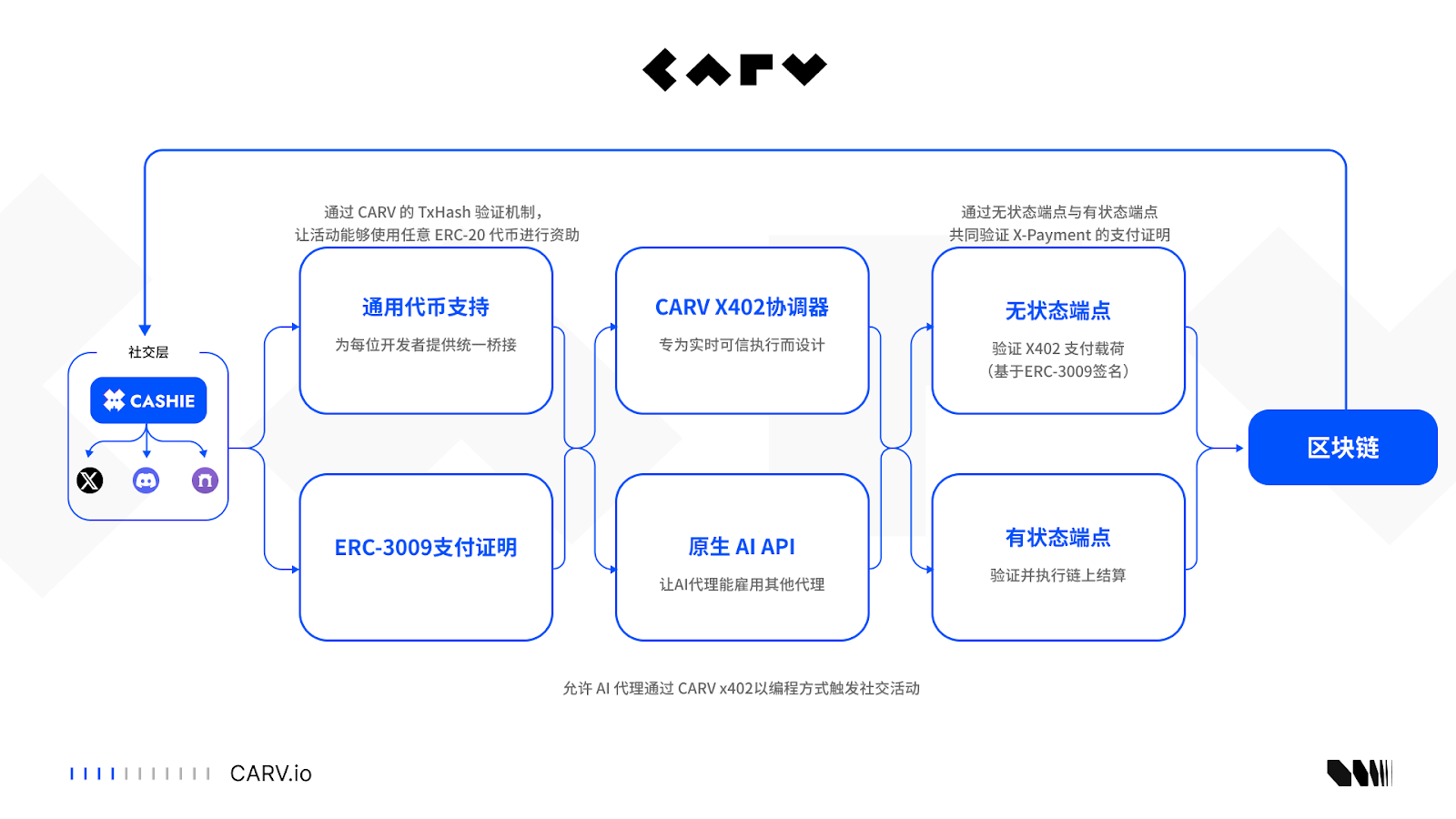
In Cashie, every operation begins with a cryptographic pledge. But the trustworthiness of the pledge depends on the system verifying it. Therefore, we built the CARV x402 Facilitator—a self-hosted, high-performance facilitator service specifically designed for social activity scenarios.

We solved a key challenge in the standard x402 (ERC-3009) process for this facilitator: payment proof state management.

Through our verify endpoint, we introduced a more robust state and nonce management layer, capable of instantly rejecting replayed signatures, intercepting repeated settlement attempts at high speed before gas is spent on transactions, providing high-throughput security protection.

We have opened the facilitator's interface, allowing any developer on Base to build their own x402-powered applications. Developers can connect to our online endpoints today:

Stateless Endpoint: For validating x402 paymentPayload (ERC-3009 signature)

https://interface.carv.io/cashie/protocol/verify

Stateful Endpoint: For verifying and executing on-chain settlement

https://interface.carv.io/cashie/protocol/settle

  1. AI-Native API: Enabling "Agent Hires Agent" via x402

True to the vision of ERC-8004 (Trustless Agents), Cashie 2.0 is not just a platform; it is a programmable tool for other AI agents to call upon.

We have opened an AI-native HTTP API that fully implements the x402 protocol. This means any other AI agent (from Virtual, Base, or any other ecosystem) can programmatically "hire Cashie" to run a campaign.

The process is as follows:

  1. An AI agent sends a request to our API

  2. Receives a 402 Payment Required challenge

  3. Resubmits the request carrying its own X-Payment proof

  4. Thereby achieving automated fund pledging and campaign initiation

The entire process is completed autonomously by the agent, forming a true agent-to-agent social business model.

  1. Universal ERC-20 Support via TxHash Verification

The Web3 world is fragmented by different token standards; not every ERC-20 supports gasless approval or signature-based authorization. But Cashie's design philosophy is universality and compatibility. We built Cashie for the entire Base ecosystem, not just for tokens supporting ERC-3009.

Cashie has a built-in independent txHash verification API, allowing any project to launch incentive campaigns with any ERC-20 token: the project simply needs to complete a regular on-chain transfer and submit the transaction's txHash as proof of funds. The system will automatically perform on-chain verification, fund confirmation, and replay protection.

This makes Cashie the most flexible and compatible social growth engine on Base, and we will gradually open universal token support capabilities to all developers.
What Does This Mean for Users and Developers?

For Users (KOLs, community members, even ordinary individuals):

  • Frictionless Incentives: Simply interact on X (e.g., repost, complete tasks) to receive crypto rewards, no need to manually submit wallet addresses.

  • Identity Sovereignty: CARV ID ensures your rewards are tied to a verified identity, not an empty wallet.

  • Native Privacy Protection: Thanks to the Shielded Mind runtime environment, your behaviors and intentions are protected.

For Developers:

  • Programmable Social Growth: You can build your own agents or use the Cashie API to launch automated campaigns, raffles, quests, etc.

  • No Need to Collect Wallet Addresses: With ERC-7231 and CARV ID, user identities are verifiable on-chain, eliminating manual collection or management of wallets.

  • Composable Infrastructure: Build upon Cashie to create x402-based content permissions, bounty boards, or AI agent-driven incentive layers.

Cashie 2.0 Campaign

To truly bring this model to users, CARV officially launches the Cashie 2.0 Campaign, with a $45,000 reward pool to encourage creators and users to jointly experience the new paradigm of on-chain social incentives. Creators (such as KOLs and projects) can set their own reward pools, campaign duration, and participation logic, and publish a campaign link via a single social media post. Funds are authorized and automatically escrowed via gasless x402 signatures, followed by the agent runtime environment monitoring social behaviors in real-time, judging eligibility, determining winners, and directly settling on-chain.

Participants only need to verify their identity once using their social account, without disclosing wallet information. The system automatically identifies eligibility and sends rewards to their linked Base wallet, enabling a truly frictionless participation experience with no manual wallet collection, spreadsheets, or gas fees.

How the Cashie 2.0 Campaign Works

For Creators (KOLs / Projects)

  1. Connect Wallet

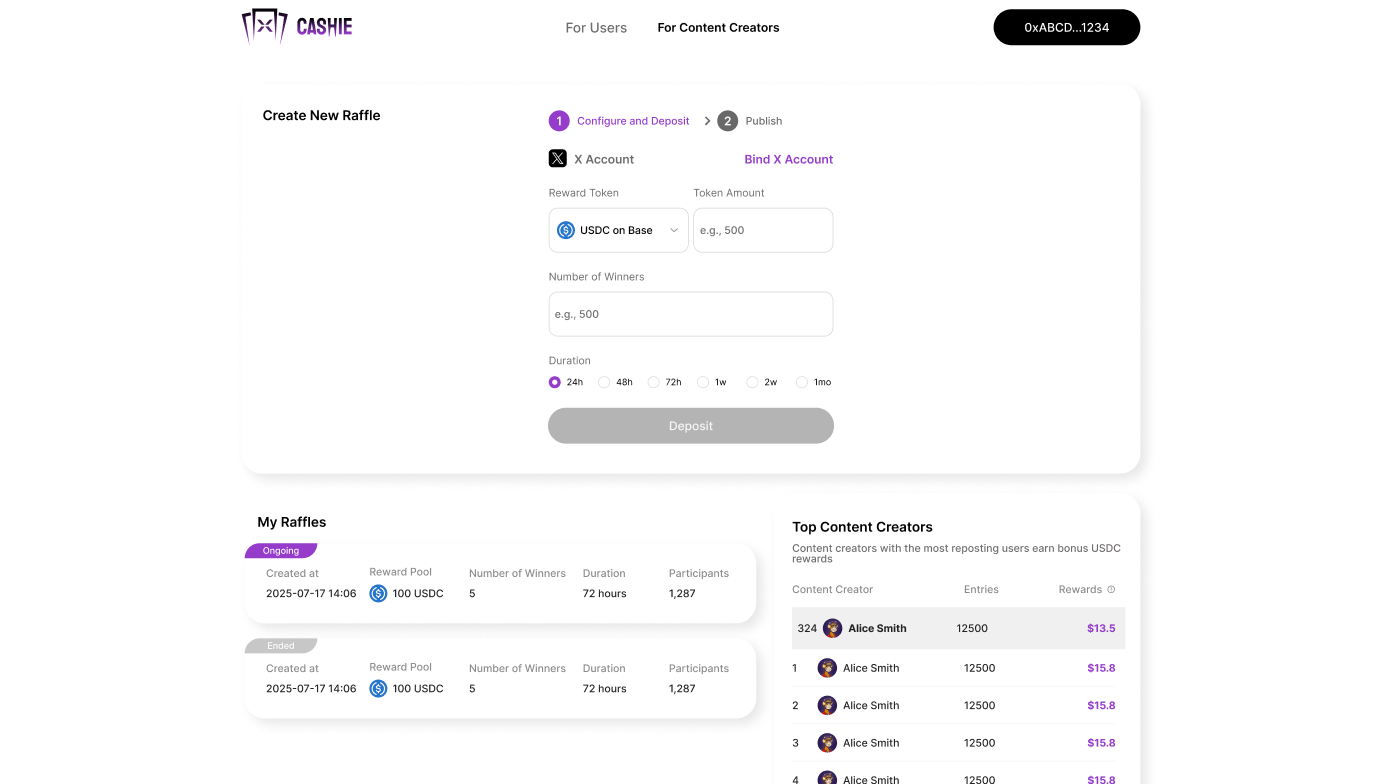
Go to the campaign page: https://carv.io/cashie, log in with your wallet, and link your X account.
  1. Create a Campaign (Giveaway)

  • Set the reward amount, number of winners, and campaign duration.

  • Authorize the prize pool via a gasless x402 signature.

  • Automatically generate a tweet template ready for posting.

  1. Post the Tweet

Post the template with one click to start accumulating interaction data.

  1. Let the System Run Automatically

Cashie will automatically verify reposts, follows, and all participation criteria; the more participants the campaign attracts, the higher the creator's ranking and the greater the potential rewards.

  1. Automatic Raffle and Reward Distribution

After the campaign ends, the AI agent will automatically conduct a fair draw and send rewards directly to the winners' Base wallets—no scripts, no spreadsheets, no manual work.

Creator Incentives (Creating Raffle Campaigns)
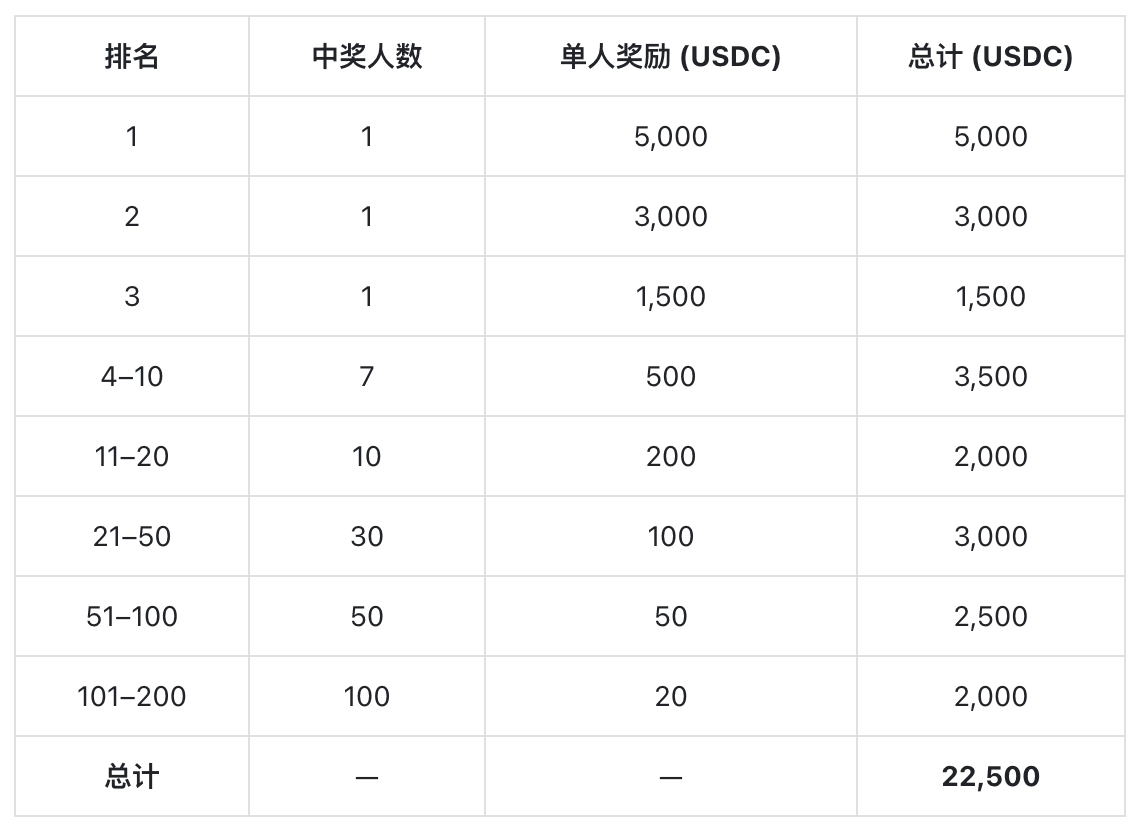
The more people your campaign attracts, the higher your ranking, and the more rewards you can receive.

How Participants Join

  • Participate directly via X (Twitter)

  • Log in with Twitter and link your wallet address

  • No gas fees required throughout the process

  • If selected, rewards are automatically sent to your Base wallet linked to your X account

Participant Incentives (Participating in Raffles)
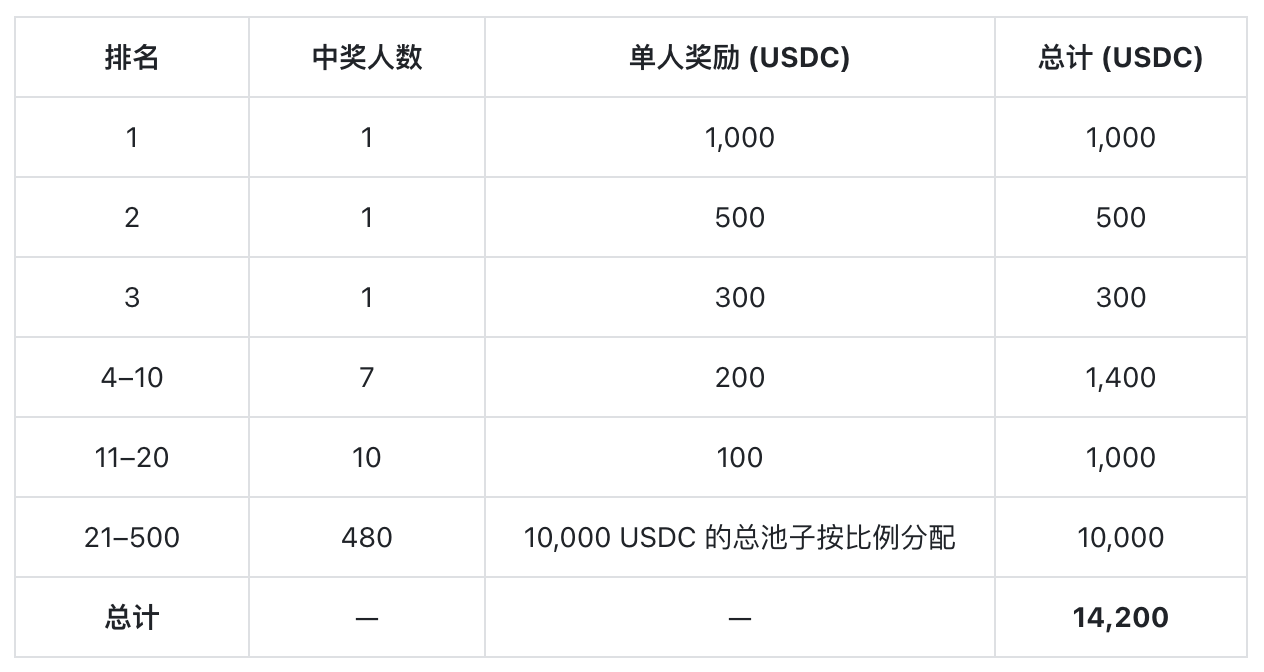
The more campaigns you participate in, the larger your share of the incentive pool.

Next Steps

Cashie is already powering campaigns for numerous creators and projects within the Base ecosystem, but this is just the beginning. Next, Cashie will undergo a series of capability upgrades:

  • Self-Hosted Facilitators: Developers can independently deploy x402 services to build flexible social payment logic on Base.

  • AI Campaign Agents: Based on real-time trends and sentiment changes, AI agents will be able to autonomously launch campaigns, achieving truly data-driven automated growth.

  • Enterprise Integrations: Launch on-chain social growth SDKs for marketing and growth teams, with deep integration solutions for channels like Telegram and Discord.

  • Cashie SDK: Help developers build their own incentive campaign layers more quickly.

These capabilities will propel Cashie to become the core entry point for CARV's Agentic AI and Base's SocialFi ecosystem, moving beyond simple token incentives to allocating resources to truly valuable, verifiable participation.

The birth of Cashie 2.0 signifies a true paradigm shift: for the first time, it precisely connects social attention with on-chain incentives, bringing social capital into a new era that is programmable and verifiable. Cashie is not just a tool, but the infrastructure for a programmable social economy:

  • AI agents execute tasks with clear intent,

  • Users receive fair rewards for genuine interaction,

  • Developers can build new models of collaboration and growth.

As the CARV AI Being roadmap advances to the next stage, Cashie will become the key engine connecting "People ↔ Machines" and "Influence ↔ Value," opening up new spaces for trustless collaboration.

The Social Ledger is finally truly on-chain.

About CARV

CARV is the birthplace of Sovereign AI Beings, where they live, learn, and evolve.

What are AI Beings? They are sovereign intelligences natively born on-chain, possessing purpose, autonomy, and the capacity for continuous growth. AI Beings have memory, identity, perception, and interaction capabilities; they don't just execute commands but can make independent decisions, adapt over time, and pursue self-defined goals.

Relying on CARV's core infrastructure—the CARV SVM chain, the D.A.T.A. framework, and the CARV ID / Agent ID system (ERC-7231)—CARV enables AI Beings to be verifiable, user-authorized, capable of continuous learning and co-creation. Based on CARV's AI-first tech stack, consumer AI applications incubated by CARV Labs have landed on mainstream app markets like Google Play and App Store, reaching billions of users and bringing agent-driven experiences with real-world incentives into global digital life.

To date, CARV has issued 8M+ CARV IDs, has 60K+ verifier nodes, and has integrated 1000+ project ecosystems, connecting AI agents, Web3 infrastructure, and real-world application scenarios to jointly promote the rise of the agent-driven economy. In this system, the $CARV token serves core functions of staking, governance, and coordination, making CARV the "operating system" for AI Beings on Web3.

  • X (Twitter): https://x.com/carv_official

  • Discord: https://discord.com/invite/carv

  • Telegram: https://t.me/carv_official_global

  • Whitepaper: https://docs.carv.io/

Trending Cryptos

Related Questions

QWhat is the core innovation of Cashie 2.0, and how does it bridge the gap between social and economic ledgers?

ACashie 2.0 is a programmable execution layer protocol that bridges the gap between the Social Ledger (recording human signals like likes and retweets on Web2 platforms) and the Economic Ledger (transparent, programmable blockchains). It achieves this by using CARV ID (ERC-7231) as an identity oracle to map social behaviors to on-chain identities, and an AI execution agent (ERC-8004) to automatically verify social interactions and distribute on-chain incentives, transforming social capital into verifiable, executable value.

QWhat are the three core pillars of the Cashie 2.0 architecture?

AThe three core pillars of Cashie 2.0 are: 1) x402 Payment (Pledge Mechanism): An ERC-3009 signature that acts as a gasless, cryptographically secured commitment of funds for an activity. 2) CARV ID (The Proof): An identity system (ERC-7231) that maps social media usernames to on-chain identities, connecting the social and economic ledgers. 3) ERC-8004 Agent (The Executor): A modular AI execution agent comprising tools for payment verification, social monitoring (e.g., Twitter), raffles/quests, and automated reward distribution.

QHow does Cashie 2.0's integration with x402 and its facilitator service enhance security and scalability for developers?

AThe CARV x402 Facilitator service enhances security and scalability by solving a key challenge in the standard x402 (ERC-3009) flow: payment proof state management. Its verify endpoint introduces a robust state and nonce management layer that can instantly reject replayed signatures, providing high-throughput protection by intercepting duplicate settlement attempts before any gas is spent on-chain. This allows for secure, high-performance social payment applications on Base.

QWhat capabilities does the 'AI-native API' provide, and how does it enable an 'agent-to-agent' economy?

AThe AI-native HTTP API fully implements the x402 protocol, allowing any AI agent (from Virtual, Base, or other ecosystems) to programmatically 'hire Cashie' to execute a campaign. The agent sends a request to the API, receives a '402 Payment Required' challenge, resubmits the request with its own X-Payment proof, and thus autonomously initiates the activity with locked funds. This creates a trustless, automated agent-to-agent social business model where AI agents can engage in economic activities on behalf of users.

QWhat is the main value proposition of the Cashie 2.0 Campaign for creators and participants?

AFor creators (KOLs/projects), the campaign allows them to set up reward pools with gasless x402 signatures, automatically generate promotional tweets, and have an AI agent handle all verification, winner selection, and on-chain reward distribution—eliminating manual processes and Sybil attacks. Participants simply engage with the tweet using their social account (linked to a CARV ID and Base wallet) and, if selected, receive rewards automatically without paying gas or revealing wallet addresses, enabling a frictionless experience for converting social engagement into on-chain value.

Related Reads

Former CFTC Chairman, Circle President Tarbert: Preaching Long-Termism While Cashing Out $30 Million Himself

Former CFTC Chairman and Circle President Heath Tarbert has consistently advocated for a long-term vision in public, urging patience from investors as Circle’s stock price has fallen significantly from its peak. However, it has been revealed that since Circle’s IPO, Tarbert has continuously sold his CRCL shares through pre-arranged trading plans, cashing out approximately $30 million, without making any public market purchases. This contrast between his public messaging and personal actions has drawn criticism. Tarbert joined Circle in July 2023 as Chief Legal Officer, leveraging his regulatory experience to help guide the company through its IPO and expansion. Despite promoting stablecoins as long-term infrastructure, he established a 10b5-1 trading plan just before Circle went public, leading to substantial stock sales over the following year. In March 2026, he initiated another plan to sell more shares. His career trajectory highlights a pattern of moving between high-level regulatory roles and influential positions in the financial sector. After resigning as CFTC Chairman in early 2021, he joined Citadel Securities as Chief Legal Officer just 27 days later, during a period of intense regulatory scrutiny for the firm. He later joined Circle, aiding its efforts to navigate regulatory challenges for its public listing. While Tarbert's expertise in policy and compliance is valuable to companies like Circle, his actions—advocating long-term confidence while personally divesting—raise questions about the alignment between his public statements and his private financial decisions, leaving investors who followed his advice to bear the market risks.

marsbit17m ago

Former CFTC Chairman, Circle President Tarbert: Preaching Long-Termism While Cashing Out $30 Million Himself

marsbit17m ago

Gate Research Institute: The 'Wall Street-ization' Wave of Crypto Financial Products – Competition or Integration?

The article titled "Gate Research Institute: Are Crypto Financial Products Sparking a 'Wall Street' Wave—Competition or Convergence?" explores the evolving relationship between the crypto ecosystem and traditional finance (TradFi). The piece begins by reflecting on Bitcoin's original 2009 vision of decentralization, disintermediation, and moving away from banks. It then contrasts this with the 2024 landscape, where key crypto assets like Bitcoin are increasingly held through Wall Street products like ETFs issued by giants like BlackRock. The article questions whether this signifies that TradFi is systematically taking over the rights to issue, price, custody, and distribute crypto financial assets. The core argument is that this is not a zero-sum takeover but rather a bidirectional convergence where each side addresses the other's weaknesses. Crypto offers 24/7 global markets, programmable settlement, and open access but lacks compliant channels, institutional-grade custody, deep fiat liquidity, and mainstream distribution. TradFi possesses these but is constrained by legacy systems, limited operating hours, and slow settlement. Two primary convergence paths are highlighted: * **Path A (CEX to TradFi):** Exemplified by Gate, which has progressed from offering tokenized stocks and CFDs to providing direct, real stock trading (US, Hong Kong, South Korea) within its platform, using USDT. * **Path B (TradFi to Crypto):** Exemplified by Robinhood, which has integrated crypto trading, acquired exchanges like Bitstamp, and is moving traditional assets like stocks onto the blockchain via tokenization and its own Layer 2. Both paths are ultimately competing to become the next-generation, unified financial account—a "super account" where users can seamlessly trade cryptocurrencies, stocks, ETFs, RWA (Real World Assets), and tokenized treasury products in one interface. The growth of RWA and tokenized treasuries (e.g., BlackRock's BUIDL) is presented as the asset-layer fusion, providing stable, yield-bearing assets on-chain and acting as a bridge between the two worlds. In conclusion, the "Wall Street-ization" of crypto is framed as a mutual transformation. Decentralized ideals persist in the protocol layer, while at the application layer, a more efficient, global, and accessible unified capital market is emerging from this convergence. The future competition lies not between crypto exchanges and stockbrokers, but between platforms vying to offer the most comprehensive asset coverage, liquidity, and user experience within a single account.

marsbit21m ago

Gate Research Institute: The 'Wall Street-ization' Wave of Crypto Financial Products – Competition or Integration?

marsbit21m ago

Claude's Major New Feature: Screen Recording + Voice, Distilling Your Skills into AI Tasks in One Click

Claude has introduced a major new feature called "Record a Skill," available for Pro, Max, and Team users. This function, found in the Claude desktop app's CoWork menu, allows users to create reusable AI skills simply by recording their screen and providing voice narration while performing a task. Claude then automatically analyzes the recording and generates a functional Skill. A hands-on test confirmed the feature works seamlessly. Users start recording via the Skills manager, perform their workflow while verbally explaining the steps and logic, and avoid including sensitive information. After recording, Claude processes the content and creates the Skill, which can be saved and later invoked with a slash command (/). This eliminates the need for manual adjustments or writing complex instruction files. The innovation goes beyond mere efficiency. Previously, creating a Skill required writing a detailed SKILL.md file in Markdown—a significant barrier for non-technical users. "Record a Skill" bypasses this by directly capturing both actions and the implicit reasoning shared in the narration. This lowers the barrier to knowledge transfer and automation, addressing a core challenge in corporate knowledge management: the difficulty of getting experts to write and maintain documentation. However, the feature also highlights a shift in the nature of work. A case study from March 2026 showed a freelancer whose five-year client relationship was effectively replaced by a hand-coded Claude Skill automating their content workflow. With the even lower barrier of screen recording, the ability to distill personal expertise into automatable skills accelerates this trend. The "moat" for work is moving from simply knowing how to do a task to mastering tasks that are difficult or impossible to automate.

marsbit25m ago

Claude's Major New Feature: Screen Recording + Voice, Distilling Your Skills into AI Tasks in One Click

marsbit25m ago

Feeding AI "Noise" Can Also Boost Scores, This Work Enables Positive Transfer with Noise

Feeding "Noise" to AI Can Improve Performance: A Method Enables Positive Transfer from Noise This work, Semi-Supervised Noise Adaptation (SSNA), introduces a Noise Adaptation Framework (NAF) that challenges traditional transfer learning. Instead of requiring a labeled source domain of real data (e.g., images, text), NAF uses randomly generated Gaussian noise as the source. For a target task with C classes, it constructs C noise clusters by sampling from Gaussian distributions. Although this synthetic noise contains no semantic meaning, NAF trains it to form a discriminative class structure in a shared representation space—clustering same-class noise and separating different classes. The key is aligning this learned structure from the noise domain to the real, sparsely labeled target domain. A small number of target labels are still essential to establish the correspondence between noise clusters and actual classes. The training objective combines: 1) supervised loss on the few labeled target samples, 2) classification loss for the noise to build its structure, and 3) a distribution alignment loss (using Negative Domain Similarity) to minimize the gap between the noise and target domains in the shared space. Experiments show significant gains in few-label settings. With just 4 labels per class, NAF with a ResNet-18 backbone improves accuracy over a standard supervised baseline (ERM) by +12.35% on CIFAR-10, +7.61% on CIFAR-100, +4.38% on DTD-47, and +2.74% on Caltech-101. It also benefits fine-grained datasets and scales to ImageNet-1K (with 100 labels/class) and text classification (AG News). NAF can be integrated into existing semi-supervised methods like FixMatch for further gains. Ablation studies confirm the transferred benefit comes from the discriminative structure of the noise, not randomness itself. Collapsing all noise into a single point causes negative transfer, while increasing separation between noise cluster centers improves performance. The amount of noise per class is less critical once a basic structure forms. In conclusion, this work demonstrates that for positive transfer, the semantic content of source data may not be necessary. What can be effectively transferred is the *organizational structure* of categories within a representation space. This offers a promising alternative for scenarios where real source data is unavailable due to privacy, copyright, or procurement constraints.

marsbit27m ago

Feeding AI "Noise" Can Also Boost Scores, This Work Enables Positive Transfer with Noise

marsbit27m ago

Trading

Spot

Hot Articles

How to Buy CARV

Welcome to HTX.com! We've made purchasing Carv (CARV) simple and convenient. Follow our step-by-step guide to embark on your crypto journey.Step 1: Create Your HTX AccountUse your email or phone number to sign up for a free account on HTX. Experience a hassle-free registration journey and unlock all features.Get My AccountStep 2: Go to Buy Crypto and Choose Your Payment MethodCredit/Debit Card: Use your Visa or Mastercard to buy Carv (CARV) instantly.Balance: Use funds from your HTX account balance to trade seamlessly.Third Parties: We've added popular payment methods such as Google Pay and Apple Pay to enhance convenience.P2P: Trade directly with other users on HTX.Over-the-Counter (OTC): We offer tailor-made services and competitive exchange rates for traders.Step 3: Store Your Carv (CARV)After purchasing your Carv (CARV), store it in your HTX account. Alternatively, you can send it elsewhere via blockchain transfer or use it to trade other cryptocurrencies.Step 4: Trade Carv (CARV)Easily trade Carv (CARV) on HTX's spot market. Simply access your account, select your trading pair, execute your trades, and monitor in real-time. We offer a user-friendly experience for both beginners and seasoned traders.

5.3k Total ViewsPublished 2024.10.10Updated 2026.06.02

How to Buy CARV

Discussions

Welcome to the HTX Community. Here, you can stay informed about the latest platform developments and gain access to professional market insights. Users' opinions on the price of CARV (CARV) are presented below.

活动图片