Tuttle Capital Launches New Crypto Blast ETFs

TheCryptoTimesPublished on 2025-11-06Last updated on 2025-11-06

Tuttle Capital Management has expanded its crossover investment options after filing for its “Crypto Blast” single-stock ETFs with the U.S. Securities and Exchange Commission (SEC) on November 5, 2025. The filing listed six ETFs tied to familiar names, including MicroStrategy, Nvidia, Coinbase, Tesla, Palantir, and Robinhood. 

According to the filing, each fund combines regular company stocks with some exposure to crypto-related ETFs. Tuttle plans to list the funds on the Cboe BZX Exchange, but they are not approved yet. So, nothing is available for trading until regulators review the filings. Tuttle describes the funds as aiming to provide a steady income along with some exposure to crypto markets, especially during changing market conditions.

A ‘Strategic’ structure

The flagship MSTR Crypto Blast ETF mainly invests in MicroStrategy’s stock. Its goal is to earn income and achieve potential growth. The fund uses a put spread strategy on MicroStrategy shares and puts any leftover cash into cryptocurrency ETFs that hold Bitcoin, Ether, and Solana. Bloomberg ETF analyst Eric Balchunas described the setup, saying the fund “implement(s) a put spread strategy on the stock… but then also invest(s) the cash… in crypto ETFs… for the ‘blast.’”

The filing states that the fund will invest at least 80% of its net assets in MSTR-related options and selected crypto ETFs. The expense ratio stands at 0.99%. There are no additional distribution fees. The fund does not attempt to track the exact performance of MicroStrategy. It seeks weekly distribution payouts. However, the filing noted market risks, liquidity risks, and potential underperformance during unstable pricing conditions.

Broader market context

This development arrives as ETF flows around major crypto assets show unusual behavior. Bitcoin and Ethereum spot ETFs recently experienced several days of notable outflows. Analyst Daan Crypto Trades explained that outflows can align with local bottoms if price holds firm. He highlighted that flows should be compared with price action to understand market sentiment. Hence, investors track both movement and response rather than numbers alone.

Meanwhile, Bloomberg’s Eric Balchunas defended a bullish long-term outlook on crypto shared by analyst Tom Lee. He noted that Lee’s optimism rewarded patient holders. “If someone bets big on a team to win and they win by a smaller margin than expected, it is still a victory,” he said. His comment underscored the importance of strategy over exact price targets.

This ETF proposal reflects how traditional finance and crypto markets continue to intersect. It introduces a structure that links stock-based strategies with crypto asset exposure. The approach may influence how investors evaluate risk, allocation, and market behavior across both areas.

Also Read: Franklin Templeton Nears Launch of Spot XRP ETF


Mobile Only ImageMobile Only Image

Trending Cryptos

Related Reads

BONK Crypto Treasury Company Has Only $2.14 Million Cash Left, 70% of Revenue Comes from Founder's Own Platform

BONK Inc. (BNKK), the NASDAQ-listed company associated with the Solana meme coin BONK, reported stark financials for the first half of the year. While revenue skyrocketed 6,218% year-over-year to $5.5 million, the company posted a net loss of $7.88 million and its cash reserves plummeted to just $214,000. Its auditors issued a "going concern" warning, citing cumulative losses of $191.4 million, negative operating cash flow, and critically low liquidity. A critical detail is that $3.92 million, or 71%, of its revenue came from an "affiliate revenue share" with LetsBonk.fun, a meme coin launchpad. This platform is linked to founder Mitchell Rudy, whose entity, Lucky Dog Holdings, beneficially owns approximately 40.2% of common stock and all C Series preferred shares. These preferred shares grant the holder the right to elect half of the company's board. The company's financial structure is further intertwined with Rudy; it sold $50 million worth of stock to his entities, accepting payment in BONK tokens. Fluctuations in the value of these and other held digital assets led to an $8.17 million unrealized loss, the primary driver of the net loss. With operating cash outflows of $4.17 million for the half-year, the remaining cash covers roughly nine days of operations at the current burn rate, highlighting severe financial strain despite top-line growth.

marsbit12m ago

BONK Crypto Treasury Company Has Only $2.14 Million Cash Left, 70% of Revenue Comes from Founder's Own Platform

marsbit12m ago

CryptoQuant Noted a Signal of a Bitcoin Reversal

CryptoQuant has highlighted a potential reversal signal for Bitcoin, suggesting the bearish phase might be nearing its end as on-chain metrics show initial signs of spot demand recovery. Their analysis indicates that the 30-day spot demand metric has recovered from -206,000 BTC in late July to approximately -5,000, close to turning positive for the first time since February 2026. Historically, such a reversal has been followed by a median 60-day price gain of 18.1%, with a win rate of 78% (increasing to 87% when valuations are depressed). However, they caution that this is a favorable sign, not a guarantee. Analysts from Bitfinex Alpha note that two of three conditions for a sustainable Bitcoin recovery are already met: improved Federal Reserve rate expectations and relatively accommodative financial conditions, thanks to easing inflation and reduced odds of a near-term rate hike. The missing third catalyst is a capital rotation from traditional markets (like stocks and AI infrastructure) into cryptocurrencies. If this occurs, Bitcoin could reclaim $70,000. Conversely, continued negative flows might see support tested around $57,000. Current headwinds include significant weekly outflows from US spot Bitcoin ETFs (roughly $385 million) and reduced stablecoin supply. Wintermute offers a more cautious outlook, pointing to the same large ETF outflows and ongoing miner selling pressure. They note that Bitcoin has failed to rally despite the improved Fed outlook, which is typically bullish for risk assets. As an example, they cite miner Riot Platforms, which sold a substantial portion of its Bitcoin reserves in Q2 as its mining cost (~$91,000 per BTC) remains far above the current market price, forcing sales for liquidity. This combination of ETF outflows and miner selling is suppressing new demand.

cryptonews.ru13m ago

CryptoQuant Noted a Signal of a Bitcoin Reversal

cryptonews.ru13m ago

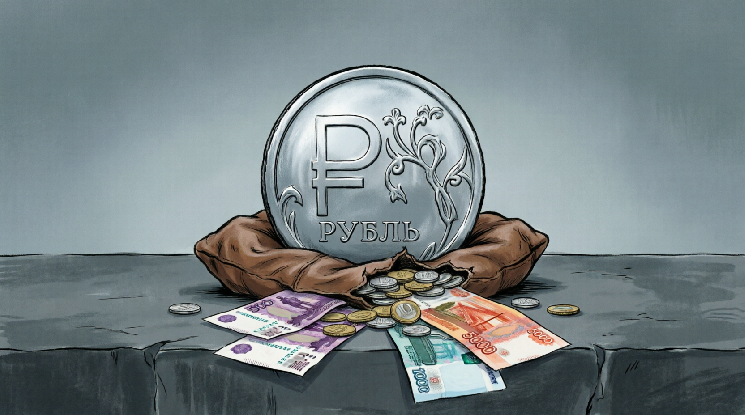
Is a Strong Ruble Good? Not for the Budget: Treasury Already Short 1.5 Trillion

The Russian budget has lost about 1.5 trillion rubles in revenue since the start of 2026 due to the ruble being stronger than the government's planned exchange rate. The budget was based on an average annual rate of 92.2 rubles per US dollar, but the actual average for the first seven and a half months was just 76.9 rubles. This discrepancy creates a significant shortfall, as every ruble of appreciation against the dollar reduces annual budget revenues by 140–160 billion rubles. When accounting for oil and gas revenues, the sensitivity is even higher, with potential annual losses reaching up to 2.5 trillion rubles. So far this year, the budget has already missed out on roughly 1.7 trillion rubles. The ruble's exchange rate has shown considerable volatility in 2026, ranging from a low near 71 rubles per dollar in May to over 85 rubles by mid-August. Despite this recent weakening, the year's average remains well below the budget target, creating a structural deficit in oil and gas revenues. Forecasts suggest the final average rate for 2026 will be around 80–82 rubles, which would result in a budget shortfall of about 1.6 trillion rubles. A strong ruble reduces import costs and inflation but also cuts the ruble earnings of exporters and threatens the funding of social obligations. The gap between the planned and actual rate is attributed not only to oil price dynamics but also to the fiscal rule mechanism, which can influence the currency's direction. The Ministry of Finance recently halted foreign currency sales under this rule, removing dollar supply from the market and contributing to pressure on the exchange rate. The budget policy is now forced to adapt to a stronger ruble than originally planned.

cryptonews.ru14m ago

Is a Strong Ruble Good? Not for the Budget: Treasury Already Short 1.5 Trillion

cryptonews.ru14m ago

Robinhood CEO: The Tokenization Wave of U.S. Stocks is Coming, America Must Not Be Left Behind

We are at the early stage of a global supercycle for asset tokenization, a transformative force reshaping finance. Robinhood has actively expanded this frontier outside the US, recently launching Robinhood Chain, a public EVM chain designed for Real World Assets (RWA) and focused on stock tokens. It enables global users to access over 190 US stocks backed 1:1 by underlying securities. However, a key gap remains: these tokenized stocks are not yet available within the United States itself. In the US, the debate around stock tokenization centers on its practical value, given existing low-cost access to equities. Critics question the need, but this misses the core innovation: tokenizing premium financial assets to make them portable, programmable, self-custodied, and tradable 24/7 within an open financial ecosystem. This is more than moving stocks onto a blockchain; it's rebuilding the foundational infrastructure of asset ownership. For US investors, this new infrastructure offers three core advantages: 1. **Real-time clearing and settlement**, enhancing market resilience by eliminating the systemic risks and capital burdens inherent in the traditional T+2/T+1 settlement cycle, as starkly revealed during events like the GameStop volatility. 2. **Native 24/7 trading capability**, allowing all investors to manage risk and react to global news outside standard market hours, a tool previously largely accessible only to institutions. 3. **Greater user control and portability of assets**, enabling instant transfers between platforms and into DeFi. This self-custody model fosters competition among service providers and unlocks new use cases like lending and using tokens as collateral. Realizing these benefits in the US requires more than technology; it necessitates modernizing a century-old securities regulatory framework built for legacy infrastructure. Policymakers must act swiftly to adapt rules for this new paradigm while preserving investor protections. Other jurisdictions are advancing, and the US risks being left behind in shaping the future of asset ownership—a future largely built around American assets and innovation. Tokenizing publicly traded stocks is just the beginning, paving the way for broadening access to other asset classes like private equity. US investors deserve to participate in this innovation.

marsbit49m ago

Robinhood CEO: The Tokenization Wave of U.S. Stocks is Coming, America Must Not Be Left Behind

marsbit49m ago

Trading

Spot

Hot Articles

Quiz for Blast

HTX Learn has launched a tutorial on Blast.

2.8k Total ViewsPublished 2023.12.10Updated 2024.02.18

Quiz for Blast

How to Buy BLAST

Welcome to HTX.com! We've made purchasing Blast (BLAST) simple and convenient. Follow our step-by-step guide to embark on your crypto journey.Step 1: Create Your HTX AccountUse your email or phone number to sign up for a free account on HTX. Experience a hassle-free registration journey and unlock all features.Get My AccountStep 2: Go to Buy Crypto and Choose Your Payment MethodCredit/Debit Card: Use your Visa or Mastercard to buy Blast (BLAST) instantly.Balance: Use funds from your HTX account balance to trade seamlessly.Third Parties: We've added popular payment methods such as Google Pay and Apple Pay to enhance convenience.P2P: Trade directly with other users on HTX.Over-the-Counter (OTC): We offer tailor-made services and competitive exchange rates for traders.Step 3: Store Your Blast (BLAST)After purchasing your Blast (BLAST), store it in your HTX account. Alternatively, you can send it elsewhere via blockchain transfer or use it to trade other cryptocurrencies.Step 4: Trade Blast (BLAST)Easily trade Blast (BLAST) on HTX's spot market. Simply access your account, select your trading pair, execute your trades, and monitor in real-time. We offer a user-friendly experience for both beginners and seasoned traders.

2.8k Total ViewsPublished 2024.06.24Updated 2026.06.02

How to Buy BLAST

Discussions

Welcome to the HTX Community. Here, you can stay informed about the latest platform developments and gain access to professional market insights. Users' opinions on the price of BLAST (BLAST) are presented below.

活动图片