With the rapid evolution of blockchain technology and digital currencies, decentralized finance (DeFi) has steadily emerged as a crucial component of the global financial system. While DeFi offers numerous advantages, challenges remain in terms of asset liquidity and interoperability between blockchain networks. In this context, Orbiter Finance, a decentralized cross-chain bridge, presents an innovative solution aimed at advancing interoperability and enabling the efficient transfer of assets across blockchain ecosystems.
As technologies like Layer 2 and Rollups gain traction, the increasing diversity of blockchain networks has further complicated the issue of cross-chain interoperability. Orbiter Finance, with its innovative technical architecture, not only enhances transaction efficiency but also significantly reduces transaction costs, fostering collaboration and integration within the blockchain ecosystem.
Addressing the Cross-Chain Interoperability Challenge
As the blockchain ecosystem continues to expand, interoperability between different blockchains has become more critical than ever. For decentralized finance to achieve widespread adoption, blockchain networks must be able to seamlessly connect and share assets and data. Orbiter Finance tackles this challenge by leveraging Zero-Knowledge Proof (ZKP) technology. By using zk-SNARKs recursive proofs, Orbiter Finance enhances transaction efficiency while lowering costs.
Traditional cross-chain bridges typically rely on mechanisms like locking, minting, and burning, which add complexity and costs. Orbiter Finance optimizes this design by simplifying the cross-chain transaction process. By utilizing smart contracts, transactions are processed more efficiently, ensuring that assets are securely transferred throughout the process.
Zero-Knowledge Proof technology allows Orbiter Finance to validate transactions without revealing their details, ensuring privacy while enhancing transaction security and preventing malicious activities.
Decentralized Architecture and the Maker Mechanism
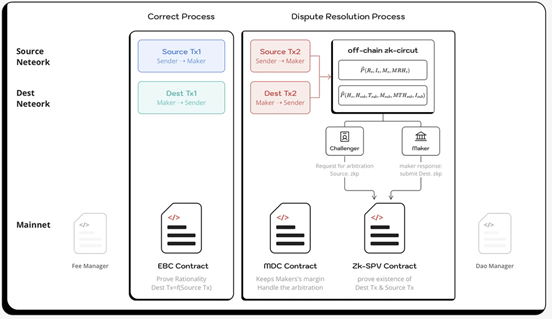
Decentralization lies at the heart of blockchain, and Orbiter Finance takes this principle a step further with its innovative “Maker mechanism.” Unlike traditional cross-chain bridges, Orbiter Finance introduces two key roles: Maker and Sender. The Maker provides liquidity, while the Sender initiates cross-chain transfer requests. The inclusion of smart contracts ensures transparency and security in transactions, ensuring liquidity while minimizing risks.
The Maker mechanism’s innovation allows more users to participate in the decentralized finance ecosystem and earn rewards through liquidity provision. User participation and contribution are incentivized and recognized, laying the foundation for Orbiter Finance’s long-term sustainable growth.
In this mechanism, the interaction between Maker and Sender is streamlined, yet the smart contracts’ complexity and flexibility ensure that every step in the transaction process is effectively monitored and verified, significantly improving transaction reliability.
Impressive Market Performance: Leading the Cross-Chain Bridge Space
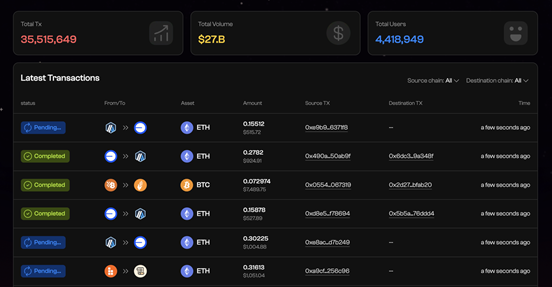
Orbiter Finance has not only pioneered technological innovation but has also demonstrated strong performance in the market. Since its launch, Orbiter Finance has processed over $28 billion in transactions and has amassed more than 4.39 million users, solidifying its leadership position in the cross-chain bridge space.
Moreover, Orbiter Finance’s ecosystem continues to expand. Initially supporting 19 chains, Orbiter Finance now covers 40+ chains, including major Layer 2 networks like Arbitrum and Polygon zkEVM, and even extends to popular chains like Solana and TON. As the Layer 2 ecosystem grows, Orbiter Finance’s market share and user base are expected to continue expanding, presenting vast potential for the future.
Additionally, with the inclusion of more blockchain projects and ecosystems, Orbiter Finance is continually enhancing its platform’s compatibility and adaptability. Whether in terms of the number of supported chains or transaction efficiency, Orbiter Finance remains at the forefront of the industry.
A Stable Revenue Model and the OBT Token
Orbiter Finance’s success is not only attributed to its leading technology but also to its innovative business model. The Gas Fee Prepaid model adopted by the project ensures stable revenue from every cross-chain transaction. As the Layer 2 ecosystem continues to expand, Orbiter Finance’s revenue scale is growing as well. With millions of dollars in stable monthly cash flow, Orbiter Finance has become a popular target for investors.
Furthermore, Orbiter Finance enhances its business model through the OBT token. The issuance and distribution of the OBT token provide users with more opportunities for participation, and token holders can play an essential role in ecosystem governance. This creates a more flexible incentive structure for the platform’s long-term operation.
The launch of the OBT token not only introduces new investment opportunities for the platform but also offers users a chance to participate in governance and decision-making. As the token economy model continues to evolve, the market value of the OBT token is expected to rise.
Orbiter Finance and the Trump Inaugural Ceremony
Orbiter Finance’s strategic partnerships extend beyond the blockchain ecosystem. In January 2025, Orbiter Finance became a sponsor of the Trump Presidential Inauguration, marking a significant step in the recognition of digital currencies in mainstream society and politics. While the full impact of this collaboration is yet to be fully realized, it undeniably serves as a strong endorsement of blockchain technology and the legitimacy of digital currencies.
This collaboration also signifies that the potential of blockchain technology is no longer confined to the financial sector; it is increasingly penetrating broader societal and economic realms. This trend will help drive more blockchain projects into mainstream markets, attracting greater participation from users and institutions.
While the full implications of this collaboration remain to be seen, it is certain that blockchain technology’s transparency and efficiency play a crucial role in future political and societal developments. By engaging in such a high-profile partnership, Orbiter Finance further cements its leadership position in the cryptocurrency industry.

Future Outlook: Further Advancing Blockchain Interoperability
As digital currencies and blockchain technologies become more widespread, cross-chain interoperability will become an indispensable part of the blockchain ecosystem. Orbiter Finance, as a pioneer in decentralized cross-chain bridges, is positioned at the forefront of this field. Through continuous optimization of its technical architecture and expanding ecosystem partnerships, Orbiter Finance is poised to further promote connectivity between blockchains and enhance the liquidity of finance and assets.
As Layer 2 technology evolves, the issue of cross-chain interoperability will be more effectively addressed. Orbiter Finance, as a leading player in this field, is laying the foundation for the future decentralized financial ecosystem. With ongoing technological innovation and ecosystem expansion, Orbiter Finance will continue to drive change within the blockchain industry.
Conclusion: Watch for the Future of Orbiter Finance
Orbiter Finance, as a decentralized cross-chain bridge, is steadily carving out a significant place in the field of cross-chain interoperability, thanks to its innovative technology and decentralized architecture. With the ongoing expansion of its ecosystem and increasing market recognition, Orbiter Finance is well-positioned to become a critical component of global blockchain infrastructure in the future. If you are interested in blockchain technology and decentralized finance, Orbiter Finance is undoubtedly a project to watch.
As the decentralized finance ecosystem continues to develop, Orbiter Finance’s role will become increasingly important. Whether you are an investor, developer, or blockchain enthusiast, Orbiter Finance offers valuable opportunities for involvement.