Dora Factory airdrops tokens to over 1 million Cosmos stakers

cryptoslatePublished on 2024-06-07Last updated on 2024-06-07

Dora Factory, a leading blockchain infrastructure provider, airdropped its native DORA token to over 1 million Cosmos Hub stakers on June 5 to boost participation in the ecosystem’s governance and decentralized funding activities.

Dora Factory focuses on decentralized governance and public goods funding tools. The company has developed technologies like Dora Vota and Public Good Staking to enhance decentralized governance.

Funding public goods

Following the airdrop, the project stated that Cosmos communities could participate in the ATOM Economic Zone (AEZ) quadratic funding program — an initiative it is spearheading with DoraHacks and Atom Accelerator DAO. This campaign aims to mobilize decentralized communities to support public goods projects through fundraising.

Cosmos users can participate using their ATOM tokens to vote and donate to public goods teams they want to support. This initiative aims to aid early-stage developers and decide the allocation of an 80,000 ATOM and $200,000 USDC matching pool over ten rounds of AEZ Quadratic Funding and MACI voting. The smart contracts for this voting round are on the Dora Vota network, allowing the community to use the airdropped DORA tokens as gas fees.

The team emphasized that the campaign was more than just distributing the reward pool to early-stage projects and vital public goods in AEZ. They stated it was also a democratic governance experiment designed to harness community power to support public goods and promising developers.

Privacy voting

Also, Dora Factory launched an innovative on-chain voting system with enhanced privacy features known as Minimal Anti-Collusion Infrastructure (MACI). This system allows community members to vote and review projects anonymously while protecting their addresses.

The team said it whitelisted a record 1 million addresses to participate in testing MACI privacy voting and would distribute $20,000 USDC stablecoin to the selected teams. Dora Factory will cover all voting fees for this round through Dora Vota’s native Gas Station feature.

MACI voting could revolutionize on-chain governance for the Cosmos community and other blockchains, making decentralized governance more efficient and cost-effective.

Posted In: Cosmos, Crypto, Governance

Related Reads

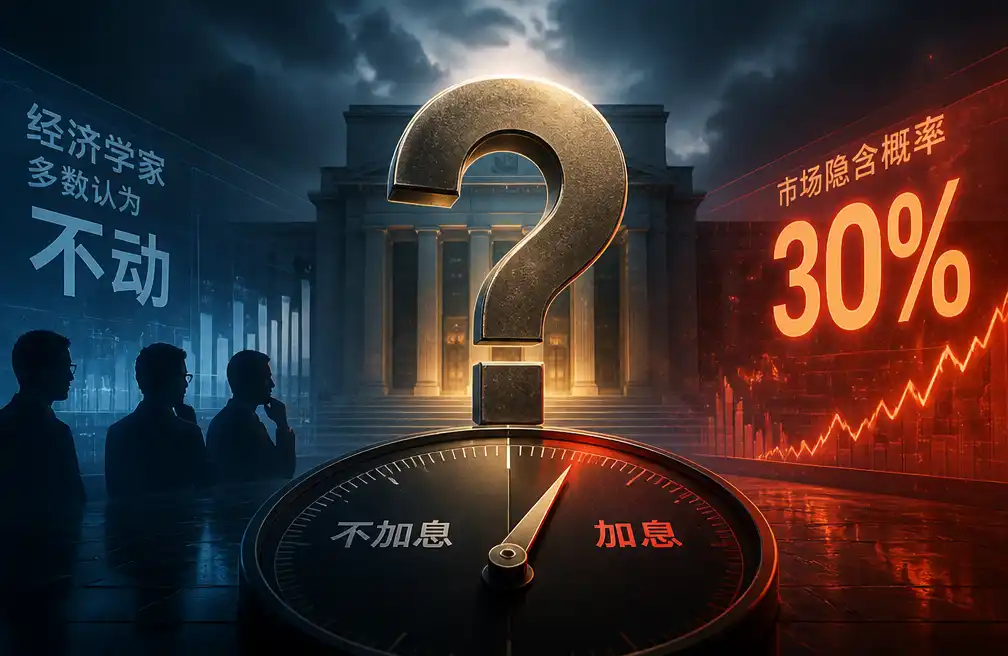
To Hike or Not Tonight: Economists Unanimous on 'No', Markets Price in a 30% Chance

Federal funds futures are repricing ahead of the July FOMC decision, as traders pay a higher premium for the risk of a surprise rate hike or more hawkish signals. This contrasts with economists, where a Reuters survey of 104 analysts unanimously expects rates to remain unchanged at 3.50%-3.75%, with 78 foreseeing no change through year-end. Yet, futures markets have priced in about a 30% probability of a 25-basis-point hike. The core debate, especially under new Fed Chair Kevin Warsh, centers on how the Fed will respond to the oil price shock from Middle East tensions. The market is not necessarily predicting a hike tonight but is hedging against two tail risks: an immediate rate increase, or a hold combined with communication that seriously opens the door for a September hike. This hedging activity has driven up open interest in Fed funds futures. Analysts are divided on how to weight the oil price surge in the Fed's reaction function. Hawkish voices (e.g., BofA) worry that completely dismissing the price pressure could challenge the Fed's inflation credibility in Warsh's first major test. Dovish views (e.g., Citi) argue the shock is primarily supply-driven and that overreacting with rate hikes could unnecessarily hurt growth, unless clear signs of secondary inflation emerge. Warsh's new tenure amplifies policy path uncertainty, as markets lack a stable baseline for his communication style. This environment forces traders to price in a wider range of outcomes, explaining the divergence between unanimous economist forecasts and market hedging. The key focus will be on Warsh's post-meeting commentary. If he downplays the oil shock and stresses anchored long-term expectations, hawkish pricing may recede. If he emphasizes the risk of broader price spillovers and prioritizes returning to 2% inflation, the market will interpret this as reopening the door for a September hike. This would sustain support for the USD, keep pressure on JPY (testing intervention thresholds), and challenge risk assets like stocks and crypto through higher discount rates and weaker sentiment. The baseline remains no action in July, but the communication will determine how far this repricing extends.

marsbit35m ago

To Hike or Not Tonight: Economists Unanimous on 'No', Markets Price in a 30% Chance

marsbit35m ago

The Semiconductor Industry's Most Obscure Chokepoint Material: It Has Multiplied in Price Unnoticed, and China Just Banned Its Export

"Helium: The Silent Choke Point in Semiconductors" Helium, despite being the universe's second most abundant element, is critically scarce on Earth. It cannot be synthesized artificially and escapes Earth's gravity once released, making it a non-renewable resource. Yet, it is indispensable for advanced semiconductor manufacturing, requiring ultra-high purity (99.9999%) for processes like wafer etching, leak detection, and thermal management in lithography tools, with no viable substitutes. This low-profile resource, whose price has doubled unnoticed, suddenly gained attention when China imposed an export ban on July 10th. The ban is a response to a severe global shortage triggered months earlier. In March, missile attacks damaged the world's largest helium production hub in Qatar's Ras Laffan, halting a third of global supply with repairs expected to take 3-5 years. Concurrently, Russia tightened export controls, and the US sold off its federal helium reserve. Approximately 200 specialized transport containers, each worth ~$1 million, were stranded with perishable cargo. Global spot prices skyrocketed, and chipmakers like TSMC warned of potential impacts. China, which imports over 84% of its helium (primarily from Qatar and Russia), faces a severe squeeze. Despite being helium-poor, China has developed domestic extraction technology over five years, processing byproduct gases from LNG plants to produce ultra-pure helium. Domestic output, while still only covering less than 20% of demand, enabled the recent export ban aimed at securing domestic supply for its own expanding chip industry. The industry now faces "Helium Shortage 5.0." With key global sources constrained for years, this invisible gas—once wasted on party balloons—has become a critical, geopolitically charged bottleneck for chips, healthcare (MRI machines), and beyond, forcing the world to finally treat it as the finite strategic resource it is.

marsbit1h ago

The Semiconductor Industry's Most Obscure Chokepoint Material: It Has Multiplied in Price Unnoticed, and China Just Banned Its Export

marsbit1h ago

Early Investor of Unitree Bets on a Brain-Computer Interface Company

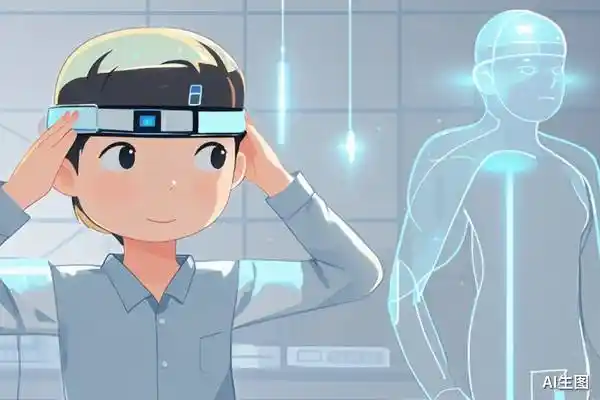
"Wabo Technologies, a brain-computer interface (BCI) startup, has secured new funding from Vertex Ventures (under Temasek), Hongtai Fund, Chengdu Future Industry Fund, and Huifengda Capital. Vertex Ventures is known for its early bet on Unitree Robotics. Inspired by the sci-fi film "Avatar," founder Zhang Xingzhi has pursued human-machine interaction for over a decade. He established Wabo in late 2025, coinciding with China's push for BCI as a future industry. Unlike companies focused solely on medical hardware, Wabo positions itself as a model company. Its core mission is to develop a "Human Neural Intent Model" that decodes EEG, EMG, and behavioral signals to understand a user's goals, confirmations, corrections, and stop intentions before physical action, translating them into standardized control signals for machines, robots, or smart devices. The young, full-stack team, backed by academic collaborators from Tianjin University and Fudan University, quickly attracted investors. The company had previously raised a seed round from Ceyuan Capital. Investors were impressed by Wabo's systematic capabilities in data collection, signal processing, and engineering, seeing potential beyond a single hardware product toward a reusable layer of human intent interpretation. Applications span medical rehabilitation, smart homes, embodied AI, and even space exploration, with Wabo partnering with Tianjin University on pioneering "space BCI" research. Wabo plans a dual-headquarters strategy, with Shanghai focusing on high-end R&D and model development, and Chengdu handling hardware, product development, and supply chain. The BCI sector in China is heating up, with over 30 financing deals in early 2026. Zhang believes future competition will center on who can build a sustainable data-model-scenario loop. He predicts industry consolidation within three years, with only companies that master this闭环 surviving. The vision from "Avatar" is inching closer to reality."

marsbit1h ago

Early Investor of Unitree Bets on a Brain-Computer Interface Company

marsbit1h ago

Trading

Spot
活动图片