YZi Labs Invests of Tens of Millions, CZ as Advisor: How to Earn Genius Points?

Odaily星球日报Published on 2026-01-14Last updated on 2026-01-14

Abstract

An article titled "YZi Labs Invests Tens of Millions, CZ as Advisor: How to Earn Genius Points?" reports on a major investment in the decentralized exchange Genius. YZi Labs has invested tens of millions of dollars, and former Binance CEO CZ will serve as an advisor. Genius is a privacy-focused DEX supporting spot, perpetual contracts, and copy trading across over 10 blockchains, including BNB Chain and Solana. It aims to offer a CEX-like experience with self-custody and has processed over $60 million in testnet volume. CZ and Genius's team clarified that Genius is not a direct competitor to Aster, another YZi Labs portfolio project, but rather a trading terminal that enables cross-chain token access with privacy features. The article provides a step-by-step guide for users to interact with the platform and earn GP points through trading and referrals. A recommended "low-cost points strategy" involves trading the USDC-USDT pair to minimize volatility impact, executing larger trades to reduce gas fee ratios, and spinning a daily bonus wheel after reaching $10,000 in trading volume. Users can also earn additional rewards through referrals and social tasks. The platform is currently in a test phase, with a public testnet for its privacy protocol planned for Q2 2026.

Original | Odaily Planet Daily (@OdailyChina)

Author | Asher (@Asher_ 0210)
Last night, a blockbuster news rocked the community—YZi Labs has invested "tens of millions of dollars" in DEX Genius, and CZ will also personally join as an advisor.

Odaily Planet Daily is here to give you the first look at Genius, a step-by-step guide to interacting with Genius, and the current interaction strategy based on personal testing.

Project Introduction
Genius is a privacy-centric decentralized exchange (DEX) offering spot, perpetual contracts, and copy trading, supporting over 10 public chains including BNB Chain and Solana. Its goal is to become an on-chain alternative to Binance—bringing the speed, liquidity, and privacy experience of a CEX on-chain while remaining fully self-custodial and non-custodial (users hold their private keys). The platform has already processed over $60 million in trading volume during its testing phase and plans to launch a public test of its privacy protocol in Q2 2026. Back in October 2024, Genius announced the completion of a $6 million seed funding round led by CMCC Global, with participation from Cadenza Ventures, AVA Labs, Arca, Flow Traders, and other institutions.

In response to the community's view that "YZi Labs' investment in Genius is bearish for Aster," CZ posted on X, stating, "Genius is a trading terminal connected to exchanges, not a competitor to Aster."

Additionally, Genius's CMO Ryan also addressed a similar question in the community—"What's the difference between Aster and Genius? Why would YZi Labs invest in another project doing Perp DEX?" Ryan stated, "I think both are important; Aster is a very important perpetual exchange. I believe YZi Labs' motivation for investing in Genius is to enable everyone to access any token on any chain (and soon, privately)."
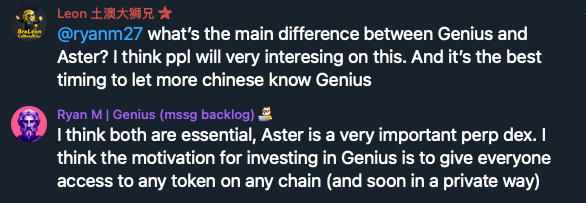
Genius CMO Ryan discusses the relationship between Aster and Genius

It's clear that both CZ and the Genius team believe Genius and Aster have different positioning and are not in direct competition.

Step-by-Step Guide

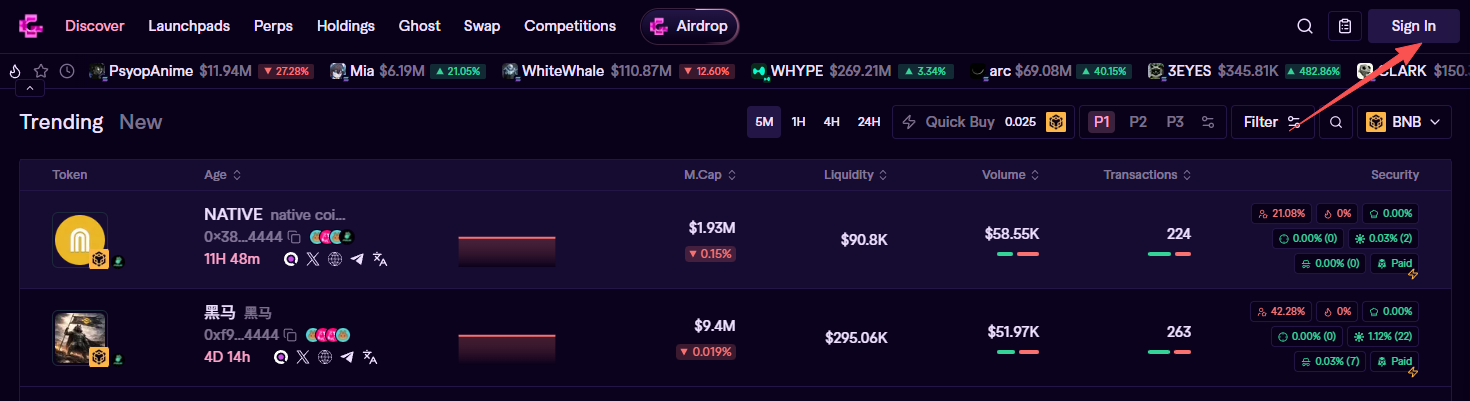
STEP 1. Go to the official website (Link: https://www.tradegenius.com/ref/NY8SYH). Using this referral link gives you 500 GP points. Click "Start Trading," then click "Sign In" at the top to log in with your wallet.
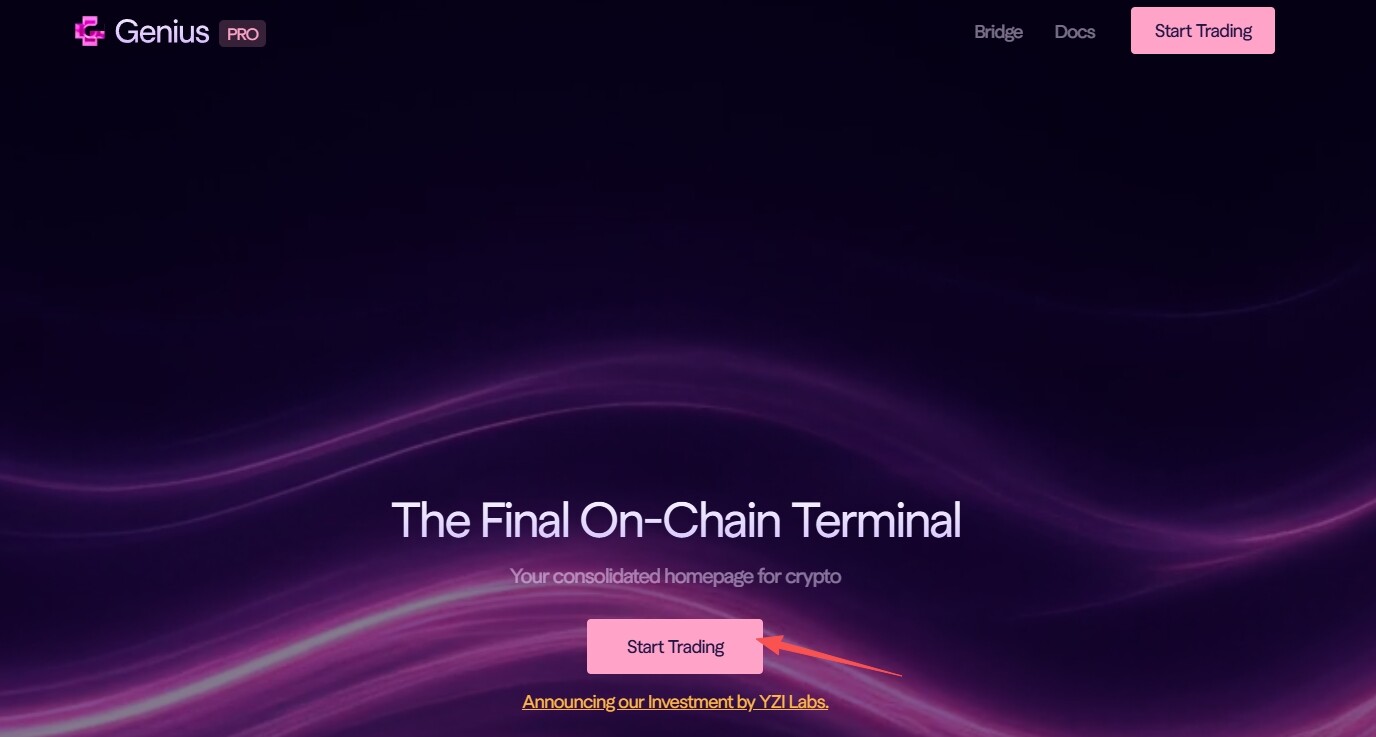
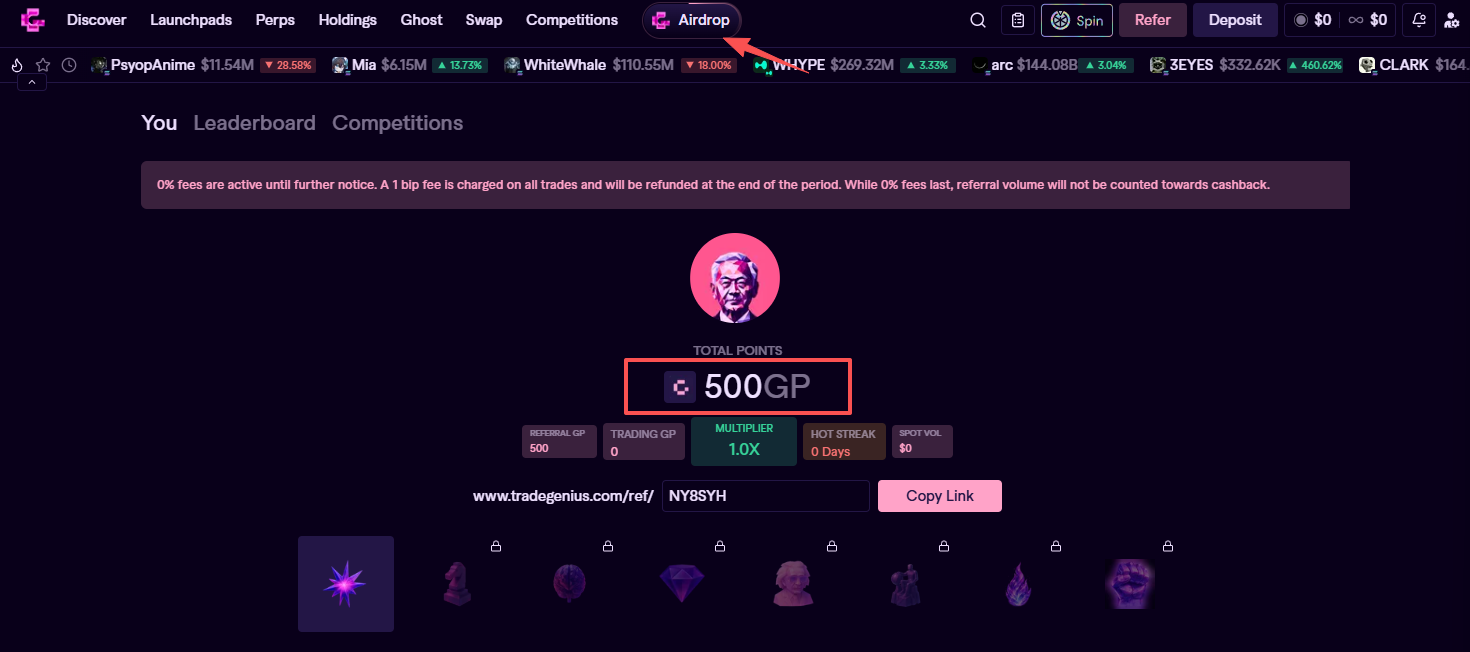
STEP 2. Click on "Airdrop" at the top to see your current GP points and personal referral link.
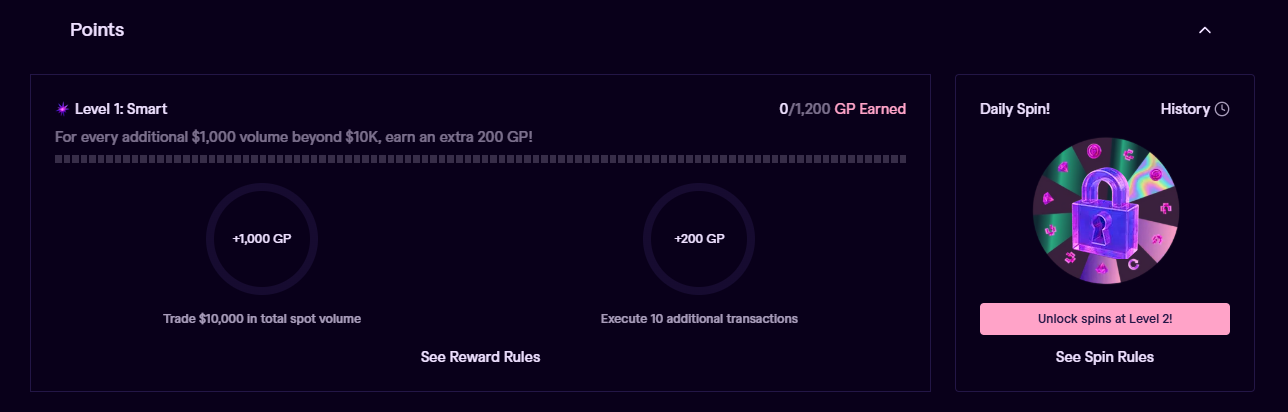
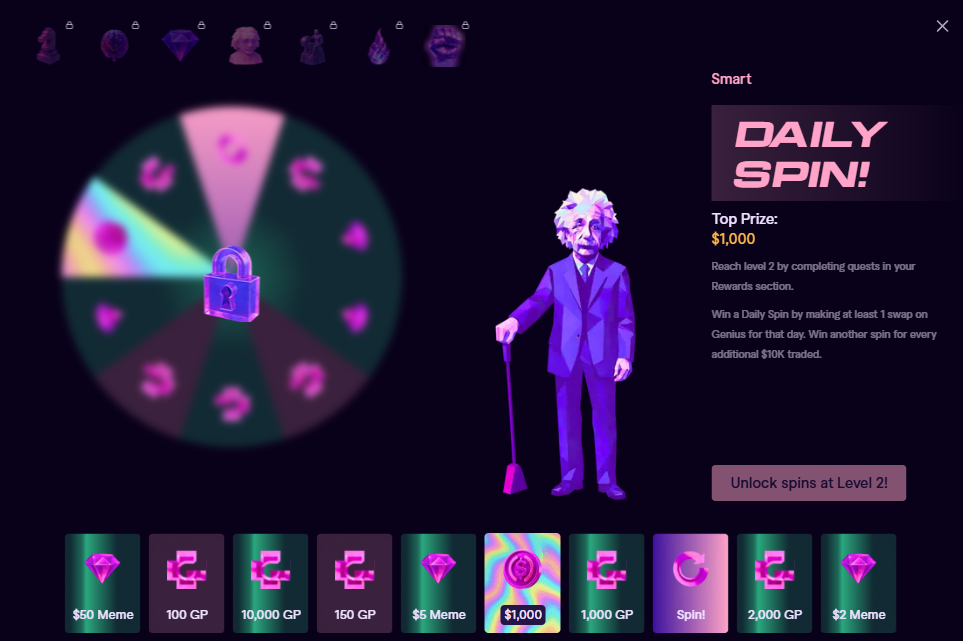
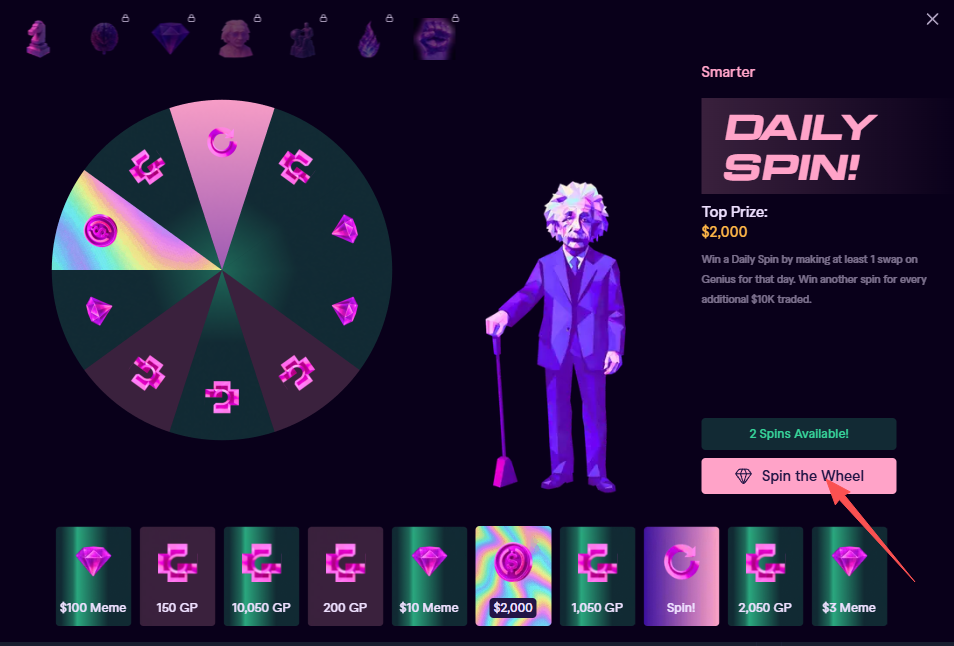
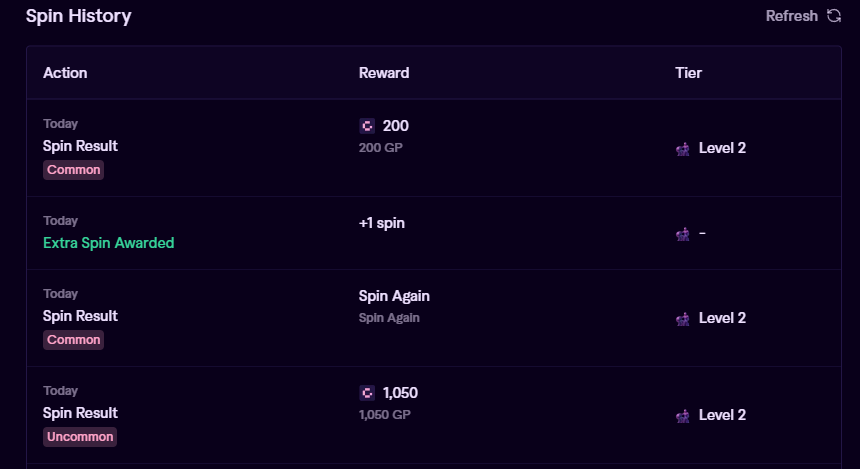
STEP 3. Under the "Airdrop" section, first is "Points." Accumulate $10,000 in trading volume to get 1200 GP points. After exceeding $10,000, every additional $1000 in trading volume earns 200 GP points. Additionally, trading at least once daily gives you one free spin on the wheel. Every additional $10,000 in trading volume grants an extra spin, with no upper limit.
Other rules for earning points through trading:

  • Users earn 1 GP point for every $100 in spot trading volume / $1000 in perpetual contract trading volume;
  • Trade consecutively for 7 days to earn a win streak multiplier (resets after one day without trading);
  • Base multiplier and win streak multiplier apply to user's spot and perpetual contract trading (referral points not included).
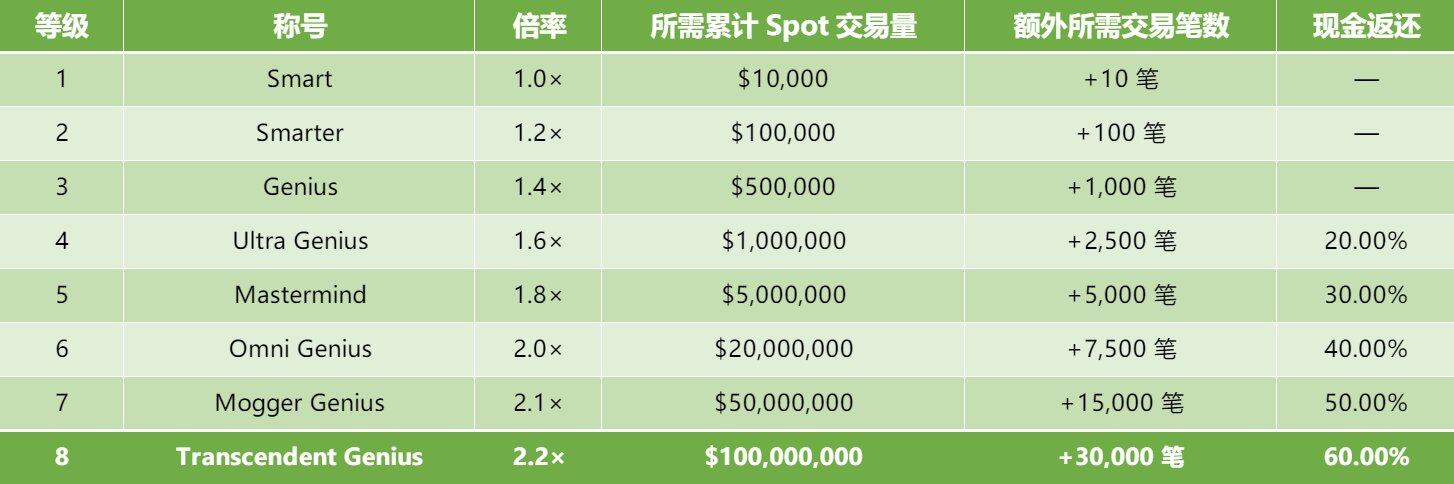
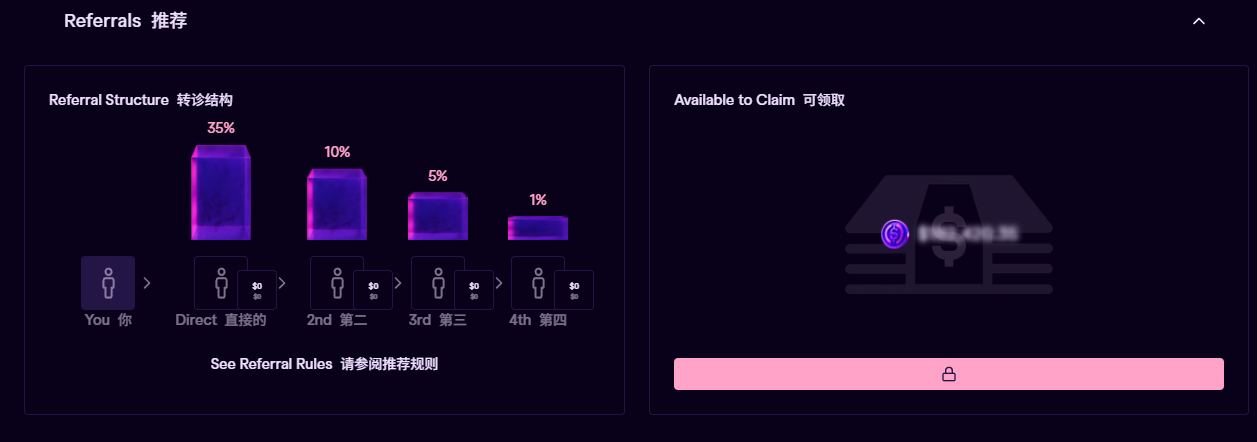
STEP 4. Under the "Airdrop" section, next is "Referrals." Invite friends to earn more GP points.
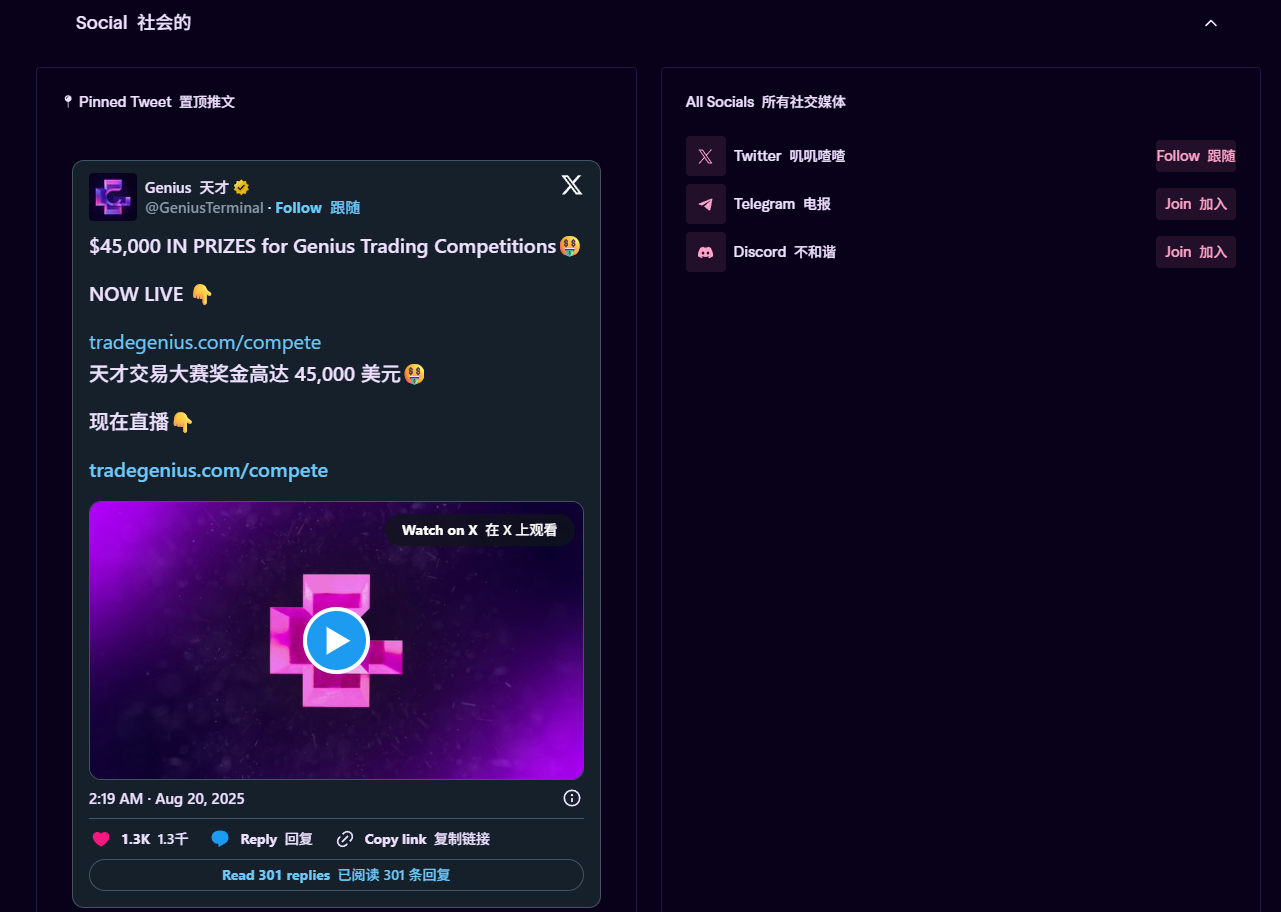
STEP 5. Under the "Airdrop" section, lastly is "Social" (the "Token Rewards" section is not yet open, skip for now), which contains official social media information.
STEP 6. Click on "Deposit" at the top. Supports deposits of EVM, Solana, and SUI assets. Official recommendation is to send ETH or USDC.

Current "Basic Income Points Earning" Strategy Sharing

Based on actual interaction, I've summarized a "basic income points earning" strategy. The specific operational思路 is as follows:

1、To minimize wear and tear from token price fluctuations, choose spot trading for USDC-USDT.
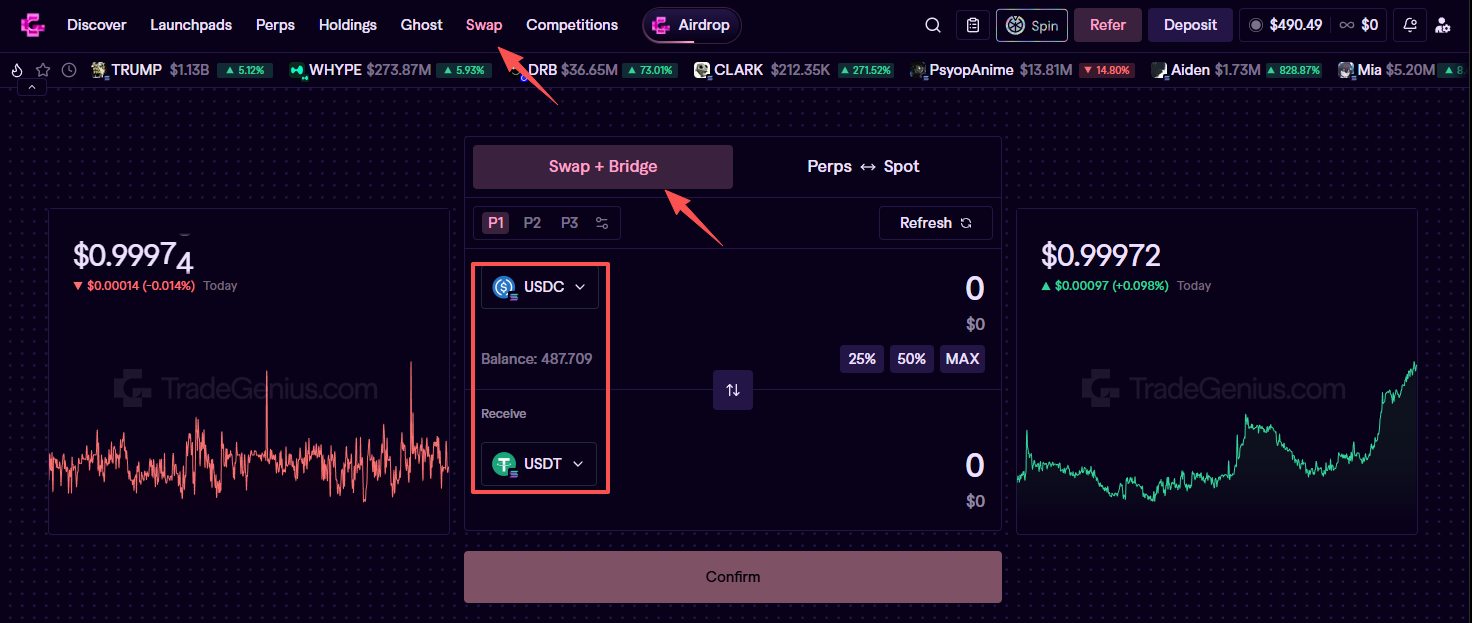
2、Try to make the single transaction amount larger. The Gas fee paid for a test transaction of $400 and $100 is almost the same, as shown below.
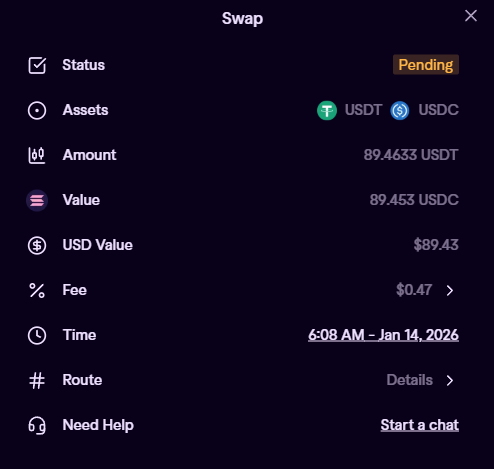
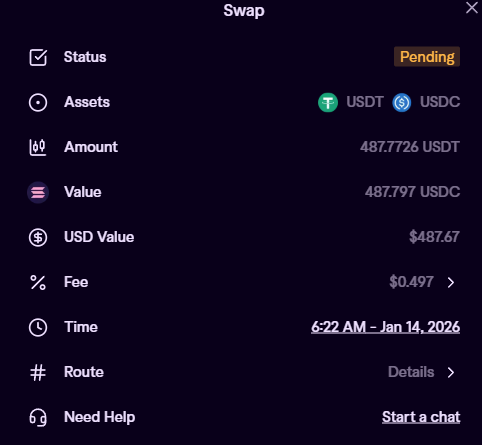
3、Once you unlock the wheel spin by reaching $10,000 in trading volume, just make one trade per day to qualify for the spin. There's no need to "frantically increase trading volume."
Related Questions

QWhat is Genius and what is its primary focus?

AGenius is a privacy-focused decentralized exchange (DEX) that offers spot trading, perpetual contracts, and copy trading. It supports over 10 blockchains, including BNB Chain and Solana, and aims to provide a chain-based alternative to centralized exchanges like Binance by combining CEX-like speed, liquidity, and privacy with self-custody and non-custodial features.

QWhy did CZ and YZi Labs invest in Genius, and how is it different from Aster?

ACZ and YZi Labs invested in Genius because it is a trading terminal that connects to exchanges, not a direct competitor to Aster. Genius focuses on enabling access to any token on any chain, soon with privacy features, while Aster is primarily a perpetual contract exchange. The investments and advisory role highlight the complementary rather than competitive nature of the two projects.

QHow can users earn GP points on the Genius platform?

AUsers can earn GP points by trading: 1 GP point for every $100 in spot trading volume or $1000 in perpetual contract volume. Additional points come from a 1200 GP bonus for reaching $10,000 in cumulative trading volume, with 200 GP for every additional $1,000. Daily trading grants a spin-the-wheel chance, and more spins are earned per $10,000 in trading. Inviting friends via a personal link also rewards points.

QWhat is the recommended 'low-cost points earning' strategy mentioned in the article?

AThe recommended strategy to minimize costs while earning points is to: 1) Trade the USDC-USDT pair to reduce price volatility wear. 2) Execute larger single transactions (e.g., $400 instead of $100) to optimize gas fees, which are similar for both amounts. 3) Reach $10,000 in trading to unlock the daily spin-the-wheel feature, then only trade once daily to maintain the spin opportunity without excessive volume.

QWhat are the steps to start using Genius platform and earn the sign-up bonus?

ATo start using Genius and earn the 500 GP sign-up bonus: 1) Visit the official website via an invite link (e.g., https://www.tradegenius.com/ref/NY8SYH). 2) Click 'Start Trading' and then 'Sign In' to connect a wallet. 3) Navigate to the 'Airdrop' section to view points and your referral link. 4) Deposit assets like ETH or USDC via supported chains (EVM, Solana, SUI). 5) Begin trading to accumulate points and bonuses.

Related Reads

After 50x Storage Surge, Justin Sun Always Looks to the Next Decade

Sun Yuchen, known for his controversial stunts like a $30 million lunch with Warren Buffett (canceled due to a kidney stone) and eating a $6.2 million duct-taped banana, is often overshadowed by a significant fact: his decade-long track record of spotting major investment trends. In 2016, he famously advised young people to invest in Bitcoin, Nvidia, Tesla, and Tencent instead of buying property. A hypothetical $20,000 investment in Nvidia and Tesla from that list would now be worth over 50 million RMB. His latest major call was on November 6, 2025, predicting a "50x storage opportunity" tied to the AI boom, which materialized with Sandisk's stock surging nearly 50-fold by 2026. Looking ahead, Sun now focuses on the next frontier: Physical AI. He identifies four key areas: 1. **Embodied AI/Robotics**: He sees this reaching its "iPhone moment," with companies like UBTech and Galaxy General leading in commercialization. 2. **Drones**: Viewed as the first commercially viable form of Physical AI, revolutionizing sectors from warfare (e.g., AeroVironment's Switchblade) to logistics. 3. **Spatial Computing**: Beyond VR, it's about AI understanding physical space, a foundational technology for robotics and autonomous systems, exemplified by Apple's Vision Pro. 4. **Space Exploration**: After a 2025 suborbital flight with Blue Origin, Sun advocates for space as the ultimate frontier, discussing blockchain's potential role in space asset management and data transactions. His investment philosophy involves betting on entire, inevitable trends rather than single companies. For robotics, he sees Tesla (the body/manufacturer) and Nvidia (the brain/AI platform) as complementary plays. In defense drones, he highlights companies making tanks obsolete (AeroVironment) and those augmenting fighter jets (Kratos). For space, he participated in Blue Origin's flight and anticipates SpaceX's potential IPO to redefine the sector's valuation. Sun Yuchen's vision frames the next two decades not as a revolution in information flow (like the internet), but in the fundamental operation of the physical world through AI-powered robots, autonomous systems, and spatial intelligence, ultimately extending human and AI activity into space. While many still focus on conventional assets, he continues to look toward the next technological horizon.

marsbit58m ago

After 50x Storage Surge, Justin Sun Always Looks to the Next Decade

marsbit58m ago

The Billionaires Behind the Most Expensive Midterm Election in History

"The Most Expensive Midterm Elections and Their Billionaire Backers" This analysis details the unprecedented scale of spending in the 2026 midterm elections, highlighting the key billionaire donors shaping the political landscape. Jeff Yass, founder of Susquehanna International Group, has contributed over $81 million, ranking third among individual donors behind George Soros ($102.6M) and Elon Musk ($84.8M). Yass is a major donor to Trump's MAGA Inc. and supports school choice and various candidates. Overall, federal committees have raised over $4.7 billion this cycle, with political ad spending projected to reach $10.8 billion. Republican-aligned groups are significantly out-raising their Democratic counterparts. "Dark money" from undisclosed sources continues to grow. The core stakes involve control of Congress and policy direction for Trump's final term. Donors are also motivated by specific issues: Sergey Brin and Chris Larsen are funding opposition to a proposed California wealth tax and supporting crypto-friendly policies. Other top donors include OpenAI's Greg Brockman and his wife Anna ($50M total to MAGA Inc. and an AI-focused PAC), Richard Uihlein ($45.3M to conservative causes), venture capitalists Marc Andreessen and Ben Horowitz (each over $44M to crypto/AI PACs and MAGA Inc.), Miriam Adelson ($42.6M to GOP leadership PACs), Paul Singer ($33.9M), and Diane Hendricks ($25.8M to MAGA Inc.). The article notes that the peak fundraising period is still ahead, with major primaries approaching.

marsbit1h ago

The Billionaires Behind the Most Expensive Midterm Election in History

marsbit1h ago

The Largest IPO in History Is Approaching, Surpassing SpaceX, 28 Years of AI Self-Iteration, Countdown to Intelligence Explosion

"Anthropic Nears Trillion-Dollar IPO, Fueled by Explosive Growth and 2028 'Intelligence Explosion' Warning Anthropic is considering a deal valuing the AI company near $1 trillion, potentially leading to one of the largest IPOs ever and surpassing SpaceX. Its revenue has skyrocketed, with Annual Recurring Revenue (ARR) reaching $45 billion in May 2026—a 500% increase in just five months. This vertical growth curve is attributed to its key products, Claude Code and Cowork, dominating AI coding and enterprise collaboration. Beyond commercial success, co-founder Jack Clark issued a pivotal warning in an interview: there is a greater than 50% chance that by the end of 2028, AI systems will achieve recursive self-improvement—the ability to autonomously build a 'better version' of themselves, initiating an 'intelligence explosion.' This prophecy underpins the company's astronomical valuation, as the market prices in the potential for transformative and disruptive AI. Further signaling its ambition, Anthropic formed a $1.5 billion joint venture with Goldman Sachs and Blackstone, aiming to disrupt traditional consulting firms like McKinsey by deploying Claude AI for complex strategic work. This move tests AI's capacity to replace high-level cognitive labor, a precursor to its predicted autonomous evolution. The narrative presents a dual future: unprecedented economic opportunity alongside significant risks like economic restructuring and security threats. Anthropic's meteoric rise and Clark's 2028 prediction frame the coming years as a countdown to a potential technological singularity."

marsbit1h ago

The Largest IPO in History Is Approaching, Surpassing SpaceX, 28 Years of AI Self-Iteration, Countdown to Intelligence Explosion

marsbit1h ago

Trading

Spot
Futures
活动图片





