XRP adoption rises as ETF inflows absorb supply – Signals to watch into 2026

ambcryptoPublished on 2026-01-01Last updated on 2026-01-01

Abstract

XRP adoption is intensifying as institutional ETF inflows steadily absorb supply, reducing exchange balances to a seven-year low of 1.6 billion tokens. Despite trading near $1.87 with muted price action, on-chain and derivatives signals strengthen. The XRP Ledger ranks as the second fastest-growing real-world asset network, outpacing Ethereum and Solana. However, overhead liquidity near $2.50–$3.20 continues to cap upside momentum, keeping XRP range-bound. Key factors to watch include sustained ETF demand, expanding infrastructure adoption, and a potential breakout requiring broader market participation.

Ripple’s XRP adoption intensified as institutional flows steadily absorbed tokens, even while price action remained compressed.

On the 31st of December 2025, XRP traded near $1.87. Despite muted movement, multiple on-chain and derivatives signals strengthened together.

ETF inflows remained consistent, exchange balances declined, and XRPL infrastructure activity expanded. These signals diverged sharply from stagnant spot price behavior.

So, was XRP consolidating quietly as supply tightened, or simply tracking broader market hesitation?

XRPL’s RWA momentum continued building quietly

On-chain data showed the XRP Ledger ranking as the second fastest-growing real-world asset network over the past 30 days. Growth reached nearly 18%, trailing only Canton.

XRPL outpaced Ethereum, Solana, and Avalanche in relative RWA expansion during the same period. The data pointed toward rising infrastructure adoption.

This growth highlighted increasing relevance in tokenized finance and compliance-focused use cases. Price, however, remained unresponsive.

Infrastructure-led adoption often preceded repricing, but timing depended on broader liquidity conditions.

ETF inflows quietly reduced exchange supply

At the same time, XRP supply on exchanges fell to a seven-year low, with balances dropping to roughly 1.6 B tokens from 3.76 B in October.

The decline coincided with sustained U.S. spot XRP ETF inflows. ETFs recorded $15 million in daily inflows, extending a multi-week streak.

As ETFs accumulated XRP, fewer tokens remained available on centralized exchanges. These new whales reduced immediate sell-side availability through steady absorption.

Institutional demand continued to absorb supply, even as prices failed to break higher.

Overhead liquidity capped upside pressure

Derivatives data from Binance showed heavy unclaimed liquidity, clustered above the $2.50–$3.20 price region. These zones reflected concentrated liquidation interest from leveraged positions.

Overhead liquidity remained densest around prior consolidation highs, where repeated failed advances had built exposure. Price continued to trade beneath these bands.

Such liquidity clusters often acted as resistance during range-bound conditions, keeping XRP compressed below areas of concentrated positioning.

XRP traded between $1.73 support and $2.32 resistance, a range established around mid-November. Momentum indicators reflected indecision.

RSI hovered near neutral levels, while MACD signals remained mixed, suggesting neither side controlled direction.

What to watch next

Markets watched for whether ETF-driven absorption and infrastructure growth could eventually influence price discovery.

A range breakout would likely require expanding volume and broader market participation.


Final Thoughts

  • ETF inflows appeared to play a key role in reducing exchange supply despite stagnant price action.
  • XRP’s divergence between adoption and price suggested patience dominated current market positioning.


Trending Cryptos

Related Questions

QWhat was the price of XRP on December 31, 2025, and what was the apparent contradiction in its market behavior?

AXRP traded near $1.87 on December 31, 2025. The contradiction was that while the price action remained compressed and stagnant, multiple on-chain and derivatives signals, such as consistent ETF inflows and declining exchange balances, were strengthening.

QAccording to the article, how did the XRP Ledger (XRPL) perform in terms of Real-World Asset (RWA) network growth, and what does this signify?

AOn-chain data showed the XRP Ledger ranked as the second fastest-growing real-world asset network over the past 30 days, with growth reaching nearly 18%, trailing only Canton. It outpaced Ethereum, Solana, and Avalanche. This growth highlights increasing relevance in tokenized finance and compliance-focused use cases, pointing toward rising infrastructure adoption.

QWhat key trend was observed with XRP supply on exchanges, and what was identified as the primary driver behind this trend?

AXRP supply on exchanges fell to a seven-year low, dropping to roughly 1.6 billion tokens from 3.76 billion in October. The primary driver behind this trend was sustained U.S. spot XRP ETF inflows, which recorded $15 million in daily inflows, steadily absorbing supply and reducing the number of tokens available on centralized exchanges.

QWhat is the significance of the 'overhead liquidity' mentioned in the derivatives data from Binance, and how did it affect XRP's price?

AThe 'overhead liquidity' refers to heavy, unclaimed liquidity clustered above the $2.50–$3.20 price region, which represents concentrated liquidation interest from leveraged positions. These liquidity clusters acted as resistance during range-bound conditions, capping upside pressure and keeping the XRP price compressed below these levels.

QWhat two factors does the article suggest are needed for XRP to break out of its trading range and influence price discovery?

AThe article suggests that a range breakout would likely require expanding trading volume and broader market participation, on top of the existing ETF-driven supply absorption and infrastructure growth.

Related Reads

Bitcoin Mining Farms Are Becoming AI Factories

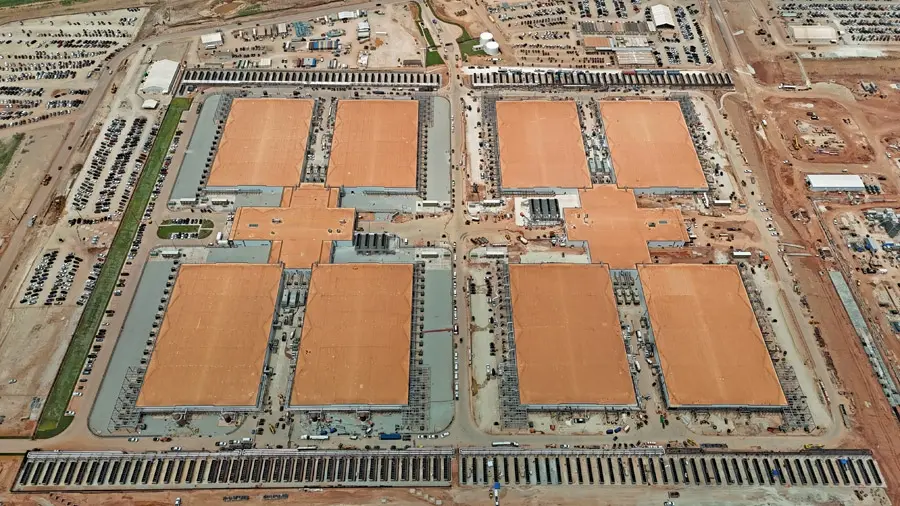
Bitcoin mines are transforming into AI factories. This shift is driven by the convergence of three key assets from the previous crypto cycle: infrastructure, talent, and capital. Crypto mining companies like Crusoe, CoreWeave, and Bitdeer are repurposing their core competency—securing power, land, and grid connections in remote locations—to build data centers for AI clients. These firms are signing multi-billion dollar, long-term contracts with companies like Anthropic, AWS, and Microsoft, as AI's demand for reliable, high-capacity compute surpasses the profitability of Bitcoin mining. Simultaneously, crypto entrepreneurs and engineers are applying their skills to new AI ventures. Examples include OpenSea's co-founder launching OpenRouter (an AI model aggregator), and former Coinbase engineers building Fal.ai (a generative media infrastructure platform). Their experience in building scalable, global software networks translates effectively to the AI space. Furthermore, capital accumulated during the crypto boom is now fueling AI. Figures like Jed McCaleb (co-founder of Ripple) funded Voltage Park, a large-scale GPU cloud provider. Notably, some crypto investments, like FTX's early bets on Anthropic and Cursor, have generated astronomical paper returns, demonstrating how high-risk crypto capital flowed into AI before it became mainstream. The transition is not just about repurposing hardware, but about redirecting critical resources—power infrastructure, distributed systems expertise, and venture funding—to the next technological frontier: artificial intelligence.

链捕手1h ago

Bitcoin Mining Farms Are Becoming AI Factories

链捕手1h ago

Morpho Launches Fixed-Rate Product Midnight: Lenders and Borrowers Set Their Own Rates, Ending the Era of Interest Rate Models

Morpho Launches Fixed-Rate Product Midnight: Lenders and Borrowers Set Their Own Rates, Ending the Era of Algorithmic Interest Models On-chain lending has grown to $60 billion but remains minuscule compared to traditional finance's $200 trillion annual credit volume. Morpho identifies the lack of fixed rates and maturity dates as key bottlenecks. Institutions need predictability, not the passive floating rates set by algorithmic models. Midnight allows lenders and borrowers to directly quote rates, set terms, and become price makers, not takers. Fixed-rate lending is now viable due to cheaper, faster blockchains and the entry of institutions demanding control and certainty over returns, costs, and duration. Morpho Blue previously gave users control over risk; Midnight adds control over interest rates. Past attempts at on-chain fixed-rate lending failed primarily because they were built on top of floating-rate pools (creating unpredictability) or lacked sufficient active participants. Midnight avoids these pitfalls as a standalone primitive with fixed rates at its core, built upon Morpho Blue's existing large and active user base. Midnight offers distinct value: institutions gain predictable term structures and full control; fintech companies can offer tailored fixed-rate products; lenders/borrowers achieve predictability and efficiency; and curators can now differentiate by configuring both risk and interest rates. Morpho Midnight is not a replacement for Morpho Blue. The Morpho network will now feature two complementary market structures: floating-rate/open-term (Blue) for flexibility and fixed-rate/fixed-term (Midnight) for predictability. Liquidity can flow between them. The launch will be gradual, prioritizing security. Initially, it will support direct lending on Base network with one trading pair (cbBTC/USDC) and limited maturity dates. Advanced features like auto-rollovers will be introduced later.

marsbit1h ago

Morpho Launches Fixed-Rate Product Midnight: Lenders and Borrowers Set Their Own Rates, Ending the Era of Interest Rate Models

marsbit1h ago

Trading

Spot

Hot Articles

What is XRP 2.0

XRP 2.0: A New Frontier in the Cryptocurrency Landscape Introduction to XRP 2.0 In the ever-evolving realm of cryptocurrency, new projects continuously emerge, vying for attention and adoption. One such promising initiative is XRP 2.0, a novel cryptocurrency project designed to leverage advanced blockchain technology and robust encryption methodologies. While the name draws parallels with Ripple’s XRP, it’s crucial to note that XRP 2.0 operates independently, focusing on enhancing transaction security, privacy, and scalability. As the digital financial landscape increasingly embraces decentralized solutions, XRP 2.0 aims to contribute meaningfully to web3 and the overall expansion of crypto projects. What is XRP 2.0? At its core, XRP 2.0 is a cryptocurrency project that aims to create a secure and decentralized digital currency ecosystem. Its foundational technology integrates sophisticated blockchain principles with cutting-edge encryption techniques. The overarching goal of XRP 2.0 is to establish itself as a reliable and efficient platform enabling swift transaction execution while prioritizing enhanced privacy protections for its users. The project is promoted as a solution to many limitations faced by existing cryptocurrencies, proposing a system that can handle a higher volume of transactions with improved speed and privacy. This versatility positions XRP 2.0 as a significant contender in a marketplace riddled with various digital currencies. Who is the Creator of XRP 2.0? The identity of the creator behind XRP 2.0 has been flagged as ‘Wilbur.’ However, comprehensive details regarding Wilbur or their associated entity remain elusive. The anonymity of many cryptocurrency creators is not an uncommon phenomenon in the industry, often designed to maintain a degree of privacy and security. Who are the Investors of XRP 2.0? As of now, specific information related to the investment foundations or organizations supporting XRP 2.0 is not publicly available. In the cryptocurrency sector, the backing by reputed investors can significantly influence a project's credibility and success, yet the transparency regarding the financial supporters of XRP 2.0 has not been established. How Does XRP 2.0 Work? XRP 2.0 stands out by employing a combination of blockchain technology and advanced encryption algorithms that ensures secure and decentralized transactions. Its innovative structure includes unique features designed to foster user engagement and broaden functionalities beyond conventional cryptocurrency transactions. Among these features, XRP 2.0 incorporates AI-powered capabilities, such as text-to-image and text-to-speech functionalities. These additions are designed to enhance the interactive experience for users, promoting broader applicability across various sectors. By bridging technological advancements with user-centered design, XRP 2.0 aims to capture the attention of a diverse range of individuals and enterprises looking to integrate cryptocurrency solutions into their operational frameworks. Timeline of XRP 2.0 Understanding XRP 2.0 requires examining the milestones that have defined its journey thus far: July 23, 2023: XRP 2.0 is introduced as a novel cryptocurrency project, aiming to revolutionize secure and decentralized transaction capabilities in the blockchain domain. September 8, 2023: The launching of another project, XRP20, occurs, marking the emergence of an ERC-20 token on the Ethereum blockchain that remains unrelated to XRP 2.0. November 13, 2023: The XRP Ledger undergoes a significant update with the release of rippled server software version 2.0.0. It is essential to note that this development is disconnected from the XRP 2.0 cryptocurrency project. Key Points About XRP 2.0 To distill the essence of XRP 2.0, several critical factors emerge: Unique Features: The inclusion of features like AI-powered text-to-image and text-to-speech further diversifies the potential applications of XRP 2.0. Blockchain Technology: The framework utilizes advanced blockchain mechanisms and encryption protocols, ensuring a secure and decentralized environment for transactions. Scalability and Privacy: XRP 2.0 prioritizes enhanced privacy protections in transaction processes and the scalability necessary to accommodate a growing user base. No Affiliation with Ripple: Importantly, despite its name, XRP 2.0 does not have any allegiance or collaboration with Ripple’s XRP, distinguishing its operational framework and objectives within the cryptocurrency ecosystem. Conclusion XRP 2.0 represents an ambitious venture into the cryptocurrency sphere, aiming to offer a combination of security, privacy, and efficiency in digital transactions. By integrating sophisticated technologies and user-friendly features, the project sets out to broaden the horizons of what cryptocurrency can achieve in today's digital economy. While the anonymity of its creator and lack of disclosed investors might raise questions for some, XRP 2.0's focus on advanced functionalities and decentralisation enhances its appeal amidst an increasingly crowded crypto market. As the cryptocurrency landscape continues to evolve, XRP 2.0 may yet emerge as a pivotal player in the expansion of secure and scalable blockchain solutions.

1.2k Total ViewsPublished 2024.04.01Updated 2024.12.03

What is XRP 2.0

Discussions

Welcome to the HTX Community. Here, you can stay informed about the latest platform developments and gain access to professional market insights. Users' opinions on the price of XRP (XRP) are presented below.

活动图片