World Cup Approaches, Prediction Markets Face a Major Test

marsbitPublished on 2026-05-15Last updated on 2026-05-15

Abstract

The 2026 FIFA World Cup represents a major public test for sports prediction markets like Polymarket and Kalshi, which have grown significantly by offering tradable markets on event outcomes. This global event, hosted by the US, Canada, and Mexico, concentrates risks related to sports integrity, cross-border operations, and gambling ecosystems. A key concern is the potential for insider trading on non-public information (e.g., injuries, lineups), which could be exploited in granular prediction markets. FIFA's choice of its official prediction market partner, ADI Predictstreet, has raised significant doubts. The platform, relatively unknown, has faced scrutiny over the integrity of its executives—including past insider trading allegations and associations with a major EU corruption scandal—its rapid licensing in Gibraltar, and the fact its product was not yet live at the time of the announcement. This partnership begins with a "trust deficit." FIFA itself carries historical corruption baggage, and its deepening ties with betting and data industries fuel concerns about maintaining sporting integrity. While FIFA has established monitoring systems, their effectiveness against potential insider trading across decentralized global prediction markets remains unproven. Major US-based prediction platforms have updated rules to prohibit trading based on confidential information. However, the World Cup's complex ecosystem of federations, teams, and officials makes enforcement far mor...

Author: Zen, PANews

In recent years, prediction market platforms led by Polymarket and Kalshi have turned political, macroeconomic, crypto, entertainment, and sports events into tradable markets. Users express probabilistic judgments and earn profits by buying and selling event outcomes. Especially after entering the sports arena, these platforms have seen substantial and sustained growth in trading volume, making sports a pillar of their revenue structure.

In this major sports year, particularly the 2026 FIFA World Cup—co-hosted by the USA, Canada, and Mexico, and expanded for the first time to 48 teams—will represent the most significant public stress test for sports prediction markets to date. It compresses sports competition, cross-border event organization, the betting ecosystem, and global user traffic into a single market scenario, significantly amplifying both risk dimensions and external scrutiny.

In such a high-density, globalized, cross-jurisdictional sporting event, the combination of insiders and tradable prediction markets means that any information asymmetry regarding injuries, starting lineups, referees, or even internal governance could be rapidly converted into pricing advantages.

In this sense, the 2026 World Cup is not only an opportunity for prediction markets to compete for sports traffic but also a public examination of their ability to safeguard sports integrity.

From Obscurity to the World Cup Spotlight: FIFA's Prediction Market Partner Faces Multiple Queries

In April of this year, FIFA (Fédération Internationale de Football Association) announced its official prediction market partner for the 2026 World Cup. Surprisingly, the brand announced was neither Polymarket nor Kalshi, but a little-known platform—ADI Predictstreet.

Just as people were wondering who ADI Predictstreet was, this company placed at the center of the world's largest sporting event began to face public skepticism due to the negative history of its executives, the speed of its licensing, and the immaturity of its product.

The first layer of controversy surrounding Predictstreet involves executive integrity. When ADI Predict Street was announced as FIFA's betting partner, the company's Chief Council Member, Ajay Bhatia, represented the company on stage. He was photographed with FIFA President Gianni Infantino, both holding up a jersey bearing the ADI Predict Street logo.

FIFA President Gianni Infantino (left) and Ajay Bhatia (right)

Bhatia is the CEO and Managing Director of QuantLase Lab, a subsidiary of IHC (International Holding Company), which is chaired by a member of the Abu Dhabi royal family and Vice President of the UAE. On the other hand, ADI Predictstreet falls under Finstreet, which is a subsidiary of Sirius International Holding, which is also part of IHC.

According to Norwegian football news outlet Josimar, Bhatia was embroiled in an insider trading scandal in 2025. He was accused of purchasing shares in the Indian energy giant Adani Group before IHC publicly announced it would invest in it. The case was settled for approximately $150,000 in September 2025, with Bhatia not admitting guilt.

Shortly after Josimar disclosed Bhatia's past, ADI Predictstreet announced that Dimitrios Psarrakis would assume the role of CEO. However, Psarrakis's resume also appears questionable. He previously served as an assistant to former European Parliament Vice President Eva Kaili, who was a central figure in the European Parliament's Qatar corruption scandal (also known as Qatargate).

Former European Parliament Vice President Eva Kaili (left) and ADI Predictstreet CEO Dimitrios Psarrakis (right)

Kaili allegedly accepted benefits from Qatar and Morocco in exchange for promoting their interests within the EU. While the legal and ethical risks associated with Kaili cannot be directly equated to Psarrakis, his professional connection to a figure at the heart of a scandal is sufficient to raise questions about reputation and due diligence.

Beyond executive credibility issues, the speed at which ADI Predictstreet obtained its license is also noteworthy. Just days before being announced as the official prediction market partner for the 2026 World Cup, ADI Predictstreet announced it had secured a license in Gibraltar. Officials claimed the approval speed "set a record" and that the entire process was very rigorous.

However, although the ADI Predictstreet website domain was registered in January and it obtained its license by the end of March, its actual product is still not live. The real-money trading experience remains unknown. As the official prediction market platform FIFA has thrust into the World Cup spotlight, the outside world still cannot assess whether its actual trade matching, settlement, risk control, anti-manipulation, and user protection mechanisms have undergone stress testing.

Therefore, with these multiple layers of uncertainty, the World Cup's partnership with ADI Predictstreet began with a deficit of trust.

FIFA's Historical Baggage and Gamblification Controversy

Beyond the questionable credibility of the ADI Predictstreet platform, FIFA itself, often criticized for corruption, struggles to gain inherent trust in this matter.

In 2015, the U.S. Department of Justice brought widespread corruption charges against numerous FIFA officials and sports marketing executives. Then-U.S. Attorney General Loretta Lynch described the corruption as "rampant, systemic, and deep-rooted." This historical backdrop makes it difficult for FIFA to convince the public through official statements alone in any cooperation involving betting, data, or prediction markets.

In recent years, FIFA's ties to the betting and data industries have also deepened, fueling concerns about match integrity at a similar pace.

Shortly before the 2022 Qatar World Cup, FIFA struck a deal with betting operator Betano; the following year, FIFA signed an agreement with New Zealand lottery company TAB for the Women's World Cup; in early 2026, FIFA commercialized its streaming platform FIFA+ through a deal with data company Stats Perform, bringing more lower-tier matches into the betting market.

From a commercial perspective, this can be interpreted as FIFA developing its data assets and fan engagement. But from a sports integrity viewpoint, it also means the World Cup is being embedded deeper into the betting and trading ecosystem. As the event becomes increasingly enamored with the commercial value brought by this ecosystem, a major question arises: can it remain sufficiently independent to control risks?

In response, FIFA has taken some measures to address betting-related threats. In 2024, FIFA relocated its legal department and integrity unit to Miami (resulting in the loss of many experienced staff) and also formed an integrity task force, with members including institutions like Interpol, the U.S. Federal Bureau of Investigation, and representatives from the betting industry.

In February 2026, FIFA announced that U.S.-based integrity and compliance monitoring company IC360 would join this task force and use its ProhiBet software to monitor betting-related threats, including whether players and match officials bet on their own games.

However, this mechanism seems more like a screening tool for regulated markets rather than a complete defense line covering the global betting and prediction market risks of the World Cup. For an event involving parties worldwide and extremely long information chains, truly dangerous insider trading often doesn't occur in the places most visible to regulators.

Insider Trading Concerns Rise, Prediction Market Leaders Tighten Rules

Traditional betting monitoring typically relies on information sharing between betting companies, data providers, leagues, and regulators. Prediction markets, however, may involve crypto wallets, offshore platforms, cross-border accounts, proxy trading, and decentralized settlement. Even if official partner platforms are regulated, other platforms may still open World Cup markets outside FIFA's official system.

If anomalous trading occurs on non-partner platforms, among non-U.S. users, via crypto wallets, or through proxy accounts, it remains an unproven question whether FIFA's traditional integrity tools can penetrate these layers.

In sports prediction markets, risks of insider manipulation for outcomes like World Cup winner, group stage advancement, or a team's progression are typically low, as they are difficult for a single participant to manipulate.

But more micro and granular markets are entirely different. Whether a specific player starts, a player is injured, a red card occurs in a match, a team gets a penalty, a specific referee officiates, or a VAR controversy happens—these events are more susceptible to influence by a few insiders and easier to price based on non-public information.

The U.S. Commodity Futures Trading Commission (CFTC), as the sole regulator of prediction markets, recognized this early. One of its key guidelines for sports prediction markets is to remind regulated exchanges to focus on contracts related to individual player performance, prop bets, and micro-markets vulnerable to manipulation. The CFTC also encourages platforms to share data with sports leagues and strengthen contract settlement and market surveillance.

In response, prediction market platforms in the U.S. have adapted their management. Following Congressional pushes to limit prediction market legislation, Kalshi and Polymarket quickly updated their rules. Kalshi stated it would prohibit sports personnel from trading contracts related to areas they participate in or are employed in. Polymarket also updated its rules, banning users from trading contracts if they possess confidential information or can influence the event outcome.

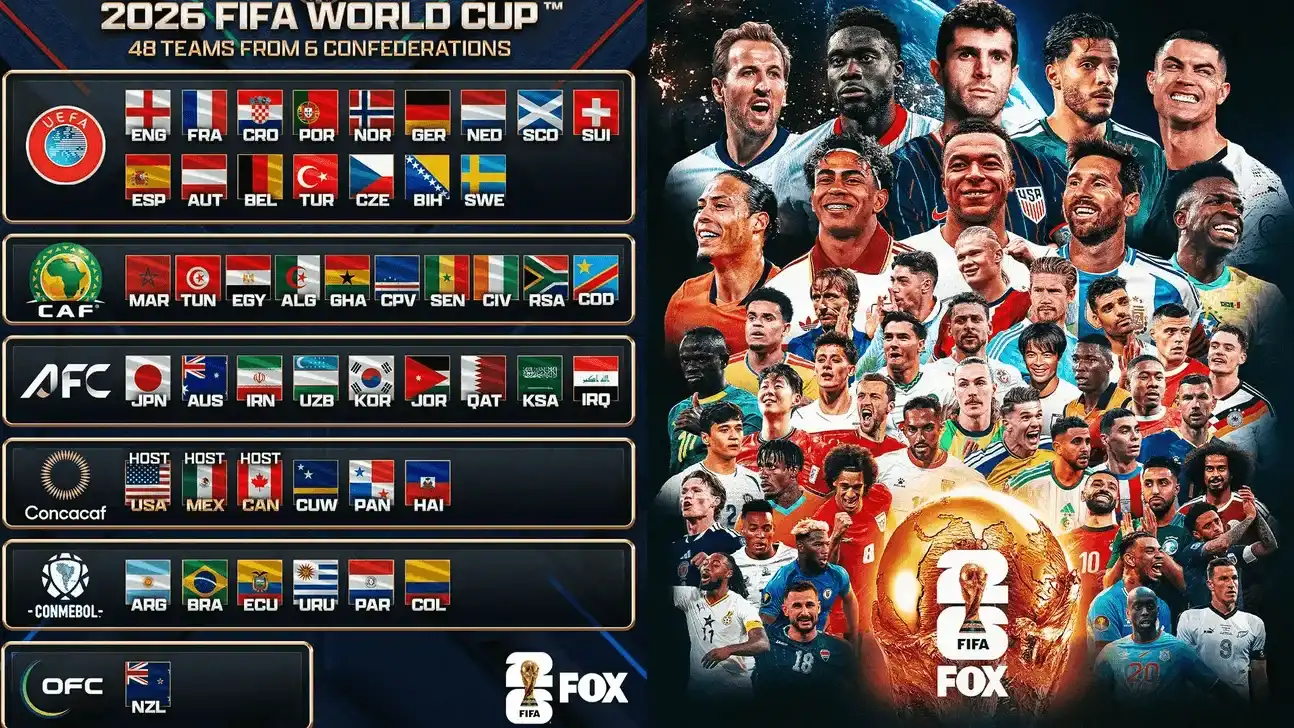
However, the complexity of the World Cup far exceeds that of a single U.S. professional league. Leagues like the NBA and MLB have clear league, team, player union, referee, and official data structures. The World Cup involves a vast array of entities: FIFA, six continental confederations, 48 national teams, clubs, agents, medical teams, referee committees, broadcasters, and data suppliers. Who qualifies as an "insider," how to identify them, and whether they can trade via family, friends, proxy wallets, or third-party accounts? These questions are much harder to answer in the World Cup context.
Furthermore, prediction markets face not just sports integrity issues but also global regulatory legitimacy. In April this year, the Brazilian government blocked 27 prediction market platforms and tightened derivatives rules, prohibiting derivatives based on sports, online games, politics, elections, culture, and social outcomes. Dozens of other countries also reject the argument that "event contracts are not gambling."

In such a climate, FIFA's choice of a platform riddled with question marks and with a product not fully validated as its official World Cup prediction market partner has itself pushed the sports integrity issue to the forefront ahead of time.

Of course, the 2026 World Cup will not determine the survival of prediction markets, but it will likely define the boundaries of their mainstream integration into the global sports industry: will they become a regulated event-trading infrastructure, or just another gambling risk entry point amplified by global sports traffic?


Related Questions

QAccording to the article, what are the main controversies surrounding ADI Predictstreet, the official FIFA 2026 World Cup prediction market partner?

AThe main controversies are: 1) Questionable integrity of its high-level executives, including allegations of insider trading and associations with the 'Qatargate' European Parliament corruption scandal. 2) The extremely fast speed at which it obtained its Gibraltar license. 3) The fact that its actual product was not yet live at the time of the announcement, raising doubts about its transaction, settlement, risk control, and user protection mechanisms.

QWhy is the 2026 FIFA World Cup considered a major stress test for prediction markets?

AThe 2026 World Cup, as a high-density, global, cross-jurisdictional mega-sports event, compresses sports competition, cross-border organization, the gambling ecosystem, and global user traffic into a single market scenario. This significantly amplifies the risk dimensions and external scrutiny. Any information advantage held by insiders regarding injuries, lineups, referees, or internal governance could be rapidly converted into pricing advantages in a tradeable prediction market, posing a severe test to the market's ability to maintain sports integrity.

QWhat specific types of World Cup prediction markets are considered most vulnerable to insider manipulation, according to the article?

AMicroscopic and granular markets are most vulnerable. These include events such as whether a specific player will start, whether a player will be injured, whether a red card will be issued in a match, whether a team will get a penalty kick, which referee will officiate, or whether a VAR controversy will occur. These events are more easily influenced by a small number of insiders and can be priced ahead of time using non-public information.

QWhat actions have established prediction market platforms like Kalshi and Polymarket taken to address integrity concerns related to sports events?

AFollowing legislative pressure in the U.S., these platforms have updated their rules. Kalshi stated it will prohibit sports-related personnel from trading contracts in the fields they participate in or are employed by. Polymarket also updated its rules to prohibit users from trading contracts related to an event if they possess confidential information or are capable of influencing the event's outcome.

QWhat historical and recent factors contribute to skepticism about FIFA's ability to ensure integrity in its dealings with betting and prediction markets?

AHistorical factors include the widespread, systemic, and deep-rooted corruption scandal within FIFA exposed by the U.S. Department of Justice in 2015. Recent factors include FIFA's deepening ties with the betting and data industry (e.g., partnerships with Betano, TAB, Stats Perform), which increasingly embeds events like the World Cup into the gambling and trading ecosystem. This commercial focus raises questions about FIFA's independence and ability to control integrity risks effectively.

Related Reads

TechFlow Intelligence Bureau: Chip Stocks Lose Trillions in a Single Day, Bitcoin Falls Below $60,000, US-Iran Conflict Escalates

**Daily Tech & Markets Roundup: AI Advances, Market Turmoil, and Geopolitical Tensions** **AI / LLMs**: Anthropic's internal report on AI self-improvement sparked serious discussions about Recursive Self-Improvement (RSI). Meanwhile, debate continues on AI coding tools after Claude was accused of introducing bugs into the rsync codebase. In positive news, DeepSeek V4 Flash impressed in local deployment tests, and GitHub Copilot now supports custom endpoints for local models. A surprising research turn suggests removing chain-of-thought prompting can sometimes improve LLM performance. **Crypto / Web3**: Bitcoin plunged below $60,000, with its RSI hitting levels last seen during the COVID-19 crash, driven by strong U.S. jobs data reviving interest rate hike fears. Discussions highlight Ethereum DeFi's continued lack of a smooth consumer payment layer. **Chips / Hardware**: Chip stocks suffered a massive sell-off, with the Philadelphia Semiconductor Index posting its worst single-day drop in six years, erasing over a trillion dollars in value. Marvell, Micron, AMD, and Intel were among the biggest losers. **Tech Companies**: A leaked Microsoft document revealing goals to make Copilot "addictive" drew criticism. LinkedIn founder Reid Hoffman left Microsoft's board to focus full-time on his AI agent startup, Manus. Google was revealed to be paying SpaceX $920 million monthly for AI training compute. **Markets & Macro**: A blowout U.S. jobs report (172k vs. 80k expected) crushed hopes for near-term rate cuts, sending Treasury yields soaring and triggering a broad market sell-off. CEOs from Kraft, McDonald's, and Whirlpool simultaneously warned U.S. consumers are exhausting their savings. **Geopolitics**: U.S.-Iran tensions escalated with missile/drone interceptions and U.S. strikes on Iranian radar sites, keeping the critical Strait of Hormuz largely closed since late February and posing ongoing oil supply risks. **The Bottom Line**: The strong jobs data acted as a single trigger for correlated sell-offs across equities, crypto, and chips. Underlying the volatility is a stark contradiction between robust employment data and warnings of consumer weakness, alongside geopolitical risks that could reignite inflation, leaving markets to price in a fraught macro outlook with no clear "soft landing" path.

marsbit52m ago

TechFlow Intelligence Bureau: Chip Stocks Lose Trillions in a Single Day, Bitcoin Falls Below $60,000, US-Iran Conflict Escalates

marsbit52m ago

It Took Me a Year to See the Bitter Truth About Agent Payments

After a year building infrastructure for the Agent economy, engaging with major players like Stripe, Visa, and Coinbase, the author shares a sobering analysis of the current state of Agent payments. The core finding is a stark lack of genuine, immediate demand across most envisioned use cases. The article breaks down four key market segments: 1. **Agent-to-Merchant (Consumer Shopping):** For most product categories (e.g., clothing, electronics), conversational AI shopping is a step backwards from visual e-commerce interfaces. While agents excel at understanding needs, they can't replace side-by-side product comparison. Real merchant interest is defensive "Agent Engine Optimization," not driven by current customer demand. Potential exists for high-frequency, low-decision purchases (like food delivery) or navigating complex store UIs, but these require massive B2C distribution channels dominated by giants like Amazon. 2. **Agent-to-API (Developer Services):** Developers already have subscriptions and billing relationships for APIs (compute, data). Prepaid balances solve micro-payment issues for low transaction volumes. A deeper structural problem is that major SaaS vendors' business models rely on enterprise contracts, resisting granular pay-per-call pricing. While protocols like MPP and x402 serve the long tail of niche services, this market is small and developers are historically low-willingness-to-pay. 3. **Agent-to-Agent:** This remains largely theoretical with minimal transaction volume. While it represents a long-term bet on a fundamentally new transaction infrastructure (sub-second, micro-penny to million-dollar, multi-party settlements), it does not constitute a present market. 4. **Agent-to-Finance:** This is the only category with existing, paying demand. Integrating AI into financial workflows (trading, portfolio management) is a natural evolution and enables new capabilities like autonomous rebalancing. However, competition favors established, regulated institutions. The "real problem" is not moving money between agents, but the broader challenge of **coordination**—orchestrating work between agents and humans, verifying outcomes, and settling results. Payment is just one component of settlement, which is itself part of coordination. Companies that solve the coordination layer will subsume payment, not the other way around. While well-funded incumbents build defensively for a long-term future, startups must find where the market is today—which, for the author's team, lies outside these four categories in an area of real, growing, and underserved activity.

marsbit1h ago

It Took Me a Year to See the Bitter Truth About Agent Payments

marsbit1h ago

It Took Me a Year to See the Hard Truth About Agent Payments

**Title: It Took Me a Year to See the Hard Truth About Agent Payments** Over the past year, I've worked on infrastructure for the Agent economy, engaging with major players like Stripe, Visa, Coinbase, and numerous startups. The findings reveal a stark reality: genuine, widespread demand for Agent-based payments does not yet exist. **Key Observations:** * **Agent-to-Merchant (Shopping):** The user experience for AI shopping often falls short, especially for visual product discovery. While AI excels at understanding needs, conversational interfaces can't yet replace browsing and comparing multiple products visually. Current merchant interest is largely defensive ("Agent Engine Optimization") for a future that hasn't arrived. High-frequency, low-friction purchases (like food delivery) are potential fits, but lack open APIs and face high AI inference costs. Simpler, more affordable, or cross-language interactions for complex UIs are a niche opportunity but require massive consumer distribution to scale. * **Agent-to-API (Developer Tools):** Developer payment needs for APIs (computing, data, models) are already met through subscriptions and prepaid credits. The core challenge is not payment friction but supplier economics: most large SaaS providers prefer enterprise contracts over micropayments for API calls. Protocols like MPP and x402 suit the long-tail of smaller services but cater to a developer market historically reluctant to pay for these tools. Major infrastructure needs at the top of the stack are already being addressed. * **Agent-to-Agent (Machine Commerce):** This is a long-term vision with almost no current transaction volume. While a future with high-speed, high-frequency, multi-party machine-to-machine transactions would require novel infrastructure, it remains theoretical. The market is not here yet. * **Agent-to-Finance:** This is the only category with clear, present demand. Financial professionals and DeFi users already pay for tools, and AI augmentation is a natural evolution. Autonomous AI agents can enable entirely new financial strategies. However, competition is fierce from established, regulated incumbents who can more easily layer AI onto their existing products. **The Core Insight:** Companies, especially giants with long time horizons, are building defensively for a potential future of mass machine commerce. For them, early investment is a low-cost hedge. For startups, the current market reality is different. The primary challenge isn't just moving money between agents (payments). The larger, unsolved problem is **orchestration** – coordinating work between agents and humans, verifying outcomes, and then settling. Payment is just a part of settlement, which is just a part of orchestration. Companies that solve the orchestration problem will subsume payments, not the other way around. After a year of building, we see the real, growing, and underserved market opportunity lies in this broader domain of orchestration.

链捕手1h ago

It Took Me a Year to See the Hard Truth About Agent Payments

链捕手1h ago

Claude Opus 4.8 Finds a $4.5 Billion Bug: The AI Era is Mass-Producing Hackers

A researcher discovered a critical "infinite mint" vulnerability in the Zcash cryptocurrency's Orchard protocol using Claude Opus 4.8, leading to a swift fix but also a 50% market drop, erasing billions in value. This incident highlights a new era where powerful, accessible AI models are dramatically lowering the barrier to finding software vulnerabilities. Previously, the security community feared specialized models like Claude Mythos Preview, capable of finding decades-old zero-day exploits. The Zcash case, however, involved a publicly available, general-purpose model. This shift makes advanced security auditing—and attack capabilities—accessible to far more people, not just experts. The mass democratization of vulnerability discovery brings a dual challenge: a flood of low-quality, AI-generated false reports that overwhelm maintainers, and the real, rapid uncovering of deep, dangerous bugs. Open-source projects, often understaffed and unfunded, are particularly vulnerable to this "attention DDoS." The article cites examples like curl shutting down its bug bounty program due to the unsustainable workload. Our perceived digital safety has often been luck, relying on the high cost and effort required to find deeply hidden flaws in complex systems, as seen with historical vulnerabilities like Heartbleed or Baron Samedit. AI changes this cost structure, effectively "mass-producing flashlights" to illuminate every corner of our codebase. While large companies operate extensive security chains involving external white-hat hackers and massive defensive operations, the global cybersecurity workforce faces a severe shortage, especially of experienced personnel capable of analyzing complex threats and coordinating fixes. The core dilemma emerges: AI makes *finding* bugs cheap and scalable, but *fixing* them remains a slow, expensive, and human-intensive process. The article concludes that AI won't destroy the internet but acts as a bright light, revealing that our digital existence is not inherently secure but is precariously maintained by ongoing human effort. The true cost in the AI era may not be discovery, but whether there will be enough people left willing and able to do the hard work of repair.

marsbit2h ago

Claude Opus 4.8 Finds a $4.5 Billion Bug: The AI Era is Mass-Producing Hackers

marsbit2h ago

Trading

Spot
Futures

Hot Articles

How to Buy ZEN

Welcome to HTX.com! We've made purchasing Horizen (ZEN) simple and convenient. Follow our step-by-step guide to embark on your crypto journey.Step 1: Create Your HTX AccountUse your email or phone number to sign up for a free account on HTX. Experience a hassle-free registration journey and unlock all features.Get My AccountStep 2: Go to Buy Crypto and Choose Your Payment MethodCredit/Debit Card: Use your Visa or Mastercard to buy Horizen (ZEN) instantly.Balance: Use funds from your HTX account balance to trade seamlessly.Third Parties: We've added popular payment methods such as Google Pay and Apple Pay to enhance convenience.P2P: Trade directly with other users on HTX.Over-the-Counter (OTC): We offer tailor-made services and competitive exchange rates for traders.Step 3: Store Your Horizen (ZEN)After purchasing your Horizen (ZEN), store it in your HTX account. Alternatively, you can send it elsewhere via blockchain transfer or use it to trade other cryptocurrencies.Step 4: Trade Horizen (ZEN)Easily trade Horizen (ZEN) on HTX's spot market. Simply access your account, select your trading pair, execute your trades, and monitor in real-time. We offer a user-friendly experience for both beginners and seasoned traders.

3.1k Total ViewsPublished 2024.03.29Updated 2026.06.02

How to Buy ZEN

Discussions

Welcome to the HTX Community. Here, you can stay informed about the latest platform developments and gain access to professional market insights. Users' opinions on the price of ZEN (ZEN) are presented below.

活动图片












