Despite a broad crypto pullback, aggressive Ethereum accumulation has continued as large buyers step in during weakness rather than retreating.
On-chain data from Lookonchain showed Tom Lee’s Bitmine absorbing nearly 45,000 ETH in rapid succession, sourcing liquidity directly from Kraken and BitGo.
At the same time, an OTC-linked whale added another 10,000 ETH even as broader sentiment weakened.
This behavior signals intent. Instead of waiting for confirmation, large players appear willing to absorb downside volatility.
However, accumulation alone does not guarantee immediate upside. Therefore, the structure of spot demand, order behavior, and leverage positioning now matters more than price reactions.
Large buyers absorb sell pressure
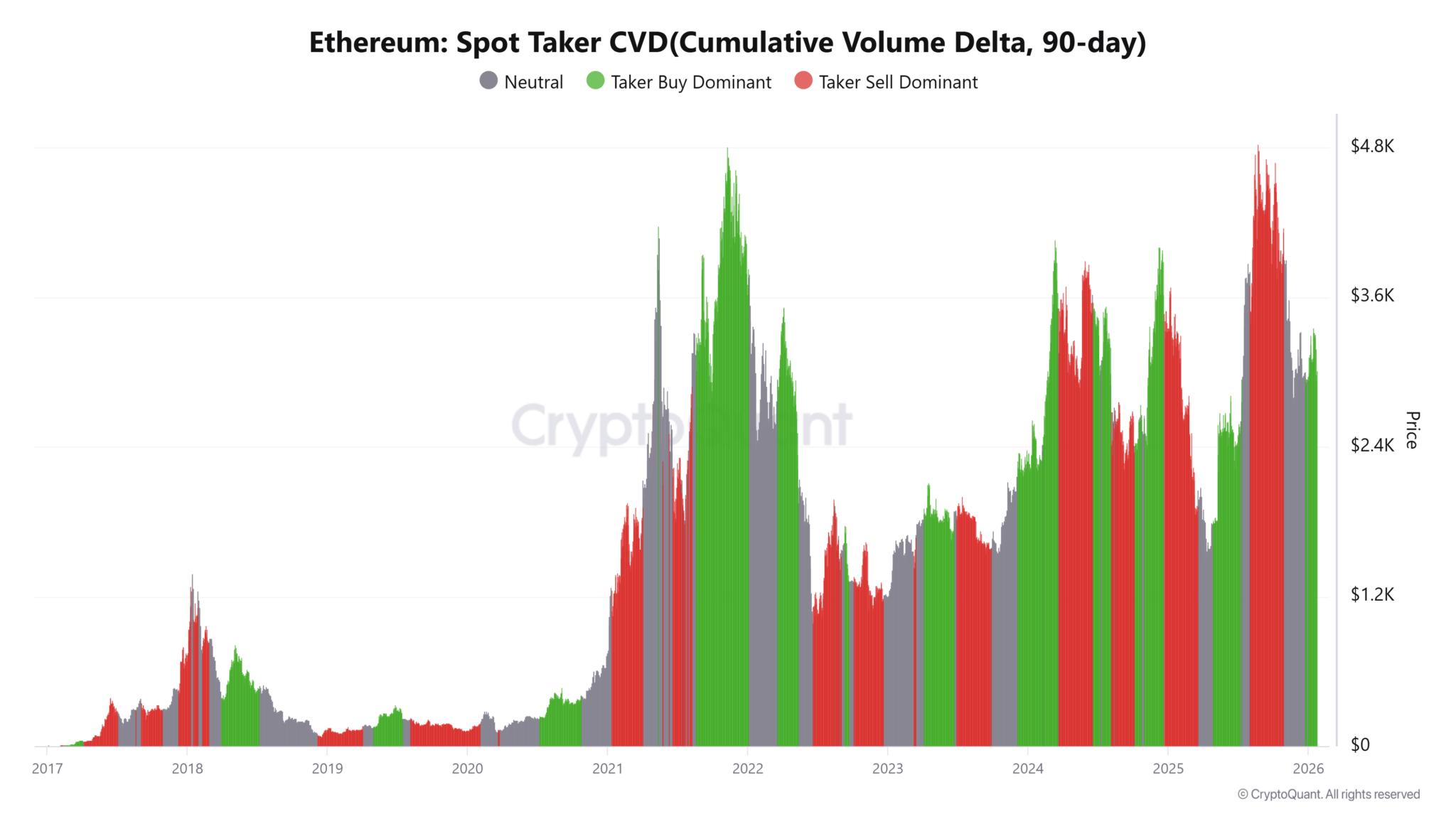
Spot taker CVD continued to print buyer dominance, reinforcing the idea that aggressive participants control execution at market prices.
Buyers do not wait on bids; instead, they cross the spread and absorb available supply. This pattern suggested urgency rather than caution.
Furthermore, buyer-dominant CVD during a market drawdown often reflects conviction rather than speculative chasing. However, this demand does not come from scattered retail flows. Large executions dominate activity.
As a result, the Spot market showed clear absorption rather than distribution. Still, sustained buyer aggression must persist to offset broader risk-off conditions.
Otherwise, sellers could regain short-term control. Therefore, spot taker behavior now acts as the primary stabilizing force for Ethereum’s [ETH] price structure.
Ethereum order sizes reveal whale execution
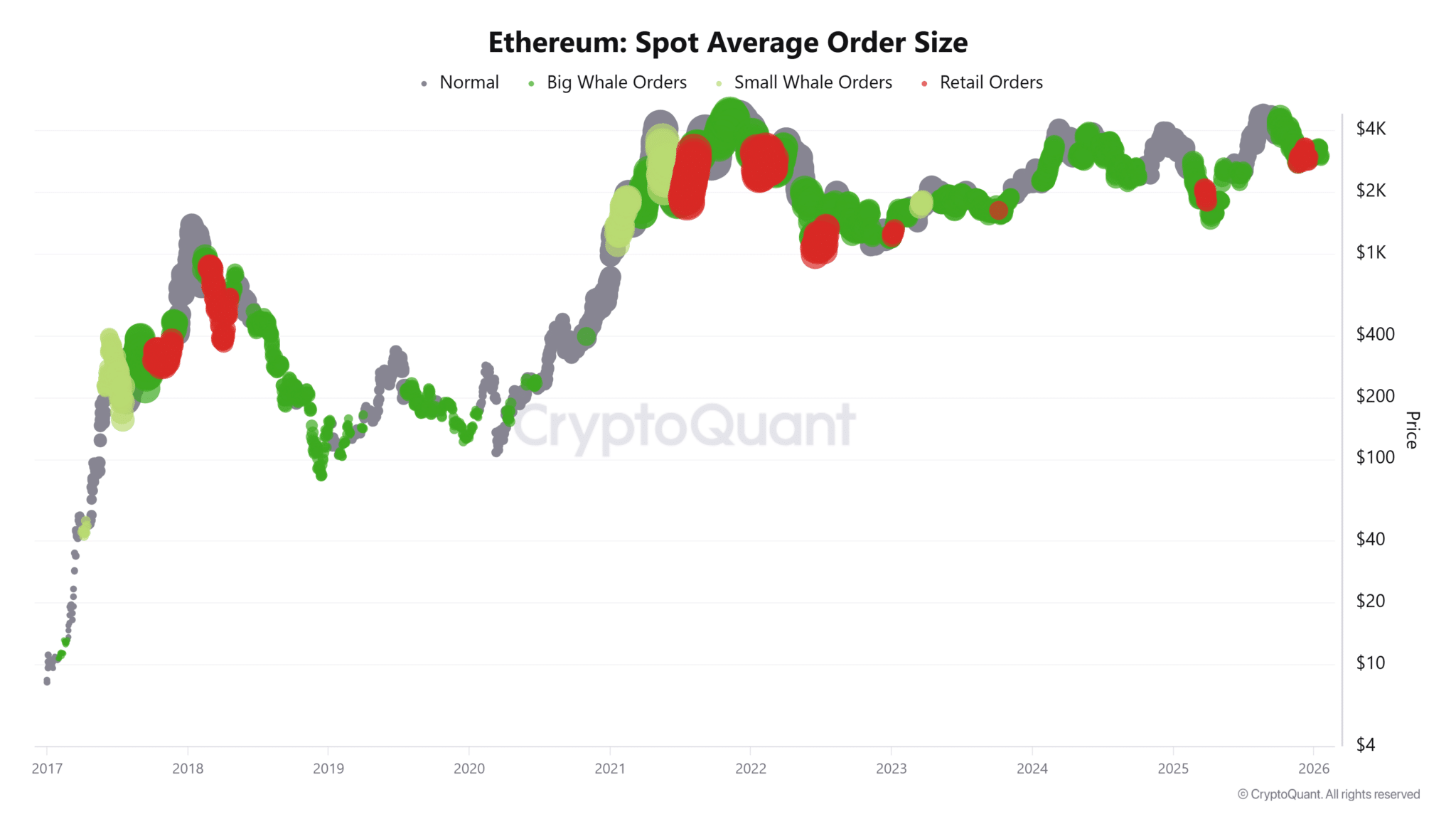
Spot Average Order Size has expanded sharply, pointing directly toward whale-driven participation rather than fragmented retail activity.
Larger order sizes usually reflect institutional desks or OTC-linked execution strategies. In this case, order growth aligns closely with the accumulation flows identified on-chain.
The alignment matters. It shows consistency between wallet-level behavior and exchange-level execution.
However, whales do not chase price blindly. They typically scale into positions while liquidity remains available. Therefore, rising order size during weakness suggests deliberate accumulation rather than panic buying.
At the same time, sustained large orders can compress the available supply. The compression would increase sensitivity to future demand spikes.
Hence, order size now reinforces the broader accumulation narrative already visible on-chain.
Leverage builds as confidence grows
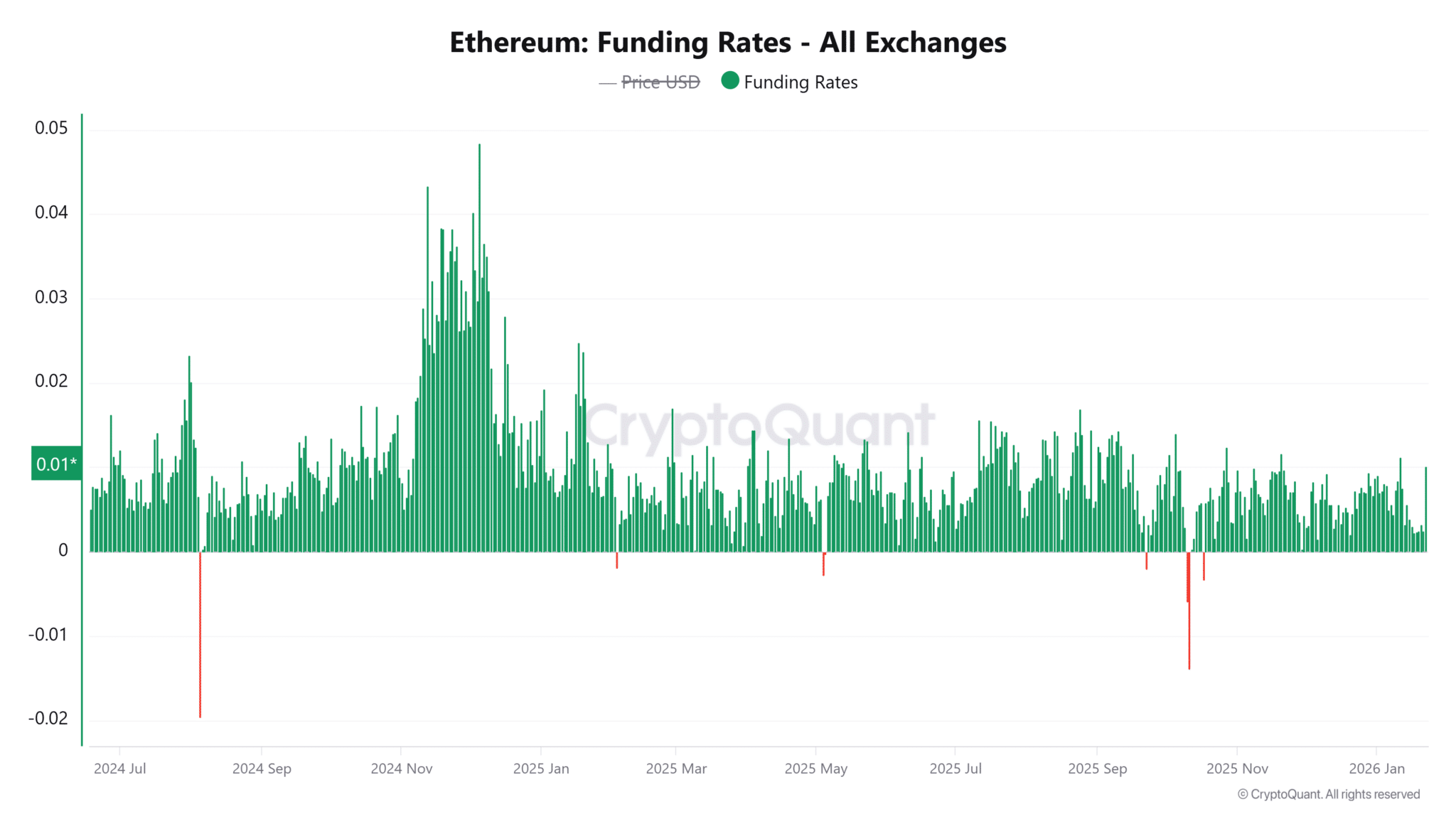
Funding Rates have risen sharply, signaling that traders increasingly favor long exposure. The metric sat around 0.01017, marking a 145.56% increase over the recent baseline.
Traders now pay a clear premium to maintain long positions. This shift reflects growing confidence rather than hesitation.
However, leverage behaves differently from spot demand. While spot buyers absorb supply outright, leveraged traders rely on price continuation.
Therefore, elevated funding strengthens upside pressure only if the price holds steady. If momentum stalls, funding costs could force faster unwinds.
Furthermore, rapid funding expansion often increases short-term volatility. As a result, leverage now adds fuel to Ethereum’s structure but also raises sensitivity to abrupt pullbacks.
Can accumulation stabilize Ethereum?
Ethereum’s structure favored stabilization rather than breakdown. Large buyers continue absorbing supply, Spot demand remains aggressive, and whale-sized executions dominate flows.
However, rising leverage introduces conditional risk. If spot accumulation persists, it would likely anchor the price and limit downside volatility. If Spot demand fades, leverage could magnify weakness.
Therefore, Ethereum’s near-term direction hinges less on sentiment and more on whether aggressive buyers continue absorbing supply under pressure.
Final Thoughts
- Large players appear comfortable absorbing volatility rather than waiting for confirmation.
- Leverage adds upside potential but could amplify moves if spot demand weakens.




















