What The Fed’s Master Account Means For Ripple And XRP

bitcoinistPublished on 2026-01-05Last updated on 2026-01-05

Abstract

Discussions around Ripple's potential access to the Federal Reserve’s master account have highlighted significant implications for the company and XRP. According to an analysis by XRP advocate @UnknownDLT, direct integration with the Fed would allow Ripple to connect to central bank transaction flows, reducing reliance on intermediaries. This access could position Ripple Prime, through its acquisition of Hidden Road, to engage with major financial infrastructures like the DTCC, which handles quadrillions in transaction volume. Additionally, Ripple’s rail is seen as a gateway to the stablecoin sector, accounting for roughly 10% of global stablecoin transactions. XRP is framed as foundational infrastructure—enabling cross-border and intersystem payments—rather than a speculative asset. The long-term vision suggests XRP could dominate cross-border payments, with the XRP Ledger supporting high-volume, fast, and low-cost transactions. This outlook is presented as a strategic plan developed over a decade, not mere speculation.

Discussions around Ripple’s place in the global financial system have resurfaced after a market expert outlined what deeper access to the Federal Reserve’s (FED) master account could mean for the crypto company and XRP. The report outlines how direct integration with the FED could help Ripple frontrun institutional finance and position XRP as the supporting anchor to this framework.

Ripple To Access FED Master Account With XRP

An XRP advocate, @UnknownDLT, has released a new post on X explaining how access to the United States Federal Reserve’s master account could expand Ripple’s role in global financial infrastructure. Rather than focusing on price action, the report explores how XRP could play a more infrastructural role in these systems, emphasizing the benefits of the FED’s transaction volume and institutional connectivity.

According to the advocate, a FED master account would allow Ripple to connect directly to the central bank’s transaction flows. This would give the crypto company direct access to the core of US payment operations, reducing reliance on intermediary banks and third-party processors.

The report also points to Ripple Prime, an institutional prime brokerage service, formed by the rebranding and acquisition of Hidden Road. @UnknownDLT has suggested that Ripple Prime could be a key driver of Ripple’s institutional access. He stated that Hidden Road could give the crypto company direct exposure to the Depository Trust and Clearing Corporation (DTCC), which underpins an estimated $4 quadrillion in transaction volume across equities, fixed income, and derivatives markets.

Beyond traditional finance, the XRP advocate highlights Ripple’s rail as an entry point into the stablecoin sector. Ripple’s rail is said to provide access to roughly 10% of global stablecoin transaction volume, further embedding the crypto company within large-scale digital asset settlement activity.

Within this broader framework, the altcoin is described as the base layer enabling these connections. @UnknownDLT frames XRP as infrastructure rather than a typical speculative digital asset, highlighting its role in Ripple’s growing institutional reach and as a bridge for cross-border and intersystem payments.

Long-Term Vision In The Payments Sector

In a previous post, @UnknownDLT also shared a strong projection about the future role of XRP and Ripple in global payments. He stated that XRP is positioned to dominate the cross-border payments market while Ripple could emerge as the largest financial conglomerate globally.

The expert also predicted that the XRP Ledger will handle the world’s highest volume of money transfers. He explained that the blockchain network was designed to support massive financial flows. As a result, widespread adoption is seemingly inevitable. Notably, the ledger can reportedly handle up to 1,500 transactions per second, settling transfers in just 3-5 seconds with minimal fees.

@UnknownDLT has emphasized that his projections are not market hype or fear-driven speculation, but a plan that has been developing for more than ten years.

Bulls continue to push for higher prices | Source: XRPUSDT on Tradingview.com

Trending Cryptos

Related Questions

QWhat potential benefit could Ripple gain from accessing the Federal Reserve's master account?

AAccess to the Federal Reserve's master account would allow Ripple to connect directly to the central bank's transaction flows, giving it direct access to the core of US payment operations and reducing reliance on intermediary banks and third-party processors.

QAccording to the report, how is XRP's role described within Ripple's institutional framework?

AXRP is described as the base layer infrastructure that enables connections, acting as a bridge for cross-border and intersystem payments, rather than being a typical speculative digital asset.

QWhat is Ripple Prime, and how could it contribute to Ripple's institutional access?

ARipple Prime is an institutional prime brokerage service formed by the rebranding and acquisition of Hidden Road. It could give Ripple direct exposure to the Depository Trust and Clearing Corporation (DTCC), which underpins an estimated $4 quadrillion in transaction volume.

QWhat capabilities of the XRP Ledger support its potential for handling high-volume money transfers?

AThe XRP Ledger can handle up to 1,500 transactions per second, settling transfers in just 3-5 seconds with minimal fees, making it designed to support massive financial flows.

QWhat long-term projection did @UnknownDLT make about Ripple and XRP in the global payments market?

A@UnknownDLT projected that XRP is positioned to dominate the cross-border payments market, and Ripple could emerge as the largest financial conglomerate globally, with the XRP Ledger handling the world's highest volume of money transfers.

Related Reads

DRAM ETF Issuer: Samsung, SK Hynix, Micron All Surpass $1 Trillion, the AI Era of Memory Chips Has Only Just Begun

Authors: Dave Mazza, Thomas DiFazio | Source: Deep Tide TechFlow The article, written by Roundhill Investments (issuer of the DRAM ETF), responds to Morningstar's caution about investing in memory chip stocks. Morningstar warns of the sector's history of boom-bust cycles, a lack of economic moats, and potential momentum-driven overvaluation. Roundhill argues the current situation is structurally different due to AI. Key points in Roundhill's rebuttal include: * **Changed Demand & Supply Dynamics:** AI infrastructure, not consumer electronics, is now the primary growth driver for memory demand. New, strict long-term supply agreements with hyperscalers reflect the high capital intensity of advanced manufacturing. * **Existence of a Moat:** High-Bandwidth Memory (HBM), essential for AI, has extremely high manufacturing barriers. The market is dominated by Samsung, SK Hynix, and Micron, with new entrants blocked by technological complexity and long lead times for equipment like ASML's EUV machines. * **Strong Fundamental Outlook:** Analyst consensus projects the three companies will rank among the world's most profitable by 2027, with combined profits of $704 billion on over $1 trillion in revenue. Their operating margins have already reached record highs. * **Valuation Re-rating:** Despite significant stock price gains, memory stocks trade at attractive valuations (e.g., a median NTM P/E of 8.37x for the DRAM ETF) relative to projected explosive EPS growth. Roundhill suggests historical valuation frameworks may no longer apply given the new profitability paradigm. Conclusion: Roundhill contends the rally is justified by fundamentals, marking a structural shift for the memory industry into a new era of sustained, AI-driven demand against constrained supply, rather than a repeat of past cycles.

marsbit18m ago

DRAM ETF Issuer: Samsung, SK Hynix, Micron All Surpass $1 Trillion, the AI Era of Memory Chips Has Only Just Begun

marsbit18m ago

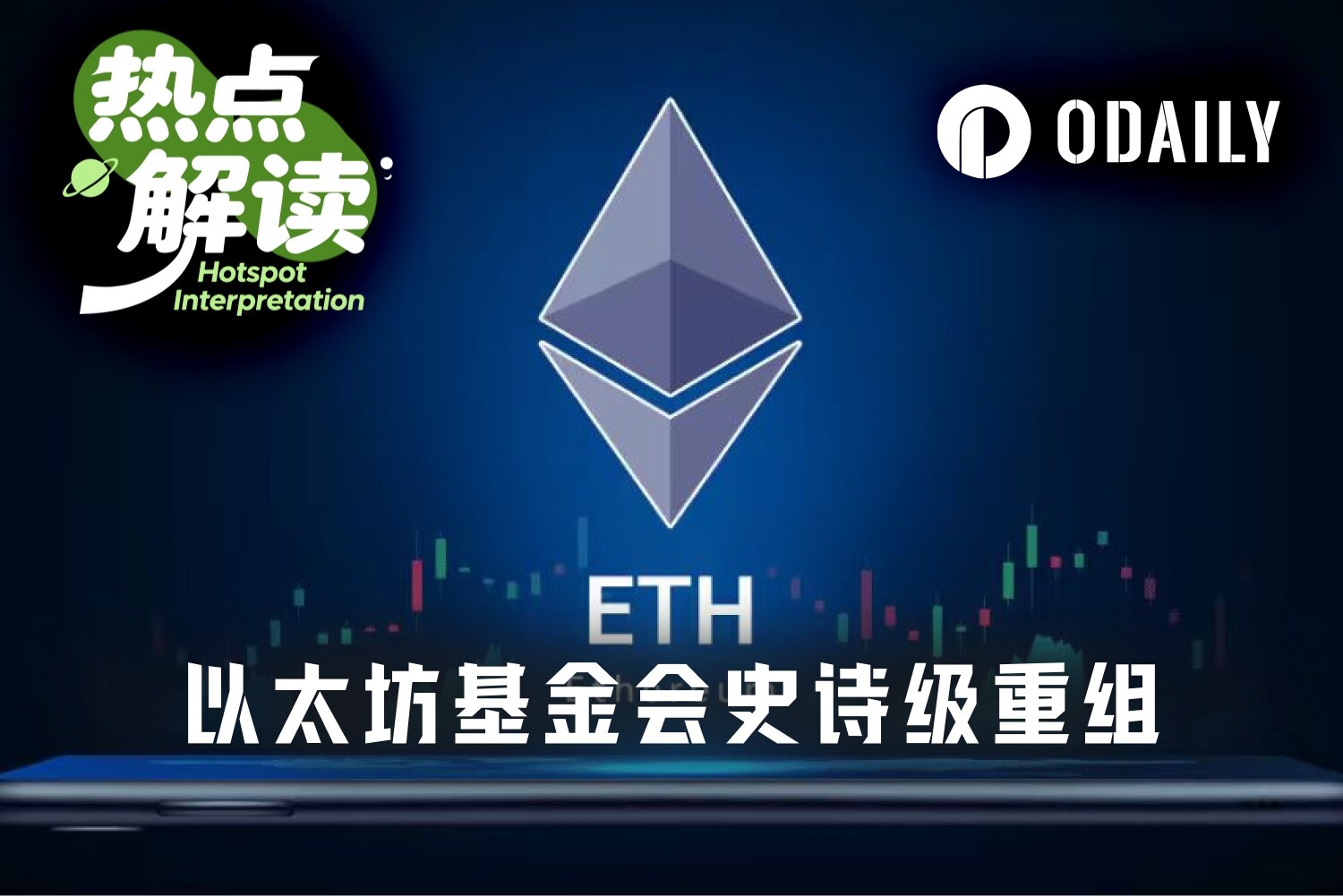
EF's Epic Reorganization: 20% Layoffs, Budget Halved, Is Ethereum Gearing Up for a Leaner Future?

The Ethereum Foundation (EF) has announced a major organizational restructuring, involving a 20% staff reduction (approx. 54 employees) and a division into functional clusters like Protocol, Access, User, Community, and Institutional layers. Co-founder Vitalik Buterin further revealed plans to cut the EF's budget by around 40% over the coming years, aiming to reduce its annual spending rate from about 15% to roughly 5% by 2030, transitioning to an endowment-driven model. This overhaul is seen as a long-overdue correction to the EF's ambiguous role. As Ethereum grew, the foundation faced persistent criticism over ETH sales, perceived lack of execution, and unclear strategy, often becoming a focal point for community frustration amid ETH's price stagnation. The reform aims to redefine the EF's boundaries, narrowing its focus to core protocol research, public goods funding, and ecosystem coordination, while offloading more applied development work to the broader market. Concurrently, ecosystem forces like the newly formed Ethlabs (founded by ex-EF researchers) and other independent groups are stepping in to fill the space, signaling a shift from a centralized model to a more distributed, collaborative ecosystem structure. The move was notably praised by Solana co-founder toly, who viewed a "leaner" EF as potentially more decisive and agile.

Odaily星球日报58m ago

EF's Epic Reorganization: 20% Layoffs, Budget Halved, Is Ethereum Gearing Up for a Leaner Future?

Odaily星球日报58m ago

Dragonfly Partner Haseeb: The Fastest-Growing Companies of the Future May All Get Stuck at 149 Employees

Dragonfly partner Haseeb explores the distorted economics of AI model pricing, drawing parallels to tax policy. He notes that startups and small teams (under 150 users) enjoy heavily subsidized, fixed-price AI subscriptions (like Claude Code), where the marginal cost of an additional token is effectively zero. This creates a powerful incentive for them to maximize token usage ("token-maxxing") and innovate aggressively with AI automation. In contrast, large enterprises (over 150 users) are forced onto "Enterprise" plans, paying per-token API fees with high (~75%) markups. This acts like a steep "tax" on AI-powered labor, disincentivizing marginal automation and experimental use, and encouraging them to retain more human workers. Haseeb argues this pricing creates a "150-person cliff," a regulatory notch similar to labor laws in France that discourage firms from growing past 50 employees. He predicts the fastest-growing future companies may deliberately cap their headcount at 149 to avoid the punitive enterprise pricing. This would foster an "AI-first" management philosophy obsessed with automation and outsourcing to stay lean. While not intentionally designed, this bifurcated pricing could become one of the most influential de facto tax policies, shaping how AI replaces labor—not through mass layoffs at big firms, but through agile, AI-native startups outcompeting them.

marsbit1h ago

Dragonfly Partner Haseeb: The Fastest-Growing Companies of the Future May All Get Stuck at 149 Employees

marsbit1h ago

Trading

Spot
Futures

Hot Articles

What is XRP 2.0

XRP 2.0: A New Frontier in the Cryptocurrency Landscape Introduction to XRP 2.0 In the ever-evolving realm of cryptocurrency, new projects continuously emerge, vying for attention and adoption. One such promising initiative is XRP 2.0, a novel cryptocurrency project designed to leverage advanced blockchain technology and robust encryption methodologies. While the name draws parallels with Ripple’s XRP, it’s crucial to note that XRP 2.0 operates independently, focusing on enhancing transaction security, privacy, and scalability. As the digital financial landscape increasingly embraces decentralized solutions, XRP 2.0 aims to contribute meaningfully to web3 and the overall expansion of crypto projects. What is XRP 2.0? At its core, XRP 2.0 is a cryptocurrency project that aims to create a secure and decentralized digital currency ecosystem. Its foundational technology integrates sophisticated blockchain principles with cutting-edge encryption techniques. The overarching goal of XRP 2.0 is to establish itself as a reliable and efficient platform enabling swift transaction execution while prioritizing enhanced privacy protections for its users. The project is promoted as a solution to many limitations faced by existing cryptocurrencies, proposing a system that can handle a higher volume of transactions with improved speed and privacy. This versatility positions XRP 2.0 as a significant contender in a marketplace riddled with various digital currencies. Who is the Creator of XRP 2.0? The identity of the creator behind XRP 2.0 has been flagged as ‘Wilbur.’ However, comprehensive details regarding Wilbur or their associated entity remain elusive. The anonymity of many cryptocurrency creators is not an uncommon phenomenon in the industry, often designed to maintain a degree of privacy and security. Who are the Investors of XRP 2.0? As of now, specific information related to the investment foundations or organizations supporting XRP 2.0 is not publicly available. In the cryptocurrency sector, the backing by reputed investors can significantly influence a project's credibility and success, yet the transparency regarding the financial supporters of XRP 2.0 has not been established. How Does XRP 2.0 Work? XRP 2.0 stands out by employing a combination of blockchain technology and advanced encryption algorithms that ensures secure and decentralized transactions. Its innovative structure includes unique features designed to foster user engagement and broaden functionalities beyond conventional cryptocurrency transactions. Among these features, XRP 2.0 incorporates AI-powered capabilities, such as text-to-image and text-to-speech functionalities. These additions are designed to enhance the interactive experience for users, promoting broader applicability across various sectors. By bridging technological advancements with user-centered design, XRP 2.0 aims to capture the attention of a diverse range of individuals and enterprises looking to integrate cryptocurrency solutions into their operational frameworks. Timeline of XRP 2.0 Understanding XRP 2.0 requires examining the milestones that have defined its journey thus far: July 23, 2023: XRP 2.0 is introduced as a novel cryptocurrency project, aiming to revolutionize secure and decentralized transaction capabilities in the blockchain domain. September 8, 2023: The launching of another project, XRP20, occurs, marking the emergence of an ERC-20 token on the Ethereum blockchain that remains unrelated to XRP 2.0. November 13, 2023: The XRP Ledger undergoes a significant update with the release of rippled server software version 2.0.0. It is essential to note that this development is disconnected from the XRP 2.0 cryptocurrency project. Key Points About XRP 2.0 To distill the essence of XRP 2.0, several critical factors emerge: Unique Features: The inclusion of features like AI-powered text-to-image and text-to-speech further diversifies the potential applications of XRP 2.0. Blockchain Technology: The framework utilizes advanced blockchain mechanisms and encryption protocols, ensuring a secure and decentralized environment for transactions. Scalability and Privacy: XRP 2.0 prioritizes enhanced privacy protections in transaction processes and the scalability necessary to accommodate a growing user base. No Affiliation with Ripple: Importantly, despite its name, XRP 2.0 does not have any allegiance or collaboration with Ripple’s XRP, distinguishing its operational framework and objectives within the cryptocurrency ecosystem. Conclusion XRP 2.0 represents an ambitious venture into the cryptocurrency sphere, aiming to offer a combination of security, privacy, and efficiency in digital transactions. By integrating sophisticated technologies and user-friendly features, the project sets out to broaden the horizons of what cryptocurrency can achieve in today's digital economy. While the anonymity of its creator and lack of disclosed investors might raise questions for some, XRP 2.0's focus on advanced functionalities and decentralisation enhances its appeal amidst an increasingly crowded crypto market. As the cryptocurrency landscape continues to evolve, XRP 2.0 may yet emerge as a pivotal player in the expansion of secure and scalable blockchain solutions.

987 Total ViewsPublished 2024.04.01Updated 2024.12.03

What is XRP 2.0

Discussions

Welcome to the HTX Community. Here, you can stay informed about the latest platform developments and gain access to professional market insights. Users' opinions on the price of XRP (XRP) are presented below.

活动图片