What Do the Smart Money Buying AAVE at Lows Actually See?

Odaily星球日报Published on 2025-12-08Last updated on 2025-12-08

Abstract

Amidst market volatility, major players like a "whale" (recovering from a forced liquidation) and investment firm Multicoin Capital have been accumulating AAVE positions, suggesting "smart money" is building structural long-term holdings. Aave dominates the on-chain lending sector, capturing ~87% of Ethereum-based lending revenue. Key insights from an analysis include: Aave's revenue shows strong cyclicality but with a significantly higher baseline—even conservative bearish projections estimate monthly revenues (~$6M) above previous bull market highs. Its native stablecoin GHO has grown organically to over $400M, demonstrating sustainable demand. Aave's buyback program has executed consistently, repurchasing 0.8% of total supply in 8 months, adding deflationary pressure. The protocol is evolving from a lending platform into a foundational liquidity layer, with GHO enabling vertical integration and revenue diversification. Despite short-term volatility, Aave presents a compelling long-term infrastructure investment due to its mature revenue model, expanding utility, and deflationary tokenomics.

Original | Odaily Planet Daily (@OdailyChina)

Author | DingDang (@XiaMiPP)

During the black swan event on October 11th, the leveraged loan whale, who was forcibly liquidated of 32,000 AAVE at approximately $101, did not exit the market. On the contrary, starting from November 24th, this address began accumulating AAVE again through leveraged loans. As of now, its total holdings have increased to 333,000 AAVE, valued at approximately $62.59 million at the current price, with an average entry cost of around $167.

Almost within the same time window, the well-known crypto investment firm Multicoin Capital also began steadily building a position in AAVE: starting from October 17th, they gradually increased their holdings through Galaxy Digital's OTC channel. Their current holdings are approximately 338,000 AAVE, with a market value of about $65.3 million.
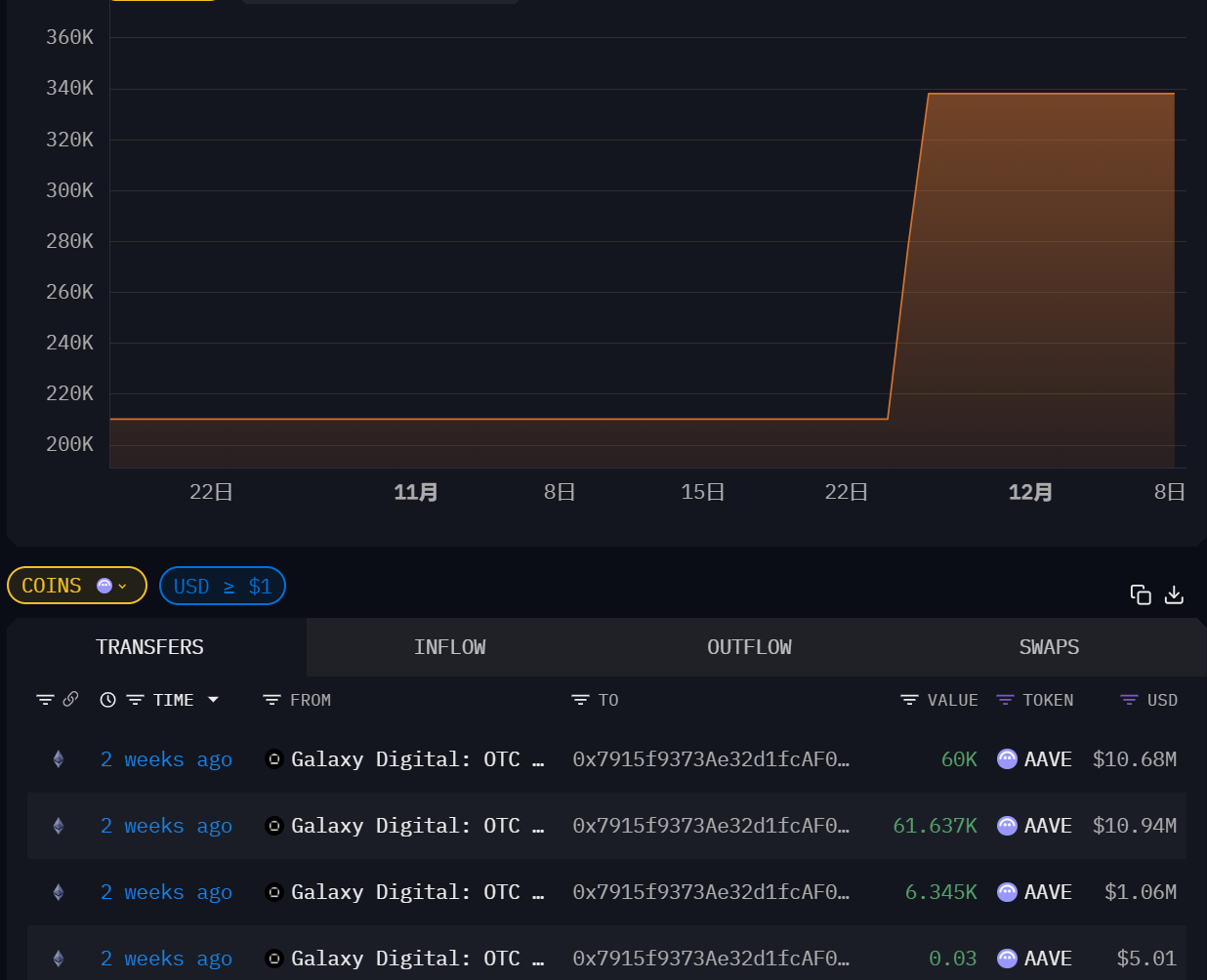
Image source: Arkham

These transactions all occurred within the past month and a half. Can these clear signs of capital accumulation be interpreted as "smart money" building a structural foundational position around AAVE? And is AAVE itself a worthwhile investment?

Aave Protocol: The "Quasi-Infrastructure" of On-Chain Lending

If on-chain lending is considered the DeFi sector closest to "native finance," then Aave has almost become the公认标准 (de facto standard) in this field. Metrics such as TVL, revenue, market share, and borrowing/lending activity all attest to Aave's success.
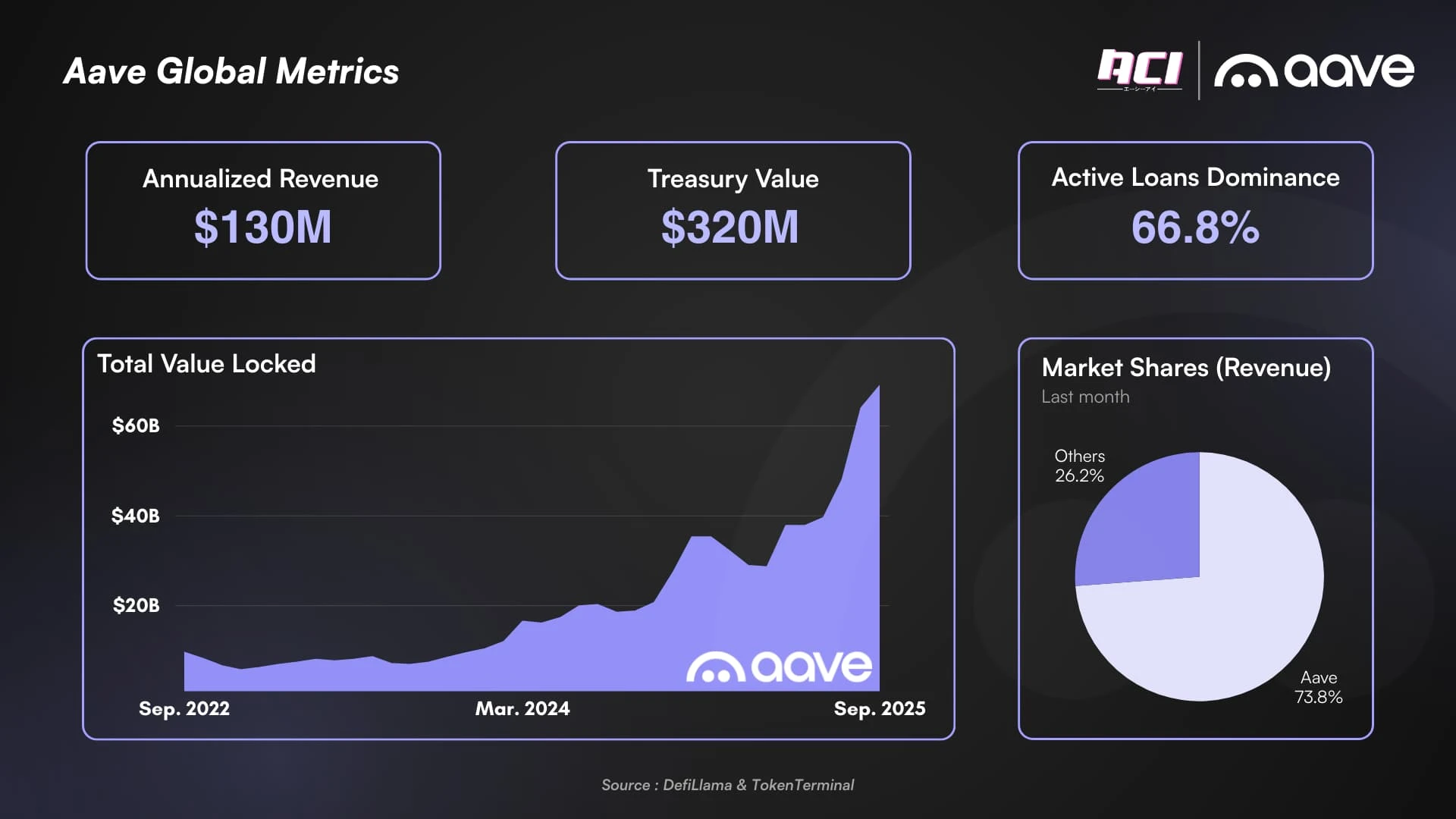
Especially in terms of revenue. As the core metric for measuring the value of a DeFi protocol, Aave holds a dominant position in the lending market. Approximately 79% of the lending market's revenue comes from the Ethereum mainnet, and 87% of *that* belongs to Aave itself.
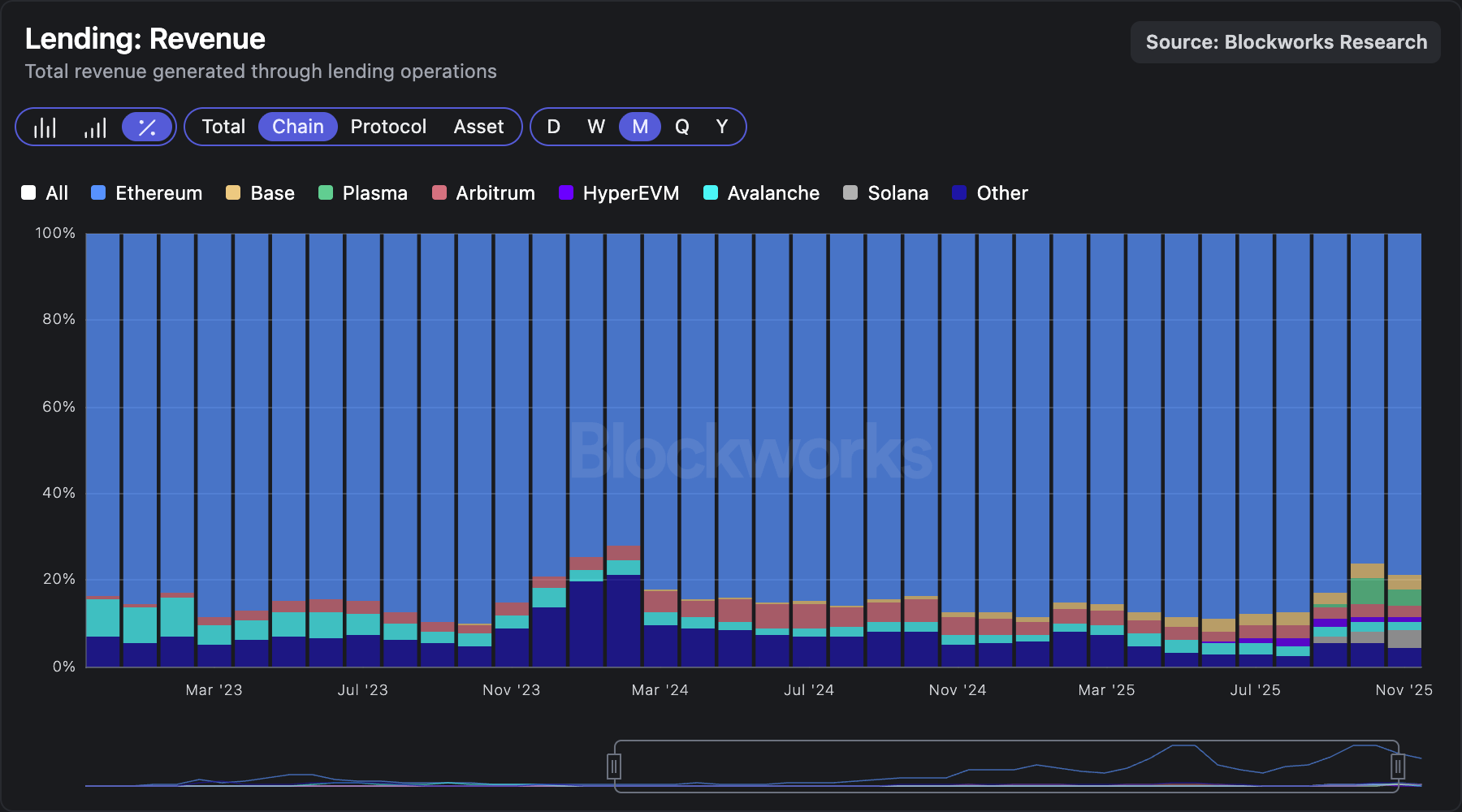
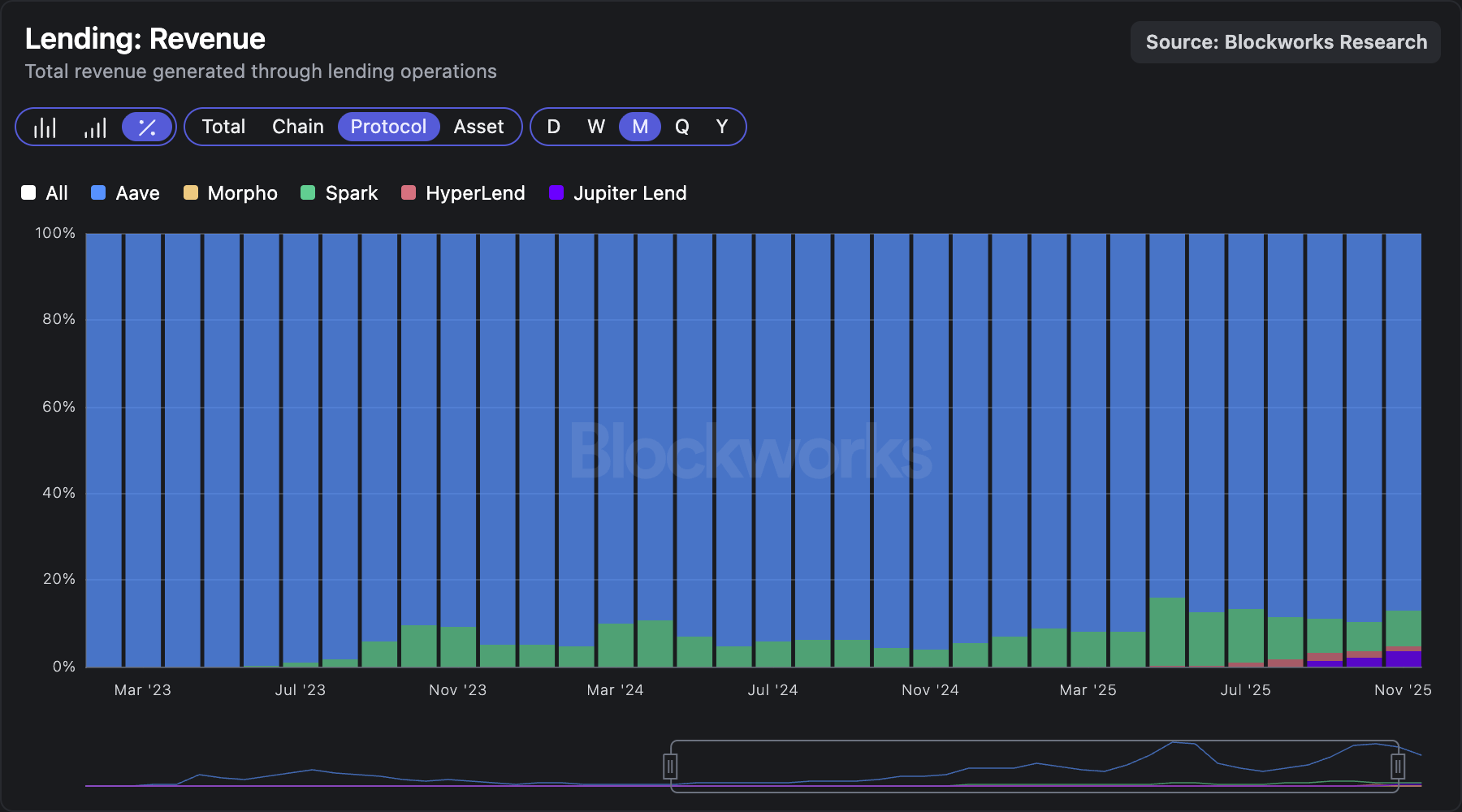
Data from Blockworks

This structure implies: Aave is not just a "leading project," but closer to a foundational protocol默认为 (defaulted to as) the default liquidity layer by the market. But the question is: Can this advantage translate into a more deterministic cash flow logic, thereby supporting AAVE's investment value?

To avoid being misled by market noise, crypto user @intern_cc systematically deconstructed Aave's long-term financial structure, starting from the "protocol's own ability to generate revenue" to evaluate whether its current growth is structural or merely a cyclical rebound.

The core analytical framework includes: 1) A revenue forecasting model, built based on historical rolling multiples and specifically adjusted for diminishing marginal returns in mature markets; 2) Product integration capability, assessing the stability of GHO and its role in vertically integrating protocol revenue; 3) Capital efficiency metrics, reviewing the execution effectiveness of the token buyback plan and comparing it with annual targets.

Odaily Planet Daily has compiled the key data as follows:

Revenue Structure: Still Highly Cyclical, but the "Bottom" is Rising
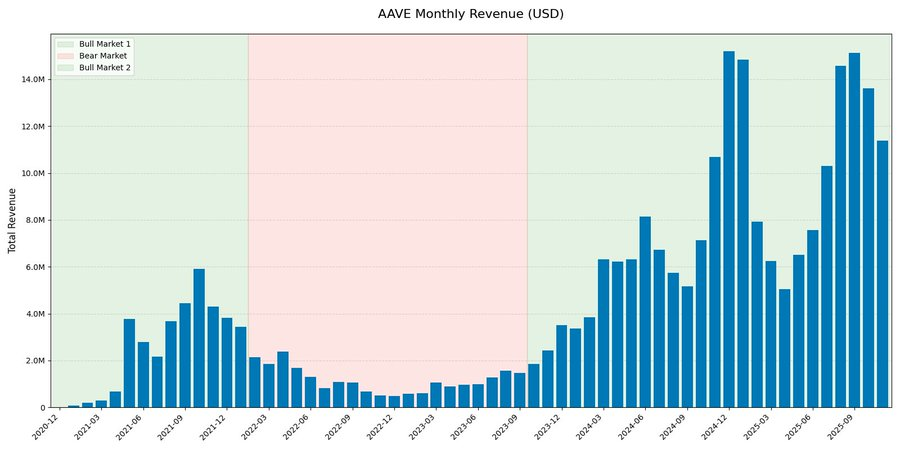
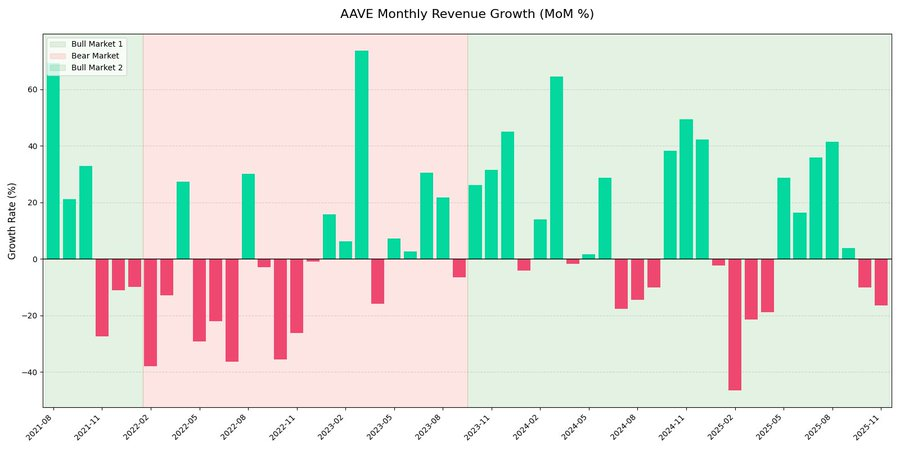
Looking back at Aave's monthly revenue data, it shows a strong cyclical characteristic. But more notably, a clear structural shift has occurred.

In the current cycle ("the second bull market"), Aave's monthly revenue experienced explosive growth, peaking at nearly $15 million, which is more than double the peak in 2021. Despite the significant growth, the month-over-month revenue chart clearly shows: Revenue remains highly volatile, primarily driven by market activity, rather than showing a linear, steady expansion.

This data also indicates that protocol revenue exhibits a clear reflexive characteristic between different market cycles.

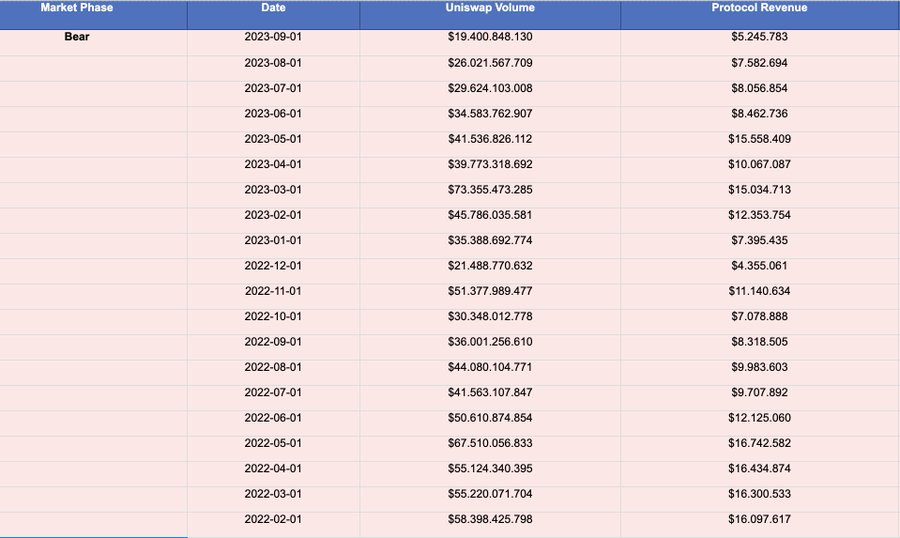
The author also points out that even for blue-chip DeFi protocols like Aave, it is difficult to completely eliminate cyclical fluctuations in future bear markets. Newer protocols like Ethena and Pendle might face more severe survival tests in future bear markets but will experience high prosperity during bull cycles. Uniswap is virtually the only blue-chip DeFi protocol that shows relatively moderate declines in trading volume and revenue during bear markets.
GHO: The Key Variable for Aave's Shift from "Horizontal Expansion" to "Vertical Integration"
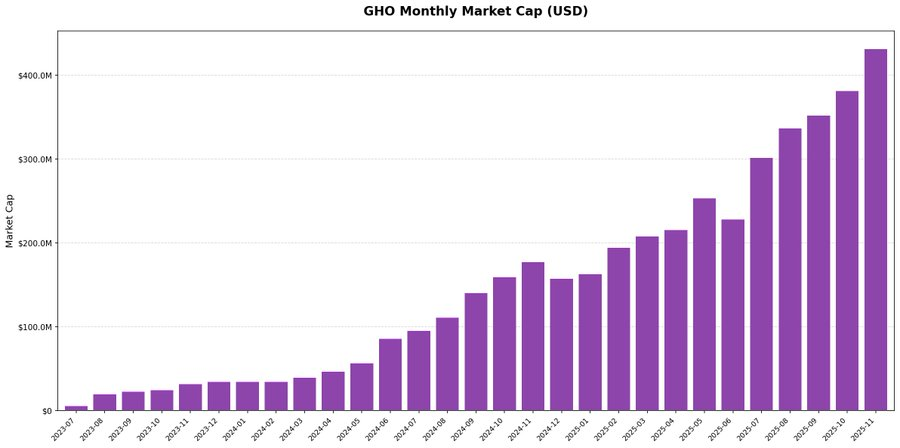
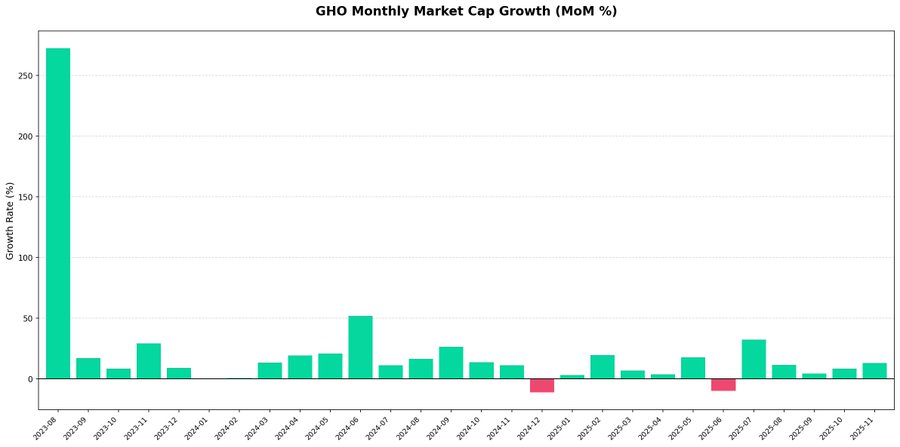
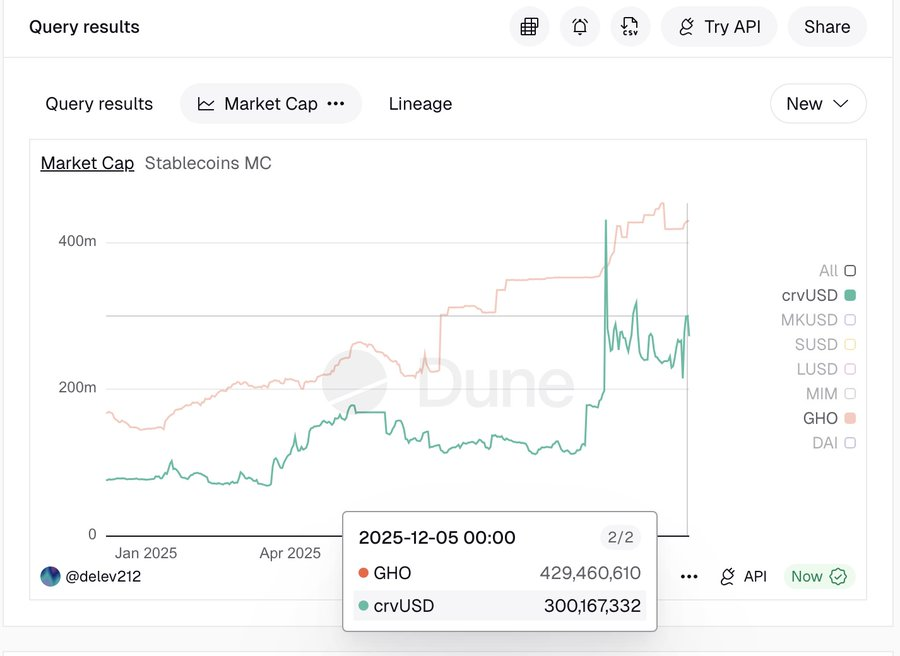
Since its launch in Q3 2023, GHO has maintained a steady upward trajectory. By the end of 2025, its market capitalization had surpassed $400 million.

Month-over-month data shows extremely low volatility, with almost no significant signs of capital outflow, indicating that demand is sustained rather than driven by short-term speculative rotation.

This trajectory validates that Aave's strategic direction towards vertical integration is effective. GHO's growth is organic growth, with no abnormal spikes in TVL.

A horizontal comparison between GHO and crvUSD reveals that CDP-type stablecoins from blue-chip DeFi protocols exhibit a clear structural demand foundation.
Revenue Forecast Model: Aave is Entering the "Mature Protocol Range"

The author modeled using rolling windows across past cycles, arguing that instead of subjectively assuming future growth rates, it's better to precisely measure the protocol's true revenue performance in each 12-month segment of past market cycles, splitting them into bear market contraction phases and bull market expansion phases.

For scenario settings, three scenarios were selected based on the historical sample distribution:

  • Conservative scenario (25th percentile)
  • Baseline scenario (median)
  • Optimistic scenario

Notably, the optimistic scenario did not use the common upper quartile (75th percentile) but was deliberately constrained to around the 60th percentile range to filter out extreme outliers. The core purpose of this design is to embody the law of diminishing marginal returns, ensuring the model reflects the growth trajectory of a protocol entering its mature stage, rather than the explosive abnormal returns of its early days.
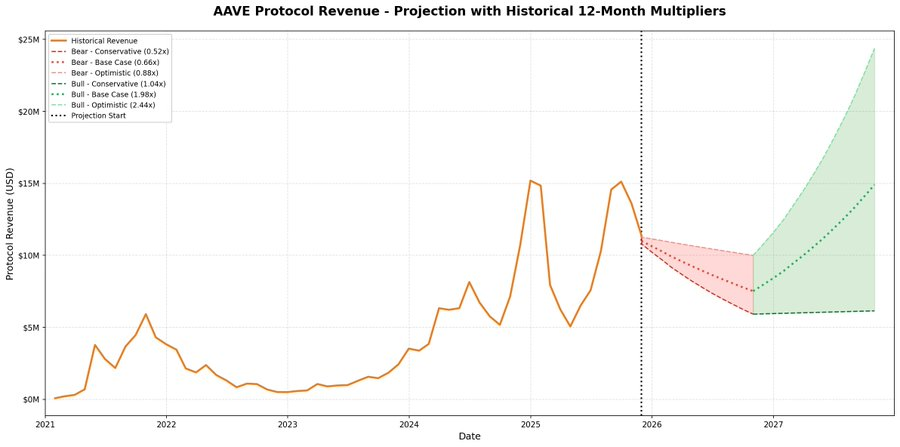
The results of this model show: Aave has clearly matured compared to the first bear market cycle. Future revenue may still decline, but the drawdown will be significantly milder.

It is particularly noteworthy that even under the bear market scenario assumption (multiple range of 0.52x–0.88x), the predicted revenue bottom is about $6 million per month, which is still higher than the historical peak during the 2021 bull market.

AAVE Buyback: The True Execution Power of the Deflation Mechanism
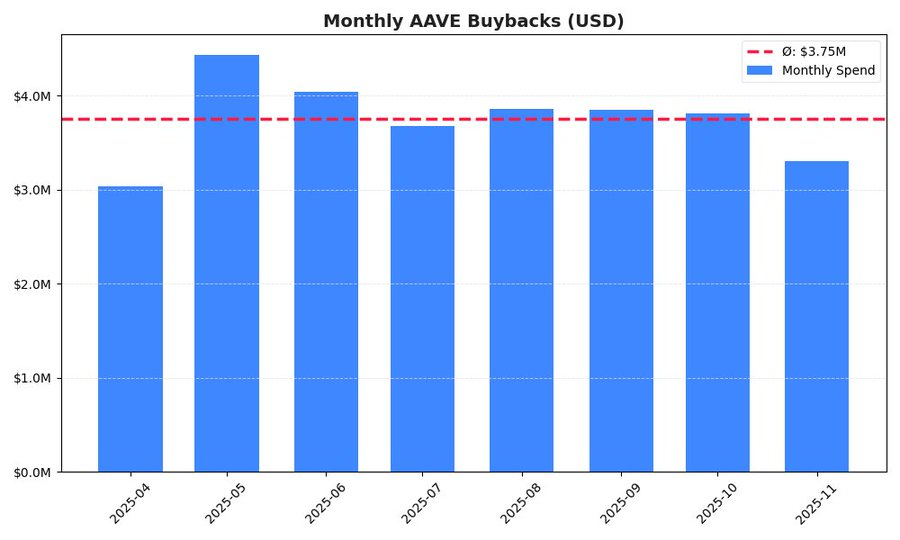
The monthly buyback volatility chart shows that the protocol employs a relatively disciplined, non-speculative execution strategy. Although there are slight fluctuations (e.g., a阶段性峰值 [stage peak] in May), the overall pace is relatively stable.
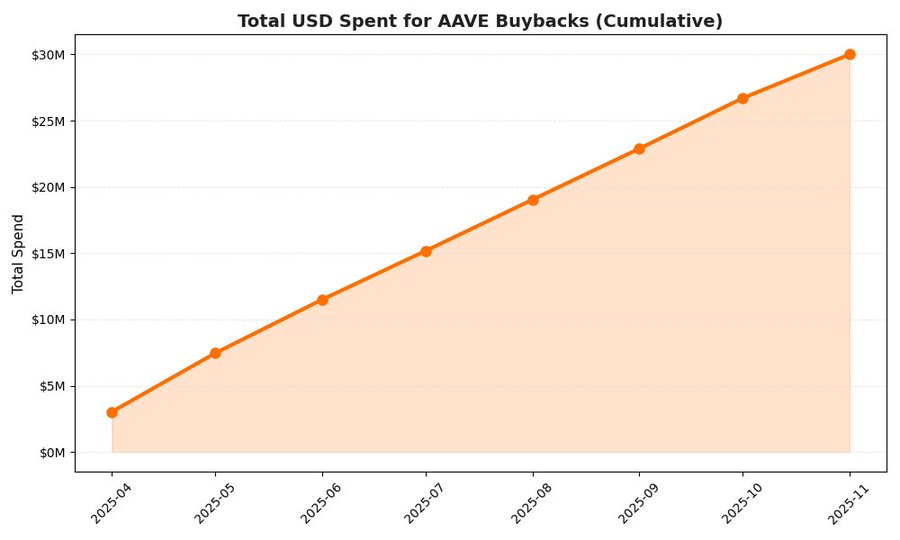
Cumulative data indicates that in the first 8 months after the buyback plan was initiated, Aave had累计投入 (cumulatively invested) approximately $30 million. To achieve the official annual target of $50 million, the corresponding monthly pace should be about $4.17 million. The current actual monthly pace is about $3.75 million. Projecting at the current speed, the annualized buyback scale would be about $45 million, representing a deviation of about 10% from the target.
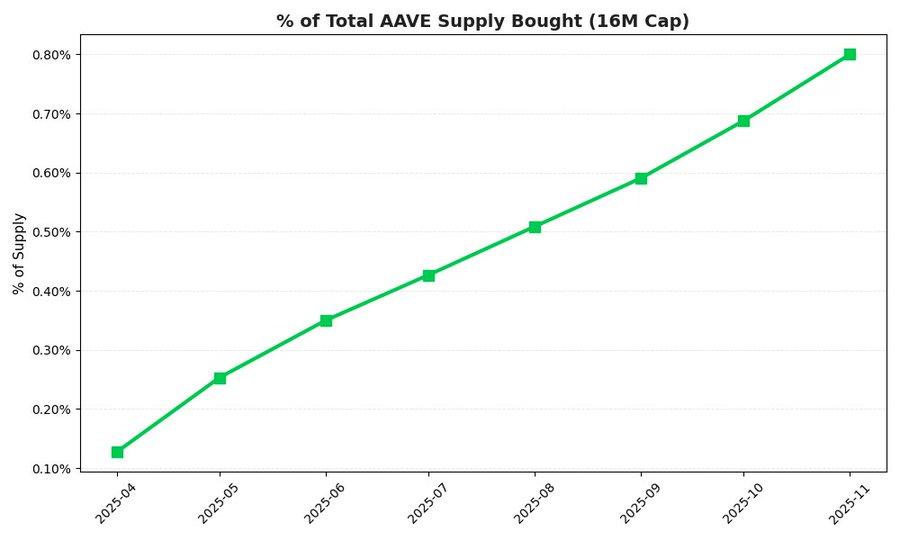
The buyback mechanism has already exerted a quantifiable deflationary pressure on the token supply: in just 8 months, the protocol has bought back approximately 0.80% of the total supply (1.6 million AAVE).

Conclusion

From a protocol perspective, Aave is evolving from a single lending protocol into a foundational liquidity layer: its revenue model is gradually entering a mature range; GHO opens a second growth curve through vertical integration; the buyback mechanism is beginning to impose real and quantifiable deflationary constraints on the supply side—these changes will not be fully priced in within a single bull-bear cycle, but they are quietly altering AAVE's long-term risk-return structure.

Short-term price fluctuations are inevitable. However, if approached from a longer-term, more infrastructure-type asset allocation logic, AAVE can still be a quality choice.


Trending Cryptos

Related Questions

QWhat key indicators suggest that 'smart money' is building a structural bottom position in AAVE?

AKey indicators include a large whale address accumulating 333,000 AAVE (worth ~$62.59M) via recursive loans since November 24, and Multicoin Capital acquiring ~338,000 AAVE (worth ~$65.3M) through Galaxy Digital OTC since October 17, both actions occurring within a month and a half, signaling strategic accumulation.

QHow does AAVE's revenue performance in the current cycle compare to the previous cycle?

AIn the current cycle, AAVE's monthly revenue peaked at nearly $15 million, which is more than double the peak of the 2021 cycle, indicating significant growth despite maintaining strong cyclical characteristics.

QWhat role does GHO play in Aave's long-term strategy, and how has it performed?

AGHO represents Aave's move towards vertical integration. It has shown steady growth, surpassing a $400 million market cap by late 2025, with low volatility and no significant outflows, indicating sustained, non-speculative demand and validating its strategic direction.

QWhat does the revenue prediction model suggest about Aave's maturity and future stability?

AThe model, based on historical rolling windows, indicates Aave has matured significantly compared to its first bear market. Even in a bearish scenario, the predicted monthly revenue bottom of ~$6 million remains higher than the 2021 bull market peak, suggesting a structurally higher revenue base and reduced future drawdowns.

QHow effective has Aave's token buyback program been in terms of execution and impact on supply?

AThe buyback program has been executed with discipline, spending ~$30 million in its first 8 months (~$3.75M/month). While slightly below the $4.17M/month pace needed to hit the annual $50M target, it has already bought back ~0.80% of the total AAVE supply (16,000 tokens), applying measurable deflationary pressure.

Related Reads

Annual Salary of Millions Competing for Electricians, Meta Rushes to Open Its Own Technical School

The AI boom is facing an unexpected bottleneck: a severe shortage of skilled construction workers and electricians. As tech giants like Meta, OpenAI, and Alphabet race to build massive data centers—such as OpenAI's $16 billion "Stargate" project—they are hitting a critical labor wall. The U.S. needs an estimated 130,000 more electricians, 240,000 construction workers, and 150,000 supervisors by 2030 for AI infrastructure alone, but tens of thousands of electrician jobs go unfilled each year. While AI companies offer high premiums, with electricians earning up to $280,000 annually, worker scarcity still causes massive losses—delays on a single project can cost $14.2 million per month. The complexity of building AI data centers, which require immense power (equivalent to powering hundreds of thousands of homes), sophisticated electrical systems, and advanced liquid cooling solutions, demands highly skilled technicians who are in short supply. To combat this, companies are investing heavily in training. Meta has committed $115 million to a free training school offering tuition, housing, and stipends, targeting 5,000 new workers. OpenAI is partnering with unions to secure skilled labor. These efforts are paying off, with a significant rise in Gen Z interest in trade schools over college. However, the power demands are staggering. AI data centers are driving a rapid surge in electricity consumption, projected to account for up to 12% of U.S. power use by 2028 and raising costs for consumers. Furthermore, the construction boom is project-based, leading to a potential future glut of trained workers once building peaks, which could depress wages industry-wide. The race for AI supremacy now depends as much on skilled hands as on advanced chips.

marsbit6m ago

Annual Salary of Millions Competing for Electricians, Meta Rushes to Open Its Own Technical School

marsbit6m ago

OpenAI No Longer Sells Its Most Expensive Model for Profit

OpenAI is shifting its business strategy away from promoting its most expensive, flagship models for every task. Recent price cuts—80% for GPT-5.6 Luna and 20% for Terra—signal a deeper change: the company now actively advises users that many tasks don't require the most powerful model. Instead, OpenAI recommends a tiered approach: use the high-end GPT-5.6 Sol for complex planning and analysis, then delegate execution to cheaper models like Luna. This mirrors moves by Anthropic, which recently launched Claude Opus 5 at half the price of its top model, Fable 5. Both companies are de-emphasizing flagship models as primary revenue drivers, using them instead for brand prestige and technological showcases. The industry is entering a "mass-market" phase, similar to automotive, where high-volume, cost-effective models handle daily operations and drive scale. OpenAI's price reductions are partly enabled by AI models themselves optimizing underlying code and infrastructure, creating a self-reinforcing cycle of efficiency gains and cost reduction. Competition is shifting from "who is smartest" to "who offers the best value." The goal is no longer selling individual models but fostering widespread API adoption and ecosystem lock-in. By making AI calls cheap and ubiquitous, companies like OpenAI aim to become the indispensable, utility-like infrastructure powering automated workflows—the "water and electricity" of software, quietly embedded everywhere.

marsbit6m ago

OpenAI No Longer Sells Its Most Expensive Model for Profit

marsbit6m ago

Will the Fed Definitely Raise Interest Rates in September? How Will Crypto and U.S. Stocks Withstand the Pressure?

The market's expectation for a September Fed rate hike surged dramatically in early August, jumping from under 50% to over 80% within a week. This shift followed a contentious July FOMC meeting, where a 9-3 vote to hold rates revealed growing dissent from hawkish members advocating for an immediate hike to combat persistent inflation. The primary catalyst for this repricing is rising oil prices, driven by renewed geopolitical tensions around the Strait of Hormuz, which threaten global supply. Energy costs directly influence inflation metrics, making the upcoming July CPI report (due August 12th) a critical data point. If it shows inflation reaccelerating, the probability of a September hike will solidify. For Bitcoin and crypto assets, this is typically bearish news. Bitcoin continues to behave as a high-beta, liquidity-sensitive risk asset. A rate hike raises the opportunity cost of holding non-yielding assets and could drive capital toward money markets, pressuring crypto prices in the short term. However, historical patterns suggest that if a hike is perceived as the end of a tightening cycle rather than the start, any negative price impact may be brief. U.S. stocks, particularly crypto-linked equities like Coinbase and growth-oriented tech stocks, are also vulnerable. Higher rates increase discount rates in valuation models, putting pressure on high-multiple companies. This coincides with a pivotal tech earnings season where investor focus has shifted from massive AI capital expenditure to tangible revenue and cash flow generation. Companies with negative cash flow and weak growth narratives could face heightened volatility if borrowing costs rise in September. In summary, a September Fed hike has evolved into a mainstream market scenario. Key factors to watch are oil prices, the July CPI report, and Fed communications, which will determine the final decision and its impact on volatile crypto and equity markets.

marsbit17m ago

Will the Fed Definitely Raise Interest Rates in September? How Will Crypto and U.S. Stocks Withstand the Pressure?

marsbit17m ago

Trading

Spot

Hot Articles

How to Buy AAVE

Welcome to HTX.com! We've made purchasing Aave Protocol (AAVE) simple and convenient. Follow our step-by-step guide to embark on your crypto journey.Step 1: Create Your HTX AccountUse your email or phone number to sign up for a free account on HTX. Experience a hassle-free registration journey and unlock all features.Get My AccountStep 2: Go to Buy Crypto and Choose Your Payment MethodCredit/Debit Card: Use your Visa or Mastercard to buy Aave Protocol (AAVE) instantly.Balance: Use funds from your HTX account balance to trade seamlessly.Third Parties: We've added popular payment methods such as Google Pay and Apple Pay to enhance convenience.P2P: Trade directly with other users on HTX.Over-the-Counter (OTC): We offer tailor-made services and competitive exchange rates for traders.Step 3: Store Your Aave Protocol (AAVE)After purchasing your Aave Protocol (AAVE), store it in your HTX account. Alternatively, you can send it elsewhere via blockchain transfer or use it to trade other cryptocurrencies.Step 4: Trade Aave Protocol (AAVE)Easily trade Aave Protocol (AAVE) on HTX's spot market. Simply access your account, select your trading pair, execute your trades, and monitor in real-time. We offer a user-friendly experience for both beginners and seasoned traders.

6.0k Total ViewsPublished 2024.03.29Updated 2026.06.02

How to Buy AAVE

Discussions

Welcome to the HTX Community. Here, you can stay informed about the latest platform developments and gain access to professional market insights. Users' opinions on the price of AAVE (AAVE) are presented below.

活动图片