Crude Oil & Indices
At the start of this weekend, U.S.-Iran tensions were still escalating.
On Friday, U.S. officials revealed that Trump had ordered a new large-scale strike against Iran, with operations potentially starting over the weekend and energy infrastructure also being possible targets. Iran, for its part, claimed that drone attacks had hit the Ahmed Al-Jaber Air Base in Kuwait, and that two oil tankers passing through the Strait of Hormuz under U.S. military escort were also attacked. Neither claim was confirmed by Kuwait or the U.S. at the time.
At 10 a.m. on Sunday, Trump suddenly called off the operation. He stated that, at the request of Iran, Saudi Arabia, the UAE, Qatar, and others, the U.S. canceled the planned strike on the condition that all parties could quickly reach an agreement, with Israel also joining this commitment.
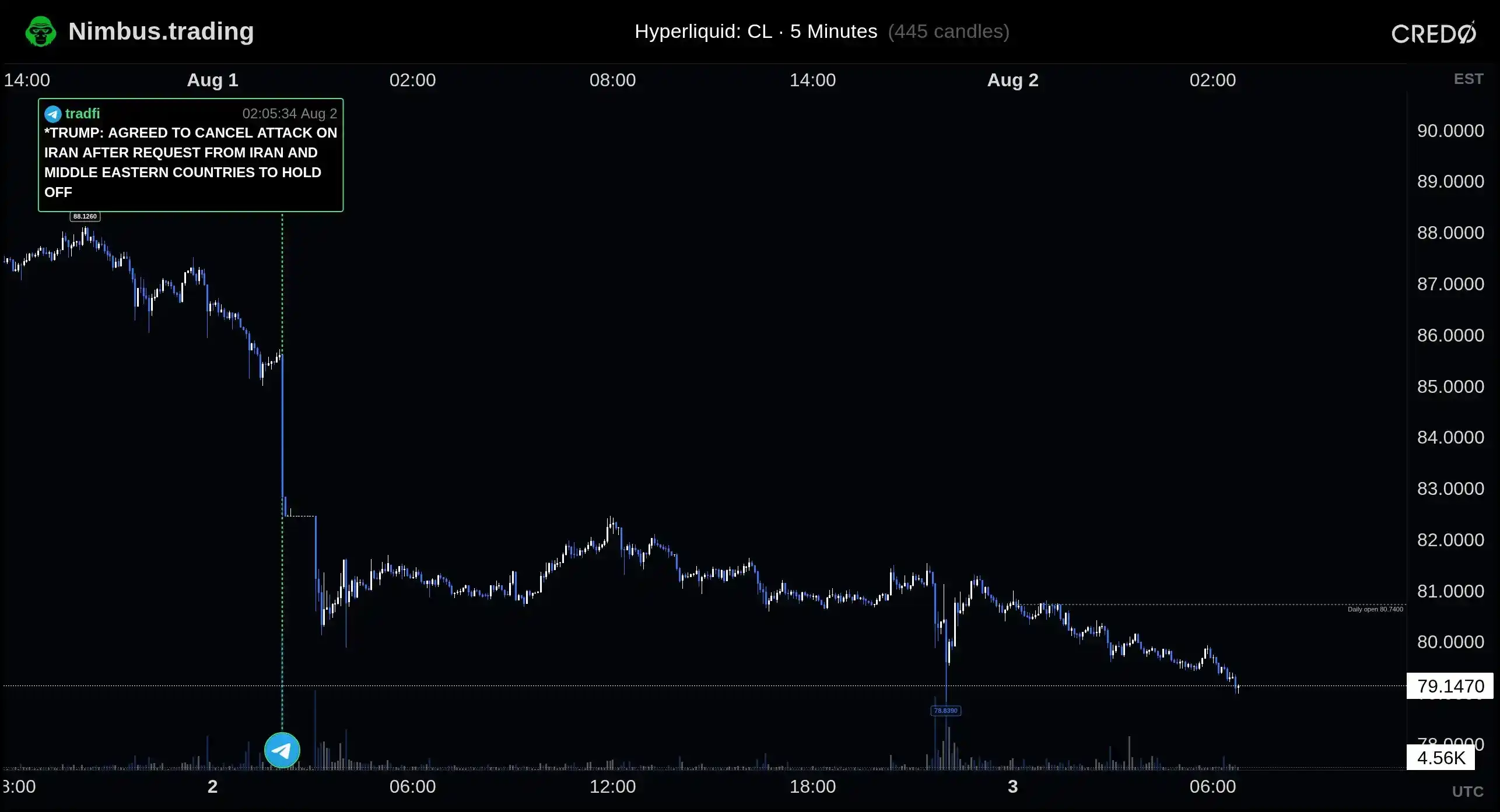
On TradeXYZ, crude oil contracts rapidly fell from around $85.5 to below $83 following the news, and subsequently continued to drop to around $79.
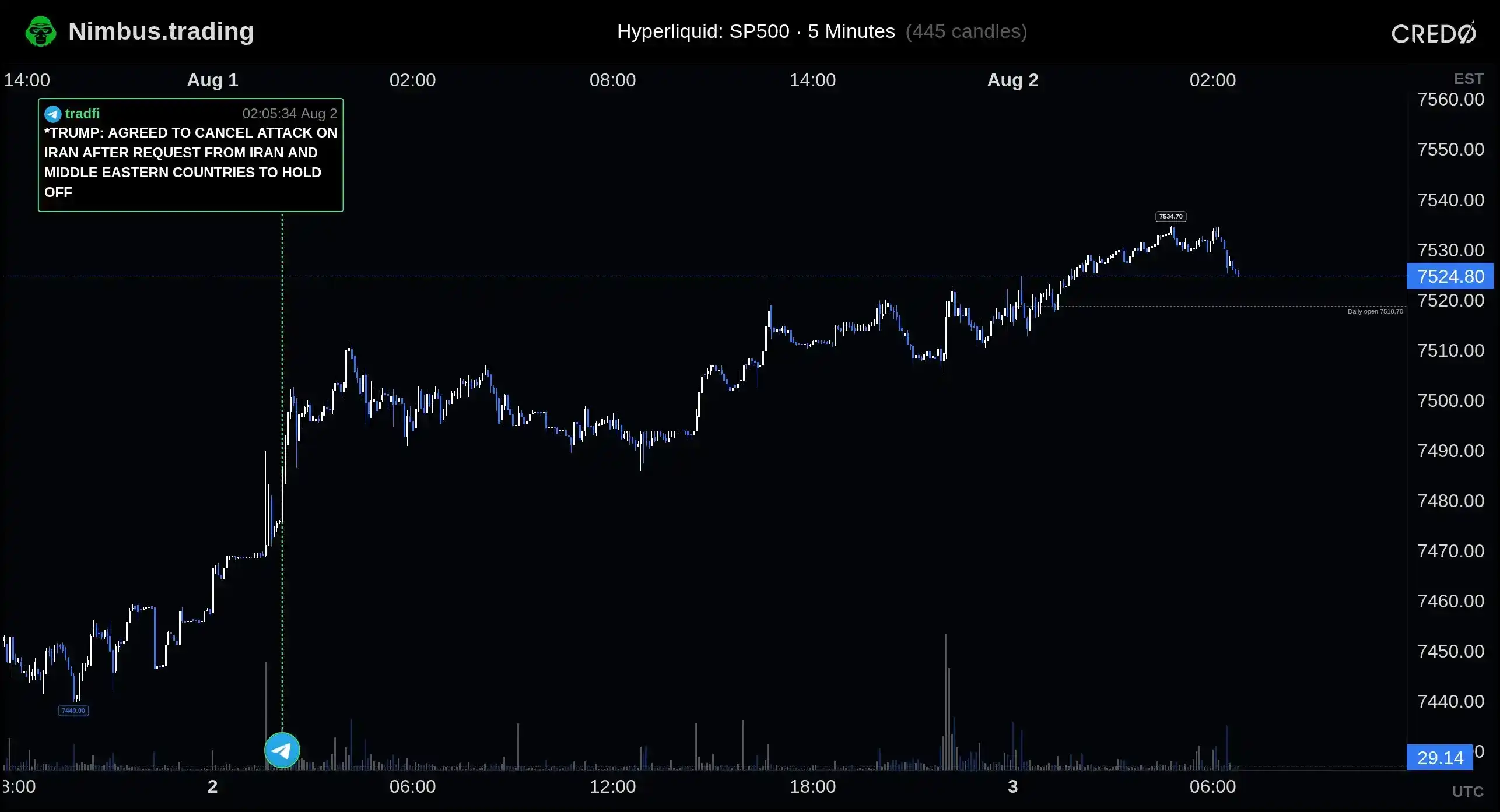
The S&P 500, meanwhile, rose from around 7470 points to above 7500, later touching 7535 points at one point.
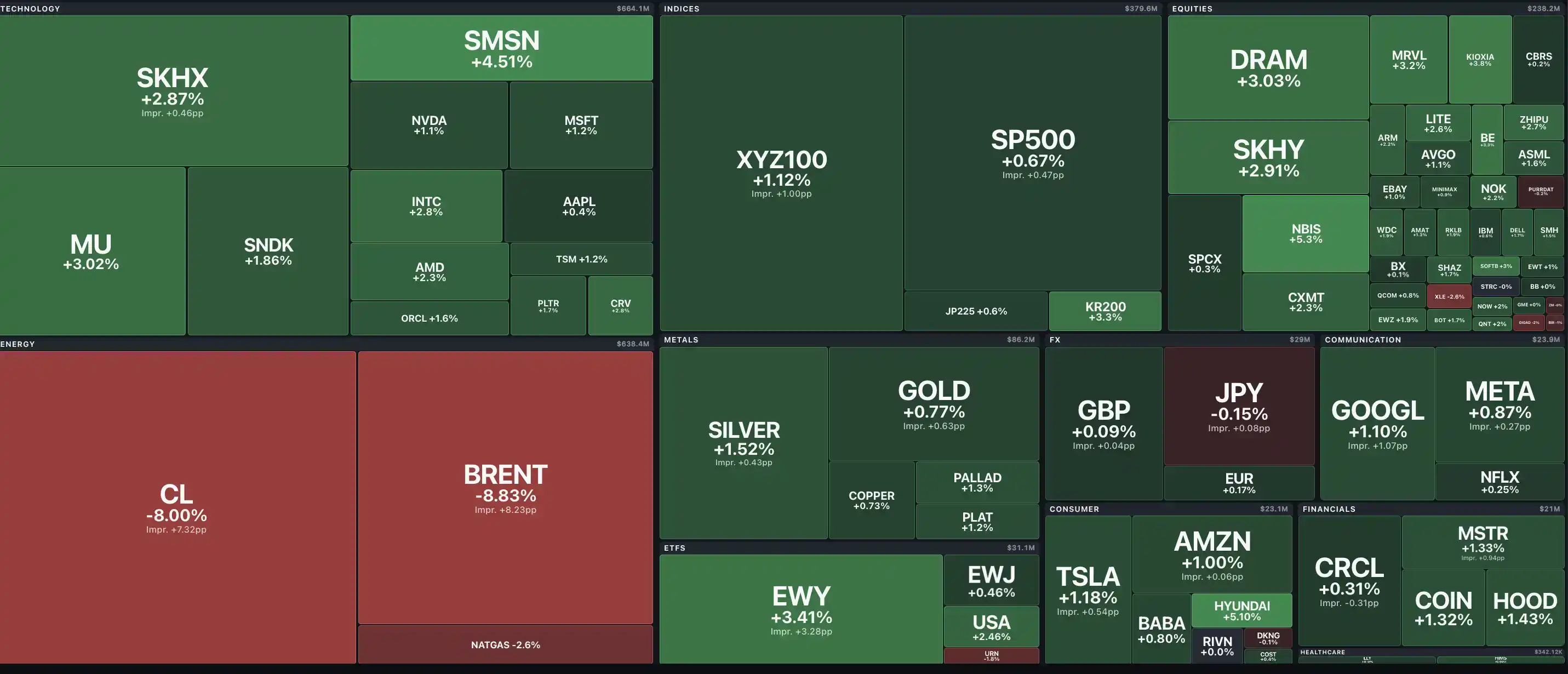
By the later part of the weekend, CL and Brent contracts had both fallen by over 8%, while the S&P 500 gained about 0.8%. Crude oil gave back the war and supply disruption risk premium that had been building up the previous day, while equities directly traded the cancellation of the large-scale strike.
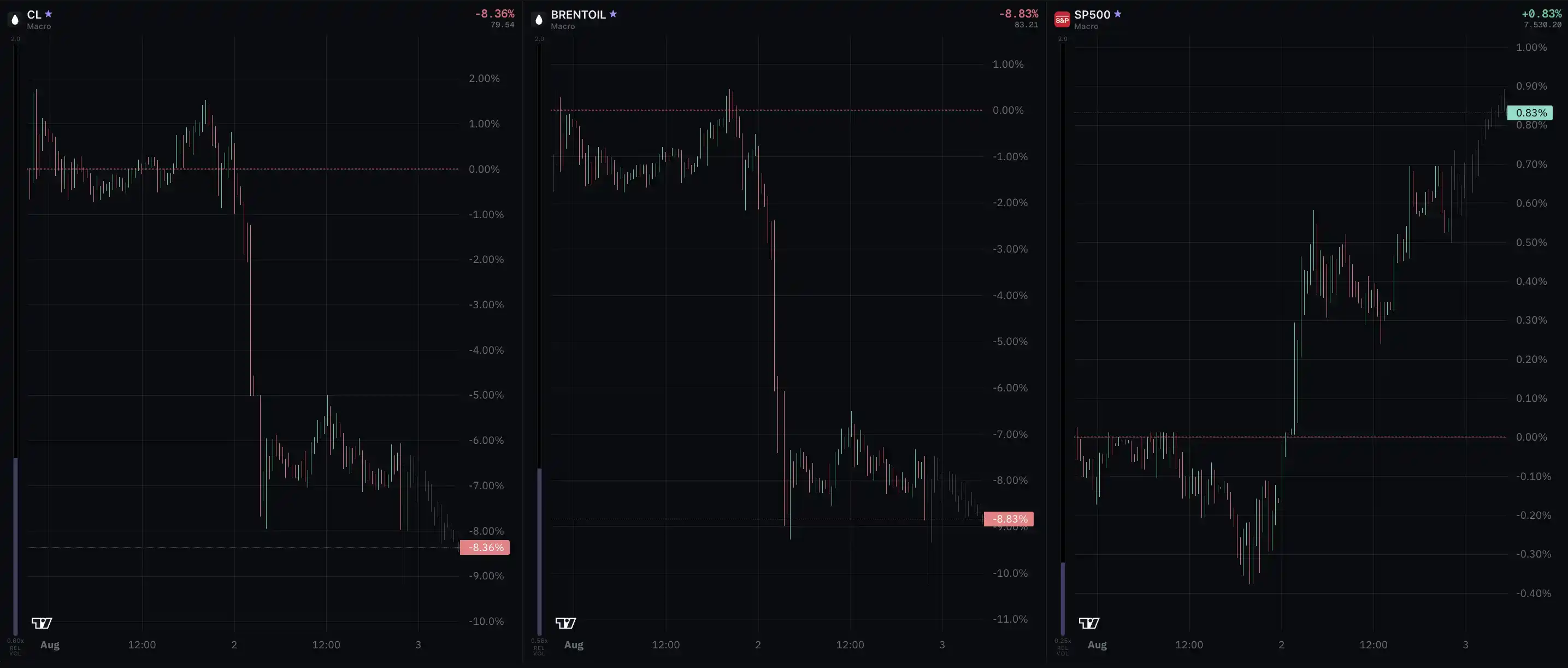
However, the agreement Trump mentioned has not yet materialized. He claimed that arrangements for the Strait of Hormuz are close to being finalized, and Iran's foreign minister also stated that consultations with Oman are in their final stages; yet, an Iranian Foreign Ministry spokesperson emphasized that the two sides discussed new shipping routes and were not directly negotiating the closure or opening of the strait. The issue of whether ships need to pay fees also remains unresolved.
The oil price around $79 reflects the cancellation of the airstrike but has not yet factored in the full resumption of navigation through the Strait of Hormuz.
Precious Metals
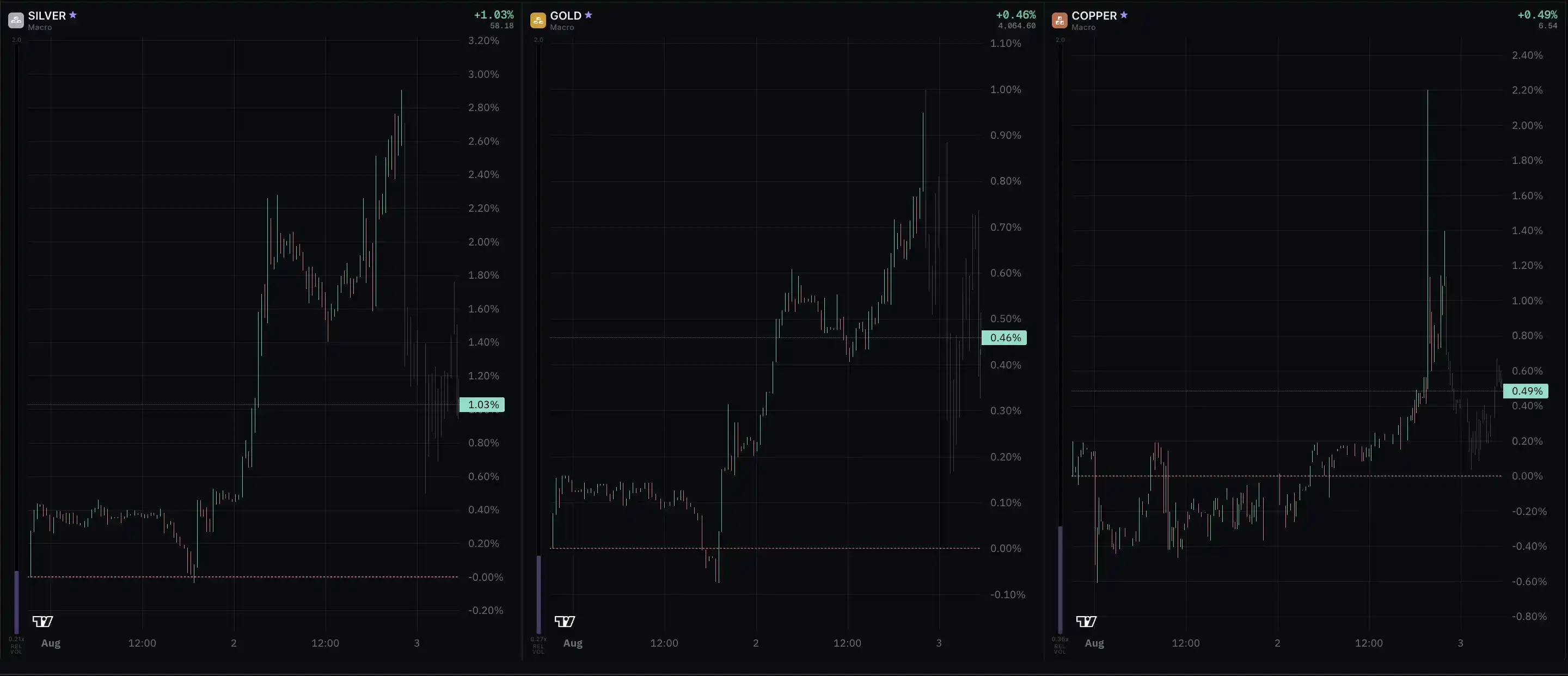
Influenced by the easing of U.S.-Iran tensions, spot gold briefly broke above $4,080 at the open. In subsequent TradeXYZ windows, gold rose about 0.5% and silver about 1%. Both moved lower after futures opened but then rebounded, with their gains significantly narrowing compared to the weekend levels.
Individual Stocks
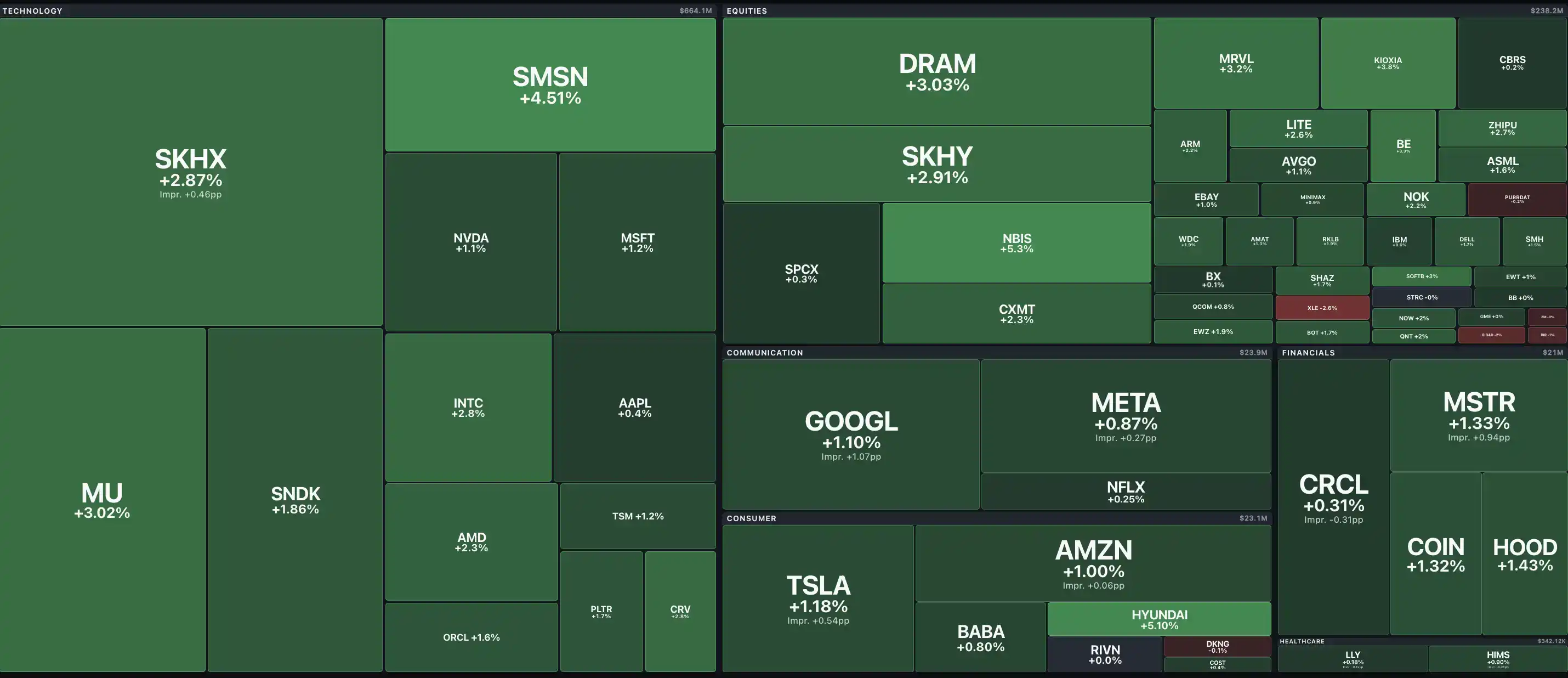
Individual stocks generally rose over the weekend, with tech, communications, consumer, and crypto-related stocks seeing varying degrees of recovery.
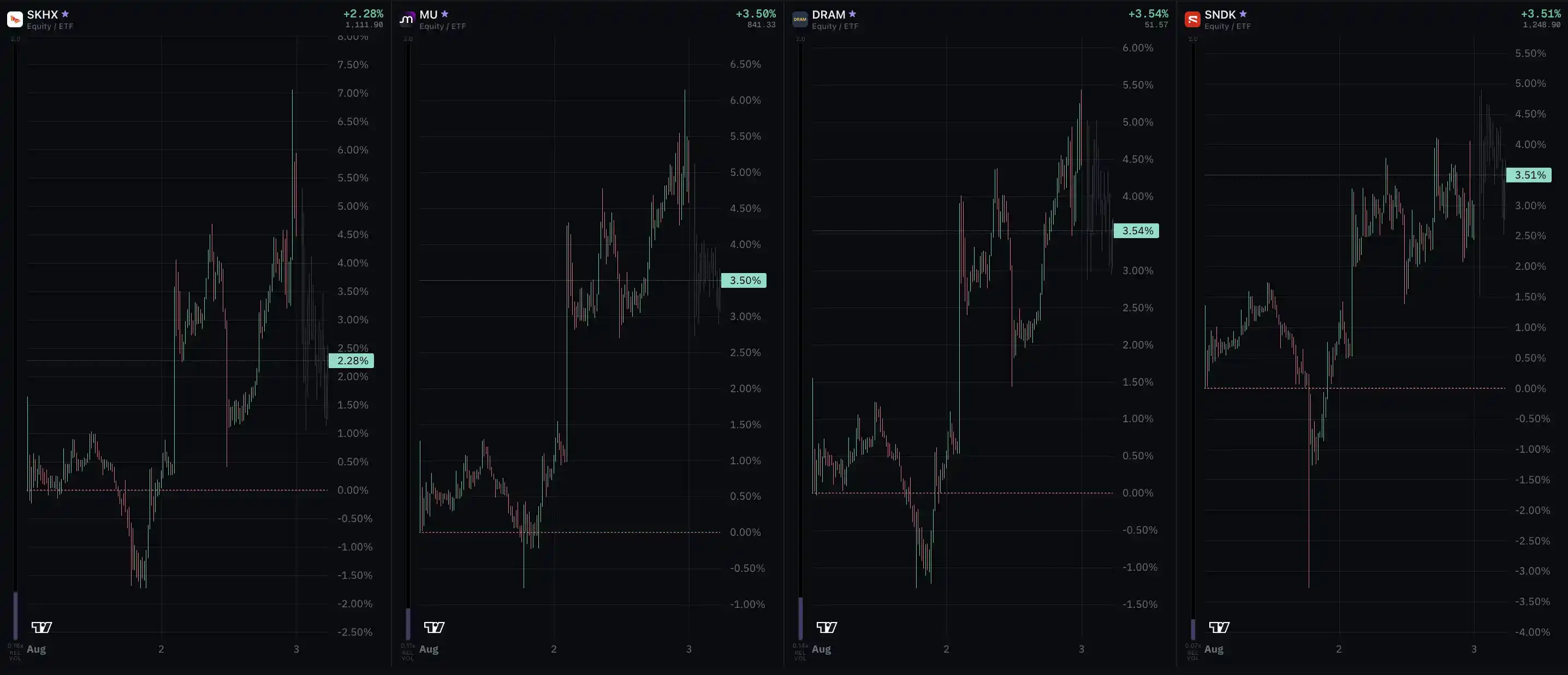
The memory sector performed strongly, with an overall gain of about 3.5%. SK Hynix's South Korean shares surged early but then pulled back, showing some relative weakness compared to peers in the same sector.
The divergence within the Mag7 was concentrated in Apple.
Excluding Apple, the other six companies gained about 1.4% to 2.0% subsequently, while Apple rose only about 0.4%. Although Apple's late-July earnings exceeded expectations, the slowdown in Services growth, weakness in the China market, and supply chain constraints weighed on its performance over the weekend.
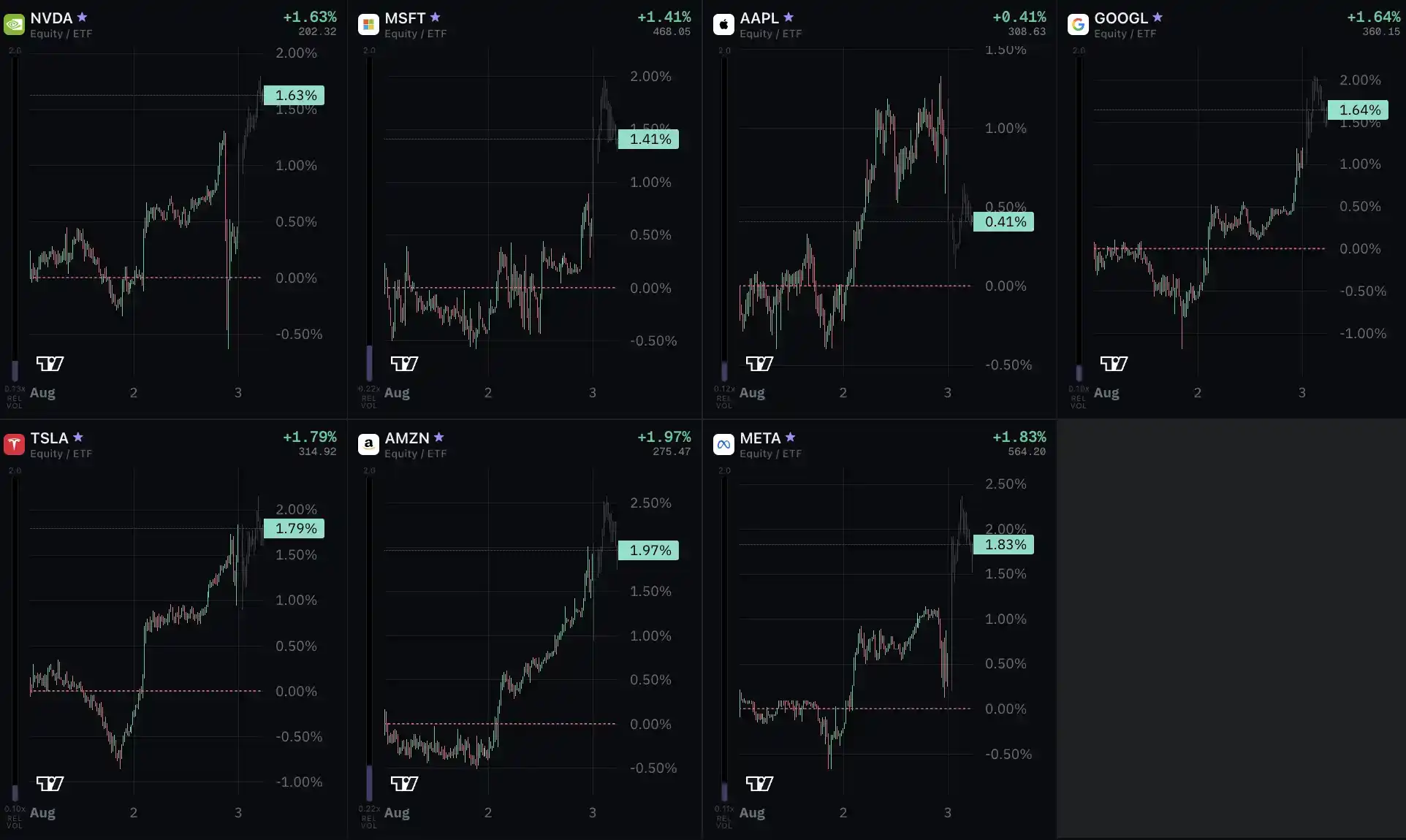
The market is currently choosing to first believe Trump's cancellation of the strike, while not completely dropping its guard against a recurrence of hostilities. As long as the next signal of war does not appear, crude oil's risk premium will remain under pressure, and equities and tech stocks will continue to enjoy this brief window of recovery.