Warren Files 40 CLARITY Act Amendments To Keep XRP Out of US Banking System, Expert Reveals

bitcoinistPublished on 2026-05-14Last updated on 2026-05-14

Abstract

As the Senate Banking Committee prepares to mark up the delayed CLARITY Act, a crypto market structure bill, Senator Elizabeth Warren has reportedly drafted 40 amendments aimed at blocking XRP from the U.S. banking system. A key proposal would restrict the Federal Reserve's ability to grant master accounts to crypto firms like Ripple, though some, including Kraken, already hold such accounts. Other reported amendments, attributed to senators including Jack Reed, would prohibit using crypto as legal tender. The DeFi Education Fund is monitoring what it calls "anti-DeFi amendments" from several Democratic senators, warning they could harm decentralized finance technology and developers by removing key protections. With the markup scheduled, negotiators are watching whether the final amendments will allow the bill to advance. Meanwhile, XRP traded around $1.41 amid a broader market downturn.

As the Senate Banking Committee’s long-awaited markup of the CLARITY Act nears, XRP has reportedly become a focal point of a wave of amendments being prepared for the key vote on Thursday.

The bill—described by participants as a crypto market structure package that has already been delayed by more than five months—is widely viewed by negotiators as close to a version they want to move forward.

Even so, some senators, including well-known crypto critic Elizabeth Warren, are signaling they plan to keep pushing changes into the draft.

Warren’s XRP Banking Move

A post from market expert and crypto researcher Bull Winkle claims Warren “stayed up all night” on Tuesday drafting 40 amendments intended to block XRP from the US banking system.

According to the post, the most consequential proposal would limit the Federal Reserve’s (Fed) ability to grant “master accounts” to crypto firms—an approach the amendments reportedly aim to apply broadly, including to institutions and companies such as Ripple, Circle, Anchorage, and Custodia Bank.

However, Bull Winkle’s assessment reminds that Kraken already holds a Federal Reserve master account and that Ripple has received approval from the Office of the Comptroller of the Currency (OCC) to operate as a bank.

In that framing, Warren’s effort is characterized less as preventing new access and more as attempting to reverse momentum that is already moving through the system.

The amendment focus is not limited to XRP-related banking concerns. Eleanor Terrett of Crypto In America reported on Wednesday that one standout proposal attributed to Senator Jack Reed includes an amendment that would prohibit crypto from being used as legal tender, including for paying taxes.

‘Anti-DeFi’ CLARITY Act Amendments

Terrett also reported that after more than 100 amendments were submitted to the CLARITY Act draft by members of the Senate Banking Committee, the DeFi Education Fund (DEF) is monitoring what it describes as “anti-DeFi amendments.”

According to that tracking effort, the group says the proposals could damage decentralized finance (DeFi) technology, its users, and developers, and is urging supporters to lobby senators ahead of tomorrow’s markup.

In DEF’s description, the DeFi-targeted amendments in the CLARITY Act appear to come from Democratic senators including Cortez Masto, Andy Kim (NJ), Chris Van Hollen, Elizabeth Warren, and Jack Reed.

The group’s stated concern is that the proposals would weaken or remove core protections. Those areas include the Blockchain Regulatory Certainty Act (BRCA), protections for non-controlling software developers, tokenization provisions, and what the group calls expanded BSA/AML obligations for developers.

With the Senate Banking Committee set to mark up the CLARITY Act on Thursday, negotiators are watching not only what gets added or removed, but also whether the final shape of the amendments will allow the bill to move forward without another round of disruption.

The daily chart shows XRP’s attempt to consolidate above the key $1.4 support. Source: XRPUSDT on TradingView.com

At the time of writing, XRP was trading at around $1.41, having recorded a 1.4% loss over the previous 24 hours. This amid a broader crypto market retracement, which saw Bitcoin (BTC) drop to $78,000 once again.

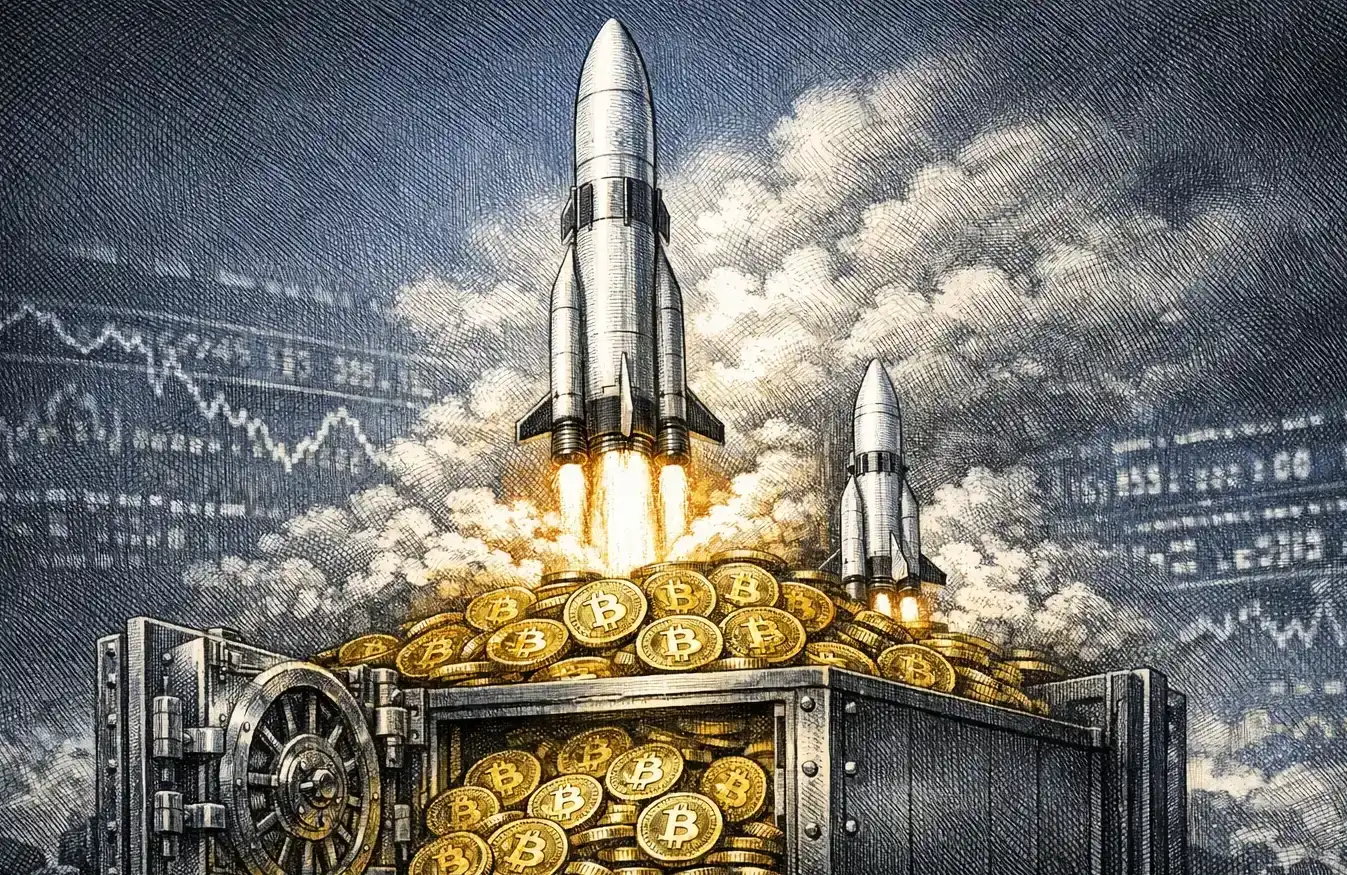
Featured image created with OpenArt, chart from TradingView.com

Related Questions

QWhat is the main focus of Senator Elizabeth Warren's reported amendments to the CLARITY Act according to the article?

AAccording to the article, Senator Elizabeth Warren reportedly drafted 40 amendments focused on blocking XRP from the U.S. banking system. A key proposal aims to limit the Federal Reserve's ability to grant 'master accounts' to crypto firms, including Ripple, Circle, Anchorage, and Custodia Bank.

QWhich organization is monitoring 'anti-DeFi amendments' to the CLARITY Act, and what is its concern?

AThe DeFi Education Fund (DEF) is monitoring what it describes as 'anti-DeFi amendments.' The group's concern is that these proposals could damage decentralized finance (DeFi) technology, its users, and developers by weakening or removing core protections related to the Blockchain Regulatory Certainty Act, non-controlling software developers, tokenization, and AML obligations.

QWhat does the article suggest about the current status of crypto firms' access to the Federal Reserve master accounts, using specific examples?

AThe article suggests that some crypto firms already have access to Federal Reserve master accounts. It specifically notes that Kraken already holds a Federal Reserve master account and that Ripple has received approval from the Office of the Comptroller of the Currency (OCC) to operate as a bank.

QWho are the Democratic senators identified by the DEF as having submitted DeFi-targeted amendments to the CLARITY Act?

AAccording to the DeFi Education Fund (DEF), the DeFi-targeted amendments in the CLARITY Act appear to come from Democratic senators Cortez Masto, Andy Kim (NJ), Chris Van Hollen, Elizabeth Warren, and Jack Reed.

QWhat was the market performance of XRP mentioned at the end of the article?

AAt the time of writing in the article, XRP was trading at around $1.41, having recorded a 1.4% loss over the previous 24 hours. This occurred amid a broader crypto market retracement, which saw Bitcoin (BTC) drop to $78,000.

Related Reads

Will the Next Crypto Bull Run Start with On-Chain Trading of SpaceX?

This article presents a scenario-based forecast for the crypto industry from 2026 to 2029, arguing that the next major cycle will be driven not by technological narratives but by legal access to real-world assets. The author predicts that by mid-2026, pre-IPO perpetual contracts for top private companies like SpaceX, OpenAI, and Anthropic on platforms like Hyperliquid will become the primary gateway for accessing quality assets, as most crypto-native tokens fail to capture real value. The much-hyped AI x Crypto intersection largely fails except for prediction markets, which thrive on betting on AI model supremacy. By 2027, public blockchain foundations are forced to choose between catering to retail speculation or building compliant infrastructure for institutions, with many opting for the latter. Growth in stablecoins and tokenized private credit/equity hits a "triple ceiling" due to regulatory and political uncertainty rather than market demand. The pivotal shift is forecast for 2028. A major liquidation event in pre-IPO perpetuals exposes the structural flaw of synthetic markets lacking a real underlying asset anchor. In response, regulatory changes finally allow the public solicitation of private securities resales to verified accredited investors. This creates a legitimate secondary market for real company equity, which then becomes the core asset class of the new bull market, relegating synthetic perps to a niche role. By 2029, the industry becomes "boring" but foundational. Tokens without claims on real cash flows or assets cease trading. Stablecoin growth is steady but politically capped. Crypto infrastructure fades from view as it gets absorbed into traditional finance backends. The article's central thesis is that the key bottleneck for crypto's next phase is legal and regulatory channels for real asset ownership, not technology.

marsbit21m ago

Will the Next Crypto Bull Run Start with On-Chain Trading of SpaceX?

marsbit21m ago

The Value Distribution of Stablecoins

**Summary: The Value Distribution of Stablecoins** The article argues that stablecoins are evolving from mere trading tools into broader channels for dollar access. It divides the stablecoin ecosystem into four layers to analyze how value is distributed: 1. **Issuance Layer:** Mints stablecoins, holds reserve assets, and captures the spread between reserve yield and user costs (e.g., Tether, Circle). This layer currently earns the largest profit margin. 2. **Infrastructure Layer:** Connects stablecoins to the traditional financial system, handling fiat on/off-ramps, banking integration, compliance (KYC/AML), and asset management (e.g., Bridge, BVNK). This is the "unglamorous" but critical work, building the essential bridges between crypto and real-world finance. 3. **Acquiring/Distribution Layer:** Integrates stablecoins into merchant systems, manages payment flows, and provides enterprise financial software (e.g., Stripe, Coinbase). They act as the access point for businesses. 4. **Application Layer:** The end-users and businesses that ultimately use stablecoins for payments, settlements, or as a store of value. They benefit from convenience but have little pricing power. The core thesis is that while the issuance layer currently dominates profits, the often-overlooked **infrastructure layer holds significant long-term potential**. The real challenge and barrier to mass adoption is not the on-chain transfer of stablecoins (which is simple), but the complex "last mile" integration into existing business workflows, banking systems, and regulatory frameworks across different countries. Companies in this layer are currently in a "land grab" phase, investing heavily to build networks, secure bank partnerships, and establish compliance pathways. While their position is currently pressured by the profitable issuers above and distribution platforms below, the article suggests that if stablecoins become a default financial rail for businesses, the infrastructure providers who have done the hard work of integration will ultimately gain strong pricing power and become entrenched, essential players.

marsbit7h ago

The Value Distribution of Stablecoins

marsbit7h ago

The Value Distribution of Stablecoins

The Value Distribution of Stablecoins The article argues that stablecoins are evolving from a mere trading tool into a broad "dollar channel." It analyzes the industry's value chain through four layers: 1. **Issuance Layer (e.g., Tether, Circle):** The top layer that mints stablecoins, holds reserve assets, and captures the thickest interest rate spread. 2. **Infrastructure Layer (e.g., Bridge, BVNK):** Connects stablecoins to the traditional financial system, handling critical but complex "dirty work" like fiat on/off-ramps, banking integration, compliance (KYC/AML), and cross-border settlement. 3. **Acquiring/Distribution Layer (e.g., Stripe, Coinbase):** Embeds stablecoins into merchant systems, manages payment flows, and integrates with enterprise software. 4. **Application Layer:** End-users and businesses that ultimately use stablecoins for payments, settlement, or storing value. The author posits that while the issuance layer currently captures the most profit, the most overlooked and potentially critical layer is infrastructure. The core challenge for stablecoin adoption isn't the on-chain transfer (which is simple), but bridging the gap between blockchain and the real-world financial system. This involves solving practical problems for businesses: fiat conversion, reconciliation, tax handling, and user onboarding. Infrastructure companies are currently in a difficult "land-grab" phase—building networks, securing banking relationships, and achieving compliance country-by-country. They face pressure from both the profitable issuance layer above and distribution platforms below. However, the author suggests this layer is building a crucial moat. Once stablecoins become a default business rail, the infrastructure players who have done the hard work of integration may gain significant, durable value and pricing power.

链捕手7h ago

The Value Distribution of Stablecoins

链捕手7h ago

Trading

Spot
Futures

Hot Articles

What is XRP 2.0

XRP 2.0: A New Frontier in the Cryptocurrency Landscape Introduction to XRP 2.0 In the ever-evolving realm of cryptocurrency, new projects continuously emerge, vying for attention and adoption. One such promising initiative is XRP 2.0, a novel cryptocurrency project designed to leverage advanced blockchain technology and robust encryption methodologies. While the name draws parallels with Ripple’s XRP, it’s crucial to note that XRP 2.0 operates independently, focusing on enhancing transaction security, privacy, and scalability. As the digital financial landscape increasingly embraces decentralized solutions, XRP 2.0 aims to contribute meaningfully to web3 and the overall expansion of crypto projects. What is XRP 2.0? At its core, XRP 2.0 is a cryptocurrency project that aims to create a secure and decentralized digital currency ecosystem. Its foundational technology integrates sophisticated blockchain principles with cutting-edge encryption techniques. The overarching goal of XRP 2.0 is to establish itself as a reliable and efficient platform enabling swift transaction execution while prioritizing enhanced privacy protections for its users. The project is promoted as a solution to many limitations faced by existing cryptocurrencies, proposing a system that can handle a higher volume of transactions with improved speed and privacy. This versatility positions XRP 2.0 as a significant contender in a marketplace riddled with various digital currencies. Who is the Creator of XRP 2.0? The identity of the creator behind XRP 2.0 has been flagged as ‘Wilbur.’ However, comprehensive details regarding Wilbur or their associated entity remain elusive. The anonymity of many cryptocurrency creators is not an uncommon phenomenon in the industry, often designed to maintain a degree of privacy and security. Who are the Investors of XRP 2.0? As of now, specific information related to the investment foundations or organizations supporting XRP 2.0 is not publicly available. In the cryptocurrency sector, the backing by reputed investors can significantly influence a project's credibility and success, yet the transparency regarding the financial supporters of XRP 2.0 has not been established. How Does XRP 2.0 Work? XRP 2.0 stands out by employing a combination of blockchain technology and advanced encryption algorithms that ensures secure and decentralized transactions. Its innovative structure includes unique features designed to foster user engagement and broaden functionalities beyond conventional cryptocurrency transactions. Among these features, XRP 2.0 incorporates AI-powered capabilities, such as text-to-image and text-to-speech functionalities. These additions are designed to enhance the interactive experience for users, promoting broader applicability across various sectors. By bridging technological advancements with user-centered design, XRP 2.0 aims to capture the attention of a diverse range of individuals and enterprises looking to integrate cryptocurrency solutions into their operational frameworks. Timeline of XRP 2.0 Understanding XRP 2.0 requires examining the milestones that have defined its journey thus far: July 23, 2023: XRP 2.0 is introduced as a novel cryptocurrency project, aiming to revolutionize secure and decentralized transaction capabilities in the blockchain domain. September 8, 2023: The launching of another project, XRP20, occurs, marking the emergence of an ERC-20 token on the Ethereum blockchain that remains unrelated to XRP 2.0. November 13, 2023: The XRP Ledger undergoes a significant update with the release of rippled server software version 2.0.0. It is essential to note that this development is disconnected from the XRP 2.0 cryptocurrency project. Key Points About XRP 2.0 To distill the essence of XRP 2.0, several critical factors emerge: Unique Features: The inclusion of features like AI-powered text-to-image and text-to-speech further diversifies the potential applications of XRP 2.0. Blockchain Technology: The framework utilizes advanced blockchain mechanisms and encryption protocols, ensuring a secure and decentralized environment for transactions. Scalability and Privacy: XRP 2.0 prioritizes enhanced privacy protections in transaction processes and the scalability necessary to accommodate a growing user base. No Affiliation with Ripple: Importantly, despite its name, XRP 2.0 does not have any allegiance or collaboration with Ripple’s XRP, distinguishing its operational framework and objectives within the cryptocurrency ecosystem. Conclusion XRP 2.0 represents an ambitious venture into the cryptocurrency sphere, aiming to offer a combination of security, privacy, and efficiency in digital transactions. By integrating sophisticated technologies and user-friendly features, the project sets out to broaden the horizons of what cryptocurrency can achieve in today's digital economy. While the anonymity of its creator and lack of disclosed investors might raise questions for some, XRP 2.0's focus on advanced functionalities and decentralisation enhances its appeal amidst an increasingly crowded crypto market. As the cryptocurrency landscape continues to evolve, XRP 2.0 may yet emerge as a pivotal player in the expansion of secure and scalable blockchain solutions.

945 Total ViewsPublished 2024.04.01Updated 2024.12.03

What is XRP 2.0

Discussions

Welcome to the HTX Community. Here, you can stay informed about the latest platform developments and gain access to professional market insights. Users' opinions on the price of XRP (XRP) are presented below.

活动图片