Wall Street Turns Ultra-Bullish on Ethereum as Institutional Demand Rises and Fee Reform Advances

bitcoinistPublished on 2025-12-09Last updated on 2025-12-09

Abstract

Ethereum is entering a phase resembling its strongest market cycles, driven by institutional accumulation, shrinking exchange supply, and proposals to stabilize network economics. ETH held on exchanges has fallen to a record low of 8.7% of total supply, with significant accumulation from entities like BitMine Immersion Technologies and ETF inflows. Nearly 40% of ETH is locked in staking or institutional products, creating a tight supply environment. Additionally, Vitalik Buterin has proposed a gas futures market to help users hedge against fee volatility. Analysts compare current dynamics to Bitcoin years ago, citing reduced speculation and sustained institutional demand as factors that could support a major repricing.

Ethereum (ETH) is entering a phase that analysts say resembles the early stages of its strongest market cycles, driven by institutional accumulation, shrinking exchange supply, and new proposals aimed at stabilizing the network’s economics.

Related Reading: ‘Something Big’ Is Coming For XRP, Says Toroso Investments Portfolio Manager

As large investors deepen their presence and developers explore changes that could make transaction fees more predictable, sentiment on Wall Street has shifted sharply recently. For many, the combination of tightening supply and improving fundamentals has created conditions that could support a meaningful repricing.

ETH's price records some gains on the daily chart. Source: ETHUSD on Tradingview

Exchange Supply Tightens as Institutions Accelerate Accumulation

Ethereum held on centralized exchanges has fallen to its lowest level since the network launched in 2015. Glassnode data shows that balances dropped to 8.7% of the total supply last week, marking a 43% decline since July.

The reduction is tied to staking, layer-2 migration, institutional custody, and long-term treasury allocations, destinations that rarely send tokens back to exchanges.

BitMine Immersion Technologies, now the largest corporate holder of Ether, expanded its position by another $199 million over the weekend. The firm controls $11.3 billion in ETH, representing about 3.08% of supply, and continues buying toward its 5% target.

ETFs have also contributed to the drawdown, with cumulative inflows now above $12 billion. Analysts note that nearly 40% of all ETH is locked in staking or institutional products, creating one of the tightest supply environments the asset has experienced.

Technical analysts point to hidden signs of accumulation. Recent On-Balance Volume readings have broken above resistance, even as the price lingers near $3,050, a divergence that some interpret as indicating buying pressure.

Fee Reform Pushes Forward as Vitalik Buterin Proposes Gas Futures Market

Alongside market activity, a new economic proposal from Vitalik Buterin is drawing attention. The Ethereum co-founder outlined a system for onchain gas futures that would allow users to lock in transaction fees for future time periods.

The mechanism resembles traditional futures markets and is designed to help traders and developers hedge against sudden increases in network demand.

Buterin argues that clearer forward pricing could support businesses that rely on predictable costs, particularly as activity expands across staking, tokenization, and decentralized applications. Although still in its early stages, the idea is viewed as part of a broader effort to make Ethereum more stable as it scales.

Analysts See Conditions Forming for a Larger Cycle

Market commentators increasingly cite a combination of shrinking supply, rising institutional involvement, and improving network efficiency as reasons Ethereum may outperform in the next major cycle.

Some compare current dynamics to Bitcoin eight years ago, noting that Ethereum’s evolving economic model and expanding role in tokenized finance give it a broader set of drivers than in previous cycles.

Related Reading: Trump’s New Security Strategy Leaves Crypto And Blockchain Out

Whether these developments immediately translate into price gains remains uncertain. But with exchange balances at record lows and institutions steadily accumulating, analysts agree that Ethereum is entering a structurally different phase, one defined less by speculation and more by sustained demand.

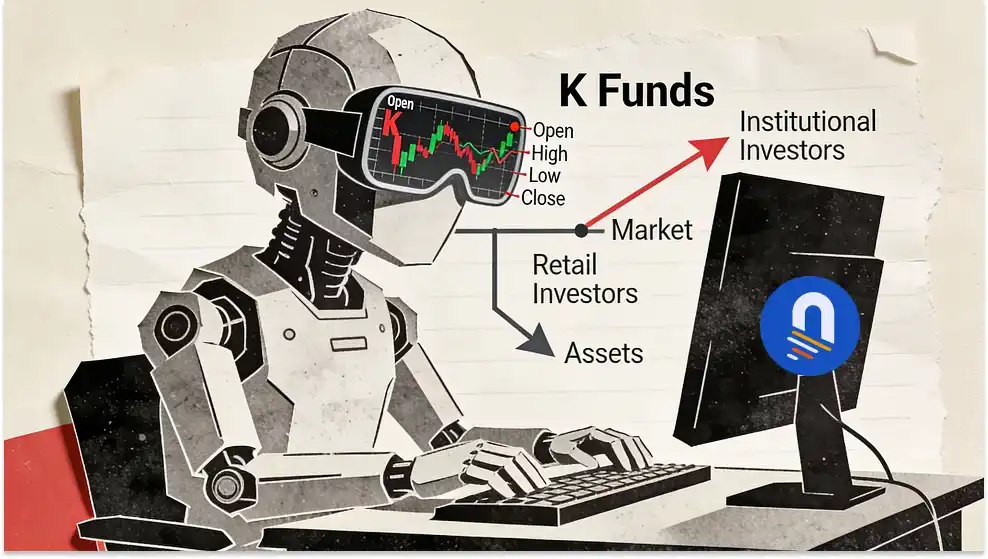
Cover image from ChatGPT, ETHUSD chart from Tradingview

Related Reads

Two Companies Capture 90% of AI Startup's $80 Billion ARR

The AI startup landscape is highly concentrated, with OpenAI and Anthropic capturing 89% of an estimated $80 billion in annualized revenue among 34 leading companies. OpenAI, with $24-25B in revenue, primarily drives growth through ChatGPT's consumer subscriptions, while Anthropic, exceeding $30B, focuses on enterprise API integration and has rapidly grown its U.S. enterprise market share from under 1% to 34.4% in under two years. The remaining 32 companies share just 11% of the revenue, facing intense pressure as resources, talent, and market attention consolidate around the two giants. This creates a self-reinforcing cycle where higher revenue fuels greater compute investment and model improvement. Despite their dominance, both leaders face challenges. OpenAI is navigating significant legal disputes and partnership tensions, while Anthropic operates under the high expectations of its massive backers like Amazon. Historical parallels in tech infrastructure (e.g., search engines, mobile OS) suggest such oligopolistic tendencies are common due to scale, network effects, and high switching costs, indicating the market could become even more concentrated. However, the rapid pace of AI innovation leaves room for disruption. For other players, the strategic path forward is not direct competition with the giants but specialization in vertical domains where general-purpose models fall short—such as legal, medical, or industrial applications—building indispensable, niche solutions.

marsbit6m ago

Two Companies Capture 90% of AI Startup's $80 Billion ARR

marsbit6m ago

Silicon Bull, Carbon Bear: The Wealth Code of 2026 is Only 'Chips' and 'Light'

The article, titled "Silicon Bull, Carbon Bear: In 2026, the Wealth Code Lies Only in 'Chips' and 'Optics'", discusses the extreme market divergence in 2026 driven by the AI investment frenzy. Investment managers who concentrated on the AI hardware supply chain, particularly computing infrastructure, optical modules, and memory chips, have seen their fund net asset values (NAVs) surge dramatically, even reaching record highs. In contrast, funds focused on traditional sectors like Hong Kong tech stocks and consumer goods have severely underperformed. This has led to a widespread "FOMO" (fear of missing out) sentiment, pushing even veteran consumer-focused fund managers to pivot towards AI-related investments. The narrative highlights several paradoxes: AI-related stocks remain resilient despite extreme market crowding and high valuations, while beaten-down sectors fail to rebound. The author dubs this split market "Silicon Bull, Carbon Bear," suggesting a bull market only for those invested in silicon-based tech (AI hardware) and a bear market for carbon-based traditional economy sectors. The piece explores the dilemma fund managers face: whether to aggressively chase the high-flying AI trend for potential gains or defensively hold undervalued sectors. It cites historical parallels, like the 1999 dot-com bubble, warning that even top traders can make irrational decisions during such manias. Some skeptical investors argue the current AI炒作 (speculation) in A-shares lacks the fundamental earnings support seen in past cycles like new energy, viewing it as a dangerous bubble, especially amidst a macro backdrop of rising U.S. bond yields. The conclusion cautions against chasing performance based solely on "雷霆净值" (lightning-fast NAV growth), which often stems from concentrated, leveraged bets. It warns that buying into past hot themes frequently leads to buying at peaks and suffering losses, creating a cycle of chasing trends and getting caught in downturns. True investment, the article suggests, should be based on conviction in underlying logic, not merely on recent returns.

marsbit25m ago

Silicon Bull, Carbon Bear: The Wealth Code of 2026 is Only 'Chips' and 'Light'

marsbit25m ago

Trading

Spot
Futures

Hot Articles

Discussions

Welcome to the HTX Community. Here, you can stay informed about the latest platform developments and gain access to professional market insights. Users' opinions on the price of ETH (ETH) are presented below.

活动图片