Ethereum [ETH] currently works like a system with two separate engines. Users need to run both a beacon client and an execution client for the network to function properly.
This setup was introduced when Ethereum moved to Proof-of-Stake, but it has also made things more complicated for users.
Now, Ethereum co-founder Vitalik Buterin is suggesting that the system could be simplified by combining these two parts into a single structure.
Buterin said,
Running two daemons and getting them to talk to each other is far more difficult than running one daemon.
This could make it easier for people to run nodes, but this idea has also started a big debate about network security.
Critics are questioning this idea
Some experts say the current system, where the Consensus Layer (CL) and Execution Layer (EL) are separate, is safer.
This is because users can combine different software clients, which helps prevent the whole network from failing if one client has a bug.
However, critics worry that only a few all-in-one clients may dominate, which could make the network more vulnerable if something goes wrong.
Is Ethereum giving strong competition to Bitcoin?
At the same time, Ethereum treasury companies have surged to an all-time high.
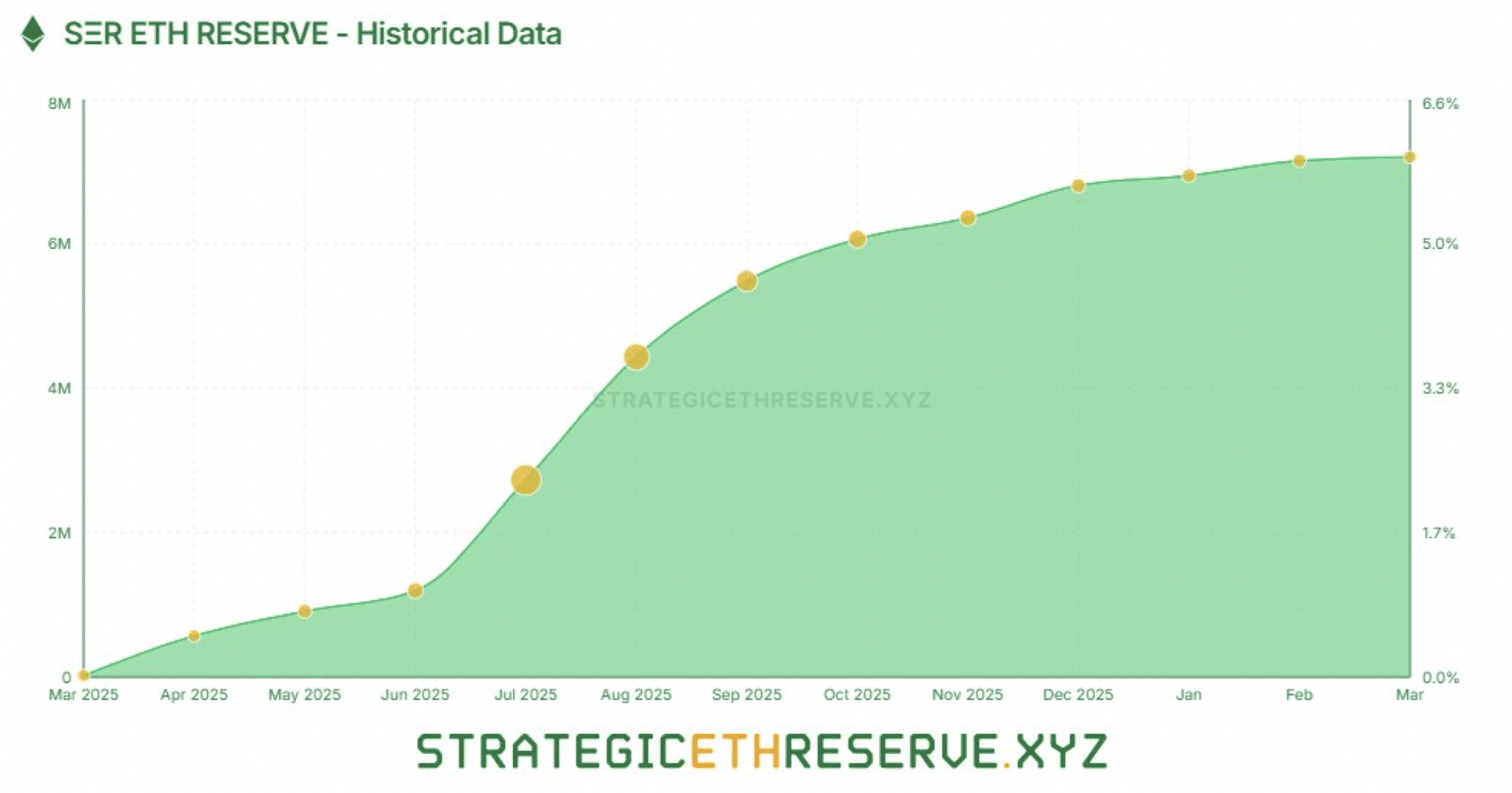
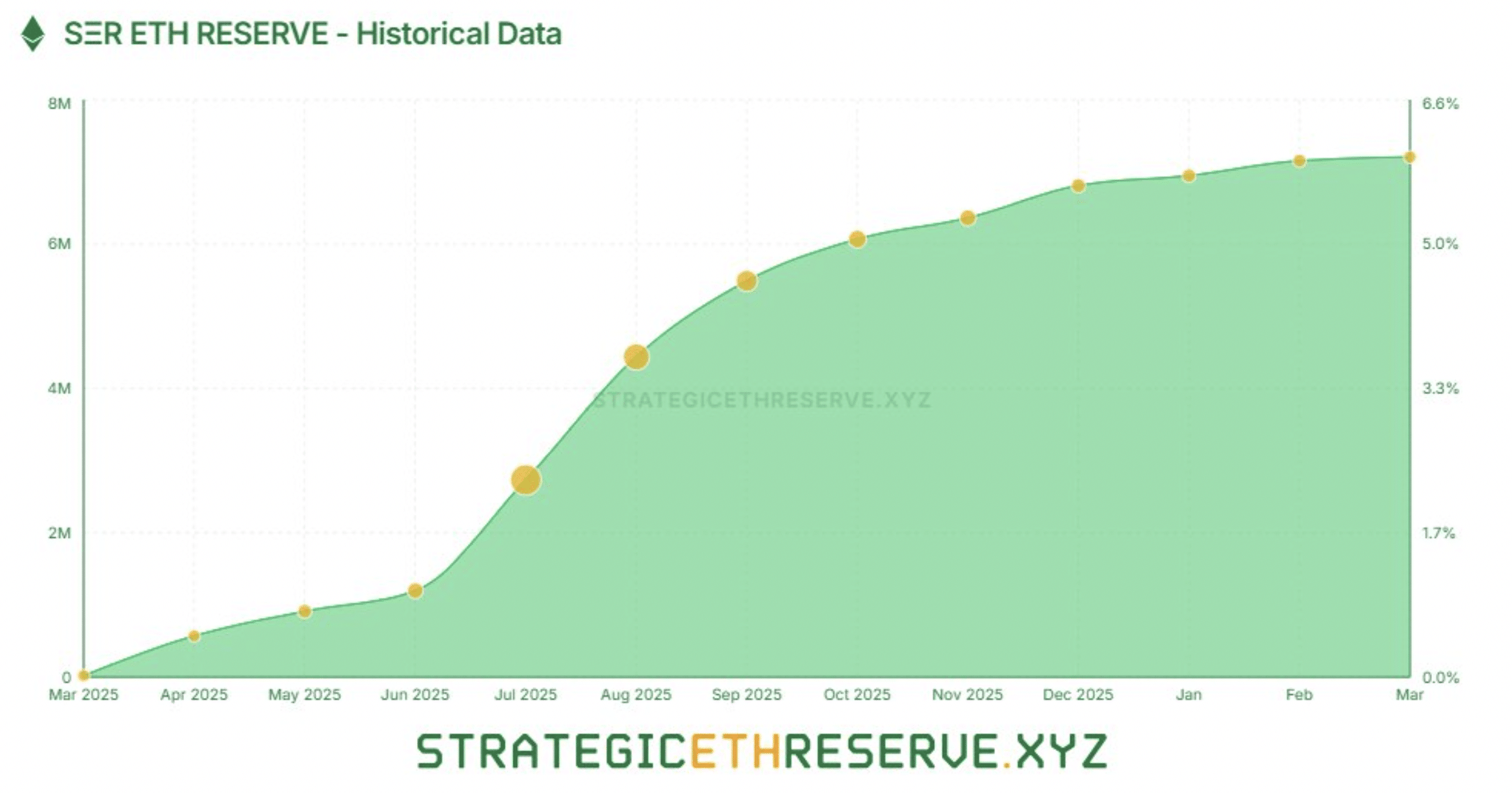
In just one year, institutions have accumulated over 6.5 million ETH, with BitMine Immersion leading at 4,534,563 ETH.
This suggests Ethereum treasury companies are trying to compete with Bitcoin’s dominance. However, with public companies holding about 1.15 million Bitcoin [BTC] this seems like a far-fetched goal at the moment.
In fact, some analysts are concerned, as noted by Ted Pillows, who said,
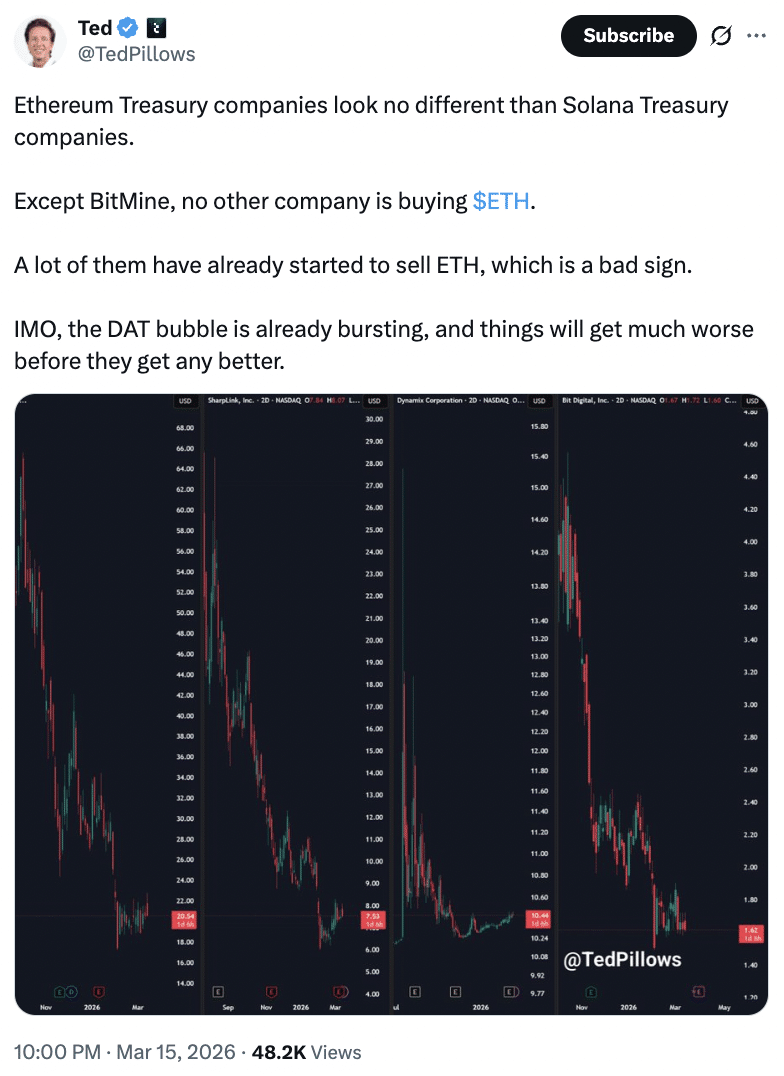
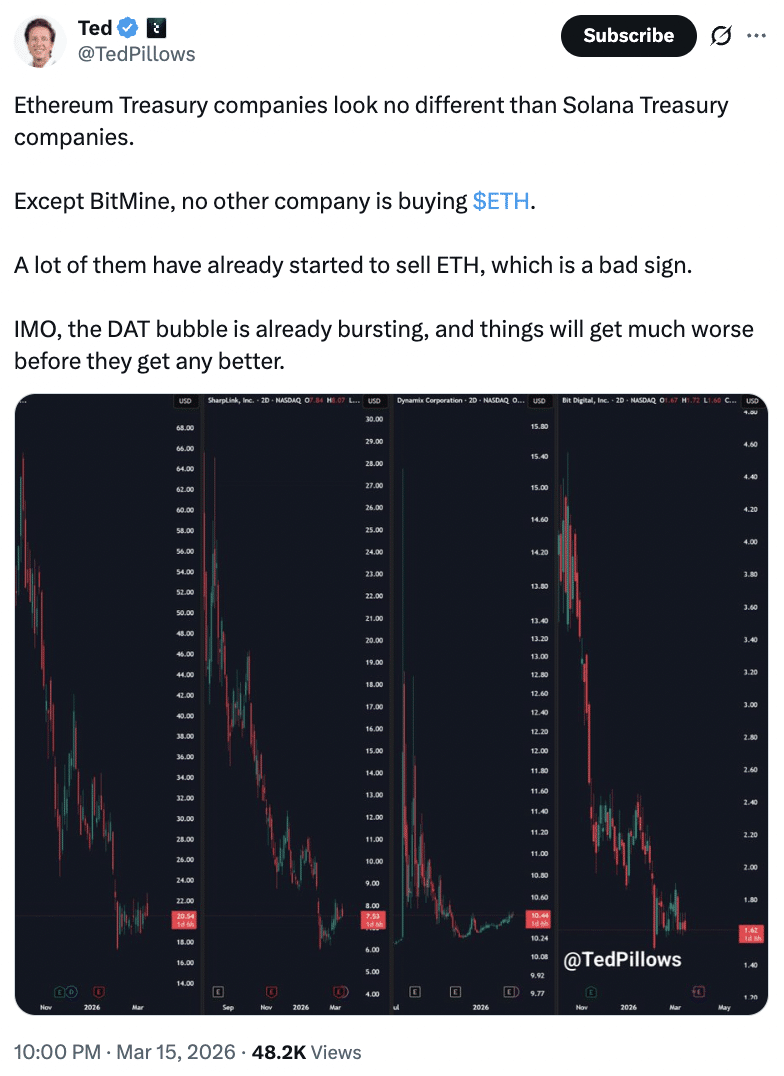
Yet, despite these concerns, some early crypto investors are showing confidence in Ethereum.
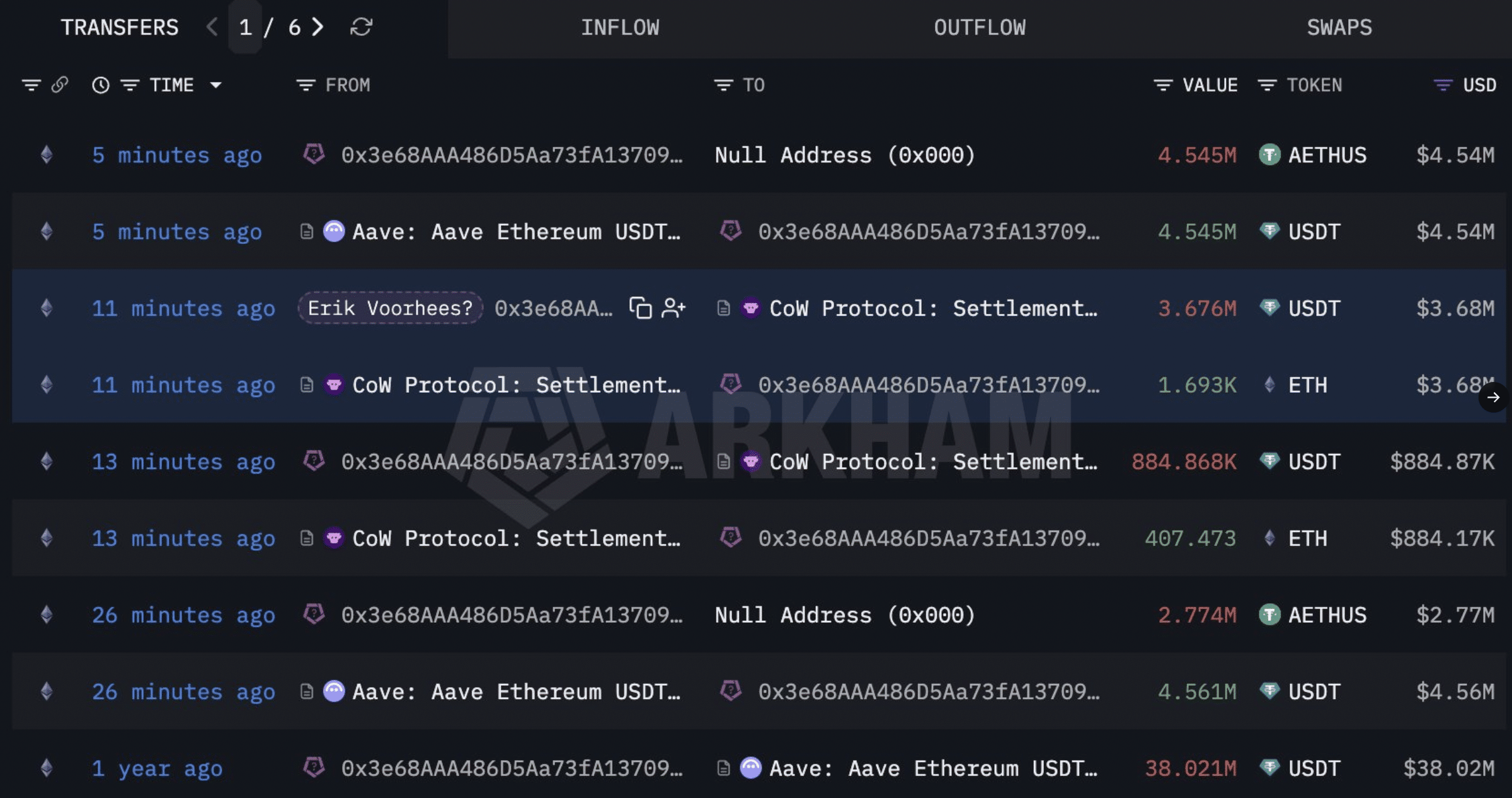
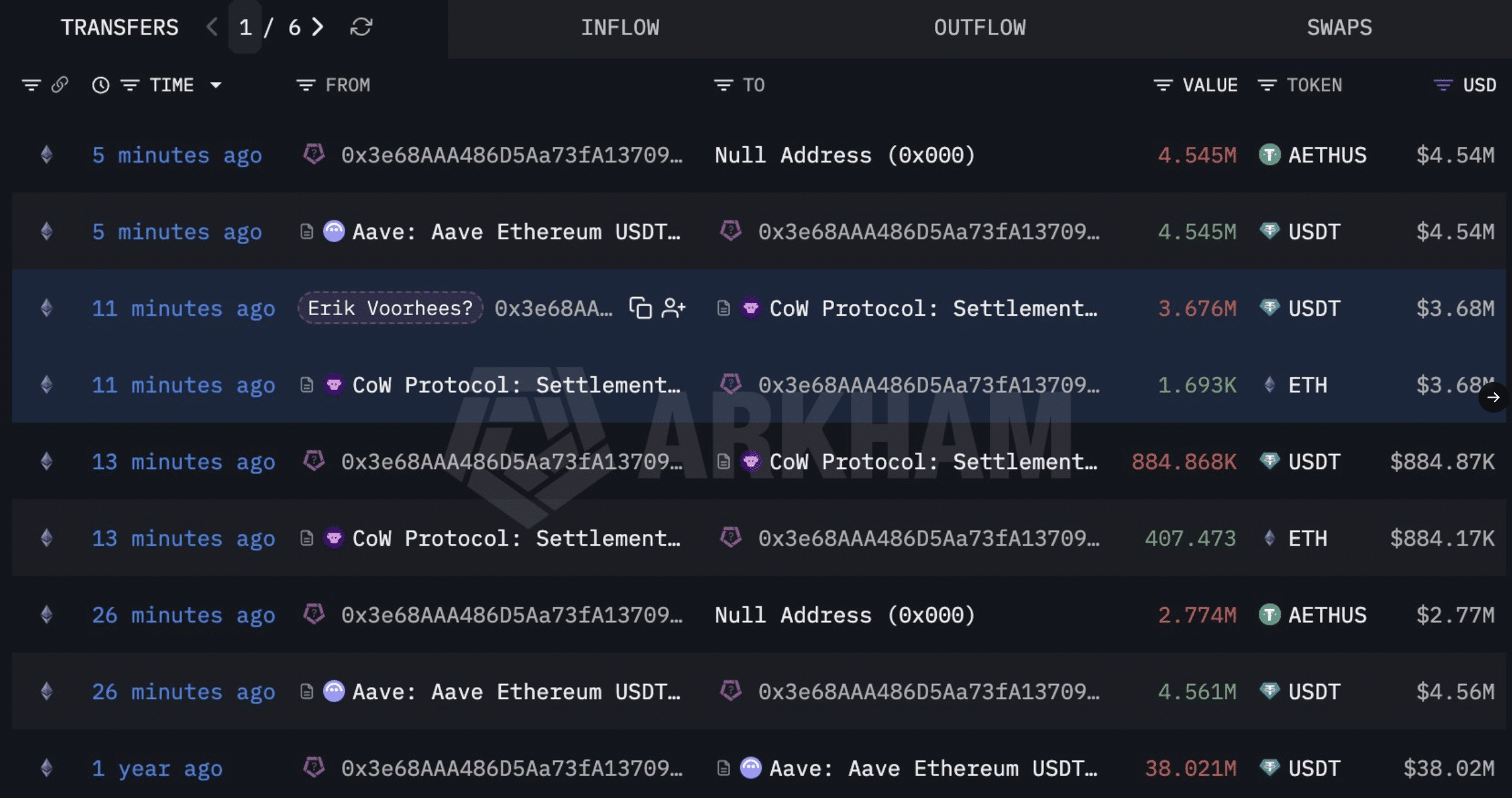
Erik Voorhees, founder of ShapeShift, recently bought 23,393 ETH worth about $49 million after staying inactive for a year. He still holds around $35 million in stablecoins, which means he could buy more ETH in the future.
Price action and other on-chain metrics
Meanwhile, the market has also improved, with ETH rising about 5.8% to around $2,244, and the ETH ETF seeing $26.7 worth of inflows on the 13th of March.
Looking at the network data, Ethereum’s condition appears mixed but active. The 30-day MVRV ratio, which measures investor profitability, recently turned positive after being negative earlier in February.
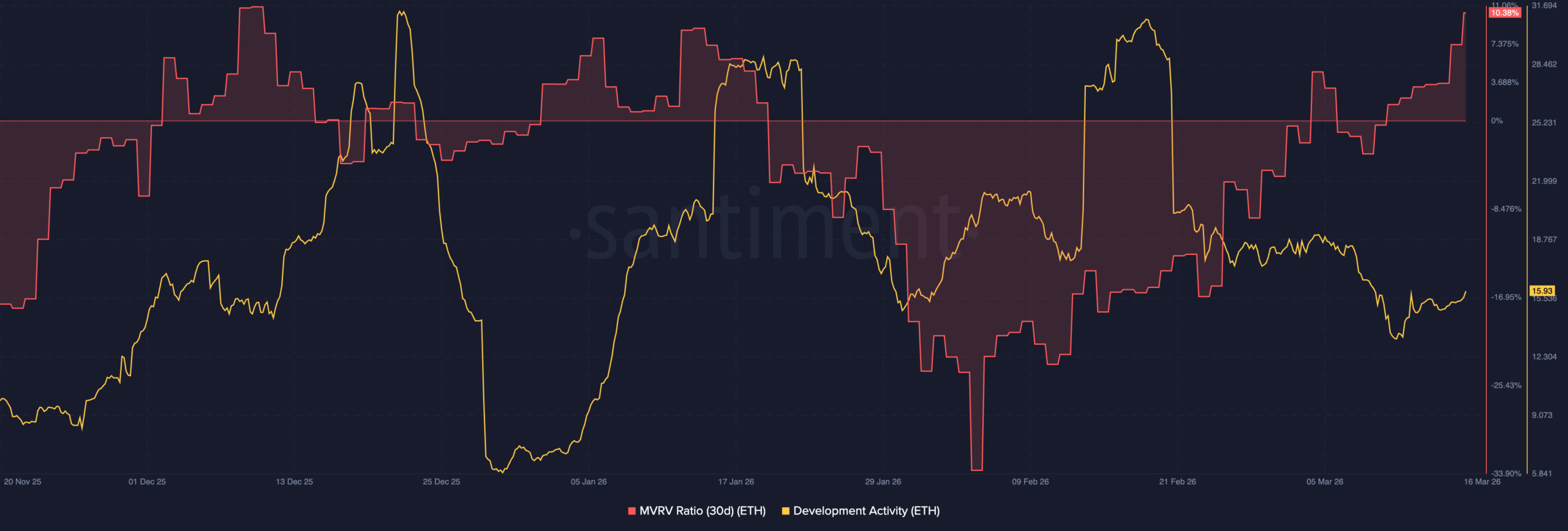
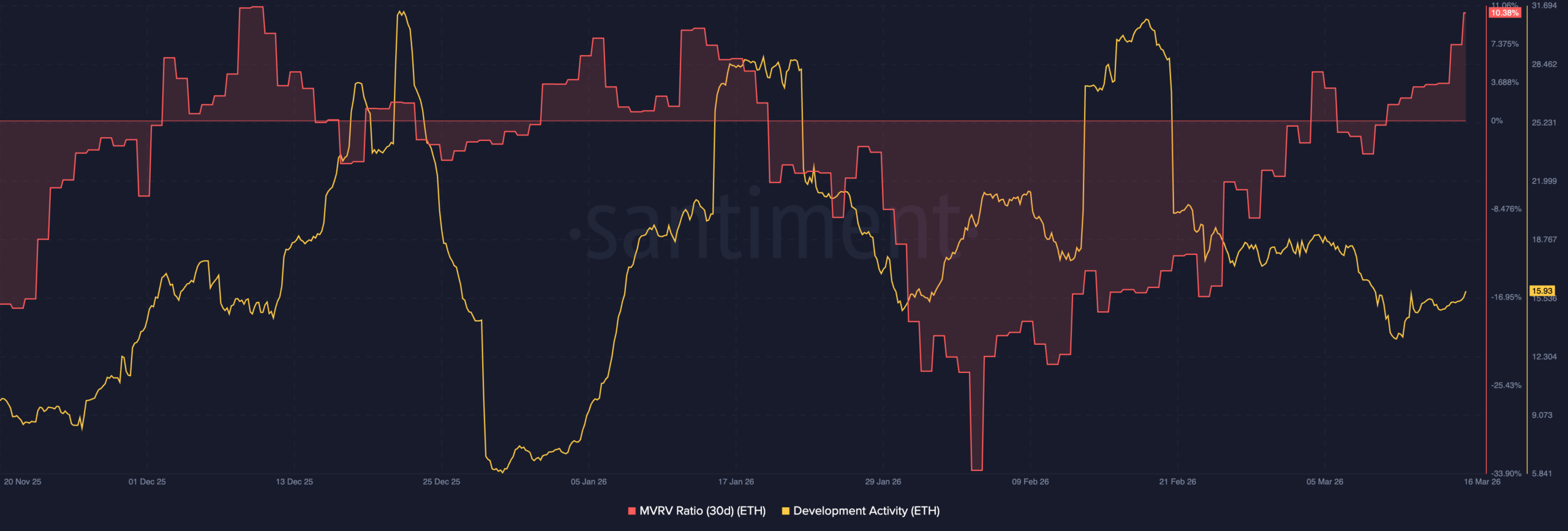
This means many traders are now back in profit, but it could also lead to more selling as people take gains. At the same time, development activity on Ethereum remains strong, showing that developers are still actively improving the network.
Other recent activity surrounding Ethereum
This coincided with the Ethereum Foundation recently transferring 5,000 ETH (about $10.38 million) and selling it through an OTC deal to BitMine Immersion Technologies.
At the same time, prediction platforms like Polymarket are suggesting that Ethereum could risk losing its position as the second-largest cryptocurrency.
Thus, with so much happening in and around the Ethereum network, investors are watching the network closely to see what happens next.
Final Summary
- Supporters believe simplification could make running nodes easier, while critics fear a unified system could increase the risk of network-wide failures.
- Despite rising ETH holdings, Bitcoin remains dominant, with public companies holding about 1.15 million BTC.




















