US Crypto Firms Face Prolonged Compliance Limbo as Market Structure Bill Slips

bitcoinistPublished on 2026-01-07Last updated on 2026-01-07

Abstract

A key U.S. legislative effort to regulate cryptocurrencies, the market structure bill (CLARITY Act), faces significant delays and may not pass until 2027, with full implementation potentially extending to 2029. According to TD Cowen analysts, political dynamics—including Democratic concerns over conflicts of interest—are stalling progress. A major point of contention is a provision restricting government officials and their families from crypto ownership, which directly impacts former President Trump’s family. A proposed three-year delay in enforcement would push the rule beyond the next presidential term. The uncertainty prolongs regulatory limbo for crypto firms, potentially hindering institutional adoption and innovation in the U.S. Meanwhile, Bitcoin trades near $94,000 as of early 2026, and international regulatory frameworks continue to advance.

A key U.S. legislative effort to regulate the cryptocurrency market is facing delays that could push the passage of the crypto market structure bill to 2027, with full implementation possibly extending to 2029.

Analysts at TD Cowen warn that political dynamics in Congress, including concerns about conflicts of interest, are slowing progress, leaving crypto firms in regulatory uncertainty.
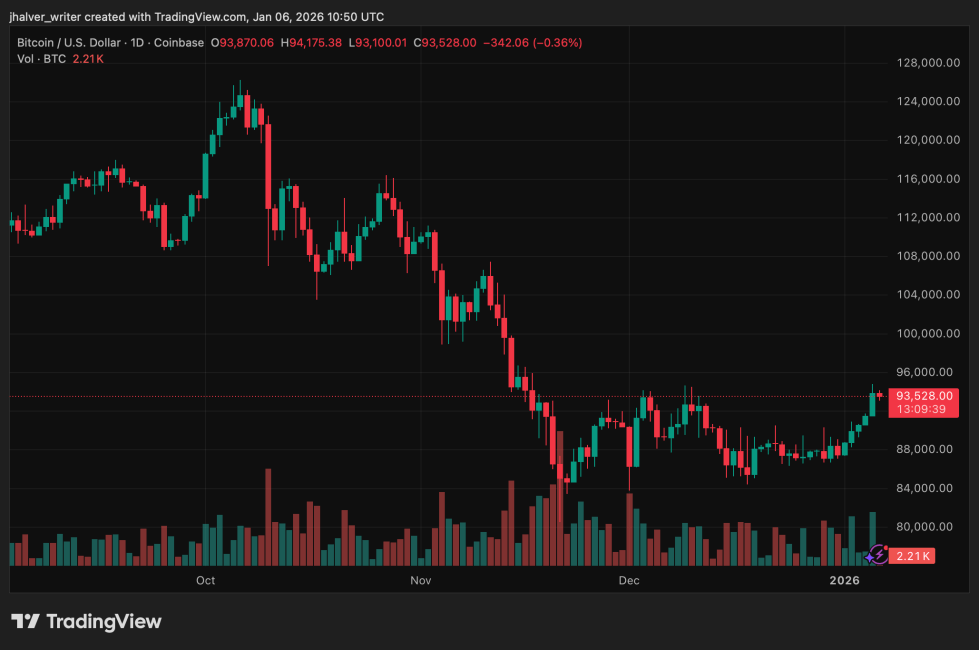
BTC's price climbs back above $90,000 on the daily chart. Source: BTCUSD on Tradingview

Political Roadblocks Delay Crypto Regulation

The crypto market structure bill, which aims to provide a clear regulatory framework for digital assets in the U.S., had been expected to advance this year. However, TD Cowen’s Washington Research Group, led by managing director Jaret Seiberg, says the bill’s approval timeline is now uncertain.

Political calculations tied to the 2026 midterm elections have reduced the urgency among Democrats to push the bill quickly, especially if they anticipate regaining control of the House of Representatives.

Seiberg notes that the Democratic Party’s insistence on strict conflict-of-interest rules, particularly those that would prevent senior government officials and their families from operating or owning cryptocurrency businesses, is a major sticking point.

This provision directly affects President Donald Trump and his family, who have reported significant crypto-related investments, including ventures in decentralized finance (DeFi) projects and bitcoin mining firms.

The proposed solution is to delay enforcement of these conflict-of-interest rules for three years after the bill’s enactment. This compromise would push the effective date beyond the next presidential term, potentially avoiding immediate impact on the Trump family’s crypto interests.

Impact on the Crypto Industry and Market Oversight

The delayed timeline means crypto firms will face ongoing regulatory uncertainty during a critical period of market growth. The bill, known as the CLARITY Act, aims to divide oversight responsibilities between the SEC and the Commodity Futures Trading Commission (CFTC), clarifying the regulation of different digital assets.

The legislation also includes provisions that could exempt certain cryptocurrencies from specific registration requirements, aiming to strike a balance between investor protection and innovation.

However, the path forward remains complicated. Senate committees are scheduled to revisit the bill later this year, but overcoming procedural hurdles, such as filibusters, will require bipartisan support, which remains uncertain.

Investors are advised to prepare for a protracted period of unclear regulatory conditions, which could influence where companies choose to invest and innovate.

Preparing for a Shifting Regulatory Landscape

Despite the delays, the crypto market remains active, with Bitcoin’s price hovering near $94,000 as of early January 2026. Still, the absence of clear rules risks slowing institutional adoption and long-term infrastructure development in the U.S.

Meanwhile, the international regulatory environment continues to evolve, with regions such as the European Union and Singapore advancing their own frameworks.

Industry groups like the Blockchain Association and Coin Center continue to engage with lawmakers, advocating for practical regulations that support growth and protect consumers.

The upcoming January 15 congressional hearing is seen as a critical moment for clarifying legislative intent, but the overall trajectory suggests that U.S. crypto firms will face extended uncertainty before comprehensive rules take effect.

Cover image from ChatGPT, BTCUSD chart from Tradingview

Related Questions

QWhat is the main reason for the delay in the crypto market structure bill according to TD Cowen analysts?

APolitical dynamics in Congress, including concerns about conflicts of interest and the Democratic Party's insistence on strict rules that would prevent senior government officials and their families from operating or owning crypto businesses, are slowing progress.

QHow does the proposed conflict-of-interest provision specifically relate to former President Donald Trump?

AThe provision directly affects President Donald Trump and his family, who have reported significant crypto-related investments, including ventures in decentralized finance (DeFi) projects and bitcoin mining firms.

QWhat is the proposed compromise to address the conflict-of-interest issue and when would it take effect?

AThe proposed solution is to delay enforcement of these conflict-of-interest rules for three years after the bill’s enactment, pushing the effective date beyond the next presidential term.

QWhich two agencies would the CLARITY Act assign oversight responsibilities to for the crypto market?

AThe CLARITY Act aims to divide oversight responsibilities between the SEC (Securities and Exchange Commission) and the CFTC (Commodity Futures Trading Commission).

QWhat is the potential impact of the regulatory delay on the U.S. crypto industry according to the article?

AThe delayed timeline means crypto firms will face ongoing regulatory uncertainty, which could slow institutional adoption, influence where companies choose to invest and innovate, and risk slowing long-term infrastructure development in the U.S.

Related Reads

Winter for Crypto IPOs: Consensys and Ledger Withdraw Applications

The crypto IPO window is tightening significantly in 2026, marked by prominent companies delaying or pausing their public listing plans. Following a successful 2025 "harvest year" that saw Circle, Bullish, and Gemini go public amidst a bull market, the tide has turned. Consensys, developer of MetaMask, recently postponed its IPO until at least fall 2026. Hardware wallet leader Ledger also suspended its planned US listing due to unfavorable market conditions, with Kraken having previously delayed its own plans. This shift is driven by a cooling market in 2026, characterized by a significant Bitcoin price correction, declining trading volumes, and reduced investor risk appetite for crypto stocks. The poor post-IPO performance of 2025 listings like Circle and Bullish, which saw major share price declines, has heightened investor caution. This contrasts sharply with the current AI sector, where companies like SpaceX, OpenAI, and Anthropic are commanding massive valuations and investor enthusiasm based on narratives of stable, exponential growth. Crypto companies now face pressure to transition from hype-driven models to demonstrating reliable cash flows and robust compliance. While the paused IPO plans may lead to valuation resets and affect ecosystem liquidity, they also accelerate industry consolidation toward stronger, more compliant infrastructure players. A potential recovery in Bitcoin's price and clearer regulations could reopen the IPO window in the latter half of 2026.

marsbit34m ago

Winter for Crypto IPOs: Consensys and Ledger Withdraw Applications

marsbit34m ago

ChatGPT Can Manage Your Money for You. Would You Trust It with Your Bank Account?

OpenAI has launched a personal finance tool for ChatGPT, currently in preview for US-based ChatGPT Pro users. This feature allows users to connect their bank and investment accounts (via Plaid, supporting over 12,000 institutions) directly to ChatGPT. It analyzes transactions, generates visual dashboards, and offers conversational financial advice—such as budgeting or planning for major purchases—based on the user's actual data. This move follows OpenAI's acquisitions of fintech startups Roi and Hiro Finance, signaling a strategic push into vertical "super assistant" applications, similar to its earlier health-focused feature. However, the launch has sparked significant privacy concerns. Critics question the safety of granting such sensitive financial access to an AI, especially amid ongoing lawsuits alleging OpenAI shared user chat data with third parties like Meta and Google. OpenAI emphasizes that ChatGPT only reads data (no transaction capabilities), deletes it within 30 days if disconnected, and offers opt-out options for model training. Yet, trust remains a major hurdle. The trend reflects a broader industry shift: AI companies like Anthropic and Perplexity are also targeting high-value, data-rich domains like finance and health. While technically promising, the tool operates in a regulatory gray area—it provides personalized guidance but disclaims formal financial advice or liability. Ultimately, OpenAI's challenge is convincing users to trust an AI with their most private financial information.

marsbit35m ago

ChatGPT Can Manage Your Money for You. Would You Trust It with Your Bank Account?

marsbit35m ago

Trading

Spot
Futures
活动图片