UK Regulator Restricts Coinbase Ad for Downplaying Crypto Risks

TheNewsCryptoPublished on 2026-01-28Last updated on 2026-01-28

Abstract

The UK Advertising Standards Authority (ASA) has restricted a Coinbase advertising campaign for downplaying the risks of cryptocurrency investing and for presenting the exchange as a solution to the country's cost-of-living crisis. The 2-minute video ad, which used satirical musical scenes of citizens singing "everything is fine" amidst a collapsing city, was deemed irresponsible. The ASA stated that using humor to address serious financial concerns risked portraying high-risk crypto products as a simple solution. The ad, which was rejected by TV ad clearance body Clearcast, was widely circulated on posters in high-traffic areas like the London Underground. The regulator noted the ads lacked required risk warnings. Coinbase defended the campaign, stating it was intended to spark discussion about the financial system and was not meant to provide simplistic solutions or mislead viewers.

The advertising overseer of the United Kingdom has restricted a Coinbase campaign that reportedly dismissed the risks of crypto investing and advertised the exchange as a solution to the cost-of-living crisis of the country.

As per the U.K. Advertising Standards Authority, the advertisements were called irresponsible and dismissed the risks of cryptocurrency, as reported by The Guardian on January 28. Initially, a 2-minute ad was released by Coinbase in July 2025 in which the video featured satirical musical scenes of cheerful citizens.

The citizens were singing slogans such as “everything is fine, everything is grand” as their homes fell into collapse and underwent power outages as the city got messed up with overflowing bins and rats.

The video then concludes with a dramatic line, “If everything is fine, then do not change anything,” before turning out to the Coinbase logo.

No Evidence For Claim Became The Ground For Rejection

The advertising watchdog stated to the global advisory council of Coinbase that we thought that using humour to address serious financial concerns, with a cue to change, risked showing complex, high-risk financial products as a swift or obvious response to those concerns.

The advertisement has so far been discarded by Clearcast, the body which screens TV commercials in the country. The grounds provided for rejection were that it showed crypto as a potential solution to economic challenges, without having much evidence for the claim.

However, the ASA claimed that it was still circulated widely on different platforms, having three posters that were shown in high-traffic areas like the London Underground and rail stations.

Moreover, the claims also included not comprising any risk warnings, mainly given that the Financial Conduct Authority has ordered that crypto promotions must come with significant risk disclosures.

A spokesperson from Coinbase also came up defending the campaign and stated that the video was intended to evoke discussion regarding the state of financial condition in the country and the need to look for better futures. He also highlighted that the ad was not made to give simplistic solutions or mislead viewers.

Highlighted Crypto News Today:

Ethereum Prepares Mainnet Launch of ERC-8004 AI Agent Standard

TagsCoinbaseCryptoCryptocurrencyUK

Related Questions

QWhy did the UK Advertising Standards Authority restrict Coinbase's advertisement campaign?

AThe UK Advertising Standards Authority restricted the campaign because it dismissed the risks of cryptocurrency investing and was deemed irresponsible. It used humor to address serious financial concerns, which risked portraying complex, high-risk financial products as a quick and obvious solution.

QWhat was the main theme of the Coinbase advertisement that was restricted?

AThe advertisement featured satirical musical scenes of cheerful citizens singing 'everything is fine, everything is grand' while their surroundings collapsed with power outages, overflowing bins, and rats. It concluded with the line 'If everything is fine, then do not change anything' before showing the Coinbase logo.

QWhich body in the UK screens TV commercials and rejected the Coinbase ad?

AClearcast, the body responsible for screening TV commercials in the UK, rejected the Coinbase advertisement.

QWhat was one of the specific reasons provided for the rejection of the Coinbase ad?

AThe ad was rejected because it presented cryptocurrency as a potential solution to economic challenges without sufficient evidence to support that claim, and it lacked the required risk warnings mandated by the Financial Conduct Authority.

QHow did Coinbase defend its advertisement campaign?

AA Coinbase spokesperson stated that the video was intended to spark discussion about the country's financial condition and the need to seek better futures, emphasizing that it was not designed to provide simplistic solutions or mislead viewers.

Related Reads

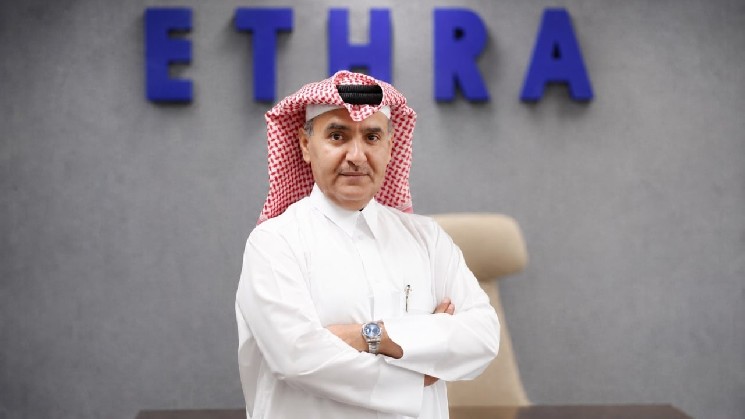
Saeed Al-Marri: How Tokenization Unlocks New Opportunities for Shipping Funds

Said Al-Marri: How Tokenization Opens New Opportunities for Shipping Funds For centuries, commercial shipping has been a capital-intensive asset class limited to institutional funds and shipping dynasties. Said bin Saleh Al-Marri, CEO of Ethra Invest and Ethra Ship, aims to break down these barriers by combining Real World Asset (RWA) tokenization with conservative private equity principles. This bridges decentralized finance (DeFi) with the physical realities of global trade. Tokenization allows fractional ownership of ships on a blockchain, giving smaller investors access to previously inaccessible markets. However, Al-Marri warns it is not a regulatory loophole or a cure for asset illiquidity. The core physical risks are isolated in Special Purpose Vehicles (SPVs) for qualified investors. While tokenization enhances transparency and ownership record-keeping, Al-Marri stresses that a liquid secondary market depends on transparent asset valuation and must not interfere with ship operations managed by professionals. Regarding legal enforcement, smart contracts cannot physically seize a ship. Legal recourse still relies on traditional maritime courts, ship mortgages, and flag state laws, with blockchain records needing to mirror legal ownership in the SPV perfectly. Beyond ownership, the industry faces administrative hurdles like paper-based bills of lading. Al-Marri argues the bottleneck is legal and operational standardization, not technology. He advocates for a hybrid model combining digital trade documents and programmable settlements with support from regulated financial institutions, rather than a full crypto replacement for tools like Letters of Credit. A major challenge is decarbonizing the global fleet by 2050. Transitioning to green fuels requires massive upfront investment. Al-Marri emphasizes a conservative, holistic approach to underwriting these projects, evaluating technology, fuel availability, safety, and resale value. Investments must be justified under conservative forecasts, not just optimistic ones. By combining pragmatic risk management with digital infrastructure, leaders like Al-Marri show that the evolution of maritime finance is about mobilizing capital to build a modernized and sustainable global fleet, not just putting ships on a blockchain.

cryptonews.ru15m ago

Saeed Al-Marri: How Tokenization Unlocks New Opportunities for Shipping Funds

cryptonews.ru15m ago

Six Years Later, UNI Finally Welcomes Its Own "Buyback Bull"

After years of debate, Uniswap's UNI token has finally entered a 'buyback bull' phase following the long-awaited activation of its fee-switch mechanism. The UNIfication proposal, executed in December 2025, redirected a portion of protocol fees from select pools and Unichain sequencer revenue into a treasury (TokenJar) dedicated to buying back and permanently burning UNI. Initial market reaction was muted due to modest early burn rates. A significant shift occurred in July 2026 with the launch of Robinhood Chain. Uniswap's immediate deployment there skyrocketed trading volume, making it a top fee-generator. Subsequently, governance votes extended the fee mechanism to v4 pools and Robinhood Chain, causing protocol revenue to nearly triple. Daily funds directed to UNI burns rose sharply, with Robinhood Chain contributing over half. This transitioned UNI's narrative from a governance token to a cash-flow asset backed by a perpetual automatic buyer. UNI's price, which had languished around $2.30 in early June, nearly doubled to approach $4.60 by late July. Analysts credit this to the tangible cash flow from fees rather than mere speculation. Unlike many newer projects where buybacks are offset by large investor unlocks, UNI's six-year history has resulted in a widely distributed and relatively clean supply, allowing the buyback pressure to effectively impact the secondary market. The key test will be whether trading activity, particularly on Robinhood Chain, sustains after its initial gas subsidies expire.

marsbit20m ago

Six Years Later, UNI Finally Welcomes Its Own "Buyback Bull"

marsbit20m ago

Only 153 Venture Capital Firms Invested in July: Is the Crypto VC Industry Experiencing a 'Mass Extinction'?

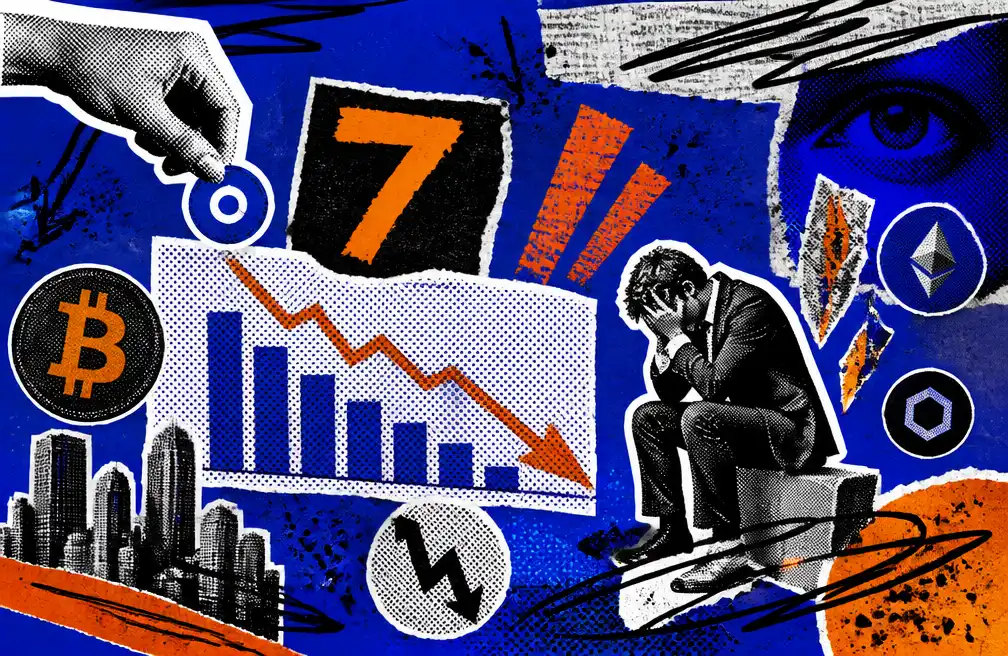
In July 2026, only 153 unique venture capital firms participated in disclosed crypto funding rounds, marking the lowest monthly count since November 2020. This figure represents an 87% decline from the peak of 1,177 firms in 2022. Overall, the first seven months of 2026 saw crypto projects raise approximately $11.78 billion across 481 rounds. This crypto VC contraction contrasts sharply with the broader venture capital landscape, where global VC investment reached a record $560.4 billion in H1 2026, heavily fueled by major AI company financings. This shift in capital allocation has drawn funds away from the crypto sector. Within crypto, funding is highly concentrated. Trading platforms, prediction markets, and payment sectors absorbed 53% of the total capital. While early-stage deals remain frequent, the largest sums flow to a few late-stage rounds and mergers & acquisitions, which surged to $7.23 billion in Q2 2026. The market is consolidating around top funds like a16z crypto and Dragonfly, which successfully raised new multi-billion dollar funds, while many smaller firms have retreated. Analysts describe this as a "great extinction" for crypto VCs, where capital is becoming more selective, favoring proven business models and assets over early-stage speculation. This raises the bar for project quality, funding efficiency, and viable exit paths.

marsbit41m ago

Only 153 Venture Capital Firms Invested in July: Is the Crypto VC Industry Experiencing a 'Mass Extinction'?

marsbit41m ago

Trading

Spot
活动图片