Traditional Brokerage Firm Enters Crypto: Interactive Brokers' Three-Month Blitz in the Crypto Market

marsbitPublished on 2026-04-02Last updated on 2026-04-02

Abstract

Interactive Brokers, a Nasdaq-listed traditional brokerage with a market cap of $113.7 billion, rapidly expanded into the crypto market within just three months in 2026. Known for its low-cost, high-efficiency execution and global multi-asset trading platform, the firm integrated cryptocurrency services seamlessly into its existing offerings. Key initiatives included introducing 24/7 stablecoin deposit services via USDC, RLUSD, and PYUSD through Zero Hash, allowing near-instant dollar conversion with minimal fees. The platform also enabled direct transfers of BTC and ETH from external wallets and launched Bitcoin and Ethereum futures via Coinbase Nano. Additionally, IBKR expanded crypto trading to European retail investors through its Irish entity, supporting 11 major cryptocurrencies. This strategic move reflects Interactive Brokers’ effort to serve professional and institutional clients seeking unified asset management—combining crypto with stocks, options, and futures on a single platform. The company emphasizes low-cost, professional-grade crypto trading, leveraging stablecoins as efficient settlement and margin tools. With strong 2025 financials—including 32% YoY growth in client accounts and $6.2 billion in net revenue—the firm demonstrates how traditional brokerage expertise can drive crypto adoption.

In 2026, Interactive Brokers took just three months to bring the low-cost, professional execution of traditional brokerage services to the crypto market.

Interactive Brokers, listed on NASDAQ in 2007, currently has a market capitalization of $113.7 billion. The brokerage platform is renowned for its low commissions, optimal execution prices, and advanced trading technology. It provides a unified platform for individual investors, active traders, and institutional clients, offering diversified trading services across more than 170 markets and over 200 countries and regions, including stocks, options, futures, forex, bonds, and funds.

Such a traditional U.S. stock market giant chose to open a new battlefield in the cryptocurrency space in 2026.

Interactive Brokers first blitzed the funding channel—stablecoins.

In January, Interactive Brokers launched a 24/7 stablecoin account funding service. Eligible clients can send USDC from their personal crypto wallets to a secure address provided by Zero Hash (supporting Ethereum, Solana, and Base networks). The funds are automatically converted to U.S. dollars and credited to the brokerage account within minutes, available around the clock, including weekends and holidays. Support for Ripple's RLUSD and PayPal's PYUSD will be added in the following weeks.

Interactive Brokers does not charge a deposit fee; only Zero Hash charges a low, tiered conversion fee, with clients only responsible for blockchain network fees.

This directly addresses the limitations of traditional wire transfers, such as bank operating hours and cross-border delays, allowing global investors to instantly inject dollar-value capital into their accounts and immediately engage in multi-asset trading.

Next, Interactive Brokers set its sights on BTC/ETH trading and deposits.

In February of this year, Interactive Brokers launched Coinbase Nano Bitcoin and Ethereum futures, enabling 24/7 trading. On March 25, users could directly transfer BTC/ETH from external wallets into their linked crypto accounts without having to sell or liquidate first.

This feature eliminates technical barriers, allowing investors to trade crypto assets with lower commissions on the same platform, enabling unified risk management for stocks, options, futures, and crypto.

Additionally, the company expanded its crypto footprint into the European market.

Through its Irish entity, Interactive Brokers opened crypto asset trading to eligible individual investors in the European Economic Area. Users can trade 11 mainstream crypto assets, including BTC, ETH, SOL, XRP, and DOGE, alongside stocks, options, futures, forex, bonds, and funds on the existing platform, with support for 24/7 trading.

This blitz into the crypto market is the latest example of Interactive Brokers, as a traditional brokerage, "embracing crypto without losing its essence."

As early as September 2021, when Bitcoin had just broken through $60,000 and crypto was still considered a high-risk, fringe asset, Interactive Brokers partnered with New York State-regulated Paxos Trust Company to pioneer spot trading for Bitcoin, Ethereum, Litecoin, and BCH. Clients did not need to open a separate crypto account; they simply applied for permissions in their existing brokerage account to trade 24/7 and withdraw to external wallets. This "low-cost + unified platform" model was aimed at serving professional investors from the start, rather than chasing retail speculation.

In the following years, Interactive Brokers steadily expanded its product line. In 2025, it added Avalanche, Cardano, Chainlink, Dogecoin, Ripple, Solana, Sui, and other tokens through Paxos or Zero Hash, supporting over 11 mainstream assets.

This path of "first steady progress, then accelerated integration" reflects the unique logic of traditional brokerages exploring Crypto. Unlike pure crypto platforms that pursue traffic and leverage, Interactive Brokers views crypto as an organic component of a multi-asset platform: stablecoins are no longer just "digital dollars" but efficient settlement rails that can be directly converted into trading capital, margin, or idle funds. The CEO team has repeatedly emphasized that the goal is to "make crypto trading as professional and low-cost as stock trading."

Perhaps Interactive Brokers' underlying intent is not hard to understand. Crypto assets are transitioning from early speculative narratives to an important part of institutional portfolio allocation. Clients increasingly need a unified, professional, and low-cost platform to simultaneously manage traditional securities, futures, options, and digital assets, enabling more efficient risk hedging, liquidity management, and capital allocation. If these services are not provided, some high-net-worth and institutional clients may shift their crypto-related business to pure crypto trading platforms, leading to reduced platform stickiness and capital diversion.

Through innovations such as 24/7 stablecoin funding, direct transfers from external wallets, and derivatives, Interactive Brokers has not only significantly reduced the friction costs of cross-border capital flows and asset migration but also transformed stablecoins into efficient settlement and margin tools, markedly enhancing the mobility and utilization efficiency of client funds. This strategy aligns precisely with the company's core strengths—advanced automated trading systems, seamless access to over 100 global markets, and ultra-low-cost execution.

In 2026, as the crypto market shifts from narrative-driven to institutionally allocated, this strategy is demonstrating its competitiveness—clients can monitor the impact of stock fluctuations on crypto positions on the same screen or use stablecoins to quickly capture global opportunities without switching between multiple apps.

The story of Interactive Brokers is essentially a microcosm of a Wall Street veteran brokerage reshaping its positioning with technology and execution.
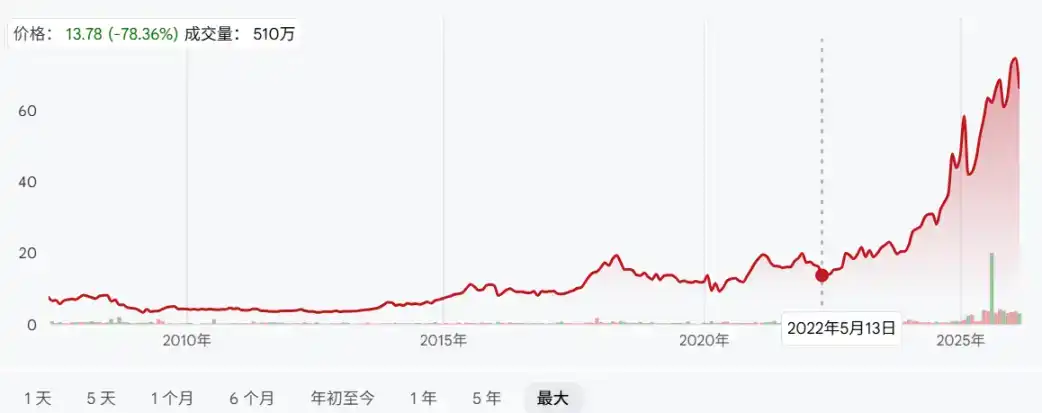
Since its founding by Thomas Peterffy in 1978, the company has focused on developing automated trading systems. According to the latest public Q4 2025 earnings report, Interactive Brokers' client account count reached 4.4 million, a 32% increase year-over-year. In 2025, net new client accounts exceeded 1 million for the year, setting an annual record. Full-year commission revenue was approximately $2.1 billion (+27%), and full-year net revenue was about $6.205 billion (+20%). Client average returns were strong (approximately 19.2% for individual clients and 28.91% for hedge fund clients).

These hardcore data points confirm the contribution of "low commissions + global access + one-stop platform" to long-term returns, and have also allowed Interactive Brokers to firmly establish itself at the intersection of TradFi and Crypto.


Related Questions

QWhat major service did Interactive Brokers launch in January 2026 to revolutionize account funding?

AInteractive Brokers launched a 24/7 stablecoin account deposit service, allowing eligible clients to send USDC from personal crypto wallets to a secure address provided by Zero Hash (supporting Ethereum, Solana, and Base networks). The funds are automatically converted to USD and credited to the brokerage account within minutes, available around the clock, including weekends and holidays.

QHow did Interactive Brokers expand its crypto trading services in February and March 2026?

AIn February, Interactive Brokers introduced Coinbase Nano Bitcoin and Ethereum futures for 24/7 trading. In March, they enabled users to transfer BTC and ETH directly from external wallets into their linked crypto accounts on the platform without needing to sell or liquidate the assets first.

QWhat was Interactive Brokers' initial foray into crypto trading back in 2021, and which company did they partner with?

AIn September 2021, Interactive Brokers partnered with Paxos Trust Company, a New York State-regulated entity, to offer spot trading for Bitcoin, Ethereum, Litecoin, and Bitcoin Cash. Clients could trade and withdraw to external wallets 24/7 without opening a separate crypto account, directly through their existing brokerage account after applying for permissions.

QWhat is the core strategy behind Interactive Brokers' approach to integrating crypto into their platform, as emphasized by their CEO?

AThe core strategy is to make crypto trading as professional and low-cost as stock trading. Interactive Brokers treats crypto as an organic component of its multi-asset platform, using stablecoins as efficient settlement rails that can be directly converted into trading capital, margin, or idle capital, aligning with their strengths in automation, global market access, and low-cost execution.

QWhat were some key financial and client growth metrics for Interactive Brokers in 2025, as mentioned in the article?

AIn 2025, Interactive Brokers' client accounts grew to 4.4 million, a 32% year-over-year increase, with a record of over 1 million net new client accounts for the year. Full-year commission income was approximately $2.1 billion (a 27% increase), and net revenue was about $6.205 billion (a 20% increase). Client average returns were strong, with individual clients at around 19.2% and hedge fund clients at approximately 28.91%.

Related Reads

Has the 'Digital Gold' Narrative for BTC Failed?

**Title: Has the "Digital Gold" Narrative for Bitcoin Failed?** The article argues that Bitcoin's "digital gold" narrative remains valid despite a recent sharp price decline (from a peak near $126k in Oct 2025 to briefly under $61k in Feb 2026). It presents a long-term investment framework based on three core points: **1. Viewing Bitcoin as an Asset:** Bitcoin is presented as a superior potential store of value compared to gold. Key arguments are its absolute scarcity (21 million cap), superior portability, and transparent auditability via its public ledger. While acknowledging its current use in early, volatile stages (~3-4% global adoption), the author draws parallels to the early, disruptive phases of the internet and e-commerce. **2. Understanding the Recent Downturn:** The current ~50% correction is framed as a predictable, consensus-driven cycle following its post-halving peak (the 2024 halving preceded the Oct 2025 high). A crucial factor is a historic "changing of hands": the influx of new institutional buyers via ETFs allowed early, low-cost holders (miners, OG believers) to take profits. The author notes that while severe, Bitcoin's historical drawdowns (e.g., 93% in 2011, 77% in 2021-22) have been progressively smaller, suggesting maturing holder structure and decreasing volatility over time. **3. The Long-Term Perspective:** The long-term thesis hinges on Bitcoin capturing a portion of gold's market value. With Bitcoin's market cap at ~$1.4 trillion (at $70k) versus gold's ~$20 trillion, significant upside potential exists if the "digital gold" narrative is partially realized. However, the author strongly cautions that short-term risks remain, the bottom is unpredictable, and high volatility is inherent. The real risk is not Bitcoin failing but poor personal position management (over-leverage, wrong capital) and a lack of deep understanding, which can force investors out during severe downturns. The conclusion uses Amazon's 95% crash post-2000 dot-com bubble and subsequent 42x recovery as an analogy. The ultimate question is not if Bitcoin's price will rise, but if an investor's strategy and conviction can withstand the volatility to see the long-term play out. The recent divergence (gold up, Bitcoin down) is posed not as a narrative failure, but as potential evidence of this ongoing, painful transition from a speculative asset to a mainstream allocation.

marsbit7h ago

Has the 'Digital Gold' Narrative for BTC Failed?

marsbit7h ago

Has BTC's 'Digital Gold' Narrative Failed?

The article discusses Bitcoin's "digital gold" narrative, its recent price drop, and long-term outlook through the perspective of "Jason". It argues the narrative is not a failure but that Bitcoin represents a superior, new asset class due to its fixed supply (21 million), portability, and auditability. The piece compares its current ~3-4% global adoption rate to early internet/e-commerce, suggesting significant growth potential. Regarding the 2025-2026 price decline (from ~$126k to briefly under $61k), the author views it as a predictable, consensus-driven sell-off within Bitcoin's ~4-year cycle post-halving, exacerbated by a major "handover" from early, low-cost holders to new institutional buyers via ETFs. A key observation is that historical peak-to-trough drawdowns have lessened over time (e.g., 93% in 2011 to ~50% in 2026), indicating maturing volatility as holder structure changes. For the long term, the author uses a simple framework: Bitcoin's total market cap (~$1.4T at $70k) is only about 7% of gold's (~$20T). Even capturing 30-50% of gold's value would imply substantial upside. However, the article strongly cautions against viewing this as investment advice, emphasizing extreme volatility and the critical importance of risk management, position sizing, and deep fundamental understanding to survive severe drawdowns. It concludes by drawing a parallel to Amazon's 95% crash in 2000 and subsequent 42x recovery, stressing that the key is surviving market cycles to realize long-term potential.

链捕手7h ago

Has BTC's 'Digital Gold' Narrative Failed?

链捕手7h ago

From Code to Cognition: A Ten-Thousand-Word Guide to the Evolution of the Robot Brain

"From Code to Cognition: The Evolution of Robot Brains" The journey of robotic intelligence has shifted dramatically from manually coded systems to AI-driven brains. For decades, robots relied on layered software stacks—perception, state estimation, planning, control—each handcrafted. While predictable, they lacked adaptability. The 2010s saw deep learning revolutionize perception (e.g., object detection) and control (via reinforcement learning), but learned skills remained narrow. The arrival of Large Language Models (LLMs) marked a turning point. LLMs acted as high-level planners, interpreting natural language instructions and generating sequences of actions for traditional robotic systems to execute. However, true integration came with Visual-Language-Action (VLA) models, which fused vision, language, and motion prediction into a single network. Pioneered by models like RT-2 and open-source projects like OpenVLA, VLAs enable robots to reason and act directly from visual input and commands. The most advanced humanoid robots now employ a "dual-brain" architecture: a slow-thinking, large VLA (System 2) for reasoning and planning, and a fast-reacting, small network (System 1) for high-frequency motion control, sometimes with an even lower-level System 0 for balance. This split balances cognition with the physics of real-time movement. Computation is split between onboard hardware (e.g., NVIDIA Jetson) for safety-critical control loops and cloud/edge servers for non-critical tasks like learning and interfaces. A crucial driver is the open-source ecosystem—models like GR00T and OpenVLA allow startups to build upon pre-trained brains and fine-tune them with their own data, accelerating development. Despite progress, current systems struggle with recovery from errors, sample inefficiency, and long-horizon tasks. This has spurred the rise of **World Models**—neural networks that predict the consequences of actions. By simulating possible futures before acting (like NVIDIA Cosmos or Meta V-JEPA), robots can plan, recover, and generalize better. This represents the next frontier: shifting intelligence from learned reactions to an internal model of physics and cause-and-effect. The field is rapidly evolving. While not yet at its "ChatGPT moment," the convergence of cheaper hardware, scalable simulation, and world models points toward robots that are increasingly capable, adaptive, and useful. The question is shifting from "what can robots do?" to "what *should* they do?"

marsbit8h ago

From Code to Cognition: A Ten-Thousand-Word Guide to the Evolution of the Robot Brain

marsbit8h ago

Trading

Spot
Futures
活动图片




