The First Person to Fly by Mars Will Be a Bitcoin Miner

marsbitPublished on 2026-05-24Last updated on 2026-05-24

Abstract

The first person to conduct a flyby of Mars will be a Bitcoin miner. In 2026, Wang Chun, co-founder of the F2Pool mining pool, announced from Bouvet Island that he would command a SpaceX Starship on humanity's first crewed interplanetary mission to Mars. His journey began in childhood, fascinated by blank spaces on maps and later by programming and systematic record-keeping. After discovering Bitcoin in 2011, he co-founded F2Pool, which grew to mine over 1.3 million BTC. His wealth from mining and his later PoS venture, stake.fish, funded his ambitions. After traveling to Earth's poles, he conceived and funded a private SpaceX mission, Fram2, achieving the first crewed polar orbit in 2025. Now, he plans a two-year Starship mission to fly by Mars, representing a shift where private individuals, empowered by new wealth like cryptocurrency, can personally define and fund humanity's next frontiers in space.

By: Bibi News

On May 21, 2026, during the global live broadcast of SpaceX's Starship V3 launch, Wang Chun, co-founder of F2Pool, stood on the most remote island in the South Atlantic, Bouvet Island, and announced that he would soon command the Starship to execute humanity's first crewed interplanetary flight mission: a flyby of Mars.

Many people know F2Pool, a mining pool that has cumulatively mined over 1.3 million bitcoins, accounting for more than 9% of all Bitcoin blocks in human history and, at its peak, holding one-third of the network's total hashrate.

The funds heading to Mars primarily came from his mining pool fee income accumulated over more than a decade since starting F2Pool in 2013, as well as wealth generated from his stake.fish PoS business founded in 2018.

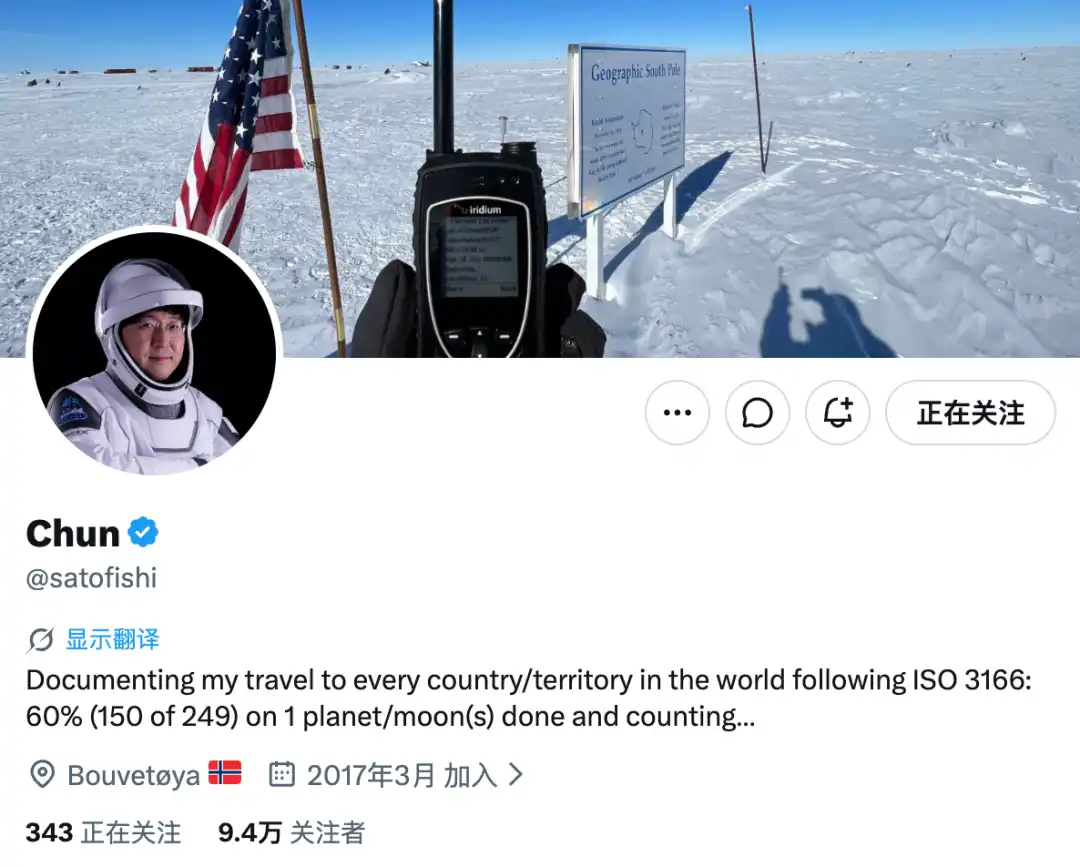
His X profile continues to be updated with records: following the ISO 3166 standard, documenting travels to every country and region in the world, currently having explored 60% of one celestial body (150 out of 249), still updating......
The Vast Blank on the Map

In 1987, Wang Chun's grandfather brought home a found world map. Wang Chun lay down and was captivated by the enormous blank space in the polar regions at the map's bottom. He was five years old then, living mostly with his grandparents, rarely venturing far, yet he was already deeply drawn to those distant and unknown places.

At age 13, upon graduating elementary school, he saved up to buy his first 486SX computer. He wrote himself a planetary gravity simulator and watched the solar system's motion trajectories on the monitor.

On the first day of registering for QQ in middle school, he set his name to 1. The next day he changed it to 2, the day after to 3, incrementing daily like this, persisting for nearly seven years, counting all the way up to 2523, until one day he found it boring and stopped.

No special reason to start, no particular reason to stop, and finally that number remained there forever. The '2' in F2Pool's name later came from this QQ number.

Although this habit stopped, his way of understanding the world did not change. He turned time into something countable, turned progress into a marked scale, stamped every ordinary day with a timestamp, making them a progress bar he could look back on.

He later meticulously recorded every train journey down to the minute and second, numbered every flight, and marked off visited countries one by one on a list. These things seemed laborious to outsiders, but for him, it was just instinct.
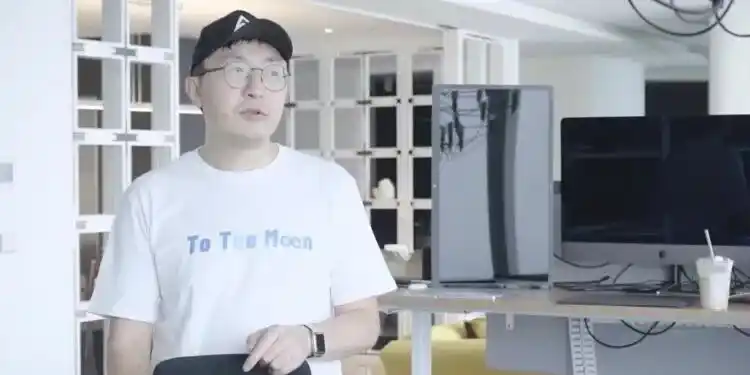
After graduation, he went to a Norwegian software company in Beijing. To save money, he slept on a French colleague's sofa, slept in the office. After work on Friday, he headed straight to the train station, returning Monday morning.

In the year 2007, he traveled 75,900 kilometers by train, equivalent to spending two full months on the road. He recorded every segment of the journey, precise to the minute or even second, posting it on forums. Someone gave him a nickname: Thousand-Trip High-Speed Rail Man.

In 2010, he went abroad for the first time, to Nepal, then India. In India, he boarded the country's longest-running train, the 16317 Himsagar Express, traveling all the way from the southernmost Kanyakumari to Kashmir, spending his entire savings at the time, $1,000.

Launching the F2Pool Bitcoin Mining Pool

In May 2011, he read two articles about Bitcoin on Solidot. That night, he opened the Bitcoin Wiki and read it from start to finish all night long. He described the feeling as if he had discovered a new continent.

On May 28, he bought his first bitcoin at a unit price of $8.70, borrowed $40,000 from his father, went to Zhongguancun to buy two graphics cards, rented four civilian houses, equipped dozens of mining rigs, second-hand motherboards, 512MB RAM, 4GB USB drives installed with Ubuntu, and started mining like that.

In the first two years, he mined 7,700 bitcoins, used 4,000 to pay for electricity, exchanged 660 for an iPhone (which was stolen in the St. Petersburg metro station). He sold the rest in January 2013 at $17 each, repaid his father's money, and made a small profit of over ten thousand dollars.

In April of that year, he and Mao Shixing, online nickname 'Shenyu' (which means 'Magic Fish'), launched F2Pool in Wenzhou, the first Bitcoin mining pool in China, later familiarly known as 'Fish Pool'.

Wang Chun wrote the backend code, Shenyu handled operations. A mining pool is different from a mining farm; a farm mines for itself, while a pool organizes the computing power of global miners, distributes rewards based on contribution, charges a handling fee, more like infrastructure for the Bitcoin network.

After going online, the pool expanded rapidly. This infrastructure business brought continuous cash flow and became an important source of his long-term wealth. Over the past decade-plus, F2Pool has helped global miners cumulatively mine over 1.3 million bitcoins.

In 2015, he used 2,900 bitcoins to buy his first apartment in Pattaya, Thailand. In 2018, he founded stake.fish in Thailand, a PoS staking service. This company later supported over twenty public chains including Ethereum, Solana, Cosmos, managing assets exceeding $3 billion.

The PoW mining pool and PoS validation, two infrastructure businesses based on different technological routes, together formed the foundation of his wealth. It is widely estimated that Wang Chun's wealth has reached hundreds of millions of dollars, but the specific figure has never been disclosed.
Flying into Space, Overlooking the Poles

On-paper wealth grew, but his lifestyle hardly changed: writing code, traveling, counting.

In December 2021, he stood at the South Pole. In July 2023, the North Pole. All geographical poles on Earth had been reached; there were no farther endpoints left, yet the questing heart did not stop.

It was then that he saw SpaceX's Falcon 9 booster landing vertically back on the launch pad. He felt that feeling again, exactly like the first time he heard about computers, the first time he discovered Bitcoin.

On April 23, 2023, lying in a hotel bed in Saudi Arabia, he asked himself: if he could design his own mission, where would he fly? The poles were the final frontier, but since 1961 when humans entered space, almost all crewed spacecraft had operated in mid-to-low inclination orbits. No vessel had ever truly flown over the poles, not because it couldn't be done, but because no one thought to do it, or no one had the resources to do it.

He thought of Darwin's HMS Beagle, the Beagle 2 Mars lander named after it, and then he thought of the Fram, the Norwegian exploration ship that conquered the poles multiple times, meaning 'Forward' in Norwegian.

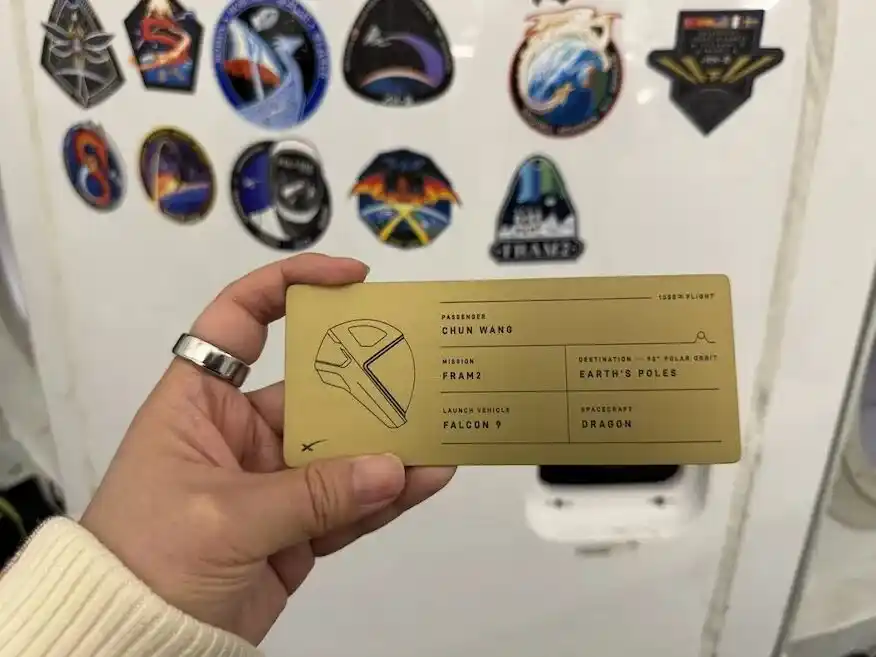
So he planned and designed everything, submitted a private mission proposal to SpaceX, requesting to charter an entire Crew Dragon, enter orbit at a 90-degree polar inclination, and fly over the poles.

The entire mission was fully self-funded, no sponsors. No brokers, no NASA approvals. He treated SpaceX as a charter company, negotiated requirements and costs, became the mission commander himself, fully responsible for overall decisions, coordinating the crew, and interfacing with ground control.

He deliberately chose the crew too: a Norwegian, a German, an Australian, all non-American citizens, because this was a purely private decision.
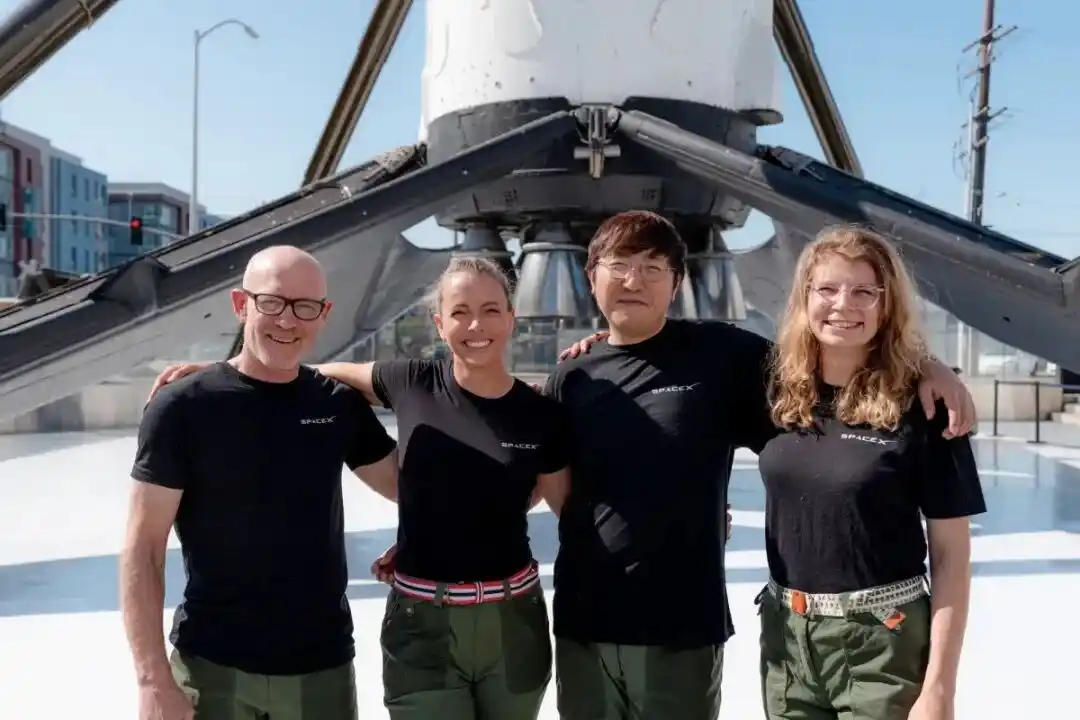
SpaceX sent him 2.8GB of learning materials, including mission procedure manuals, spacecraft system operation documents, guides for 22 scientific experiments, and explanations of polar orbit-specific risks.

Over the next 8 months, he underwent rigorous training: centrifuge high-G training, parabolic microgravity flights, cabin pressure loss simulation, polar survival drills, unassisted autonomous egress training, and more.

On March 31, 2025, the Falcon 9 lifted off from Kennedy Space Center.

Day one, the whole crew experienced space motion sickness. Day two, he wrote: feeling completely fine, like starting over.

The pole came into view, and he sent a message: Hello, Antarctica. Looking down from 430 kilometers high, a pure white expanse, no signs of human activity visible.

Suspended above Earth, he thought of Heisenberg's uncertainty principle, modeling his situation using quantum mechanics.

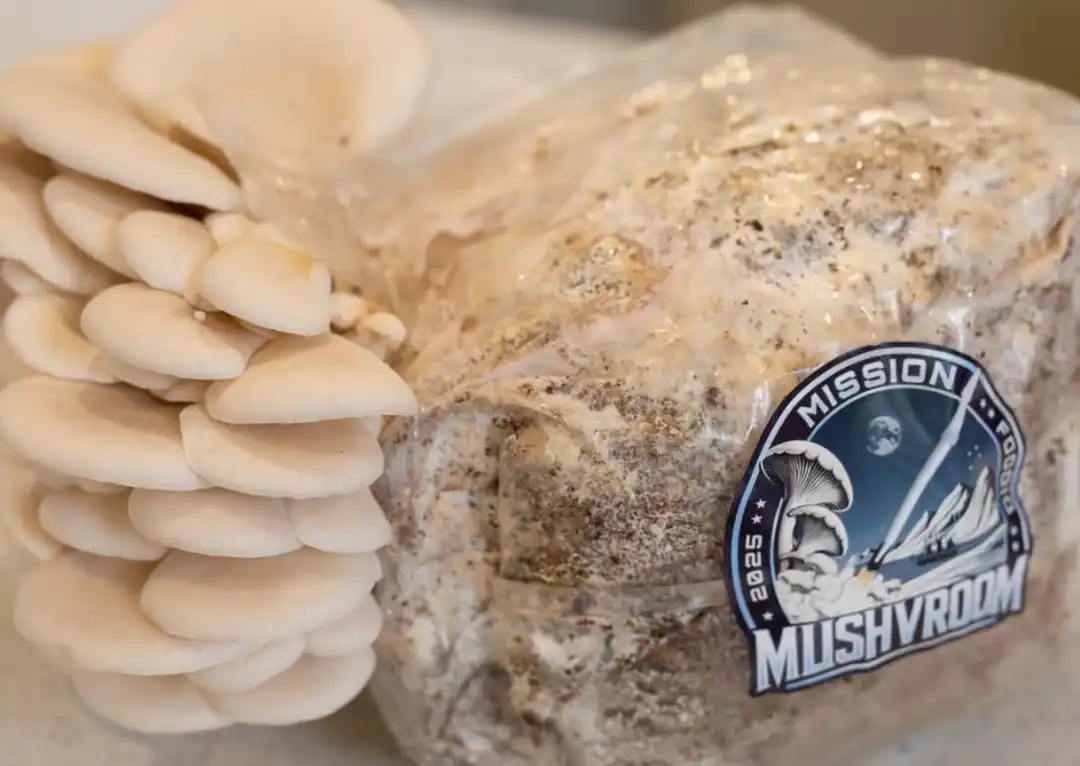
In three and a half days, the Fram2 mission completed 22 scientific experiments, including the first X-ray image taken in space by humans, growing oyster mushrooms in microgravity, monitoring polar radiation data, photographing auroras......

On April 4, 2025, the Crew Dragon splashed down off the coast of California. This was humanity's first crewed polar orbit flight, with an inclination of 90.01 degrees, breaking the 65-degree record set by the Soviet Union's Vostok 6 in 1963.
Mars Flyby

After Fram2's success, Wang Chun was already in line for SpaceX's next, even grander project.

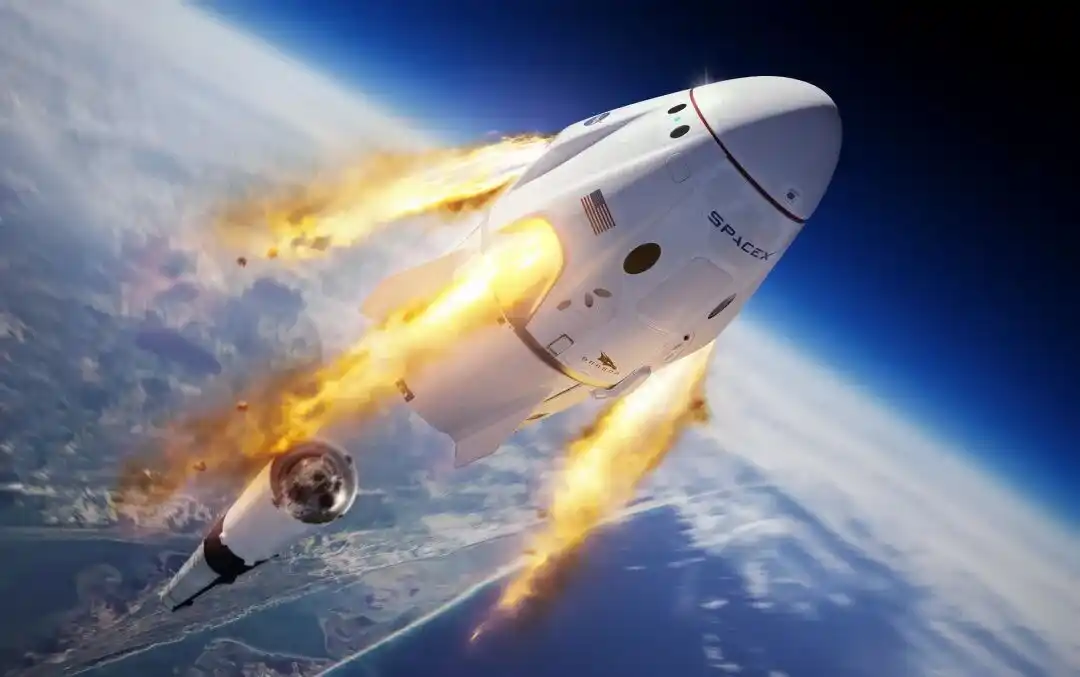
In May 2026, on the eve of SpaceX's live broadcast of the Starship V3's first launch test, the camera cut to Bouvet Island, where Wang Chun formally announced he would command the Starship to execute humanity's first crewed interplanetary flight mission: leaving the Earth-Moon system, flying by Mars, and returning to Earth, expected to take two years.

Before that, he would also complete the first commercial Starship lunar flyby mission with Dennis Tito and his wife, flying by within 200 kilometers of the lunar surface, as a warm-up for the official mission.
Twenty years ago, ordinary people had no chance to participate in deep space missions. Between 2001 and 2009, only seven extremely wealthy private individuals paid to hitch a ride to the International Space Station via Russian spacecraft, each trip costing around $20 million and requiring strict qualification review.

SpaceX changed the underlying structure of this logic. Reusable rockets lowered costs, private individuals could directly charter an entire spacecraft, mission forms shifted from brief visits to the space station to free-flight, allowing custom orbits, experiments, and crew selection.

Wang Chun's Fram2 was the first privately customized crewed polar orbit mission, and this Starship Mars flyby is humanity's first privately funded crewed interplanetary mission, with communication delays up to 20 minutes, no quick return windows, no possibility of rescue, the entire mission handled by SpaceX, unrelated to NASA.
The Continuously Expanding Map

Bitcoin played a special role in this change, creating a path for wealth accumulation not attached to the traditional financial system, and this wealth is flowing in some way towards the boundaries of civilization's expansion.

Wang Chun used mining-accumulated capital to charter the polar orbit, used mining pool operating profits to wait for Starship. It's not mere wealth consumption, but investing the resources Bitcoin gave him into the direction he's been oriented towards since he was five years old.

Over the past few decades, crewed spaceflight has long been dominated by national systems. Who could go up, where to go, what to do, was basically decided by space agencies.

Now, a programmer from Tianjin can define his own mission, choose his own orbit, be his own commander, and decide to fly by the side of Mars.

The counting continues, just on a map with a larger scale.

Trending Cryptos

Related Questions

QWhat is the source of the wealth that enabled Wang Chun to fund his private space missions?

AThe primary source of his wealth is the accumulated revenue from fees generated by the F2Pool Bitcoin mining pool he co-founded and the PoS staking service provided by stake.fish, which he later established.

QWhat was the name and significance of Wang Chun's first private space mission?

AHis first private space mission was named 'Fram2'. It was the first-ever privately funded, crewed mission to achieve a 90.01-degree polar orbit, flying directly over the Earth's North and South Poles, breaking the 1963 record of 65 degrees set by the Soviet Vostok 6 mission.

QWhat ambitious future mission did Wang Chun announce in May 2026?

AIn May 2026, he announced his plan to command the Starship spacecraft to execute humanity's first crewed interstellar flyby mission to Mars, leaving the Earth-Moon system, flying past Mars, and returning to Earth, with an estimated mission duration of two years.

QHow did Wang Chun first get involved with Bitcoin?

AHe first learned about Bitcoin in May 2011 from articles on Solidot. Intrigued, he read the entire Bitcoin Wiki in one night, describing the feeling as 'discovering a new continent'. On May 28, he bought his first Bitcoin for $8.7 and soon after borrowed money to begin mining.

QAccording to the article, what role has Bitcoin played in the broader context of space exploration?

AThe article suggests Bitcoin has played a special role by creating a path for wealth accumulation independent of the traditional financial system. This new wealth is now being channeled towards the frontiers of civilization expansion, enabling private individuals like Wang Chun to fund and define their own ambitious space missions.

Related Reads

Must-Watch Events Next Week|CLARITY Act Could Face Senate Vote; SpaceX, Circle to Report Earnings (8.3-8.9)

**Summary: Key Events and Developments to Watch (August 3-9)** The upcoming week is marked by significant financial disclosures, key legislative deadlines, and notable product updates. **Major Financial Events:** Several companies are scheduled to release their Q2 2026 earnings. American Bitcoin (ABTC) will report on August 3, followed by SpaceX and Hut 8 Mining Corp. on August 4, and Circle on August 5. Notably, a significant portion of SpaceX shares (up to 12% of total shares) will be unlocked on August 6 following their earnings release. **Key Legislative Deadline:** The U.S. Senate faces an August 7 deadline to secure 60 votes for the CLARITY Act, a bipartisan bill aiming to establish a federal regulatory framework for cryptocurrencies. The Senate may hold a full vote on the bill during the week. **Economic Data:** The U.S. July Non-Farm Payrolls report will be released on August 7, providing crucial labor market data. **Technology & Product Updates:** * **Shutdowns:** DeFi portfolio tracker Zapper and wallet app Ctrl Wallet will cease operations on August 3. * **Upgrades:** LayerZero will deprecate its v1 relayers on August 3. XRP Ledger's new version 3.3.0, featuring five new functions, is expected next week. * **AI:** Elon Musk announced that the advanced Grok 4.6 AI model is set for release around August 7. * **Bitcoin:** The BIP-110 forced signaling for a potential Bitcoin network change is scheduled to begin around August 8. **Other Notable Events:** Chinese robotics firm Unitree Tech has set its preliminary price inquiry for its IPO for August 5. South Korean exchange Upbit will delist AQT and AERGO tokens on August 3.

marsbit12m ago

Must-Watch Events Next Week|CLARITY Act Could Face Senate Vote; SpaceX, Circle to Report Earnings (8.3-8.9)

marsbit12m ago

Stocks Are Plummeting More Sharply Than Cryptocurrencies. Where Has the Money Gone?

Stock Markets Plunge Deeper Than Cryptocurrencies: Where Did the Money Go? In late July, Seoul's Kospi index triggered circuit breakers for two consecutive days, plummeting over 40% from its June high. The collapse was led by heavyweight stocks like SK Hynix, whose record profits still disappointed investors, and devastating leveraged ETFs, with one major product losing over 83% of its value. This signaled a global, forced deleveraging targeting the most crowded trades. Interestingly, while stocks exhibited extreme volatility akin to crypto markets, Bitcoin rose nearly 15% in July after a prior steep drop. Analysis shows the money fleeing equities did not flow into Bitcoin. Instead, Bitcoin had already absorbed its sell-off in May-June, when U.S. spot Bitcoin ETFs saw historic outflows. The true safe-haven beneficiary was gold, whose price rose over 20% year-on-year, highlighting a decoupling between Bitcoin and gold as "digital gold." The sell-off was a targeted unwinding of leveraged positions in tech and semiconductors, accelerated by broker-dealer risk management and shifts in the AI narrative, including new competition from Chinese memory chipmakers. The retreat path was clear: from high-valuation tech stocks to cash and U.S. Treasuries, then to gold. For Bitcoin to attract sustained institutional inflows, conditions like eased global liquidity pressure, a "soft-landing" Fed rate cut, and U.S. regulatory clarity via legislation like the stalled CLARITY Act are needed. Currently, Bitcoin is not a safe haven but an already-cleared asset. Its low correlation with tech stocks, however, makes it a potential diversification play for institutional portfolios once the storm passes. The money isn't here yet, but the positioning is underway.

marsbit12m ago

Stocks Are Plummeting More Sharply Than Cryptocurrencies. Where Has the Money Gone?

marsbit12m ago

In Conversation with Ray Dalio: We Are Currently in an AI Bubble, with 1% of My Portfolio in Bitcoin

Ray Dalio, founder of Bridgewater Associates, warns in an interview that the current AI boom shows classic bubble characteristics, which could lead to significant economic downturns as seen in past cycles like 1929 or 2000. He explains that speculative enthusiasm, fueled by debt and overvaluation, often precedes a crash when rising rates or taxation force asset sales, causing widespread losses and recession. Dalio also outlines his "Big Cycle" theory, describing an approximate 80-year pattern where widening wealth gaps, massive government deficits, and shifting geopolitical power (like China's rise) create internal conflict and global instability. He emphasizes that we are in a late-cycle, transitional phase where traditional powers like the US and UK face decline. For personal wealth protection, Dalio advises diversification beyond cash into assets like stocks, bonds, real estate, and particularly gold, which he prefers over Bitcoin. While he holds about 1% of his portfolio in Bitcoin as a non-printable hard asset, he views gold as more secure from technological or governmental threats. Regarding AI's impact, Dalio believes it will disproportionately benefit capital owners, worsening inequality by replacing both physical and cognitive labor. He suggests that human intuition and emotional intelligence, combined with AI, will be key for future workers. On taxation, Dalio argues that wealth taxes are impractical and risk triggering asset sell-offs, reducing productive investment. He points to the UK as a cautionary example of debt, low productivity, and political strife. Geopolitically, Dalio foresees a more regionalized world, with the US showing weakness in prolonged conflicts like with Iran, akin to past imperial declines. The ideal outcome, he suggests, is coexisting powerful blocs (e.g., Americas, China-Asia Pacific) without major war.

marsbit4h ago

In Conversation with Ray Dalio: We Are Currently in an AI Bubble, with 1% of My Portfolio in Bitcoin

marsbit4h ago

Daily 7.2 Trillion KRW: Foreign Capital's Record Net Buying on Friday! Wall Street Says Headwinds for Korean Stock Fund Flows Have Subsided

South Korean stock market sees a dramatic shift in fund flows. On July 31, foreign investors made a record net purchase of approximately KRW 7.2 trillion in KOSPI stocks, marking a fundamental reversal from the persistent large-scale net outflows seen in previous months. This contributed to a significant narrowing of foreign net selling in July to KRW 9.8 trillion, down sharply from KRW 48.4 trillion in June and KRW 44.5 trillion in May. Simultaneously, domestic institutional pressure eased. South Korean pension funds and asset managers turned to a net buying position in July, purchasing KRW 1.0 trillion worth of KOSPI shares, contrasting with net sales in May and June. Market volatility is expected to be dampened by new financial regulations. Effective July 31, the Financial Services Commission tightened access for retail investors to single-stock leveraged ETFs by raising the minimum cash deposit requirement. Trading volumes for these products subsequently dropped to about 50% of their monthly average. Citigroup Research maintains its year-end KOSPI target of 10,000 points. The firm cites several supportive factors: the substantial easing of headwinds from capital outflows, a robust fundamental outlook for the semiconductor sector, historically low market valuations, strong economic fundamentals, and the potential for policy support from financial authorities if needed.

marsbit4h ago

Daily 7.2 Trillion KRW: Foreign Capital's Record Net Buying on Friday! Wall Street Says Headwinds for Korean Stock Fund Flows Have Subsided

marsbit4h ago

Trading

Spot

Hot Articles

What is $BITCOIN

DIGITAL GOLD ($BITCOIN): A Comprehensive Analysis Introduction to DIGITAL GOLD ($BITCOIN) DIGITAL GOLD ($BITCOIN) is a blockchain-based project operating on the Solana network, which aims to combine the characteristics of traditional precious metals with the innovation of decentralized technologies. While it shares a name with Bitcoin, often referred to as “digital gold” due to its perception as a store of value, DIGITAL GOLD is a separate token designed to create a unique ecosystem within the Web3 landscape. Its goal is to position itself as a viable alternative digital asset, although specifics regarding its applications and functionalities are still developing. What is DIGITAL GOLD ($BITCOIN)? DIGITAL GOLD ($BITCOIN) is a cryptocurrency token explicitly designed for use on the Solana blockchain. In contrast to Bitcoin, which provides a widely recognized value storage role, this token appears to focus on broader applications and characteristics. Notable aspects include: Blockchain Infrastructure: The token is built on the Solana blockchain, known for its capacity to handle high-speed and low-cost transactions. Supply Dynamics: DIGITAL GOLD has a maximum supply capped at 100 quadrillion tokens (100P $BITCOIN), although details regarding its circulating supply are currently undisclosed. Utility: While precise functionalities are not explicitly outlined, there are indications that the token could be utilized for various applications, potentially involving decentralized applications (dApps) or asset tokenization strategies. Who is the Creator of DIGITAL GOLD ($BITCOIN)? At present, the identity of the creators and development team behind DIGITAL GOLD ($BITCOIN) remains unknown. This situation is typical among many innovative projects within the blockchain space, particularly those aligning with decentralized finance and meme coin phenomena. While such anonymity may foster a community-driven culture, it intensifies concerns about governance and accountability. Who are the Investors of DIGITAL GOLD ($BITCOIN)? The available information indicates that DIGITAL GOLD ($BITCOIN) does not have any known institutional backers or prominent venture capital investments. The project seems to operate on a peer-to-peer model focused on community support and adoption rather than traditional funding routes. Its activity and liquidity are primarily situated on decentralized exchanges (DEXs), such as PumpSwap, rather than established centralized trading platforms, further highlighting its grassroots approach. How DIGITAL GOLD ($BITCOIN) Works The operational mechanics of DIGITAL GOLD ($BITCOIN) can be elaborated on based on its blockchain design and network attributes: Consensus Mechanism: By leveraging Solana’s unique proof-of-history (PoH) combined with a proof-of-stake (PoS) model, the project ensures efficient transaction validation contributing to the network's high performance. Tokenomics: While specific deflationary mechanisms have not been extensively detailed, the vast maximum token supply implies that it may cater to microtransactions or niche use cases that are still to be defined. Interoperability: There exists the potential for integration with Solana’s broader ecosystem, including various decentralized finance (DeFi) platforms. However, the details regarding specific integrations remain unspecified. Timeline of Key Events Here is a timeline that highlights significant milestones concerning DIGITAL GOLD ($BITCOIN): 2023: The initial deployment of the token occurs on the Solana blockchain, marked by its contract address. 2024: DIGITAL GOLD gains visibility as it becomes available for trading on decentralized exchanges like PumpSwap, allowing users to trade it against SOL. 2025: The project witnesses sporadic trading activity and potential interest in community-led engagements, although no noteworthy partnerships or technical advancements have been documented as of yet. Critical Analysis Strengths Scalability: The underlying Solana infrastructure supports high transaction volumes, which could enhance the utility of $BITCOIN in various transaction scenarios. Accessibility: The potential low trading price per token could attract retail investors, facilitating wider participation due to fractional ownership opportunities. Risks Lack of Transparency: The absence of publicly known backers, developers, or an audit process may yield skepticism regarding the project's sustainability and trustworthiness. Market Volatility: The trading activity is heavily reliant on speculative behavior, which can result in significant price volatility and uncertainty for investors. Conclusion DIGITAL GOLD ($BITCOIN) emerges as an intriguing yet ambiguous project within the rapidly evolving Solana ecosystem. While it attempts to leverage the “digital gold” narrative, its departure from Bitcoin's established role as a store of value underscores the need for a clearer differentiation of its intended utility and governance structure. Future acceptance and adoption will likely depend on addressing the current opacity and defining its operational and economic strategies more explicitly. Note: This report encompasses synthesised information available as of October 2023, and developments may have transpired beyond the research period.

1.4k Total ViewsPublished 2025.05.13Updated 2025.05.13

What is $BITCOIN

Discussions

Welcome to the HTX Community. Here, you can stay informed about the latest platform developments and gain access to professional market insights. Users' opinions on the price of BTC (BTC) are presented below.

活动图片















