The Ethereum Foundation Has Split?! An In-depth Look at Ethlabs' "Bright Future"

Odaily星球日报Published on 2026-06-23Last updated on 2026-06-23

Abstract

"Ethereum Foundation Splits? Understanding Ethlabs and Its 'Bright Future'" Former Ethereum Foundation members Ansgar Dietrichs, Barnabé Monnot, Caspar Schwarz-Schilling, Josh Rudolf, and Julian Ma have announced the launch of Ethlabs, an independent non-profit research and development lab. Announced on June 22nd, the initiative comes amidst discussions about the need for new organizational structures within the Ethereum ecosystem, a point highlighted by Bankless founder David Hoffman. Ethlabs' mission is to establish Ethereum as the foundational settlement layer for the global economy. The organization positions itself as a bridge connecting frontline developers, applications, and user needs with the core protocol. It aims to translate real-world demands into protocol improvements, industry standards, and deployable products. The founding team brings significant expertise: Dietrichs and Monnot are highly cited researchers in areas like Proposer-Builder Separation (PBS) and MEV, while Schwarz-Schilling, Rudolf, and Ma contribute backgrounds in economic modeling, consensus research, and applied cryptography. Initial supporters include BitMine, a major corporate ETH treasury; Sharplink, another treasury firm; and Consensys founder Joe Lubin in a personal capacity. Community backers include figures like Uniswap's Hayden Adams and Base's Jesse Pollak. The timing coincides with internal Ethereum Foundation discussions about "spinout" projects. While Ethlabs and the Foundation...

Originally from Defiant, Author: The Defiant Team

Compiled by | Odaily Planet Daily Moni
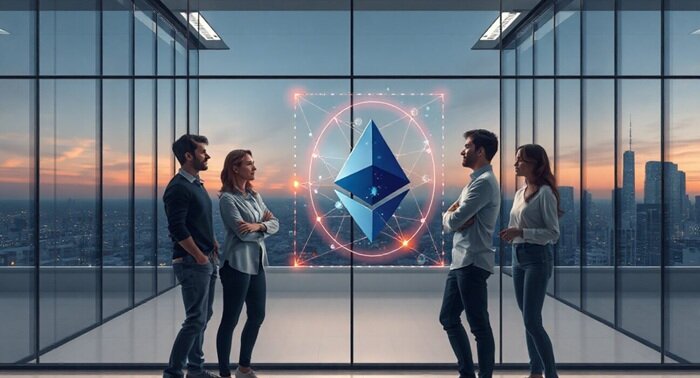
The Ethereum Foundation intentionally left a power vacuum so that new organizational structures could step up and influence Ethereum's development direction.

———David Hoffman, Founder of Bankless

In May this year, David Hoffman publicly announced on social media that he was selling all his ETH, clearly expressing strong dissatisfaction with the current management of the Ethereum ecosystem. Perhaps stimulated by this move, the Ethereum community finally began to brew change, and the "new organizational structure" David Hoffman longed for in his heart has now appeared.

On the evening of June 22, five former Ethereum Foundation members—Ansgar Dietrichs, Barnabé Monnot, Caspar Schwarz-Schilling, Josh Rudolf, and Julian Ma—officially announced the launch of an independent non-profit research and development lab, Ethlabs. It currently accepts donations in ETH, stablecoins, and ERC-20 tokens.

What is Ethlabs?

According to the introduction on the official website's main page, Ethlabs is a non-profit R&D lab dedicated to the Ethereum ecosystem and ETH, with a mission to make Ethereum the global economic settlement layer.

Ethlabs believes that the internet achieved globalization because universal protocols created a common interaction language for various networks. While various private systems still hold practical value, they always have inherent limitations. Now, the financial industry is facing a similar turning point. As value, assets, and markets become fully digitalized, the world urgently needs a collaboratively built and shared settlement infrastructure.

In this regard, Ethereum possesses unique advantages, sufficient to become this universal, neutral base layer, allowing individual users, institutions, and various smart agents to conduct transactions without intermediaries. Ethlabs provides three key reasons:

1. Ethereum has credible neutrality: Ten years of stable, uninterrupted operation, possessing the lowest counterparty risk. Its foundational layer cannot be unilaterally controlled by any institution, company, or individual.

2. ETH can serve as the benchmark asset: ETH is already a mature store of value with programmable properties. After a decade of wide distribution, it has ample on-chain market liquidity and is the most decentralized native asset within the Ethereum ecosystem.

3. Rich ecosystem of developers and DeFi resources: Ethereum has already formed an open trading market, credit, exchange, and ecosystem collaboration system accessible to everyone.

Ethlabs positions itself as a bridge between cutting-edge developers and the underlying protocol, translating the real needs of ordinary users, applications, wallets, Layer 2 networks, infrastructure teams, institutions, and core developers into protocol iterations, universal standards, supporting infrastructure, and deployable products.

On the other hand, Ethlabs will also play a role in bridging the Ethereum ecosystem: on one side are the practical deployment needs brought by front-line developers, and on the other side is the underlying protocol that needs to support all applications.

"We connect with ordinary users, decentralized applications (dApps), wallets, Layer 2 networks, infrastructure teams, institutions, ETH holders, core developers, and researchers, ultimately translating the real demands of all parties into protocol optimizations, universal industry standards, supporting infrastructure, and products ready for official launch and delivery."

What are the backgrounds of Ethlabs' founding team members?

Ansgar Dietrichs and Barnabé Monnot are among the most cited researchers in Ethereum protocol research over the past decade. The former has long been involved in research related to Ethereum's "Proposer-Builder Separation" (PBS), while the latter is renowned for his research on MEV (Maximal Extractable Value) and cryptoeconomic mechanism design conducted through the Ethereum Foundation's "Robust Incentives Group."

Caspar Schwarz-Schilling, Josh Rudolf, and Julian Ma have rich backgrounds in economic modeling, consensus research, and applied cryptography, respectively.

Who is supporting ETHlabs?

Currently disclosed backers include Bitmine, Sharplink, and Joe Lubin, founder of Consensys:

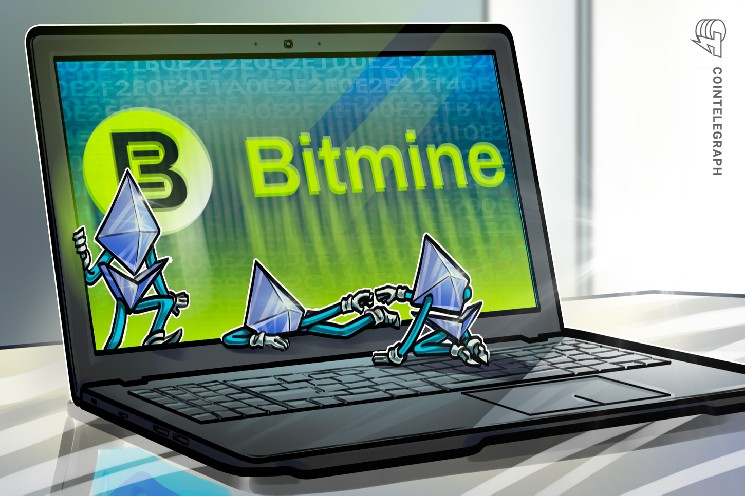
Bitmine is the largest enterprise-level ETH treasury institution by holdings, with over 5.67 million ETH. It is also continuously building its own validator node infrastructure and launched its self-developed Ethereum validator network, MAVAN, in March this year.

Sharplink is another ETH treasury company. In May this year, it jointly launched a $125 million DeFi fund, "Galaxy SharpLink Onchain Yield Fund," with Galaxy, focusing on high-yield strategies such as on-chain lending and liquidity provision.

Joe Lubin is the founder of Consensys and a co-founder of Ethereum. He is participating as a core funder in his personal capacity. Of course, David Hoffman has also publicly stated that he will provide support on Ethlabs' path forward.

According to ETHlabs' official funding page, other institutional backers include SNZ, Octant, Anchorage Digital, and investor Konstantin Lomashuk. Community supporters include Uniswap's Hayden Adams, Base's Jesse Pollak, Etherealize's Danny Ryan, the Ethereum Foundation's Justin Drake and Tim Beiko, Dragonfly's Haseeb Qureshi, and approximately 50 other donors in total.

Is Ethlabs a signal of the Ethereum Foundation's "Split"?

The timing of Ethlabs' establishment is particularly noteworthy because, on the very same day, Aerugo, the Chief Strategy Officer of the Ethereum Foundation, initiated a series of discussions regarding the Foundation's future execution direction. This included evaluation criteria for Ethereum Foundation "spinouts" and when it is appropriate for the Foundation to provide funding support.

According to Aerugo, spinout projects need to meet the following conditions:

"Is the work core to the Ethereum Foundation's mission? If the Ethereum Foundation had sufficient organizational and financial capacity, would it choose to undertake this work internally? Is there no more suitable party to carry it? Can an external team execute it while avoiding increased risk of capture, private benefit extraction, lack of transparency, or dependency?"

In fact, ETHlabs and the Ethereum Foundation have significant overlap in core research directions. Aerugo mentioned that eliminating MEV is "the next important front in the cypherpunk war" and listed it as one of the Ethereum Foundation's core protocol research areas—precisely the field Dietrichs and Monnot have long been researching.

At this stage, the emergence of Ethlabs may not necessarily signify direct competition with the Ethereum Foundation. It more likely represents a shift in the Ethereum ecosystem from a "single-core coordination model" to a "multi-R&D entity collaboration model." As Ethlabs itself stated: Maintaining independent operation, Ethereum belongs to the public project of all builders. Ethlabs is just one node in the vast ecosystem governance network—this is the future landscape of multi-node collaboration.

However, as the overlap in talent, funding, and technical direction between the two parties increases, potential divergences may still arise in the future.

Ethlabs resembles more of an organizational evolution in the maturing process of the Ethereum ecosystem. The key for the future lies not in whether it replaces the Ethereum Foundation, but in whether multiple R&D organizations can form synergies to jointly promote Ethereum into becoming a more competitive global on-chain settlement infrastructure.


Trending Cryptos

Related Questions

QWhat is the purpose and mission of the newly announced independent non-profit research and development lab, Ethlabs?

AEthlabs is an independent non-profit R&D lab dedicated to the Ethereum ecosystem and ETH. Its mission is to make Ethereum the settlement layer for the global economy by serving as a bridge between front-line developers and the core protocol, translating real-world needs into protocol improvements, standards, infrastructure, and products.

QWho are the founding members of Ethlabs and what are their notable backgrounds?

AThe founding members are five former Ethereum Foundation researchers: Ansgar Dietrichs and Barnabé Monnot (known for high-impact research on PBS and MEV), and Caspar Schwarz-Schilling, Josh Rudolf, and Julian Ma, who have strong backgrounds in economic modeling, consensus research, and applied cryptography, respectively.

QAccording to the article, what are the three main reasons Ethlabs believes Ethereum is uniquely positioned to become a global settlement infrastructure?

AEthlabs cites three key reasons: 1) Ethereum's credible neutrality, with a decade of stable, uninterrupted operation and resistance to unilateral control. 2) ETH's role as a benchmark asset, being a programmable store of value with deep on-chain liquidity and high decentralization. 3) The richness of its developer ecosystem and DeFi resources, offering open markets, credit, exchange, and collaboration systems.

QWhat event and individual's public action is suggested to have stimulated the community changes leading to Ethlabs' formation?

AThe article suggests that Bankless founder David Hoffman's high-profile announcement in May to sell all his ETH, as an expression of dissatisfaction with Ethereum's current management, may have stimulated the community to酝酿 change. His desired 'new organizational structures' are seen as materializing with Ethlabs.

QHow does the article characterize the relationship between Ethlabs and the Ethereum Foundation? Is it seen as direct competition?

AThe article characterizes it not as direct competition but as a shift from a 'single-core coordination model' to a 'multi-R&D entity collaboration model.' Ethlabs is seen as one node in a broader governance network. While potential for future divergence exists, its emergence is viewed as an organizational evolution within the maturing ecosystem.

Related Reads

Goldman Sachs In-Depth Report: Who Will Be the Long-Term Winners in China's AI Large Model Industry?

Goldman Sachs Report: China's AI Models at an Inflection Point China's open-source/open-weight large language models (LLMs) have reached performance parity with top global proprietary models, according to a Goldman Sachs report. This is driven by architectural innovations and higher parameter efficiency, allowing Chinese models to achieve comparable capabilities at 2%-10% the parameter size and significantly lower cost. The market is evolving into a two-tiered structure: a high-end segment (e.g., GLM5.2, Qwen3.7 Max) with premium pricing and a low-end, price-sensitive segment for global SMEs and individual users. Key points: * **Cost & Performance:** Innovations like Mixture of Experts (MoE) enable high performance with smaller models. Projects like Meituan's LongCat 2.0, trained on domestic hardware, highlight progress in tech self-sufficiency. * **Open-Source Strategy:** Most Chinese players use open-source/open-weight models for flexibility and ecosystem growth. However, Goldman notes this may underreport actual deployment and revenue. A shift toward "open-weight + community license" models with revenue sharing (e.g., MiniMax) could improve monetization. * **Market Shift & Global Expansion:** Enterprise AI adoption is shifting from "token maximization" to "ROI-first." International expansion, especially in non-US markets, is a major growth driver. Chinese models are increasingly available on global platforms like AWS Bedrock and Microsoft Copilot. * **Competitive Landscape:** Using a framework based on pricing power, cost advantage, and financial strength, Goldman identifies **Zhipu AI and DeepSeek** as the strongest in foundational text models, and **ByteDance** as the leader in multimodal/video generation. The report maintains Buy ratings on MiniMax and Kuaishou. * **Market Growth:** China's AI model API and subscription revenue is projected to grow from an estimated ¥35 billion in 2026 to ¥879 billion by 2030.

marsbit11m ago

Goldman Sachs In-Depth Report: Who Will Be the Long-Term Winners in China's AI Large Model Industry?

marsbit11m ago

Goldman Sachs Deep Dive Report: Who Will Become the Long-Term Winners in China's AI Large Model Industry?

Goldman Sachs Report: Who Will Be the Long-Term Winners in China's AI Large Model Industry? China's AI large model sector is at a historic inflection point. Goldman Sachs argues that the intelligence of Chinese open-source/open-weight models is approaching top global proprietary models. Rapid adoption by domestic enterprises and global SMEs is creating a data flywheel effect that will further drive model iteration. The evolution is summarized as moving from "DeepSeek's cost-efficiency moment last year to GLM's model-intelligence moment this year." Chinese models achieve near-state-of-the-art performance at significantly lower cost, primarily due to architectural innovations like Mixture of Experts (MoE) and higher parameter efficiency. Models like DeepSeek V4 Pro (1.6T params), GLM5.2 (0.7T), and MiniMax M3 (0.4T) are much smaller than global leaders. Recent advancements in coding capability are attributed to better data curation and RLHF. Landmarks like Meituan's LongCat 2.0, trained fully on domestic AI chips, demonstrate progress in hardware stack independence. The market is forming a "two-tiered structure." The high-end tier (e.g., GLM5.2, Alibaba's Qwen3.7 Max) prices around $1 per million tokens, about 10-25% of US top models, with estimated inference gross margins of 10-20%. The low-end tier (priced as low as $0.06-$0.2 per million tokens) targets price-sensitive global SMEs and individuals. MiniMax derives 60-70% of revenue overseas. Goldman forecasts China's AI model API/subscription revenue to grow from an estimated RMB 35bn in 2026 to RMB 879bn by 2030. Most Chinese players adopt open-source/open-weight strategies for deployment flexibility and community feedback, though this limits monetization as deployments on third-party platforms (e.g., Alibaba Cloud) may not generate direct revenue. A shift towards "open-weight + community license" models with revenue-sharing agreements (like MiniMax's approach) could improve unit economics. International expansion, particularly in non-US markets, is the key growth driver. The global enterprise AI paradigm is shifting from "token maximization" to "ROI prioritization." Chinese models are already hosted on major global platforms like AWS Bedrock and are under consideration for integration into Microsoft Copilot. Using a competitive framework based on pricing power, cost advantage, and financial strength, Goldman identifies the strongest players: In foundational text models, Zhipu AI (initiated coverage) and DeepSeek lead. In multimodal/video generation, ByteDance's Seed is the frontrunner, with Kuaishou's Kling and MiniMax's Hailuo also well-positioned. Goldman maintains a Buy rating on MiniMax, citing its attractive valuation.

链捕手15m ago

Goldman Sachs Deep Dive Report: Who Will Become the Long-Term Winners in China's AI Large Model Industry?

链捕手15m ago

Is Ethereum Truly a "World Computer"?

Title: Is Ethereum Really a "World Computer"? Ethereum, envisioned as a "world computer" by its founder Vitalik Buterin, aims to be a decentralized platform for global applications. However, a recent analysis by Four Pillars raises questions about whether it is more accurately a "Western computer," based on the geographical distribution of its validators. Currently, the United States dominates with 38.19% of all validators, followed by Germany at 13.04%. Combined, these two countries account for over half of the network. In contrast, Asian representation is minimal, with Singapore holding only 3.15%. The concentration is partly due to affordable cloud hosting services like Hetzner and OVH in Europe and North America, as well as the prevalence of residential validators in the U.S., where individuals run nodes via home internet connections. When examining professionally operated validators, the distribution becomes more balanced. The U.S. share drops to 25.81%, while Asian countries like Singapore (7.28%), Hong Kong (6.44%), Japan (6.38%), and South Korea (4.59%) collectively approach the U.S. level. This shift reflects strategic deployments by institutions to meet regulatory requirements and reduce latency for local users. However, regions like South America, the Middle East, and Africa remain underrepresented. Ethereum's peer-to-peer network mechanisms, such as gossipsub, disadvantage areas with low node density, creating a feedback loop where delayed message propagation reduces validator performance and rewards. This imbalance challenges Ethereum's promises of censorship resistance and global accessibility. Despite these issues, opportunities exist for growth in underrepresented regions. As demand for localized staking infrastructure rises, early entrants in areas like the Middle East could establish dominant positions by offering compliant, low-latency solutions. The evolving validator landscape highlights both the structural challenges and the potential for Ethereum to move closer to its "world computer" ideal.

Foresight News2h ago

Is Ethereum Truly a "World Computer"?

Foresight News2h ago

Trading

Spot

Hot Articles

Discussions

Welcome to the HTX Community. Here, you can stay informed about the latest platform developments and gain access to professional market insights. Users' opinions on the price of ETH (ETH) are presented below.

活动图片