# Productivity Related Articles

HTX News Center provides the latest articles and in-depth analysis on "Productivity", covering market trends, project updates, tech developments, and regulatory policies in the crypto industry.
AGI Has Been Here for 5 Months? Top Coders' Efficiency Soars 20x, the Cost is Not Daring to Sleep

AGI May Have Arrived Five Months Ago. Top Engineers' Efficiency Soars 20x, at the Cost of Sleep. Key figures suggest AGI (Artificial General Intelligence) may have already been achieved. Google DeepMind CEO Demis Hassabis states AGI is likely "a few years away." However, Marc Andreessen, a16z co-founder, claims the threshold—where AI models match or exceed a smart human's general cognitive ability—was crossed around February 2026, citing models like GPT-5.5 and Claude 4.6. These models have since been superseded by newer versions, illustrating the field's rapid pace. The Turing Test was passed by GPT-4.5 in 2025, a fact confirmed two years after the event. A significant side effect is the emergence of "AI vampires": software engineers whose productivity has increased up to 20-fold using AI coding agents. Instead of gaining leisure time, they work longer hours, managing multiple agents simultaneously. The opportunity cost of sleep has become prohibitively high, as pausing halts entire workflows. Top AI programmers can now earn up to $50 million annually. Andreessen shares his techniques for leveraging AI: asking for layered explanations (e.g., "explain to a 5-year-old"), requesting the strongest arguments for opposing sides, simulating expert panel debates, and consulting AI first for problem-solving. The real skill is knowing how to ask the right questions. In healthcare, Andreessen describes a positive personal experience with an "AI doctor" during illness. Yet, a February 2026 study in *Nature Medicine* revealed ChatGPT Health made critical errors in emergency triage, underestimating severe cases over 50% of the time. This highlights a gap between AI's advanced capabilities (e.g., solving an 80-year-old math conjecture) and its reliability in high-stakes, real-world applications. The arrival of AGI appears not as a single announced event, but as a gradual transition slipped between routine model updates, leaving its official status unconfirmed.

marsbitYesterday 02:31

AGI Has Been Here for 5 Months? Top Coders' Efficiency Soars 20x, the Cost is Not Daring to Sleep

marsbitYesterday 02:31

ChatGPT Finally Can 'Search Itself': Nearly Four Years of Conversations, Retrieved with One Click

ChatGPT, nearly four years old, has long lacked a functional way for users to search their own accumulated history. This changed on July 14th, when OpenAI launched a comprehensive "Unified Search" feature across all platforms and plans. This new search allows users to find and instantly access past conversations, uploaded documents, generated images, and projects within their own ChatGPT account, all from a single sidebar entry. This update signifies a major shift in ChatGPT's role, transforming it from a transient chat tool into a personal knowledge base or "file system" for users' AI-generated content. It completes a critical missing piece as OpenAI expands ChatGPT's capabilities with features like Projects, Memory, Work, and Sites, aiming to make it a central hub for work and creativity. The ability to easily retrieve years of personal data makes that data more valuable as a unique, irreplaceable asset in the AI era. However, it also highlights the increasing weight and potential sensitivity of this data, given default settings that allow conversations to be used for model training and legal precedents involving user logs. While a significant improvement over the previous ineffective search, this move is seen as addressing an industry-wide oversight. As the competition between AI assistants (ChatGPT, Gemini, Claude) moves beyond raw model power, the new battleground is becoming which platform can best organize, retain, and leverage the valuable data co-created by users and AI.

marsbitYesterday 00:29

ChatGPT Finally Can 'Search Itself': Nearly Four Years of Conversations, Retrieved with One Click

marsbitYesterday 00:29

Today, Claude Cowork Major Update: Close Your Laptop, It Works for You Overnight

Anthropic's Claude Cowork has received a major upgrade, officially launching on mobile and web platforms. This allows users to manage and monitor tasks from any device, freeing them from needing to stay at their computers. The key innovation is that tasks now run in the cloud on Anthropic's servers, meaning work continues even when a user's personal device is offline or closed. The update merges Chat and Cowork into a single interface and extends usage quotas. Engineers highlight three core capabilities now unified: precise context understanding, support for long-running tasks, and complete independence from a user's physical device. The workflow is described as a full cycle: a user assigns a complex task (e.g., preparing a meeting summary, drafting emails, post-meeting analysis). Claude Cowork autonomously breaks it down, connects to necessary tools like Slack and email, gathers information, and executes. It pauses only for critical user decisions, sending a notification to the user's phone for approval before proceeding. Product managers share use cases like monitoring AI agents during a soccer game or resuming a cloud-based task seamlessly after a flight, emphasizing the new flexibility. The article frames this as part of a larger trend where tech giants (OpenAI, Microsoft, Google) are competing to bring AI agents into the daily workflows of general knowledge workers, not just developers. The ultimate battleground is becoming an indispensable, seamless part of everyday productivity.

marsbit07/08 00:54

Today, Claude Cowork Major Update: Close Your Laptop, It Works for You Overnight

marsbit07/08 00:54

After Close Observation of Wash, Morgan Stanley's Chief Economist Insists: The Fed Will Not Raise Rates This Year

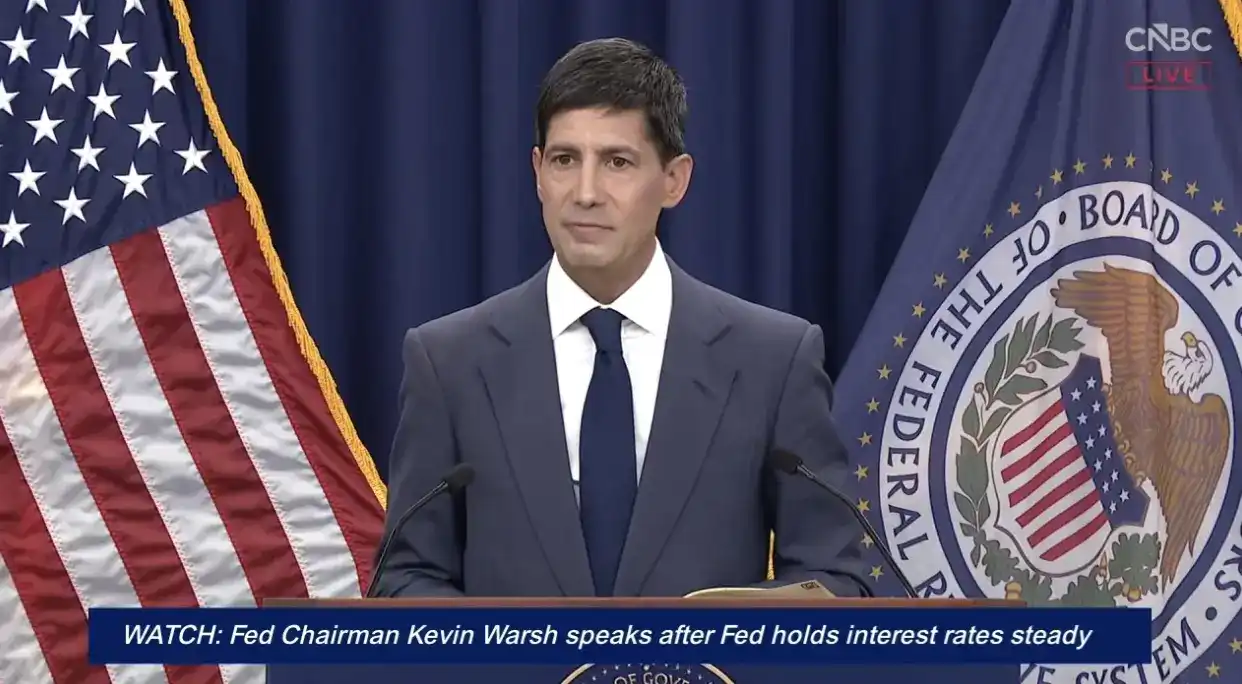
After close observation of Federal Reserve Chair Wash, Seth Carpenter, Morgan Stanley's Chief Global Economist, asserts that the Fed will not raise interest rates this year. Following Wash's speech at the ECB's Sintra forum, Carpenter notes a marginal dovish shift: Wash now more clearly balances the Fed's dual mandate of price stability and maximum employment, rather than focusing nearly exclusively on inflation. Importantly, Wash highlighted that the latest policy meeting (coinciding with falling oil prices) has already lowered market inflation expectations and term premiums, signaling no urgency for a July rate hike. Carpenter's view is supported by data. Recent non-farm payroll figures provide room for the Fed to remain patient. Morgan Stanley's inflation forecasts are below the median FOMC projection, and methodological revisions to PCE inflation could further lower readings. These factors make Carpenter "comfortable" with the call for no hikes in 2024. Carpenter also pushes back against the simplistic narrative that AI will be deflationary and lead to rate cuts. He argues AI investment is currently boosting inflation marginally. More broadly, the business cycle will dictate policy; AI's productivity gains could boost demand and, crucially, raise the equilibrium interest rate (r*), weakening the case for cuts. In contrast, the ECB's path remains more hawkish. Carpenter interprets President Lagarde's Sintra comments as leaving the door open for another 25 basis point hike in September, though softer recent data and falling oil prices provide some flexibility. A July hike or more than one additional hike this year is seen as unlikely.

marsbit07/06 01:39

After Close Observation of Wash, Morgan Stanley's Chief Economist Insists: The Fed Will Not Raise Rates This Year

marsbit07/06 01:39

Claude Engineer Finally Unveils Fable 5's Ultimate Strategy, Teaching You How to Bridge the Information Gap with AI Models

This article, titled "Claude Engineer Finally Releases Fable 5 'Skill-Burning' Guide, Teaching How to Bridge the Information Gap with Models," details a blog post by Claude Code engineer Thariq Shihipar. The core concept is the "information gap" or "unknowns"—the disconnect between a user's instructions (the "map") and the actual task requirements (the "territory"). The article argues that with powerful models like Claude Fable 5, work quality depends on the user's ability to identify and clarify these unknowns. Shihipar categorizes unknowns into four types: Known Knowns (explicit instructions), Known Unknowns (awareness of gaps), Unknown Knowns (implicit, unstated knowledge), and Unknown Unknowns (unforeseen issues). The blog provides a framework for addressing these gaps throughout the workflow: * **Before Implementation:** Techniques include "Blindspot Scanning" to uncover Unknown Unknowns, brainstorming/prototyping for visual or complex tasks, having Claude ask clarifying questions, using reference code/examples, and creating implementation plans. * **During Implementation:** Maintaining an "implementation notes" file for Claude to document deviations and decisions made due to encountered edge cases. * **After Implementation:** Creating summary documents for review and having Claude generate quizzes to ensure the user fully understands the completed changes. The article concludes that as models become more capable, the key to success is systematically discovering and defining these unknowns through low-cost methods like prototyping and planning, allowing for more effective collaboration.

marsbit07/06 00:14

Claude Engineer Finally Unveils Fable 5's Ultimate Strategy, Teaching You How to Bridge the Information Gap with AI Models

marsbit07/06 00:14

活动图片