# Loss Related Articles

HTX News Center provides the latest articles and in-depth analysis on "Loss", covering market trends, project updates, tech developments, and regulatory policies in the crypto industry.

Now the Greatest Regret Is to My Family: Crypto Experts Took a Stumble in the Stock Market

Summary: This article examines the significant losses recently suffered by cryptocurrency traders and influencers who ventured into the stock market, specifically by heavily investing in AI-related and semiconductor storage stocks. The narrative centers on the dramatic reversal in the Korean and US equity markets in late July, with stocks like SK Hynix and related leveraged ETFs experiencing historic plunges, erasing massive gains. The analysis highlights several key factors behind the "flip." Traders, accustomed to crypto's high volatility and frustrated by a stagnant market, chased the apparent momentum in AI-themed equities. Many made fatal mistakes: applying high-leverage strategies common in crypto (e.g., 2x ETFs, on-chain perpetual contracts) to stocks, and failing to understand the distinct rules of different stock markets (like Korean pre-market trading). This led to widespread liquidations, especially when a thin Korean pre-market trade triggered a cascading flash crash on a decentralized exchange. Post-crash reflections from prominent figures reveal deep regret and self-criticism. They acknowledge misjudging their expertise, overestimating their edge against sophisticated institutional players, and the dangers of leverage. The article concludes that while such setbacks are part of trading, surviving long-term requires recognizing one's limitations and the inherent risks of cross-market strategies.

marsbit5h ago

Now the Greatest Regret Is to My Family: Crypto Experts Took a Stumble in the Stock Market

marsbit5h ago

SpaceX Shares Predicted to Recover No Earlier Than Early 2027

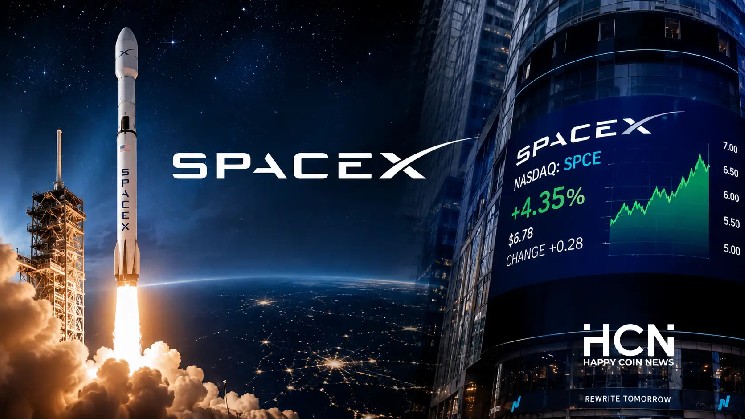
Analysts predict that a significant recovery in SpaceX's share price is unlikely before early 2027, when the current insider lock-up period is scheduled to end. Recently, shares have traded in a narrow range around $118-$124, still 48% below their 52-week high of $225.64. The short-term outlook depends heavily on potential insider selling, especially with the 52-week low of $110.85 acting as a floor. SpaceX's market capitalization stands at $1.56 trillion, but the company is not yet profitable, as evidenced by a $4.9 billion net loss in 2025 and an additional $4.28 billion loss in Q1 2026, attributed to heavy investments in Starship and AI infrastructure. The stock is currently trading at over 84 times trailing revenue, a valuation analysts say depends on a substantial future increase in Starlink's cash flow. The unlocking of 911.5 million shares worth ~$116 billion on August 6, 2026, followed by a phased release schedule, adds significant uncertainty. Quarterly results on August 4, 2026, could provide a short-term catalyst if Starlink performs strongly or Starship milestones are met. Wall Street analyst consensus for a 12-month price target is around $240, but individual forecasts vary widely from $63 to $800, reflecting deep divisions over the company's recovery prospects and future valuation. Key ratings include Morgan Stanley's $300 target and Oppenheimer's more modest $190 target.

cryptonews.ru07/27 11:04

SpaceX Shares Predicted to Recover No Earlier Than Early 2027

cryptonews.ru07/27 11:04

Bought Bitcoin at $117,000, Sold at $62,000 in Tears: This Company’s Faith Only Lasted a Year

Wall Street's once-hot trend of corporate "Bitcoin hoarding" has hit a painful reality check. Empery Digital, formerly an electric motorcycle company, pivoted to Bitcoin in July 2025, accumulating over 4,000 BTC at an average cost of approximately $117,600 each. As Bitcoin's price plummeted, the company faced massive paper losses exceeding its total market value by early 2026, triggering internal conflict with a major shareholder demanding a sale. In a stark reversal from its earlier refusal to sell, Empery Digital recently sold 1,400 BTC at an average price of $62,000, locking in a significant loss of roughly $77 million on just those coins. The proceeds were used to pay down $10 million in debt, prepare for legal fees related to shareholder lawsuits, and, most notably, fund a new strategic shift: a $65 million investment for a 25% stake in an AI data center facility. This move completes a cycle of chasing market trends—from electric vehicles to Bitcoin treasury and now to AI infrastructure. Empery's case exposes the leveraged nature of the corporate "treasury model," where buying Bitcoin with borrowed money works only while prices rise. Once the asset fell below its cost basis, the company was forced to sell at a loss to service debt and pivot to the next opportunity. The company's remaining assets are 1,514 BTC and its ambitions in AI, demonstrating that its stated "long-term belief" in Bitcoin had a clear price tag: a 50% discount.

marsbit07/21 01:25

Bought Bitcoin at $117,000, Sold at $62,000 in Tears: This Company’s Faith Only Lasted a Year

marsbit07/21 01:25

Prices From the Future Fool the Oracle, Ostium Drained of $24 Million in Five Minutes

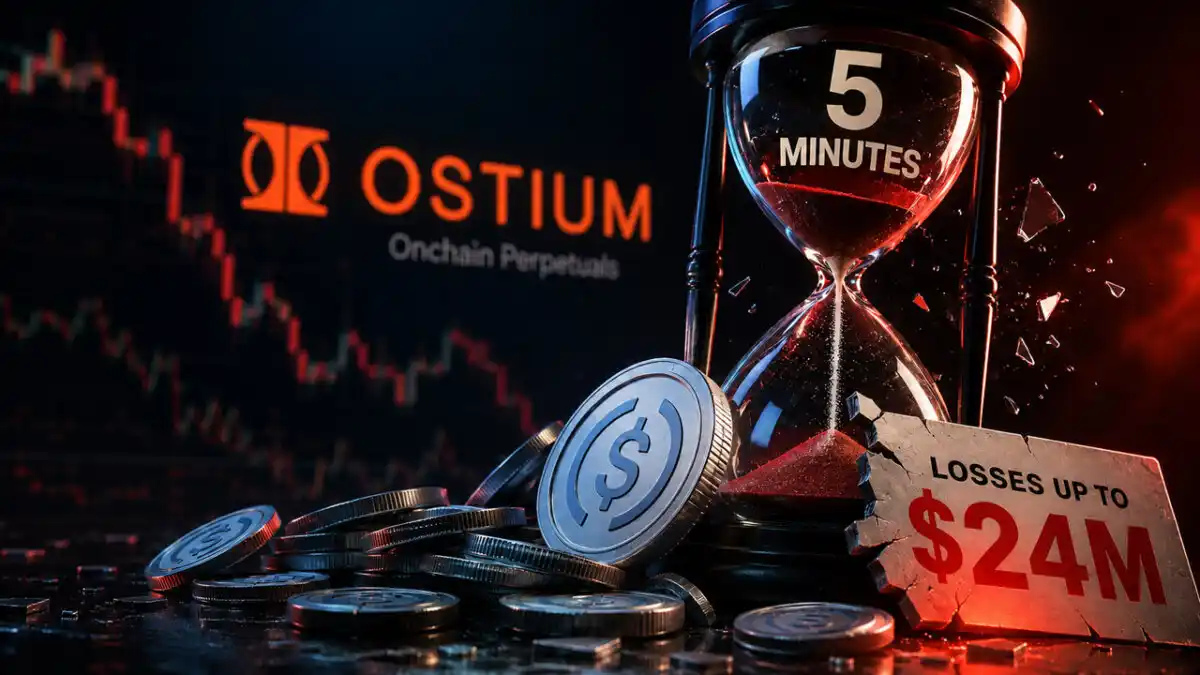
Ostium, a perpetual trading platform, suffered a security incident on July 15, resulting in significant losses from its public liquidity vault. Initial analyses from Blockaid, Cyvers, and PeckShield estimate losses of up to $24 million. The exploit occurred over a five-minute window. According to security firms, the core issue was not a missing signature, but a data integrity failure: a registered price oracle (PriceUpKeep) submitted authorized price reports with manipulated future timestamps, creating false trading profits. The protocol’s verification process confirmed the signatures as authorized but did not enforce price sanity checks or timestamp boundaries, allowing the manipulated data to be accepted for settlement. This caused the liquidity vault to pay out on these fraudulent profits. Ostium’s co-founder confirmed the team paused trading within an hour and is collaborating with law enforcement and security experts. The extracted funds were reportedly swapped for ETH, with a portion moved to Tornado Cash. The incident highlights risks in DeFi oracle designs where cryptographic signature verification is insufficient without additional safeguards for data validity, timestamp freshness, and price reasonableness. Ostium's response and planned fixes—including stricter timestamp validation, independent price checks, and circuit breakers—will be critical to preventing similar exploits.

marsbit07/17 05:33

Prices From the Future Fool the Oracle, Ostium Drained of $24 Million in Five Minutes

marsbit07/17 05:33

活动图片