# Large Models Related Articles

HTX News Center provides the latest articles and in-depth analysis on "Large Models", covering market trends, project updates, tech developments, and regulatory policies in the crypto industry.

From StepFun to Galaxy Robots: The Capital Migration Path Behind WAIC Exhibiting Companies

From Stellar Steps to Galactic Generals: The Capital Migration Route Behind WAIC 2026 Exhibiting Enterprises The 2026 World Artificial Intelligence Conference (WAIC) in Shanghai showcased over 1100 exhibitors. Analyzing their financing activities over the past 18 months reveals key capital trends in China's AI industry, with the total raised exceeding 100 billion RMB. **Large Language Models: IPO Window Opens, Capital Concentrates on Leaders** This sector attracted the most capital. Companies like Zhipu and MiniMax have completed Hong Kong IPOs, setting exit benchmarks. StepFun (Stellar Steps), a star example, saw its valuation soar to an estimated $12B through rapid, escalating funding rounds—from millions in 2023 to a $2.5B Pre-IPO round in mid-2026 led by industrial players like ZTE. The trend shows a shift: IPO paths are clear, industrial capital is entering for strategic deployment, and large, concentrated funding rounds favor commercially viable leaders. **Embodied AI: Hyper-Compressed Financing Cycles** This field entered a capital explosion phase. Companies like Galbot (Galactic General) epitomize the trend, raising over 7B RMB across 5 rounds in under 2 years. Early VC backing quickly gave way to investments from industrial giants (Meituan, CATL, SAIC) and finally "national team" funds, signaling its status as a strategic industry. The compressed fundraising pace, as seen with other leaders, indicates high consensus on the sector's potential and intense competition. **AI Chips: Domestic Substitution Enters Deep Waters** Represented by companies like Moore Threads (which completed an 8B RMB IPO as the "first domestic GPU stock"), this sector differs. It faces longer R&D cycles, higher capital thresholds, and stronger policy reliance. Funding often involves state-backed capital and telecom operators, with lower VC participation compared to other AI sectors, reflecting the industry's inherent challenges. **Capital Flow Panorama: Five Key Trends** 1. **Winner-Takes-Most:** Funding is highly concentrated in top players within each sector. 2. **Embodied AI as a New Growth Pole:** It attracts rapid, large-scale funding from industrial chains, akin to the automotive sector. 3. **Industrial Capital Ascendancy:** Strategic investors like ZTE and SAIC are replacing pure financial VCs for technology synergy. 4. **"National Team" Prominence:** State-guided investment funds are actively co-investing, aligning AI with national strategy. 5. **Diversified Exit Paths:** Beyond IPOs, options like M&A and strategic investment are increasing. **Conclusion: Capital is Not Omnipotent** While massive capital influx signals strong market confidence in China's AI outlook, it brings risks: reduced ecosystem diversity due to concentration, potential compromise of corporate independence, and valuation bubble concerns amidst compressed financing. The investor's motive behind a company often reveals more than its technical specs.

marsbit07/17 12:11

From StepFun to Galaxy Robots: The Capital Migration Path Behind WAIC Exhibiting Companies

marsbit07/17 12:11

Goldman Sachs In-Depth Report: Who Will Be the Long-Term Winners in China's AI Large Model Industry?

Goldman Sachs Report: China's AI Models at an Inflection Point China's open-source/open-weight large language models (LLMs) have reached performance parity with top global proprietary models, according to a Goldman Sachs report. This is driven by architectural innovations and higher parameter efficiency, allowing Chinese models to achieve comparable capabilities at 2%-10% the parameter size and significantly lower cost. The market is evolving into a two-tiered structure: a high-end segment (e.g., GLM5.2, Qwen3.7 Max) with premium pricing and a low-end, price-sensitive segment for global SMEs and individual users. Key points: * **Cost & Performance:** Innovations like Mixture of Experts (MoE) enable high performance with smaller models. Projects like Meituan's LongCat 2.0, trained on domestic hardware, highlight progress in tech self-sufficiency. * **Open-Source Strategy:** Most Chinese players use open-source/open-weight models for flexibility and ecosystem growth. However, Goldman notes this may underreport actual deployment and revenue. A shift toward "open-weight + community license" models with revenue sharing (e.g., MiniMax) could improve monetization. * **Market Shift & Global Expansion:** Enterprise AI adoption is shifting from "token maximization" to "ROI-first." International expansion, especially in non-US markets, is a major growth driver. Chinese models are increasingly available on global platforms like AWS Bedrock and Microsoft Copilot. * **Competitive Landscape:** Using a framework based on pricing power, cost advantage, and financial strength, Goldman identifies **Zhipu AI and DeepSeek** as the strongest in foundational text models, and **ByteDance** as the leader in multimodal/video generation. The report maintains Buy ratings on MiniMax and Kuaishou. * **Market Growth:** China's AI model API and subscription revenue is projected to grow from an estimated ¥35 billion in 2026 to ¥879 billion by 2030.

marsbit07/10 14:24

Goldman Sachs In-Depth Report: Who Will Be the Long-Term Winners in China's AI Large Model Industry?

marsbit07/10 14:24

In the First Half of the Year, Half of VC Money Flowed to AI, with These 30 Companies Alone Raising Over 170 Billion Yuan

First Half of 2026: VC Investment in AI Explodes, with 30 Top Companies Raising Over 170 Billion RMB In the first half of 2026, China's AI sector saw a massive surge in venture capital, with total equity financing exceeding 300 billion RMB—already surpassing the entire 2025 total. Key trends include: * **Massive Funding Scale:** The AI track recorded 1,203 financing events totaling over 300 billion RMB. Investment peaked in June, partly driven by DeepSeek's landmark 51-billion-RMB Series A round. * **Geographic Concentration:** Beijing, Hangzhou, Shanghai, and Shenzhen dominated, accounting for 74% of deals and 86% of total funding. Beijing led with 95.5 billion RMB, while Hangzhou surged to second place due to DeepSeek's round. * **Sector Focus:** * **Large Models** were the top draw, securing over half of all funds (nearly 1.6 trillion RMB). * **AI Infrastructure** (compute, chips) and **Embodied AI** (e.g., robotics) were other major investment areas, with the latter being the most active in number of deals. * **AIGC Applications** attracted significant capital (59.6 billion RMB), indicating strong belief in near-term commercialization. * **Investment Stage Logic:** Capital followed a clear strategy: heavy bets on growth-stage companies (A/B rounds), major funding for mature leaders, and widespread, smaller-scale seeding of early-stage innovators. * **Notable Early-Stage Trends:** World models (seen as the "OS" for embodied AI) attracted the most early capital. Angel/seed rounds reached unprecedented sizes ("inflation"), and investment shifted from foundational large models to downstream applications like robotics and physical AGI. * **Top Companies:** The 20 largest mid/late-stage deals raised 1.565 trillion RMB. Leaders include the "Big Three" large model firms (DeepSeek, StepFun, Kimi), seven leading humanoid robot companies ("Seven Samurai"), and top AIGC application players. * **Outlook:** Full-year 2026 funding is projected to exceed 6 trillion RMB. However, consolidation is expected in the large model sector, with the window for pure-play general AI startups closing. Survival will depend on finding niche verticals or securing strategic backing.

marsbit07/03 09:01

In the First Half of the Year, Half of VC Money Flowed to AI, with These 30 Companies Alone Raising Over 170 Billion Yuan

marsbit07/03 09:01

The Computing Power Dilemma in the Sino-US AI Rivalry

The Sino-US AI rivalry faces a fundamental bottleneck: the widening compute power gap. While Chinese AI chip companies have seen investment surges, their current focus remains largely on the less demanding inference market. The real challenge lies in the high-end training chip sector, crucial for developing cutting-edge large language models (LLMs), where Nvidia holds a near-monopoly. The compute disparity is stark. US tech giants like Meta, Google, and xAI command massive GPU clusters, enabling them to train trillion-parameter models rapidly. Estimates suggest US data center count and total compute capacity significantly outstrip China's. This "brute force" advantage allows for faster model iteration and exploration of larger parameter scales, with top US models reportedly leading their Chinese counterparts by 8 to 15 months. Chinese alternatives, such as Huawei's Ascend and others from companies like Moore Thread and Biren, are emerging. They show promise in inference and some training scenarios, closing the performance gap with mid-range Nvidia products. However, the core hurdle extends beyond raw chip performance to the entrenched software ecosystem, exemplified by Nvidia's CUDA platform. The path forward involves "walking on two legs": navigating import restrictions while heavily investing in the domestic chip industry. Though still in a catch-up phase, China's vast market, talent pool, and capital are fostering progress. The ultimate test is whether Chinese firms can build a competitive hardware-software ecosystem to power the next generation of AI.

marsbit06/22 10:21

The Computing Power Dilemma in the Sino-US AI Rivalry

marsbit06/22 10:21

The Most Advanced Large Models Are Now Subject to Export Controls Like Enriched Uranium

In an unprecedented move mirroring the control of enriched uranium, the US Commerce Department has imposed an export control ban on Anthropic's advanced AI models, Fable 5 and Mythos 5, forcing their global shutdown. This marks the first time a purely digital entity—a set of neural network weights—has been subjected to such hardware-like strategic export restrictions, based not on physical scarcity but on its concentrated "capability density." The article draws a direct parallel to the historical control of nuclear technology, arguing that just as uranium ore becomes a controlled substance only when enriched to a critical threshold, AI capabilities become subject to regulation when compressed into a single, potent, and easily accessible interface. This "enriched AI" is seen as crossing a threshold where its aggregated power poses a potential threat. The author predicts three major consequences over the next decade. First, capability auditing will become institutionalized, with governments setting compliance checklists and thresholds for model power, triggering automatic export controls. Second, jurisdictional boundaries will blur as US export controls extend their reach globally, governing any user of American AI services regardless of location, forcing non-US entities to reconsider their AI supply chain dependencies. Third, a technological bifurcation will occur, splitting the AI landscape into a restricted, high-risk track of advanced US proprietary models and a more reliable track of open-source or locally developed alternatives, where guaranteed access may outweigh raw performance. The core crisis exposed is the lack of a legal property rights framework for AI "intelligence." While companies invest heavily in integrating these models into their production systems, legally they only purchase a service that can be revoked at any time, leaving them with no recourse for their sunk investments. The conclusion warns of a permanently fractured digital world where the most capable models may not be the most usable, and clear, unassailable ownership of technology will become paramount.

marsbit06/15 05:41

The Most Advanced Large Models Are Now Subject to Export Controls Like Enriched Uranium

marsbit06/15 05:41

Li Kaifu and Wang Xiaochuan Pivot: The First Half of the Large Model Entrepreneurship Era Ends

Li Kaifu and Wang Xiaochuan, leading figures in China's AI industry, are signaling a strategic shift, marking the end of the first phase of the large language model (LLM) startup boom. Li's 01.AI, once seen as a potential "Chinese OpenAI," is now pivoting towards enterprise applications and Agent technology, explicitly modeling itself after the低调但 profitable Palantir with a goal of profitability by 2026. Wang's Baichuan Intelligence is fully转战ing the vertical field of healthcare, launching a medical LLM and AI doctor product. This reflects a broader industry清醒. The initial狂热 of 2023, with its focus on chasing参数, benchmarks, and the "Chinese OpenAI" narrative, has collided with the harsh reality of an AI "heavy industry" war dominated by immense capital expenditure from US tech giants (微软, Google, etc.) and Chinese互联网大厂. The cost of competing in foundational模型 has become prohibitively high for most startups. The paths of the original "Six Tigers" have diverged: some like智谱 and MiniMax achieved high valuations via IPOs, effectively closing the capital window for new通用模型 players. Others, like 01.AI and Baichuan, are retreating from the通用模型 race to focus on商业化 and垂直场景. The deeper change is China's AI sector accepting that its comparative advantage may not lie in foundational model突破 but in applications, engineering, commercialization speed, and integrating AI into real-world industrial and user scenarios—turning AI into a viable industry. Li and Wang, veterans from the互联网 era, represent a generation that entered with理想主义 but is now pragmatically adjusting to reality. Their strategic转身 signifies a交棒 from the狂热造神 phase to a more mature stage focused on sustainable business,合同, and现金流. This isn't a story of failure, but a体面告别 to unrealistic expectations, with the long-term battle ahead passed to a new generation of AI-native builders.

marsbit05/29 01:30

Li Kaifu and Wang Xiaochuan Pivot: The First Half of the Large Model Entrepreneurship Era Ends

marsbit05/29 01:30

Where Did China's Q1 AI Funding Exceeding 100 Billion RMB Go?

In Q1 2026, China's AI sector raised over 110 billion yuan (approximately $152 billion) across nearly 600 financing deals, a 185.4% year-on-year increase. Major recipients included large model companies and embodied AI firms. Approximately 30-50% of funding was allocated to computing power (GPU procurement and cloud services), highlighting its critical role as a barrier to entry. Significant portions also went to R&D and global talent acquisition. In the large model sector, three key players emerged with distinct strategies: Moonshot AI (valued at $20 billion) pursued an open-source route, achieving rapid commercialization with its Kimi K2.5 model. StepFun (raising billions) focused on a trillion-parameter foundation model and terminal device integration, backed by smartphone supply chain capital. DeepSeek, launching its first funding round at a $45 billion valuation, maintained its open-source, cost-effective approach, now attracting state fund interest. The embodied AI sector saw over 50 deals totaling around 20 billion yuan, creating over 10 unicorns with valuations exceeding 10 billion yuan each. Leading companies like Galaxy General, Qianxun AI, Independent Variable Robotics, and Zhi Jian Power secured major funding, with some beginning initial product deliveries. However, a gap between high valuations and actual revenue poses bubble risks. Key trends identified include: a shift from VC-dominated funding to mixed industrial and state capital; rapidly rising valuations intensifying the "Matthew Effect"; accelerating IPO pipelines; the competitive advantage of open-source strategies; and embodied AI transitioning from proof-of-concept to small-batch delivery. Ultimately, the massive capital influx is pushing China's AI competition into a high-stakes phase where sustaining cash flow and operational endurance may be as decisive as technological breakthroughs.

marsbit05/26 07:06

Where Did China's Q1 AI Funding Exceeding 100 Billion RMB Go?

marsbit05/26 07:06

Leading Players in Large Models Drain the Primary Market

The AI industry is witnessing an unprecedented concentration of capital into a handful of leading players, signaling what insiders call the "eve of a final shakeout." A staggering funding surge exceeding $7 billion hit just three Chinese companies in May alone—Kimi, StepFun (接近完成融资), and DeepSeek—with the latter's valuation reaching $45-$50 billion. Globally, giants like OpenAI, Anthropic, and SpaceX (set to merge with xAI) are preparing for public listings, collectively eyeing valuations over $3 trillion. This capital is no longer fueling a broad "hundred-model war" but is being funneled to "refuel" the final few contenders, following a sector-wide attrition rate exceeding 90%. This frenzy is driven by a fundamental shift in industry logic. The focus has moved from比拼模型智商 (competing on model intelligence) to "token factory economics." The explosion of long-context AI agents has massively increased token consumption per task. With token supply constrained by bottlenecks in HBM memory and power infrastructure—key factors in production costs—dominance now hinges on owning and efficiently operating large-scale compute resources. Major tech firms are investing hundreds of billions annually in this AI "power grid." Consequently, competition pivots to three core areas: 1) **Monetization** as the "AGI premium" cools, forcing a shift from user growth to revenue; 2) **Cost efficiency**, where reducing inference costs becomes the ultimate KPI as model capabilities commoditize; and 3) **Strategic path divergence** between enterprise-focused AI (prioritizing integration and reliability) and consumer-facing applications (betting on scale and user engagement). The message is clear: the final capital injections are determining the endgame lineup. Success will depend not just on technical prowess, but on transforming technology into a sustainable, profitable business model with demonstrable return on massive compute investments.

marsbit05/25 06:35

Leading Players in Large Models Drain the Primary Market

marsbit05/25 06:35

Making AI Products Is No Longer the Hard Part; Being Seen Is: Developers, Web3, and Chinese AI Opportunities at mu Shanghai

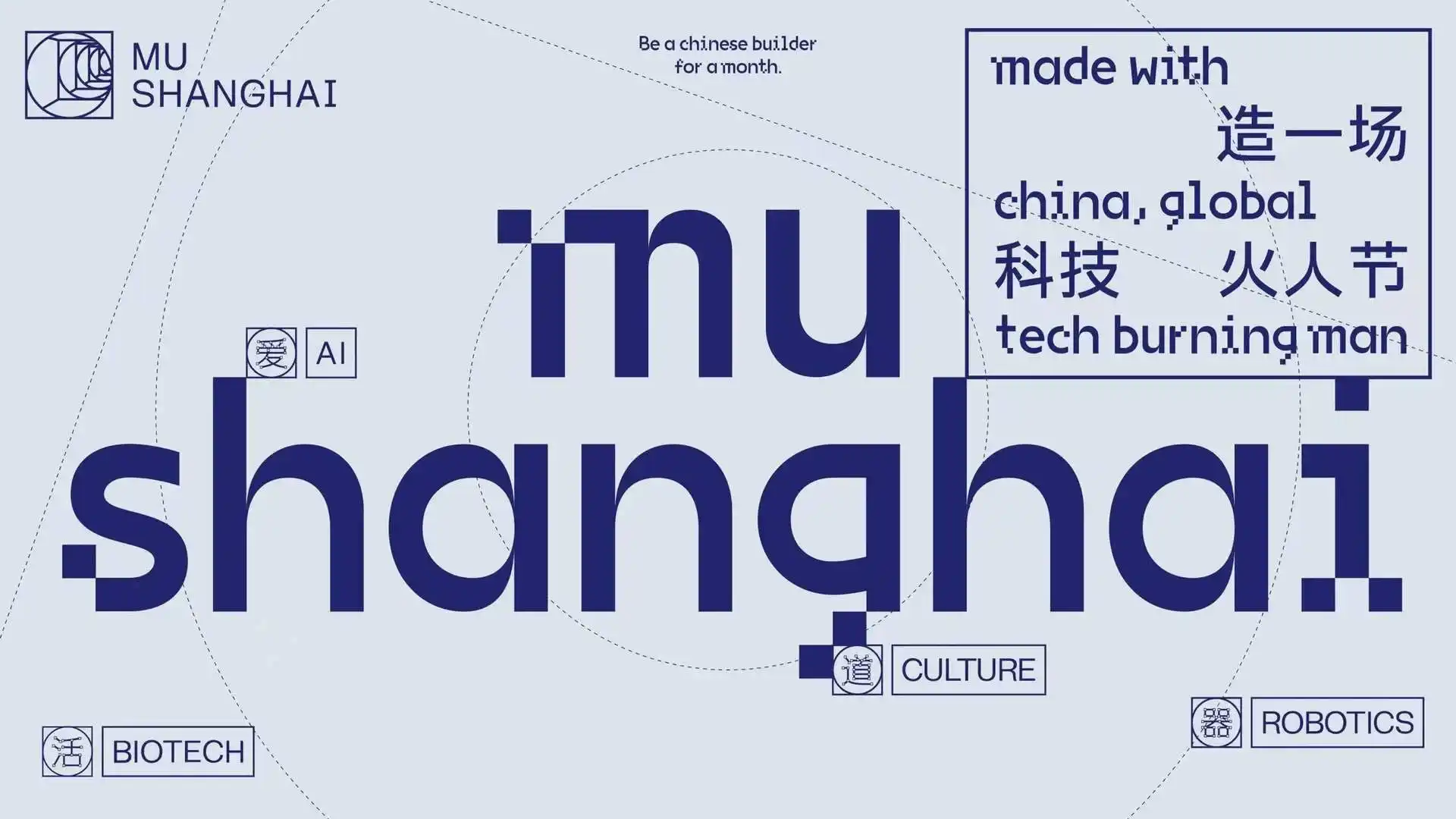
The article discusses the shifting challenges of AI entrepreneurship, based on insights from the mu Shanghai AI WEEK event in May 2026. As AI tools drastically lower the barrier to creating product prototypes, the core difficulty for startups has moved from "how to build" to "who to build for"—finding real users, sustainable business models, and community engagement. The event itself was structured as an extended, immersive developer community space rather than a traditional conference, attracting a global mix of participants (40% AI, 20-30% Web3). This format emphasized deep networking and collaborative creation over one-way presentations. A key observation is that with powerful models and coding assistants becoming ubiquitous, execution is less of a moat. The new scarce resource is judgment—identifying valuable, defensible scenarios where an application won't be quickly rendered obsolete by the next model update. This pushes competition downstream to distribution, user acquisition, and commercialization. Notably, many Web3 practitioners are migrating into AI, bringing with them expertise in community building, global collaboration, and grassroots marketing—skills highly relevant as AI apps fight for visibility. Meanwhile, opportunities in AI hardware, robotics, and embodied intelligence are seen as more durable, leveraging China's robust manufacturing and supply chain ecosystem as a key advantage. The article notes that major Chinese model companies (like MiniMax) are now actively competing for developer mindshare through community programs, hackathons, and improved tooling, recognizing developers as core users. Ultimately, the conclusion is that while AI simplifies building, the harder part of the journey is ensuring a product is truly needed, understood, and retained by its users.

marsbit05/19 07:51
Making AI Products Is No Longer the Hard Part; Being Seen Is: Developers, Web3, and Chinese AI Opportunities at mu Shanghai

marsbit05/19 07:51

活动图片