# Internet Related Articles

HTX News Center provides the latest articles and in-depth analysis on "Internet", covering market trends, project updates, tech developments, and regulatory policies in the crypto industry.

Three Rounds in a Row, Shanghai Gives Birth to a $10 Billion Satellite Internet Unicorn

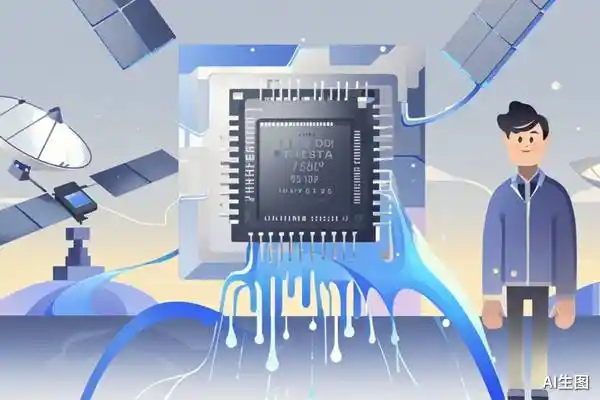
Shanghai-based semiconductor company Sixic has raised a new strategic investment round, securing backing from investors including Xinhuanet Venture Capital and Tongding Group, with continued support from existing investors. This marks the company's third disclosed financing this year, following a 1.5 billion RMB raise in February, officially cementing its status as a new Shanghai unicorn with a valuation exceeding 10 billion USD. The financing comes amid a dynamic period for China's commercial aerospace sector. Recent milestones include a successful controlled landing of a rocket first stage, signaling a path toward lower launch costs, and the establishment of a national Commercial Aerospace Innovation Consortium comprising 271 entities. Sixic stands out as the only 6G satellite internet baseband chip company within this consortium. The article highlights a market shift from a focus on rockets and satellites towards recognizing the value of the terminal and connectivity layer, essential for completing the commercial loop. Satellite internet, integral to 6G and commercial aerospace, is entering an industrial phase with clear policy support, including China's pioneering allocation of 6GHz spectrum for 6G R&D. Sixic specializes in 5G/6G satellite communication baseband chips, a highly complex segment. Unlike terrestrial communication, satellite chips must address challenges like high Doppler shift and signal loss. The company's technological validation is a key driver for investment. It has secured product certifications from leading global smartphone manufacturers, new energy vehicle makers, and communication module companies. A strategic partnership with ZTE was announced in March to collaborate on 6G NTN satellite internet. The company has achieved a full technical verification loop, from lab tests to in-orbit validation, including successfully demonstrating 5G NTN standard-based HD video calls via satellite in 2025. It maintains a 100% first-pass success rate for chip tape-outs and possesses full-stack in-house R&D capabilities. Sixic's strategy focuses on ASIC development for future commercial-scale, power-efficient consumer devices like smartphones. Its early and deep involvement in industry standards and constellation planning creates a significant competitive barrier. Looking ahead, Sixic's opportunity extends beyond chips into modules and terminal ecosystems. It has developed a full range of baseband SoC solutions and provides reference designs to help partners launch products quickly. The recent release of the CM7620 broadband satellite communication module at MWC Shanghai completes its "chip-module-terminal" portfolio. This latest funding round represents a strategic bet on the foundational communication capabilities that will underpin the next generation of 6G and satellite internet value chains.

marsbit07/14 05:25

Three Rounds in a Row, Shanghai Gives Birth to a $10 Billion Satellite Internet Unicorn

marsbit07/14 05:25

The Free Era of the Internet Has Come to an End

The free era of the internet is ending. On May 27th, Meta officially announced a global paid subscription rollout, including Instagram Plus ($3.99/month), Facebook Plus ($3.99/month), and WhatsApp Plus ($2.99/month). This follows a major company shift towards AI, marked by recent layoffs and a massive $125-145 billion investment in AI infrastructure. The move aims to create a predictable revenue stream for investors, moving beyond reliance on fluctuating ad income. Unlike the earlier European "pay for no ads" model, these new tiers focus on offering enhanced features—like anonymous Story viewing on Instagram or privacy tools on WhatsApp—to provide "a bit more control." However, a Forrester survey indicates 70% of users are reluctant to pay, questioning the value. The core of Meta's strategy lies in its upcoming AI subscriptions, priced at $7.99 and $19.99, offering advanced reasoning and higher usage limits, mirroring the freemium models of OpenAI and Anthropic. With Meta's billions of users, even a small conversion rate could generate significant revenue. Analysts are optimistic, with some projecting WhatsApp alone could bring in $40 billion annually by 2030. This shift reflects a broader industry trend where the old bargain of "free services for user data" is under pressure from rising privacy regulations and the immense costs of AI development. The success of Meta's subscriptions hinges on whether users find enough value in these premium features to open their wallets, signaling a fundamental change in how the internet is funded.

marsbit05/29 02:15

The Free Era of the Internet Has Come to an End

marsbit05/29 02:15

The True Replay of the Internet Bubble Is Web3, Not AI

Author TVBee argues that Web3, not AI, is the true reenactment of the 2000 dot-com bubble. The article compares the three sectors: the historical internet bubble, the current AI boom, and Web3. During the 2000 bubble, capital was focused on the supply side with many unprofitable companies, while demand-side applications were scarce due to limited internet access and primitive technology. In contrast, the current AI boom is primarily driven by infrastructure leaders like NVIDIA and AMD, which have substantial profits. Demand-side applications, such as various AI models and tools, are growing and integrating into more use cases, though the ecosystem is still developing. Web3, however, is criticized for its significant supply-side speculation with high valuations based on minimal revenue (e.g., ZKsync's $1.76B市值 vs. $458 daily income). Demand-side applications are limited mostly to DeFi, memecoins, and prediction markets, with much activity driven by airdrop farming rather than genuine utility. The author concludes that Web3, with its hype-driven capital and lack of practical products, mirrors the 2000 bubble most closely. Predictions include a likely U.S. stock market correction (but not a crash), a moderate impact on Bitcoin, and a prolonged, painful consolidation for altcoins to separate valuable projects from speculative ones. The author warns that the altcoin market decline since late 2024 is not yet over.

marsbit03/13 09:31

The True Replay of the Internet Bubble Is Web3, Not AI

marsbit03/13 09:31

Web4 Is Here: When the Internet Is No Longer Built Only for Humans

Amid a crypto bear market, a significant debate has emerged around redefining the internet's future, sparked by the concept of "Web4" introduced by crypto researcher Sigil Wen. He argues that advanced AI lacks not intelligence, but "write access to the world"—the ability to act autonomously via wallets, payments, and smart contracts. This idea, termed the "Web4 Manifesto," resonated widely, gaining millions of views and triggering industry reflection. Dragonfly's Haseeb Qureshi added that crypto's complexity—long addresses, irreversible transactions, phishing risks—may stem from it being designed more for AI than humans. These features, cumbersome for people, are structured and verifiable for AI agents. Web4 proposes shifting internet agency from humans to AI, granting it "action rights": reading, writing, transacting, and collaborating autonomously. Projects like OpenClaw demonstrate this shift, enabling AI to manage emails, calendars, and tasks independently. Underlying protocols (e.g., Coinbase’s x402, Anthropic’s MCP, Google’s A2A) are standardizing machine-to-machine interactions, making the internet more agent-friendly. Cryptocurrencies, especially stablecoins, are positioned as ideal "machine money"—programmable, low-friction, and embeddable in automated workflows. Real-World Assets (RWA) could serve as reserves for AI economies. This vision suggests crypto’s future lies not in human adoption but in enabling agent-driven economies, with billions of AI agents potentially using wallets. However, Vitalik Buterin cautions against reduced human oversight, emphasizing the need for accountability and control. The Web4 debate highlights a fundamental shift: the internet is evolving from a human-operated interface to a system where humans delegate actions to AI agents, redefining who the primary users are.

marsbit03/13 02:44

Web4 Is Here: When the Internet Is No Longer Built Only for Humans

marsbit03/13 02:44

Your AI Agent is Quietly Changing the Rules of the Internet

AI Agents are rapidly transforming the internet landscape, evolving from experimental tools to essential components in daily operations—managing emails, scheduling meetings, and handling support tickets. By 2025, automated traffic is projected to surpass human activity, accounting for 51% of all web traffic, with AI-driven visits to US retail sites surging by 4,700% year-over-year. However, confidence in fully autonomous agents has declined due to security concerns, as infrastructure struggles to keep pace with their expansion. Key challenges include discoverability—agents must efficiently find machine-readable services amidst web pages designed for humans, prompting a shift from SEO to Agent-Oriented Discoverability (AEO). Identity is critical: agents require cryptographic authentication, delegated authority, and real-world accountability to transact securely, leading to emerging standards like ERC-8004 and protocols such as Visa’s Trusted Agent Protocol. Finally, reputation systems are essential to verify agent performance through methods like trusted execution environments (TEEs), zero-knowledge machine learning (ZKML), and economic security models, enabling portable, auditable records of reliability. Together, discoverability, identity, and reputation form the foundational infrastructure for an agent-driven economy, ensuring agents can operate at scale with trust and autonomy.

比推03/05 19:13

Your AI Agent is Quietly Changing the Rules of the Internet

比推03/05 19:13

Based on a16z's Annual Predictions, Which Crypto Projects Are Worth Watching?

Based on a16z's 2026 predictions, several key crypto sectors and projects are worth watching. 1. **Payments & Stablecoins**: Stablecoins are becoming the internet's settlement layer. Key projects include Circle (USDC) for regulatory compliance, m0 for zero-fee USDC issuance, Ether_fi and Plasma as crypto-native neobanks, and x402 for agent-native programmable payments. 2. **RWA & On-Chain Credit**: The focus shifts from tokenization to native on-chain credit origination for efficiency. Projects to watch: Centrifuge, Blackrock's BUIDL, Maple, Plume, Pendle, Ondo, and Backed. 3. **AI Agents & Payments**: As autonomous AI agents transact, payments must become internet-native, instant, and programmable. Key players: Catena (KYA standards), Nevermined (data markets), KiteAI, ASI, EigenCloud, Fetch, and x402 implementations. 4. **Privacy**: Privacy creates user lock-in and becomes a key moat. Projects: Aztec, Nillion, Arcium, Aleo, Walrus/Seal (Sui), Payy_link, Zcash, and Monero. 5. **Security**: The shift from "code is law" to "spec is law" requires runtime enforcement and continuous monitoring. Leaders: OpenZeppelin, Trailofbits, SpearbitDAO, Cyfrin, and Immunefi. 6. **Prediction Markets**: Evolving from niche betting to real-time information infrastructure. Top platforms: Polymarket, Kalshi, FractionAI, Opinion, and Myriad Markets. 7. **zkVMs & Verifiable Computation**: zkVMs are making verifiable computation a viable systems primitive. Key projects: RiscZero, Succinct, Brevis_zk, Axiom_xyz, and ZKML stacks. 8. **On-Chain Wealth Management**: Active, personalized portfolio management becomes automated and ubiquitous. Watch: Veda, Upshift, Midas, Base (Coinbase), Morpho, and Infinit.

marsbit01/04 11:38

Based on a16z's Annual Predictions, Which Crypto Projects Are Worth Watching?

marsbit01/04 11:38

活动图片