# Future Related Articles

HTX News Center provides the latest articles and in-depth analysis on "Future", covering market trends, project updates, tech developments, and regulatory policies in the crypto industry.

When OpenClaw Founder Advises Young People to Stay Away from Crypto

A prominent AI founder, Peter Steinberger of OpenClaw, recently advised young people to "not waste time on crypto," a statement that resonated deeply and sparked self-reflection within the cryptocurrency industry. This sentiment highlights a growing anxiety: crypto may no longer be the optimal path for the next generation. The article details a significant migration of talent, capital, and attention from crypto to AI. Key industry figures, including Cobo's CEO Shenyu and Multicoin Capital's Kyle Samani, are publicly focusing on or transitioning to AI. Native crypto venture capital firms like Paradigm are also raising new funds dedicated to AI and robotics, signaling a strategic shift as the crypto sector faces a downturn in innovative, high-potential early-stage projects. Furthermore, the crypto community's engagement with AI has evolved from merely creating crypto-themed AI memes to genuinely adopting AI tools like OpenClaw to enhance personal productivity. This shift is driven by AI's superior efficiency gains and its current status as a source of technological excitement, filling a void left by a crypto market lacking in native innovation and significant wealth effect. The piece concludes that the core issue is a reallocation of time and resources. In an era where AI is dramatically compressing the time required to solve problems and generate output, the future may belong to those who focus on building uniquely human skills: judgment, creativity, and the pursuit of meaning beyond mere efficiency and profit.

Odaily星球日报Yesterday 14:30

When OpenClaw Founder Advises Young People to Stay Away from Crypto

Odaily星球日报Yesterday 14:30

When the Founder of OpenClaw Advises Young People to Stay Away from Crypto

Peter Steinberger, founder of the popular AI product OpenClaw, recently advised young people to “not waste time on cryptocurrency,” sparking widespread discussion and self-reflection within the crypto community. His comments highlighted a growing anxiety: crypto may no longer be the most promising path for the next generation. This sentiment is reflected in several ongoing shifts. Key figures in crypto, such as Cobo CEO Shenyu, are increasingly focusing on AI, with some like zkSync’s Anthony Rose and Multicoin Capital’s Kyle Samani publicly transitioning to AI-related ventures. Established crypto-native VC firms like Paradigm are also raising new funds aimed at AI and robotics, signaling a strategic reallocation of capital amid a slowdown in high-quality crypto investment opportunities. Moreover, the crypto community’s attention is shifting from mere speculative interest in AI-themed tokens to genuine engagement with AI tools like OpenClaw. Crypto influencers are sharing practical AI workflows and hosting well-attended offline events focused on AI agents and applications. The underlying reasons include shrinking alpha in crypto, a lack of groundbreaking innovation, and AI’s compelling utility in enhancing personal productivity. As AI accelerates problem-solving and reduces manual effort, it offers a more tangible value proposition for technically-minded individuals. The article concludes that in an era of AI-driven efficiency, what may truly distinguish individuals are creativity, independent thinking, and the pursuit of meaning beyond pure financial gain.

marsbitYesterday 12:39

When the Founder of OpenClaw Advises Young People to Stay Away from Crypto

marsbitYesterday 12:39

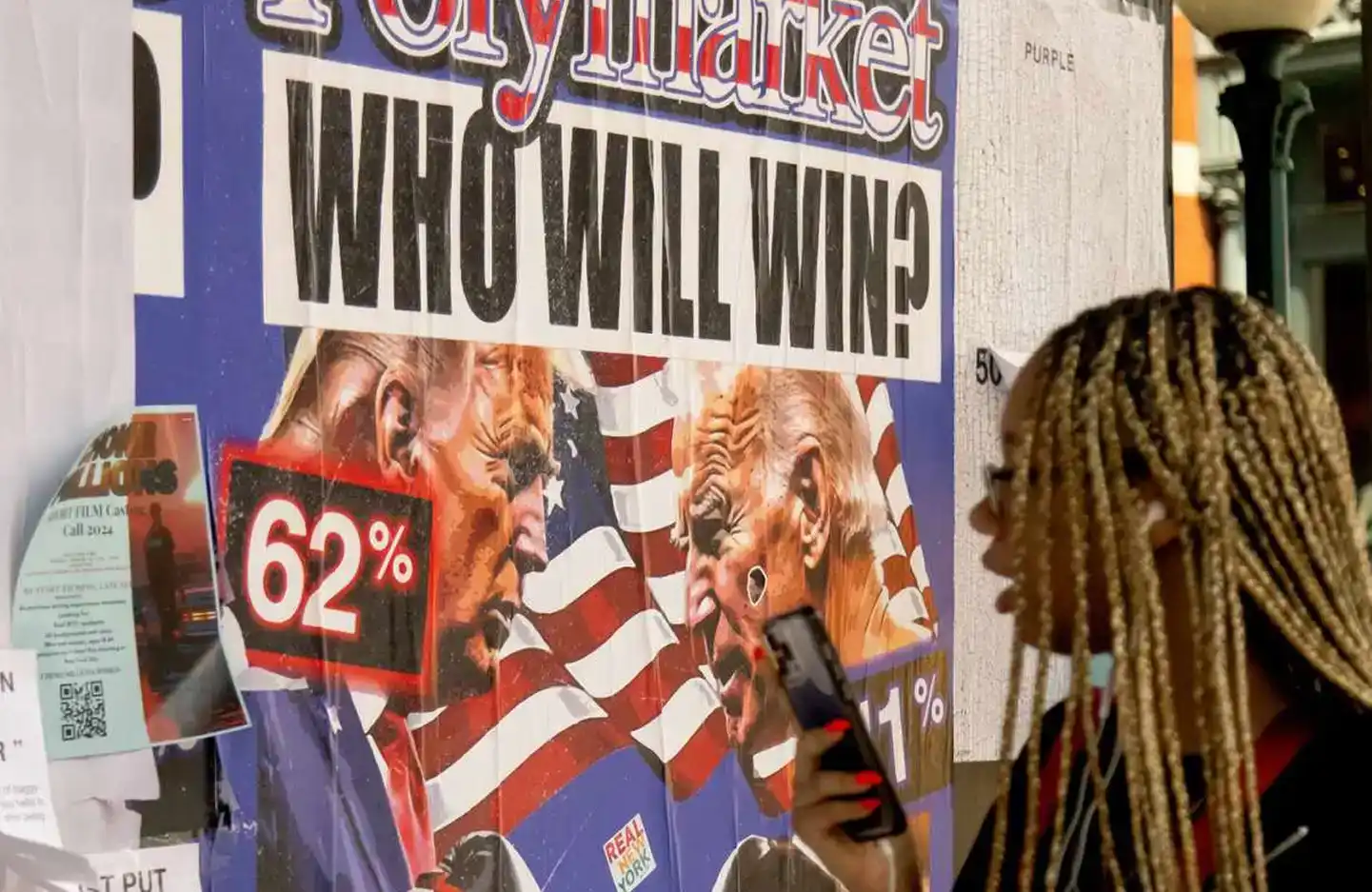
From Lloyd's Coffeehouse to Polymarket: Prediction Markets Are Reshaping the Insurance Industry

From the coffeehouses of 17th-century London to the blockchain-based prediction markets of today, the fundamental nature of risk management is being reimagined. The article begins with a contemporary crisis: major insurers like Farmers Insurance and State Farm are canceling hundreds of thousands of policies in states like Florida and California, a "great insurance withdrawal" driven by catastrophic losses from hurricanes and wildfires that have shattered traditional actuarial models. The narrative then returns to the origin of modern insurance at Lloyd's Coffee House, where merchants and shipowners gathered to collectively underwrite voyages, dispersing individual risk among a group. For centuries, this model of risk transfer, priced by expert actuaries, has dominated. However, climate change and unprecedented disasters are now exposing its limits. The article proposes looking beyond insurance to the financial concept of *hedging*—offsetting risk rather than transferring it. Examples include Ray Dalio's innovative solution for McDonald's to lock in corn and soybean meal prices to launch the McChicken, and Southwest Airlines' legendary fuel hedging strategy that saved it billions. This "elegant" mechanism turns future uncertainty into present-day certainty through open markets. The pivotal shift is embodied by Polymarket, a prediction market platform. Here, users can trade contracts on the outcome of real-world events, from elections to weather patterns. This creates a decentralized, real-time mechanism for pricing risk based on collective wisdom, not proprietary models. A homeowner in Florida could, for instance, buy a contract predicting a hurricane's landfall; its payout would act as a personalized hedge against damage. While prediction markets threaten to disintermediate insurers by eliminating information asymmetry and operational friction, they are not a complete replacement. They excel at pricing objective, verifiable risks (weather, events) but fail with complex, subjective ones (car accidents, health). The future likely holds a hybrid model: prediction markets serving as a foundational pricing layer and risk-hedging tool, while traditional insurers evolve to focus on personalized service, complex underwriting, and long-term risk management in areas where deep engagement is required. The piece concludes that we are witnessing a historic shift from passive risk acceptance to active risk trading, empowering individuals to become their own risk managers in an increasingly uncertain world.

marsbit02/21 08:12

From Lloyd's Coffeehouse to Polymarket: Prediction Markets Are Reshaping the Insurance Industry

marsbit02/21 08:12

After Dragonfly Raises $650 Million in New Funding, Haseeb Says 'Crypto Is Not for Humans,' AI Agents Are the Ultimate Users

Dragonfly Capital partner Haseeb Qureshi argues that cryptocurrency was not designed for human use, but rather for AI agents. Despite being a crypto-native firm, Dragonfly still relies on legal contracts over smart contracts due to their human-friendly design and legal enforceability. Traditional financial systems, though flawed, are built for human fallibility, whereas crypto’s complexity, security risks, and lack of intuition make it poorly suited for people. Qureshi posits that AI agents are the ideal users of crypto: they don’t tire, can verify transactions instantly, audit contracts rigorously, and prefer code-based certainty over the ambiguities of legal systems. Crypto’s deterministic, self-sovereign, and always-on nature aligns perfectly with AI’s operational needs. He envisions a future where "autopilot" wallets managed by AI handle financial tasks, navigating protocols and negotiating agreements autonomously. This shift will transform how crypto services compete and interact. Early examples, such as AI agents on platforms like Moltbook and Conway Research’s autonomous crypto-earning agents, already demonstrate this trend. In conclusion, crypto’s perceived flaws are not failures but indications that humans were never the intended users. With AI agents as the primary interface, crypto may finally realize its potential.

marsbit02/21 01:10

After Dragonfly Raises $650 Million in New Funding, Haseeb Says 'Crypto Is Not for Humans,' AI Agents Are the Ultimate Users

marsbit02/21 01:10

Dragonfly: Crypto Was Not Made for Humans

Crypto Was Not Made for Humans: A Summary Dragonfly Capital partner Haseeb Qureshi argues that cryptocurrency was not designed for human use, but rather for AI agents. Despite being a crypto-native firm, Dragonfly still relies on legal contracts over smart contracts for investments, highlighting that traditional systems are built for human fallibility—featuring safeguards, reversibility, and intuitive interfaces that crypto lacks. Crypto, with its rigid, deterministic, and code-based nature, is error-prone for humans, leading to fears around transactions, phishing, and irreversible mistakes. However, these very traits make it ideal for AI. AI agents can perfectly verify transactions, audit contracts, and operate within crypto’s 24/7, borderless, and self-sovereign environment. They prefer code over ambiguous legal systems, which are slow and unpredictable. Qureshi envisions a future of "self-driving" wallets where AI agents handle all financial interactions, navigating DeFi protocols on behalf of users. These agents will also transact with each other autonomously, forming an economy of non-human participants—a reality already emerging with projects like Moltbook and Conway Research. In conclusion, crypto’s perceived flaws are not shortcomings but indications that humans are not the intended users. Within a decade, direct human interaction with crypto may seem archaic, as AI agents become the primary interface, unlocking the technology’s full potential.

marsbit02/19 05:14

Dragonfly: Crypto Was Not Made for Humans

marsbit02/19 05:14

活动图片