From Lloyd's Coffeehouse to Polymarket: Prediction Markets Are Reshaping the Insurance Industry

marsbitPublished on 2026-02-21Last updated on 2026-02-21

Abstract

From the coffeehouses of 17th-century London to the blockchain-based prediction markets of today, the fundamental nature of risk management is being reimagined. The article begins with a contemporary crisis: major insurers like Farmers Insurance and State Farm are canceling hundreds of thousands of policies in states like Florida and California, a "great insurance withdrawal" driven by catastrophic losses from hurricanes and wildfires that have shattered traditional actuarial models. The narrative then returns to the origin of modern insurance at Lloyd's Coffee House, where merchants and shipowners gathered to collectively underwrite voyages, dispersing individual risk among a group. For centuries, this model of risk transfer, priced by expert actuaries, has dominated. However, climate change and unprecedented disasters are now exposing its limits. The article proposes looking beyond insurance to the financial concept of *hedging*—offsetting risk rather than transferring it. Examples include Ray Dalio's innovative solution for McDonald's to lock in corn and soybean meal prices to launch the McChicken, and Southwest Airlines' legendary fuel hedging strategy that saved it billions. This "elegant" mechanism turns future uncertainty into present-day certainty through open markets. The pivotal shift is embodied by Polymarket, a prediction market platform. Here, users can trade contracts on the outcome of real-world events, from elections to weather patterns. This creates a dece...

In 2023, a letter arrived in the mailboxes of one hundred thousand households in Florida, USA.

The letter, from the century-old insurance giant Farmers Insurance, was brief and brutal: one hundred thousand policies, from homes to cars, were voided effective immediately.

Promises in black and white turned into worthless paper overnight. Furious policyholders flooded social media, demanding answers from the company they had trusted for decades. But all they got was a cold announcement: "We must more effectively manage our risk exposure."

In California, the situation was worse. Insurance behemoths like State Farm and Allstate had already stopped accepting any new applications for home insurance, and over 2.8 million existing policies were denied renewal.

An unprecedented "Great Insurance Retreat" is underway in the United States. The very industry that once served as a social stabilizer, promising to be a safety net for all, is itself now in turmoil.

Why? Let's look at the following data.

Hurricane Helene may have caused over $53 billion in damages in North Carolina; Hurricane Milton, according to Goldman Sachs estimates, could result in insured losses exceeding $25 billion; and for a major fire in Los Angeles, AccuWeather estimated total economic losses between $250 and $275 billion, while CoreLogic estimated insurance payouts between $35 and $45 billion.

Insurance companies are finding themselves at the limits of their ability to pay. So, who can replace the traditional insurance industry?

A Wager in a Coffeehouse

The story begins over three hundred years ago in London.

In 1688, on the banks of the Thames, a coffeehouse named Lloyd's was shrouded in the same shadow for sailors, merchants, and shipowners. Merchant ships laden with goods sailed from London to distant Americas or Asia. A safe return meant immense wealth; but encountering a storm, pirates, or running aground meant total loss.

Risk, like an inescapable dark cloud, loomed over every seafarer.

The coffeehouse owner, Edward Lloyd, was a shrewd businessman. He realized these captains and cargo owners needed more than just coffee; they needed a place to share risk. So, he began encouraging a kind of "betting game."

A captain would write the ship and cargo details on a piece of paper and post it on the coffeehouse wall. Anyone willing to assume a portion of the risk could sign their name on this paper and write the amount they were willing to underwrite. If the ship returned safely, they would share a fee (the premium) paid by the captain proportionally; if the ship was lost, they had to compensate the captain for the losses proportionally.

If the ship returns, everyone celebrates; if it sinks, losses are shared.

This was the prototype of modern insurance. It had no complex actuarial models, only simple business wisdom—distributing one person's enormous risk for a group to share.

In 1774, 79 underwriters joined forces to form the Lloyd's Association, moving from the coffeehouse into the Royal Exchange. A modern financial industry worth trillions was born.

For over three hundred years, the essence of the insurance industry has never changed: it is a business of managing risk. Through actuarial science, it calculates the probability of various risks, prices that risk, and sells it to those seeking protection.

But today, this ancient business model faces unprecedented challenges.

When the frequency and intensity of hurricanes, floods, and wildfires far exceed the predictions of historical data and actuarial models, insurance companies find their measuring stick can no longer gauge the world's growing uncertainty.

They have only two choices: either drastically raise premiums, or retreat—as we saw in Florida and California.

A More Elegant Solution: Hedging Risk

While the insurance industry is stuck in the dilemma of "can't calculate accurately, can't afford to pay, dare not insure," we might step outside the insurance framework and look for answers in another ancient industry: finance.

In 1983, McDonald's planned to launch a revolutionary product: Chicken McNuggets. But a major problem faced management: chicken prices were too volatile. If they locked in menu prices and chicken prices soared, the company would face huge losses.

The tricky part was, there was no chicken futures market available to hedge this risk.

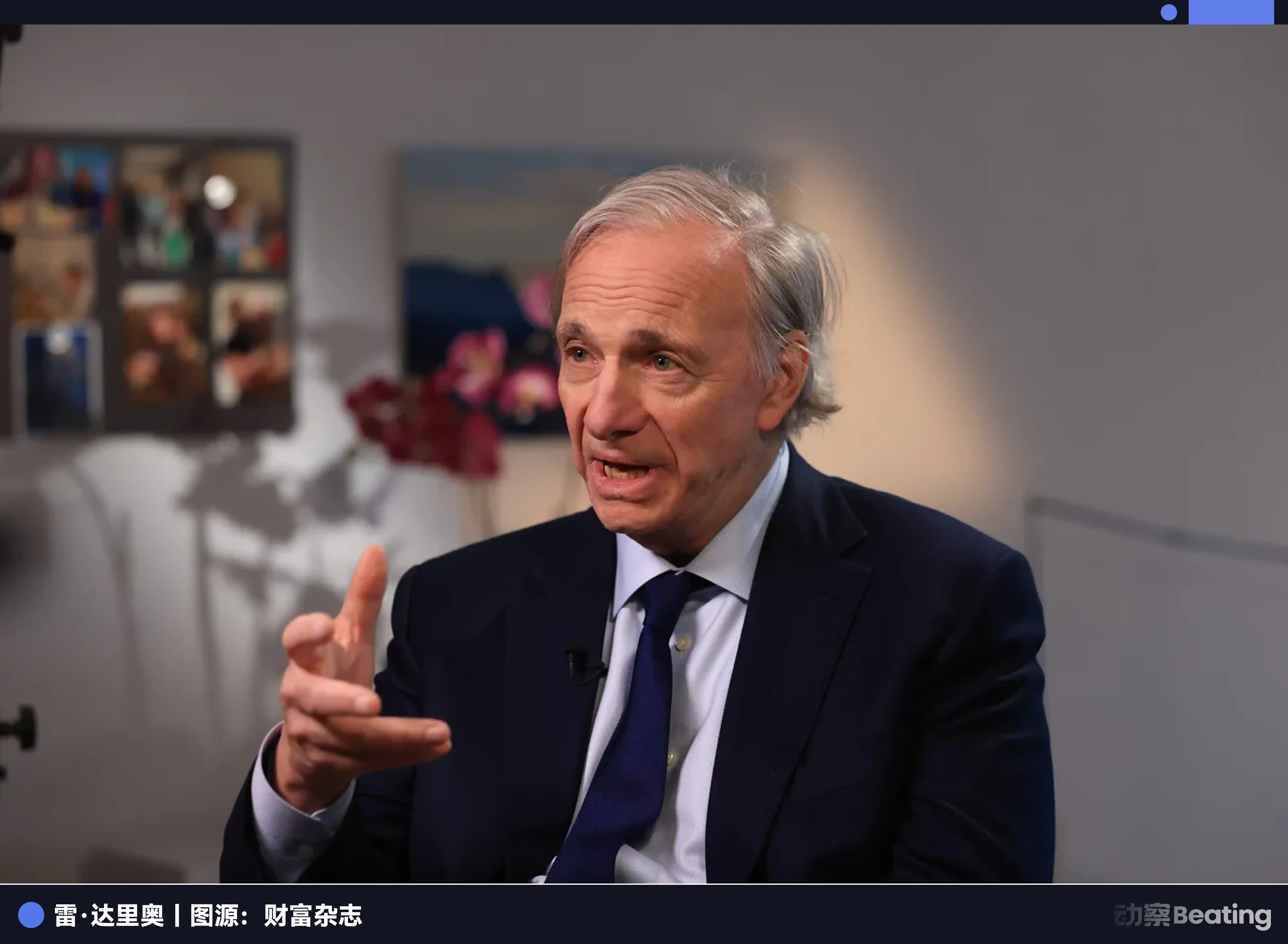
Ray Dalio, then a commodity trader, proposed a genius solution.

He said to McDonald's chicken suppliers: "Isn't the cost of a chicken just the chick, corn, and soybean meal? Chick prices are relatively stable; what really fluctuates are the prices of corn and soybean meal. You can go to the futures market and buy corn and soybean meal futures contracts, locking in your production costs. Then you can supply McDonald's with fixed-price chicken, right?"

This idea of a "synthetic future," commonplace today, was revolutionary at the time. It not only helped McDonald's successfully introduce Chicken McNuggets but also planted the seed for Ray Dalio to later found the world's largest hedge fund, Bridgewater Associates.
Another classic case comes from Southwest Airlines.

In 1993, then-CFO Gary Kelly began establishing a fuel hedging strategy for the company. From 1998 to 2008, this strategy saved Southwest approximately $3.5 billion in fuel costs, equivalent to 83% of the company's profits during the same period.

During the 2008 financial crisis, when oil prices soared to $130 per barrel, Southwest, through futures contracts, purchased 70% of its fuel at a locked-in price of $51 per barrel. This made it the only major U.S. airline that could maintain its "bags fly free" policy at the time.

Whether it was McDonald's chicken or Southwest's fuel, both reveal the same simple business wisdom: use financial markets to transform future uncertainty into present certainty.

This is hedging. Its goal is the same as insurance, but the underlying logic is completely different.

Insurance is the transfer of risk. You transfer a risk (e.g., a car accident, illness) to an insurance company and pay a premium for it. Hedging is the offsetting of risk.

You have a position in the spot market (e.g., need to buy fuel), so you establish an opposite position in the futures market (e.g., buy fuel futures). When the spot price rises, the profit from the futures offsets the loss on the spot.

Insurance is a relatively closed system, dominated by insurance companies and actuaries. Hedging is an open system, priced collectively by market participants.

So, if hedging is so elegant and efficient, why can't we use it to solve today's insurance dilemma? Why can't a Florida resident hedge the risk of a hurricane making landfall, just like Southwest Airlines hedged fuel risk?

The answer is simple: because such a market didn't exist.

Until a young entrepreneur, who started his business in a bathroom, brought it to us.

From "Risk Transfer" to "Risk Trading"

22-year-old Shayne Coplan founded Polymarket in a bathroom. This blockchain-based prediction market gained fame in 2024 during the U.S. presidential election, with annual trading volume exceeding $9 billion.

Beyond the political betting, Polymarket also hosts some intriguing markets. For example, will Houston's maximum temperature exceed 105 degrees Fahrenheit in August? Will California's nitrogen dioxide concentration be above average this week?

An anonymous trader named Neobrother accumulated profits of over $20,000 trading these weather contracts on Polymarket. He and his followers are known as "Weather Hunters."

While insurance companies are fleeing Florida because they can't predict the weather, a group of mysterious players are enthusiastically trading differences of 0.1 degrees Celsius.

Prediction markets are essentially a platform for "futurizing everything." They extend the function of traditional futures markets from standardized commodities (oil, corn, foreign exchange) to any event that can be publicly and objectively verified.

This provides a completely new way of thinking to solve the insurance industry's dilemma.

First, it replaces expert arrogance with the wisdom of the crowd.

Traditional insurance pricing relies on the actuarial models of insurance companies. But when the world becomes increasingly unpredictable, models based on historical data fail.

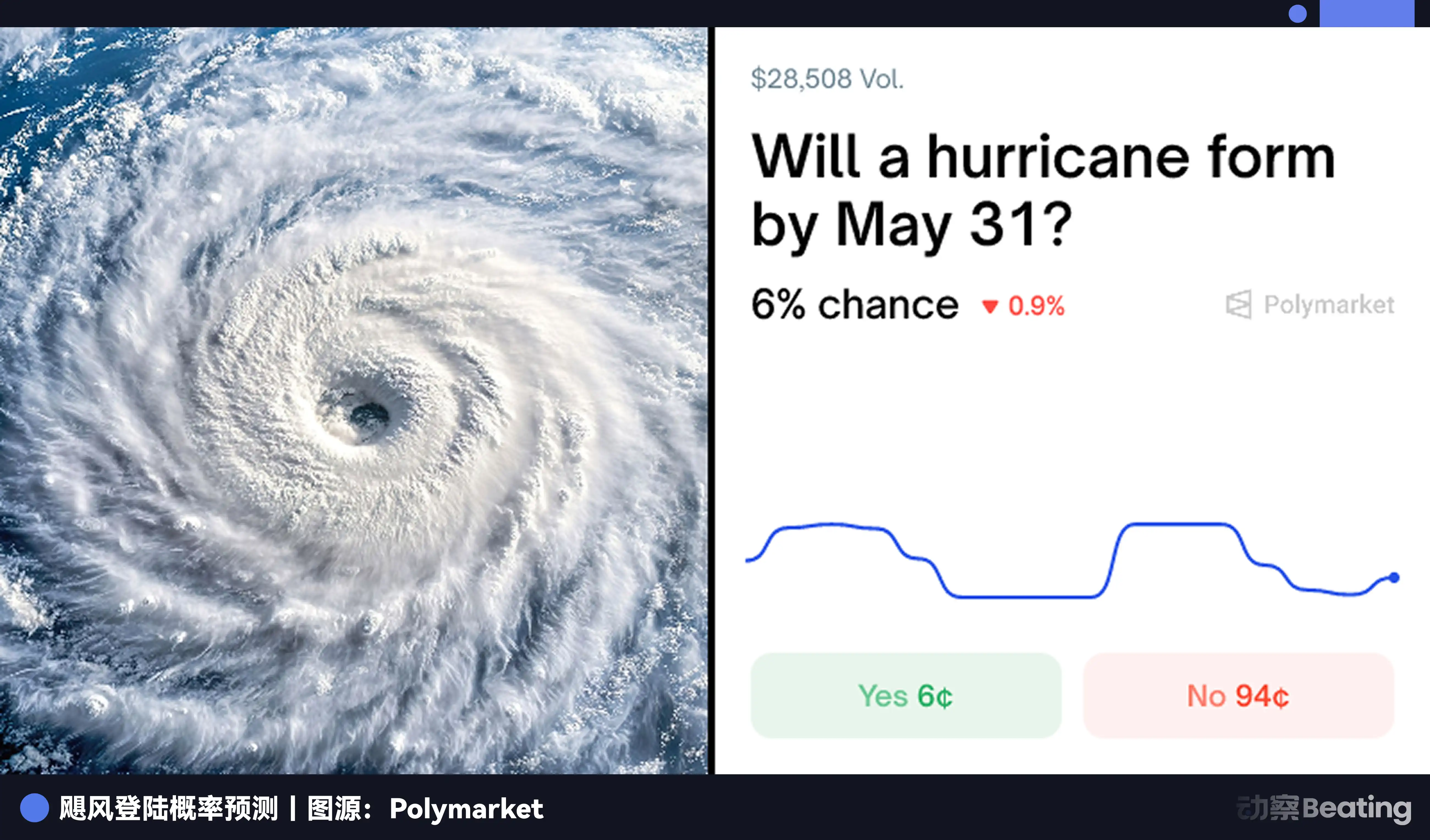
The price on a prediction market, however, is "voted" on by thousands of participants with real money. It reflects the aggregate information the market has on the probability of an event occurring. The price fluctuation of a contract on "whether a hurricane will make landfall in Florida in May" is itself the most sensitive, real-time measure of that risk.
Second, it replaces the helplessness of bearing losses with the freedom to trade.

A Florida resident worried about their house being destroyed by a hurricane no longer has only the "buy insurance" option. They can go to the prediction market and buy a "hurricane will make landfall" contract. If the hurricane does hit, their profit on the contract can be used to cover the cost of damage to their home.

This is, in essence, a personalized risk hedge.

More importantly, they can also sell this contract at any time, locking in profits or cutting losses. Risk is no longer a heavy burden that needs to be packaged and transferred wholesale; it becomes an asset that can be sliced, traded, bought, and sold at will. They transform from risk bearers into risk traders.

This is not just a technical improvement; it's a paradigm shift in thinking. It liberates the pricing power of risk from the hands of a few elite institutions and returns it to everyone.

The End of Insurance, or a New Beginning?

Will this "universal risk trading platform" of prediction markets replace insurance?

On one hand, prediction markets are eroding the foundation of the traditional insurance industry in a fundamental way.

The core of traditional insurance is information asymmetry. Insurance companies have actuaries and massive data models; they need to understand risk better than you to price it. But when the pricing power of risk is replaced by a public, transparent market driven by collective wisdom—or even insider information—the information advantage of insurance companies vanishes.

A Florida resident no longer needs to blindly trust an insurance company's quote; they just need to look at the price of a hurricane contract on Polymarket to know the market's true assessment of the risk.

More crucially, the traditional insurance industry is a "heavy model"—sales, underwriting, claims assessment, payouts... every环节 is full of labor costs and friction. Prediction markets, in contrast, are an ultimate "light model," with only trading and settlement, and almost zero intermediate links.

On the other hand, we see that prediction markets are not a panacea; they cannot completely replace insurance.

They can only hedge risks that are clearly defined and objectively verifiable (e.g., weather, election outcomes). For more complex and subjective risks (e.g., accidents caused by driving behavior, personal health conditions), they are inadequate.

You can't open a contract on Polymarket for the world to predict "whether you will have a car accident next year."

Personalized risk assessment and management remain the core strength of the traditional insurance industry.

The future landscape might not be a war of "one replacing the other," but rather a new and sophisticated relationship of co-opetition.

Prediction markets will become the infrastructure for risk pricing. Like Bloomberg Terminals and Reuters today, they provide the fundamental data anchors for the financial world. Insurance companies might also become deep participants in prediction markets, using market prices to calibrate their models or hedge catastrophic risks they cannot absorb.

And insurance companies will return to the essence of service.

When the pricing advantage is gone, insurance companies must rethink their value. Their core competence will no longer be information asymmetry, but rather a deeper focus on areas requiring deep involvement, personalized management, and long-term service, such as health management, retirement planning, and wealth inheritance.

The giants of the old world are learning the dance of the new world. And the explorers of the new world need to find the route to the continents of the old.

Epilogue

Over three hundred years ago, in a London coffeehouse, a group of merchants used primitive wisdom to invent a mechanism for sharing risk.

Over three hundred years later, in the digital world, players are reshaping how we interact with risk.

History often completes its cycles in the most unexpected ways.

From forced trust to free trading. This might be another exciting moment in financial history. Each of us will evolve from passive risk acceptors to active risk managers.

And this is not just about insurance; it's about how each of us can better survive in this world full of uncertainty.


Related Questions

QWhat is the core challenge facing the traditional insurance industry today, as described in the article?

AThe core challenge is that the frequency and intensity of catastrophic events like hurricanes, floods, and wildfires have far exceeded the predictions of historical data and actuarial models. This makes it impossible for insurers to accurately price risk, leading them to either drastically increase premiums or withdraw from markets entirely, as seen in Florida and California.

QHow did the coffeehouse owner Edward Lloyd contribute to the birth of the modern insurance industry?

AEdward Lloyd encouraged a 'betting game' in his 17th-century London coffeehouse. A ship's captain would post details of a voyage, and anyone willing to assume a portion of the risk would sign the paper and state the amount they would underwrite. If the ship returned safely, they shared the premium; if it was lost, they shared the loss. This was the雏形 of modern insurance, dispersing one person's large risk among a group.

QWhat is the fundamental difference between insurance and hedging, according to the article?

AInsurance is the transfer of risk, where an individual pays a premium to an insurance company to assume a specific risk (e.g., a car accident). Hedging is the offsetting of risk, where an entity with an exposure in the spot market (e.g., needing to buy fuel) establishes an opposite position in the futures market. If the spot price rises, the gain on the futures position offsets the loss on the physical purchase.

QWhat role does the prediction market Polymarket play in redefining risk management?

APolymarket, a blockchain-based prediction market, creates a platform for 'everything can be futures.' It allows anyone to trade contracts on the outcome of objectively verifiable events (e.g., weather, elections). This shifts risk pricing from closed, expert-led actuarial systems to an open system priced by the collective wisdom of market participants, enabling individuals to hedge personal risks directly.

QWill prediction markets completely replace the traditional insurance industry? What is the likely future relationship?

ANo, prediction markets will not completely replace traditional insurance. They are effective for hedging objective, verifiable risks (e.g., weather) but cannot handle complex, subjective risks (e.g., individual driving behavior). The future likely involves a symbiotic relationship: prediction markets will act as foundational infrastructure for real-time risk pricing, while insurers will focus on personalized risk management services like health and wealth planning, using market data to calibrate their models.

Related Reads

Stuck Polymarket: The Real Test After Riding the Traffic Boom Has Arrived

Polymarket, a leading prediction market platform, is facing significant technical challenges as its growth outpaces its current infrastructure on Polygon. Users are experiencing laggy transactions, unresponsive orders, and delayed confirmations, severely impacting the trading experience. In response, DeFi Engineering VP Josh Stevens outlined a comprehensive engineering overhaul. The plan includes reducing on-chain data delays, fixing order cancellation issues, rebuilding the central limit order book (CLOB), improving website performance, and developing a unified SDK and API. A major revelation was the ongoing "chain migration," indicating a potential move away from Polygon. The core issue is that Polymarket has evolved from a simple prediction market into a high-frequency trading platform, making Polygon's limitations—such as block space, gas fees, and block time—a ceiling for further growth. The migration is not just a simple chain switch but a fundamental rebuild of its trading system to support more complex products like perpetual contracts (Perps). This announcement has sparked competition among chains like Solana, Sui, and Algorand, all vying to host Polymarket. For Polygon, losing this key application, which contributes significantly to its gas fee revenue, would be a major setback. The real test for Polymarket is no longer attracting users but proving it can provide a stable, reliable trading environment that retains them.

Odaily星球日报1h ago

Stuck Polymarket: The Real Test After Riding the Traffic Boom Has Arrived

Odaily星球日报1h ago

Trading

Spot
Futures

Hot Articles

What is SONIC

Sonic: Pioneering the Future of Gaming in Web3 Introduction to Sonic In the ever-evolving landscape of Web3, the gaming industry stands out as one of the most dynamic and promising sectors. At the forefront of this revolution is Sonic, a project designed to amplify the gaming ecosystem on the Solana blockchain. Leveraging cutting-edge technology, Sonic aims to deliver an unparalleled gaming experience by efficiently processing millions of requests per second, ensuring that players enjoy seamless gameplay while maintaining low transaction costs. This article delves into the intricate details of Sonic, exploring its creators, funding sources, operational mechanics, and the timeline of significant events that have shaped its journey. What is Sonic? Sonic is an innovative layer-2 network that operates atop the Solana blockchain, specifically tailored to enhance the existing Solana gaming ecosystem. It accomplishes this through a customised, VM-agnostic game engine paired with a HyperGrid interpreter, facilitating sovereign game economies that roll up back to the Solana platform. The primary goals of Sonic include: Enhanced Gaming Experiences: Sonic is committed to offering lightning-fast on-chain gameplay, allowing players and developers to engage with games at previously unattainable speeds. Atomic Interoperability: This feature enables transactions to be executed within Sonic without the need to redeploy Solana programmes and accounts. This makes the process more efficient and directly benefits from Solana Layer1 services and liquidity. Seamless Deployment: Sonic allows developers to write for Ethereum Virtual Machine (EVM) based systems and execute them on Solana’s SVM infrastructure. This interoperability is crucial for attracting a broader range of dApps and decentralised applications to the platform. Support for Developers: By offering native composable gaming primitives and extensible data types - dining within the Entity-Component-System (ECS) framework - game creators can craft intricate business logic with ease. Overall, Sonic's unique approach not only caters to players but also provides an accessible and low-cost environment for developers to innovate and thrive. Creator of Sonic The information regarding the creator of Sonic is somewhat ambiguous. However, it is known that Sonic's SVM is owned by the company Mirror World. The absence of detailed information about the individuals behind Sonic reflects a common trend in several Web3 projects, where collective efforts and partnerships often overshadow individual contributions. Investors of Sonic Sonic has garnered considerable attention and support from various investors within the crypto and gaming sectors. Notably, the project raised an impressive $12 million during its Series A funding round. The round was led by BITKRAFT Ventures, with other notable investors including Galaxy, Okx Ventures, Interactive, Big Brain Holdings, and Mirana. This financial backing signifies the confidence that investment foundations have in Sonic’s potential to revolutionise the Web3 gaming landscape, further validating its innovative approaches and technologies. How Does Sonic Work? Sonic utilises the HyperGrid framework, a sophisticated parallel processing mechanism that enhances its scalability and customisability. Here are the core features that set Sonic apart: Lightning Speed at Low Costs: Sonic offers one of the fastest on-chain gaming experiences compared to other Layer-1 solutions, powered by the scalability of Solana’s virtual machine (SVM). Atomic Interoperability: Sonic enables transaction execution without redeployment of Solana programmes and accounts, effectively streamlining the interaction between users and the blockchain. EVM Compatibility: Developers can effortlessly migrate decentralised applications from EVM chains to the Solana environment using Sonic’s HyperGrid interpreter, increasing the accessibility and integration of various dApps. Ecosystem Support for Developers: By exposing native composable gaming primitives, Sonic facilitates a sandbox-like environment where developers can experiment and implement business logic, greatly enhancing the overall development experience. Monetisation Infrastructure: Sonic natively supports growth and monetisation efforts, providing frameworks for traffic generation, payments, and settlements, thereby ensuring that gaming projects are not only viable but also sustainable financially. Timeline of Sonic The evolution of Sonic has been marked by several key milestones. Below is a brief timeline highlighting critical events in the project's history: 2022: The Sonic cryptocurrency was officially launched, marking the beginning of its journey in the Web3 gaming arena. 2024: June: Sonic SVM successfully raised $12 million in a Series A funding round. This investment allowed Sonic to further develop its platform and expand its offerings. August: The launch of the Sonic Odyssey testnet provided users with the first opportunity to engage with the platform, offering interactive activities such as collecting rings—a nod to gaming nostalgia. October: SonicX, an innovative crypto game integrated with Solana, made its debut on TikTok, capturing the attention of over 120,000 users within a short span. This integration illustrated Sonic’s commitment to reaching a broader, global audience and showcased the potential of blockchain gaming. Key Points Sonic SVM is a revolutionary layer-2 network on Solana explicitly designed to enhance the GameFi landscape, demonstrating great potential for future development. HyperGrid Framework empowers Sonic by introducing horizontal scaling capabilities, ensuring that the network can handle the demands of Web3 gaming. Integration with Social Platforms: The successful launch of SonicX on TikTok displays Sonic’s strategy to leverage social media platforms to engage users, exponentially increasing the exposure and reach of its projects. Investment Confidence: The substantial funding from BITKRAFT Ventures, among others, emphasizes the robust backing Sonic has, paving the way for its ambitious future. In conclusion, Sonic encapsulates the essence of Web3 gaming innovation, striking a balance between cutting-edge technology, developer-centric tools, and community engagement. As the project continues to evolve, it is poised to redefine the gaming landscape, making it a notable entity for gamers and developers alike. As Sonic moves forward, it will undoubtedly attract greater interest and participation, solidifying its place within the broader narrative of blockchain gaming.

1.1k Total ViewsPublished 2024.04.04Updated 2024.12.03

What is SONIC

What is $S$

Understanding SPERO: A Comprehensive Overview Introduction to SPERO As the landscape of innovation continues to evolve, the emergence of web3 technologies and cryptocurrency projects plays a pivotal role in shaping the digital future. One project that has garnered attention in this dynamic field is SPERO, denoted as SPERO,$$s$. This article aims to gather and present detailed information about SPERO, to help enthusiasts and investors understand its foundations, objectives, and innovations within the web3 and crypto domains. What is SPERO,$$s$? SPERO,$$s$ is a unique project within the crypto space that seeks to leverage the principles of decentralisation and blockchain technology to create an ecosystem that promotes engagement, utility, and financial inclusion. The project is tailored to facilitate peer-to-peer interactions in new ways, providing users with innovative financial solutions and services. At its core, SPERO,$$s$ aims to empower individuals by providing tools and platforms that enhance user experience in the cryptocurrency space. This includes enabling more flexible transaction methods, fostering community-driven initiatives, and creating pathways for financial opportunities through decentralised applications (dApps). The underlying vision of SPERO,$$s$ revolves around inclusiveness, aiming to bridge gaps within traditional finance while harnessing the benefits of blockchain technology. Who is the Creator of SPERO,$$s$? The identity of the creator of SPERO,$$s$ remains somewhat obscure, as there are limited publicly available resources providing detailed background information on its founder(s). This lack of transparency can stem from the project's commitment to decentralisation—an ethos that many web3 projects share, prioritising collective contributions over individual recognition. By centring discussions around the community and its collective goals, SPERO,$$s$ embodies the essence of empowerment without singling out specific individuals. As such, understanding the ethos and mission of SPERO remains more important than identifying a singular creator. Who are the Investors of SPERO,$$s$? SPERO,$$s$ is supported by a diverse array of investors ranging from venture capitalists to angel investors dedicated to fostering innovation in the crypto sector. The focus of these investors generally aligns with SPERO's mission—prioritising projects that promise societal technological advancement, financial inclusivity, and decentralised governance. These investor foundations are typically interested in projects that not only offer innovative products but also contribute positively to the blockchain community and its ecosystems. The backing from these investors reinforces SPERO,$$s$ as a noteworthy contender in the rapidly evolving domain of crypto projects. How Does SPERO,$$s$ Work? SPERO,$$s$ employs a multi-faceted framework that distinguishes it from conventional cryptocurrency projects. Here are some of the key features that underline its uniqueness and innovation: Decentralised Governance: SPERO,$$s$ integrates decentralised governance models, empowering users to participate actively in decision-making processes regarding the project’s future. This approach fosters a sense of ownership and accountability among community members. Token Utility: SPERO,$$s$ utilises its own cryptocurrency token, designed to serve various functions within the ecosystem. These tokens enable transactions, rewards, and the facilitation of services offered on the platform, enhancing overall engagement and utility. Layered Architecture: The technical architecture of SPERO,$$s$ supports modularity and scalability, allowing for seamless integration of additional features and applications as the project evolves. This adaptability is paramount for sustaining relevance in the ever-changing crypto landscape. Community Engagement: The project emphasises community-driven initiatives, employing mechanisms that incentivise collaboration and feedback. By nurturing a strong community, SPERO,$$s$ can better address user needs and adapt to market trends. Focus on Inclusion: By offering low transaction fees and user-friendly interfaces, SPERO,$$s$ aims to attract a diverse user base, including individuals who may not previously have engaged in the crypto space. This commitment to inclusion aligns with its overarching mission of empowerment through accessibility. Timeline of SPERO,$$s$ Understanding a project's history provides crucial insights into its development trajectory and milestones. Below is a suggested timeline mapping significant events in the evolution of SPERO,$$s$: Conceptualisation and Ideation Phase: The initial ideas forming the basis of SPERO,$$s$ were conceived, aligning closely with the principles of decentralisation and community focus within the blockchain industry. Launch of Project Whitepaper: Following the conceptual phase, a comprehensive whitepaper detailing the vision, goals, and technological infrastructure of SPERO,$$s$ was released to garner community interest and feedback. Community Building and Early Engagements: Active outreach efforts were made to build a community of early adopters and potential investors, facilitating discussions around the project’s goals and garnering support. Token Generation Event: SPERO,$$s$ conducted a token generation event (TGE) to distribute its native tokens to early supporters and establish initial liquidity within the ecosystem. Launch of Initial dApp: The first decentralised application (dApp) associated with SPERO,$$s$ went live, allowing users to engage with the platform's core functionalities. Ongoing Development and Partnerships: Continuous updates and enhancements to the project's offerings, including strategic partnerships with other players in the blockchain space, have shaped SPERO,$$s$ into a competitive and evolving player in the crypto market. Conclusion SPERO,$$s$ stands as a testament to the potential of web3 and cryptocurrency to revolutionise financial systems and empower individuals. With a commitment to decentralised governance, community engagement, and innovatively designed functionalities, it paves the way toward a more inclusive financial landscape. As with any investment in the rapidly evolving crypto space, potential investors and users are encouraged to research thoroughly and engage thoughtfully with the ongoing developments within SPERO,$$s$. The project showcases the innovative spirit of the crypto industry, inviting further exploration into its myriad possibilities. While the journey of SPERO,$$s$ is still unfolding, its foundational principles may indeed influence the future of how we interact with technology, finance, and each other in interconnected digital ecosystems.

54 Total ViewsPublished 2024.12.17Updated 2024.12.17

What is $S$

What is AGENT S

Agent S: The Future of Autonomous Interaction in Web3 Introduction In the ever-evolving landscape of Web3 and cryptocurrency, innovations are constantly redefining how individuals interact with digital platforms. One such pioneering project, Agent S, promises to revolutionise human-computer interaction through its open agentic framework. By paving the way for autonomous interactions, Agent S aims to simplify complex tasks, offering transformative applications in artificial intelligence (AI). This detailed exploration will delve into the project's intricacies, its unique features, and the implications for the cryptocurrency domain. What is Agent S? Agent S stands as a groundbreaking open agentic framework, specifically designed to tackle three fundamental challenges in the automation of computer tasks: Acquiring Domain-Specific Knowledge: The framework intelligently learns from various external knowledge sources and internal experiences. This dual approach empowers it to build a rich repository of domain-specific knowledge, enhancing its performance in task execution. Planning Over Long Task Horizons: Agent S employs experience-augmented hierarchical planning, a strategic approach that facilitates efficient breakdown and execution of intricate tasks. This feature significantly enhances its ability to manage multiple subtasks efficiently and effectively. Handling Dynamic, Non-Uniform Interfaces: The project introduces the Agent-Computer Interface (ACI), an innovative solution that enhances the interaction between agents and users. Utilizing Multimodal Large Language Models (MLLMs), Agent S can navigate and manipulate diverse graphical user interfaces seamlessly. Through these pioneering features, Agent S provides a robust framework that addresses the complexities involved in automating human interaction with machines, setting the stage for myriad applications in AI and beyond. Who is the Creator of Agent S? While the concept of Agent S is fundamentally innovative, specific information about its creator remains elusive. The creator is currently unknown, which highlights either the nascent stage of the project or the strategic choice to keep founding members under wraps. Regardless of anonymity, the focus remains on the framework's capabilities and potential. Who are the Investors of Agent S? As Agent S is relatively new in the cryptographic ecosystem, detailed information regarding its investors and financial backers is not explicitly documented. The lack of publicly available insights into the investment foundations or organisations supporting the project raises questions about its funding structure and development roadmap. Understanding the backing is crucial for gauging the project's sustainability and potential market impact. How Does Agent S Work? At the core of Agent S lies cutting-edge technology that enables it to function effectively in diverse settings. Its operational model is built around several key features: Human-like Computer Interaction: The framework offers advanced AI planning, striving to make interactions with computers more intuitive. By mimicking human behaviour in tasks execution, it promises to elevate user experiences. Narrative Memory: Employed to leverage high-level experiences, Agent S utilises narrative memory to keep track of task histories, thereby enhancing its decision-making processes. Episodic Memory: This feature provides users with step-by-step guidance, allowing the framework to offer contextual support as tasks unfold. Support for OpenACI: With the ability to run locally, Agent S allows users to maintain control over their interactions and workflows, aligning with the decentralised ethos of Web3. Easy Integration with External APIs: Its versatility and compatibility with various AI platforms ensure that Agent S can fit seamlessly into existing technological ecosystems, making it an appealing choice for developers and organisations. These functionalities collectively contribute to Agent S's unique position within the crypto space, as it automates complex, multi-step tasks with minimal human intervention. As the project evolves, its potential applications in Web3 could redefine how digital interactions unfold. Timeline of Agent S The development and milestones of Agent S can be encapsulated in a timeline that highlights its significant events: September 27, 2024: The concept of Agent S was launched in a comprehensive research paper titled “An Open Agentic Framework that Uses Computers Like a Human,” showcasing the groundwork for the project. October 10, 2024: The research paper was made publicly available on arXiv, offering an in-depth exploration of the framework and its performance evaluation based on the OSWorld benchmark. October 12, 2024: A video presentation was released, providing a visual insight into the capabilities and features of Agent S, further engaging potential users and investors. These markers in the timeline not only illustrate the progress of Agent S but also indicate its commitment to transparency and community engagement. Key Points About Agent S As the Agent S framework continues to evolve, several key attributes stand out, underscoring its innovative nature and potential: Innovative Framework: Designed to provide an intuitive use of computers akin to human interaction, Agent S brings a novel approach to task automation. Autonomous Interaction: The ability to interact autonomously with computers through GUI signifies a leap towards more intelligent and efficient computing solutions. Complex Task Automation: With its robust methodology, it can automate complex, multi-step tasks, making processes faster and less error-prone. Continuous Improvement: The learning mechanisms enable Agent S to improve from past experiences, continually enhancing its performance and efficacy. Versatility: Its adaptability across different operating environments like OSWorld and WindowsAgentArena ensures that it can serve a broad range of applications. As Agent S positions itself in the Web3 and crypto landscape, its potential to enhance interaction capabilities and automate processes signifies a significant advancement in AI technologies. Through its innovative framework, Agent S exemplifies the future of digital interactions, promising a more seamless and efficient experience for users across various industries. Conclusion Agent S represents a bold leap forward in the marriage of AI and Web3, with the capacity to redefine how we interact with technology. While still in its early stages, the possibilities for its application are vast and compelling. Through its comprehensive framework addressing critical challenges, Agent S aims to bring autonomous interactions to the forefront of the digital experience. As we move deeper into the realms of cryptocurrency and decentralisation, projects like Agent S will undoubtedly play a crucial role in shaping the future of technology and human-computer collaboration.

557 Total ViewsPublished 2025.01.14Updated 2025.01.14

What is AGENT S

Discussions

Welcome to the HTX Community. Here, you can stay informed about the latest platform developments and gain access to professional market insights. Users' opinions on the price of S (S) are presented below.

活动图片












