# Delisting Related Articles

HTX News Center provides the latest articles and in-depth analysis on "Delisting", covering market trends, project updates, tech developments, and regulatory policies in the crypto industry.

Share Price of the 'First Blockchain Stock' Plummets 96%, Is Canaan Technology Facing Delisting?

Canaan Inc., once hailed as the "world's first blockchain stock," is facing delisting from Nasdaq. The company received a 180-day extension until January 11, 2027, to regain compliance after its stock price remained below $1 for 30 consecutive days. Currently trading around $0.29, its market cap has plummeted over 90% from its peak. This crisis stems from severe financial struggles. Q1 2026 results showed a 24.3% year-over-year revenue decline to $62.7 million and a net loss of $88.7 million, which included a $25 million non-cash inventory write-down for mining rigs. The company's cash reserves have also shrunk significantly. While it holds a substantial Bitcoin reserve (1,915 BTC valued at ~$120 million), its core business is under pressure. Canaan's attempt to diversify into AI chips failed, leading to a costly shutdown of that division in 2025. Returning focus to Bitcoin mining hardware, it faces intense competition and a cyclical industry downturn. The "post-halving" era and a capital shift from crypto mining to AI infrastructure have crippled demand for its primary products. As a potential lifeline, the company is pivoting towards becoming a "computing infrastructure service provider," expanding its self-mining operations and exploring energy integration projects like waste heat utilization. It has also secured strategic investments. However, these moves have yet to restore market confidence. Canaan's story reflects the broader crypto mining winter, where the market now prioritizes profitability over narrative, forcing the company into a fight for survival ahead of the next compliance deadline.

marsbit07/16 05:41

Share Price of the 'First Blockchain Stock' Plummets 96%, Is Canaan Technology Facing Delisting?

marsbit07/16 05:41

From Blockchain's First Share to the Edge of Delisting: Canaan Technology Trapped in a 'Fight for Survival'

Canaan Inc., once hailed as the "first global blockchain stock," is now fighting to avoid delisting from Nasdaq. On July 15, the company received a 180-day extension, until January 11, 2027, to regain compliance after its ADS price fell below $1 for 30 consecutive trading days. Its market cap has plummeted over 90% from its peak after its 2019 IPO. The financial picture is grim. Q1 2026 results showed a 24.3% year-over-year revenue decline to $62.7 million and a net loss of $88.7 million. The company recorded a gross loss, including approximately $25 million in non-cash inventory writedowns for its mining machines, signaling collapsing demand. Its Q2 revenue guidance is a weak $35-45 million. A costly strategic misstep contributed to its troubles. In June 2025, Canaan terminated its non-core AI chip business after years of development yielded minimal revenue but significant operating expenses, forcing a full retreat to its core Bitcoin mining hardware and proprietary mining operations. However, the core business faces intense pressure. The mining machine industry is highly cyclical and tied to Bitcoin's price. In the current "post-halving" environment with lower marginal returns, demand has cooled sharply. Canaan's product revenue crashed to $42.9 million in Q1 2026 from $164.9 million in Q4 2024. In response, management is pivoting from a pure hardware seller to a "computing power infrastructure service provider." It is expanding proprietary mining, with total hash rate in joint projects reaching 11 EH/s, and exploring energy integration projects like using mining heat for agriculture. It also secured $72 million in strategic investment in late 2025. Canaan's struggle reflects the broader crypto mining winter, where capital has shifted toward AI and high-performance computing. The company must now prove its viability within the 180-day grace period, with a potential reverse stock split on the table, as the market focuses on cash flow and profitability over mere narrative.

Foresight News07/16 03:32

From Blockchain's First Share to the Edge of Delisting: Canaan Technology Trapped in a 'Fight for Survival'

Foresight News07/16 03:32

Korean Companies Following Strategy in Accumulating Cryptocurrency: From Bull Market to Delisting?

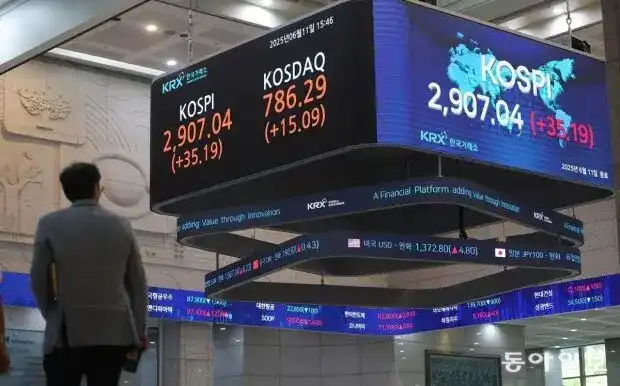
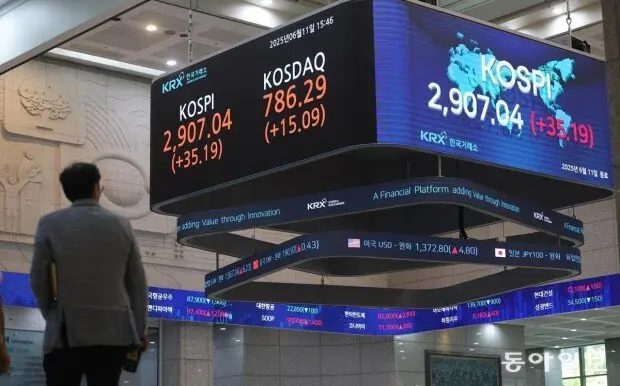
Title: Korean DAT Companies Following "Strategy" Bitcoin Hoarding Model Face Delisting Amid Bear Market Summary: Several Korean KOSDAQ-listed companies, known as Digital Asset Trusts (DATs), are at risk of being delisted due to a combination of stricter regulatory thresholds and a downturn in crypto markets. These firms, inspired by models like Strategy and Japan's Metaplanet, raised capital to buy Bitcoin, relying on a cycle of rising crypto prices to boost their stock value. However, recent reforms in Korea have raised the minimum market capitalization required to stay listed from 150 billion won to 200 billion won (approx. $1.3M), with a further increase to 300 billion won set for next January. The new rules also close loopholes like reverse stock splits used to artificially inflate share prices. The situation is exacerbated by a significant drop in Bitcoin's price from its 2025 peak and a weak KOSDAQ market. While the main KOSPI index has surged nearly 95% year-to-date, KOSDAQ has fallen about 10%, draining liquidity from smaller companies. Many DATs now hover near or below the new market cap thresholds and must also book substantial valuation losses on their Bitcoin holdings. Analysts suggest that without a sustained recovery in both crypto prices and broader market interest in KOSDAQ stocks, these companies have limited options to avoid delisting, marking a precarious moment for Korea's crypto-linked public companies.

marsbit07/03 09:44

Korean Companies Following Strategy in Accumulating Cryptocurrency: From Bull Market to Delisting?

marsbit07/03 09:44

Korean Companies That Learned to Hoard Coins from MicroStrategy: From Bull Market to Delisting?

South Korean companies that adopted the “Digital Asset Treasury” (DAT) strategy—issuing shares to buy and hold Bitcoin, inspired by MicroStrategy—now face delisting risks on the KOSDAQ market. New regulations effective July 1, 2026, tightened listing maintenance rules, notably raising the minimum market capitalization threshold from 150 billion KRW to 200 billion KRW (about $1.3 million), with a further increase to 300 billion KRW scheduled for January 2027. Companies failing to meet both the share price and market cap requirements for specified periods risk being designated for delisting, with fewer options for financial engineering like stock splits to artificially boost prices. The downturn in cryptocurrency prices has severely impacted these firms. Bitcoin, which peaked above $120,000 in mid-2025, has fallen below $60,000, forcing DAT companies to report large valuation losses. Compounding this, the KOSDAQ index has dropped about 10% year-to-date, while the main KOSPI index surged nearly 95%, diverting investor interest away from smaller-cap stocks. Examples like BitPlanet (holding 300 BTC) and Parataxis Ethereum currently hover just above the new market cap limits, but face heightened scrutiny and potential delisting starting in 2027. Industry analysts warn that the combination of weak crypto markets, a struggling KOSDAQ, and stricter regulations creates a significant survival challenge for these companies, highlighting the risks of business models overly reliant on volatile digital asset prices.

链捕手07/03 09:40

Korean Companies That Learned to Hoard Coins from MicroStrategy: From Bull Market to Delisting?

链捕手07/03 09:40

活动图片