# Cost Optimization Related Articles

HTX News Center provides the latest articles and in-depth analysis on "Cost Optimization", covering market trends, project updates, tech developments, and regulatory policies in the crypto industry.

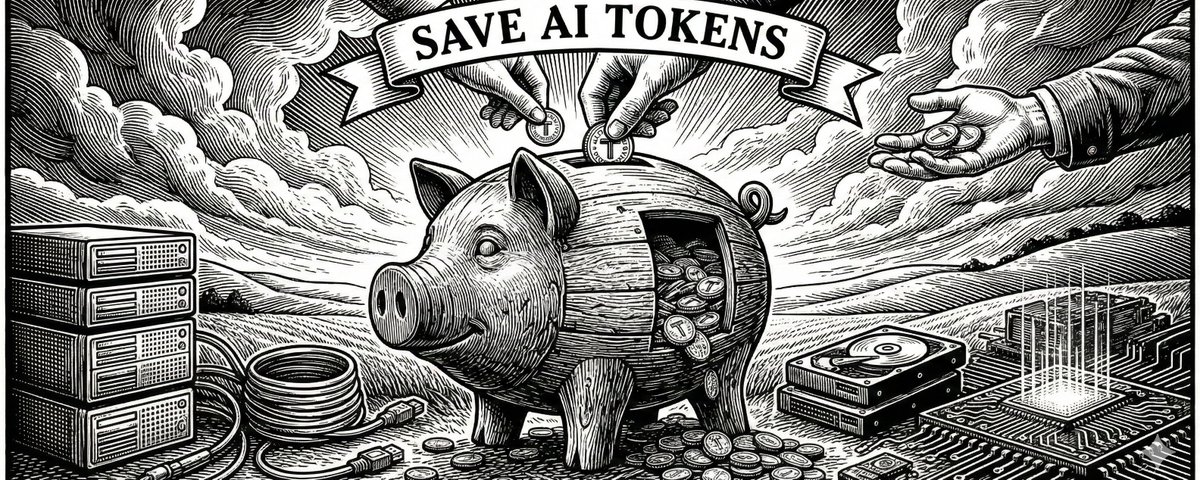
The Art of Saving in the AI Era: How to Spend Every Token Wisely

In the AI era, tokens are the new currency, and efficiency is paramount. This article outlines strategies to minimize token usage while maximizing value. Key principles include prioritizing high signal-to-noise ratio inputs by removing unnecessary content like greetings, repetitive context, or verbose instructions before processing. Converting files (e.g., PDFs to clean Markdown) and compressing images drastically reduce token consumption. Avoid conversational, multi-turn interactions; instead, provide clear, concise, and complete instructions upfront to prevent costly back-and-forth. Output costs are higher than input, so eliminate AI pleasantries and enforce structured responses (e.g., JSON) over verbose explanations. Use system prompts to mandate direct answers and disable unnecessary features like "extended thinking" for simple tasks. Manage context efficiently: start new conversations for new tasks, compress long histories, and leverage prompt caching to reuse fixed instructions at lower costs. Employ model tiering—assigning complex tasks to premium models (e.g., Claude Opus) and simpler subtasks to cheaper ones (e.g., Claude Haiku)—to optimize cost and performance. Ultimately, the most effective saving is questioning whether a task requires AI at all. Human judgment remains a critical filter to avoid unnecessary token expenditure, ensuring that AI complements rather than replaces human efficiency.

marsbit04/03 03:22

The Art of Saving in the AI Era: How to Spend Every Token Wisely

marsbit04/03 03:22

OpenClaw Token Saving Ultimate Guide: Use the Strongest Model, Spend the Least Money / Includes Prompts

This guide provides strategies to reduce OpenClaw token usage by 60-85% when using expensive models like Claude Opus. The main costs come not just from your input and the model's output, but from hidden overhead: a fixed System Prompt (~3000-5000 tokens), injected context files like AGENTS.md and MEMORY.md (~3000-14000 tokens), and conversation history. Key strategies include: 1. **Model Tiering:** Use the cheaper Claude Sonnet for 80% of daily tasks (chat, simple Q&A, cron jobs) and reserve Opus for complex tasks like writing and deep analysis. 2. **Context Slimming:** Drastically reduce the token count in injected files (AGENTS.md, SOUL.md, MEMORY.md) and remove unnecessary files from `workspaceFiles`. 3. **Cron Optimization:** Lower the frequency, merge tasks, and downgrade non-critical cron jobs to Sonnet. Configure deliveries for notifications only when necessary. 4. **Heartbeat Tuning:** Increase the interval (e.g., 45-60 minutes), set a silent period overnight, and slim down the HEARTBEAT.md file. 5. **Precise Retrieval with QMD:** Implement the local, zero-cost qmd tool for semantic search. This allows the agent to retrieve only specific relevant paragraphs from documents instead of reading entire files, saving up to 90% of tokens per query. 6. **Memory Search Selection:** For small memory files, use local embedding; for larger or multi-language needs, consider Voyage AI's free tier. By implementing these changes—model switching, context reduction, and smarter retrieval—users can significantly cut costs while maintaining performance for most tasks.

marsbit02/11 00:35
OpenClaw Token Saving Ultimate Guide: Use the Strongest Model, Spend the Least Money / Includes Prompts

marsbit02/11 00:35

活动图片