# Copyright Related Articles

HTX News Center provides the latest articles and in-depth analysis on "Copyright", covering market trends, project updates, tech developments, and regulatory policies in the crypto industry.
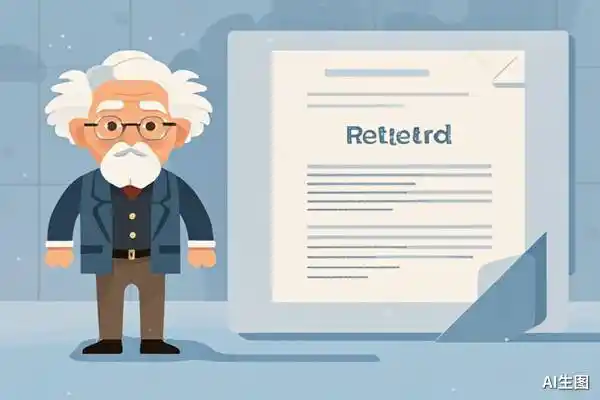

Planck Retracted? The Father of Quantum Tripped by an Algorithm

The recent discovery that two articles (published in 1940 and 1942) by Max Planck, the Nobel laureate and founder of quantum theory, are marked as "retracted" on Springer's digital platform highlights a curious clash between historical publishing practices and modern automated systems. An investigation suggests these retractions are algorithmic errors, not due to fraud or misconduct. The papers, philosophical reflections on science published in *Die Naturwissenschaften*, were likely flagged by the platform's systems. One article, a republished lecture, may have been mistaken for duplicate publication. Another, sharing a title with a prior article by a different author (a common practice for continuing debates at the time), may have triggered a similar automated check. The digital versions have even been replaced with blank pages, contrary to normal practice of preserving retracted texts. This incident underscores how contemporary digital infrastructure, built around concepts like "self-plagiarism" and strict copyright, can misclassify and obscure legitimate historical scholarly communication. It serves as a warning that digital archives are not neutral mirrors of the past but are filtered by platform rules, potentially distorting the scientific record. As AI systems increasingly rely on such databases, such erroneous metadata could propagate, affecting how future tools interpret and access historical knowledge.

marsbit06/30 12:44

Planck Retracted? The Father of Quantum Tripped by an Algorithm

marsbit06/30 12:44

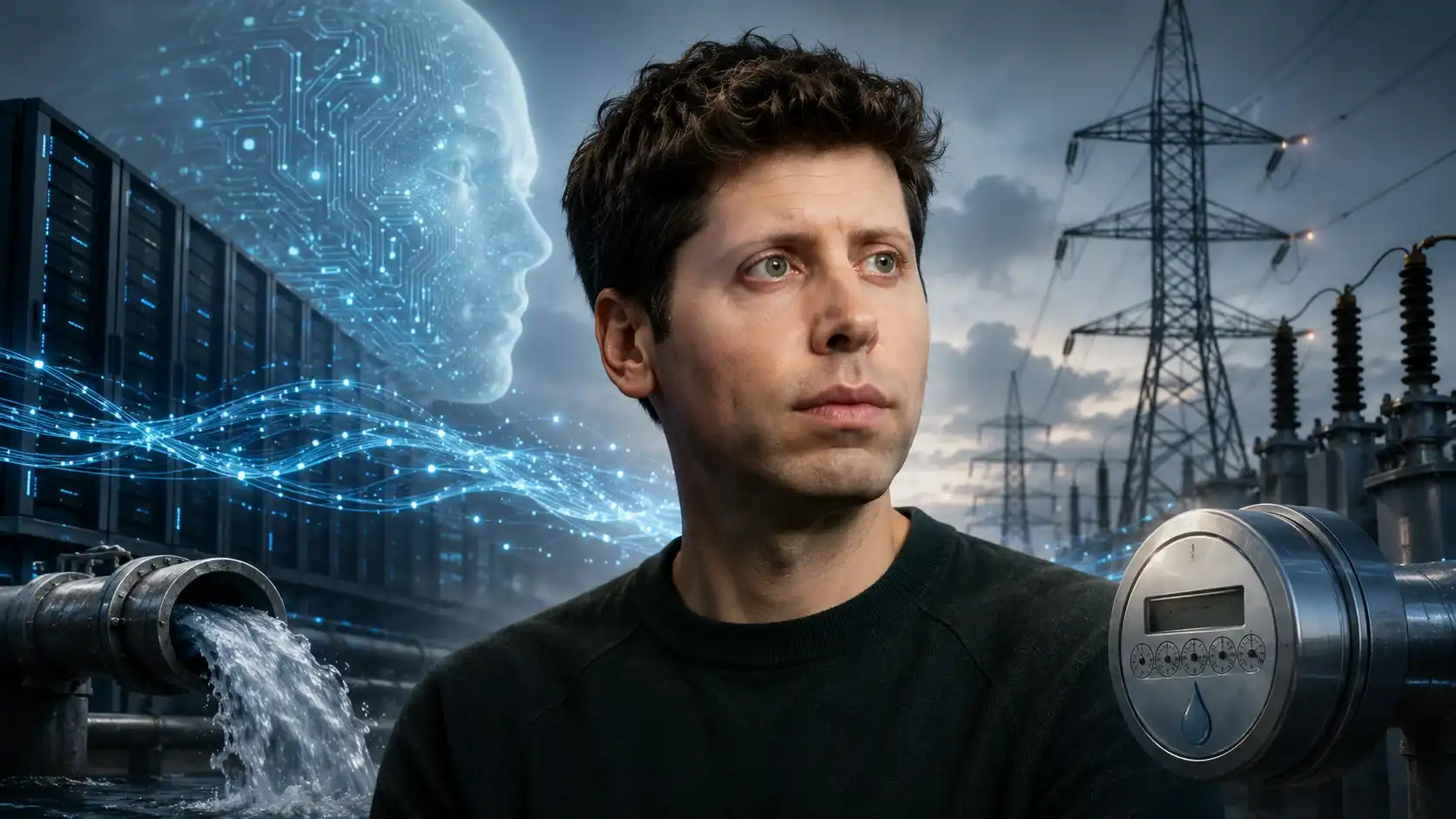
Why Sam Altman's 'Water and Electricity Theory' Sparks Copyright Controversy

OpenAI CEO Sam Altman's recent statement that "intelligence will become a utility like electricity or water" has sparked significant controversy, primarily around copyright issues and the nature of AI development. While positioning AI as a utility serves as a compelling narrative for infrastructure investors, critics argue the analogy is flawed in three key areas. First, there's a fundamental "property gap." Traditional utilities like water and power create new, physical infrastructure from scratch. In contrast, major AI models are trained by reorganizing vast amounts of existing human-created content—books, articles, code, etc.—often scraped from the web without explicit permission or compensation to creators. This "free acquisition, paid resale" model is seen by many as ethically problematic. Second, there's a "pricing gap." True public utilities are typically regulated to ensure universal service with non-discriminatory, cost-plus pricing. AI's token-based pricing, however, involves significant price discrimination (e.g., output tokens costing much more than input tokens) and is designed for revenue maximization, not equitable access. Third, a "governance gap" exists. Utilities operate under public oversight, while AI pricing and development are currently controlled by a few private companies. Furthermore, the industry's own shift toward buying licensed training data (e.g., deals with Reddit or news publishers) undermines its previous legal reliance on "fair use" for freely scraped data. In conclusion, while AI is indeed becoming a foundational technology, calling it a public utility remains contentious. The title requires not just scale and a pay-per-use model, but also credible solutions for data provenance, equitable pricing, and public governance.

marsbit05/27 10:03

Why Sam Altman's 'Water and Electricity Theory' Sparks Copyright Controversy

marsbit05/27 10:03

Zhou Shen's New Song 'Chronicle of the Moon' Released: Clearly Marked as Strictly Prohibited for AI Training and Voice Imitation

On April 1, Chinese singer Zhou Shen released the theme song "Yue Zhi Ji" for the fantasy drama "Yue Lin Qi Ji," with a notable copyright declaration explicitly prohibiting the use of the work for artificial intelligence (AI) training. This marks the first case in China where such a restriction was imposed at the time of a song’s release, setting a precedent for protecting vocal rights and creative sovereignty in the digital age. The statement specifies that unauthorized use—including covers, re-recording, remixing, or distribution—is strictly forbidden. It explicitly bans the use of the work in AI training, imitation, learning, or generation activities, addressing growing concerns over AI voice replication and algorithm-driven music plagiarism. Zhou Shen has previously emphasized that while AI can achieve technical precision, it cannot replicate the emotional depth and artistic essence of human performance. As AI music commercializes by 2026, this proactive measure establishes a legal and technical framework to safeguard original vocal works and clarifies authorization standards for AI training data. Industry experts believe such declarations will simplify copyright enforcement by establishing intent at the source. Leading artists like Zhou are helping define ethical and legal boundaries for human-AI collaboration, reaffirming that irreplaceable human emotion remains central to artistic creation.

marsbit04/02 01:49

Zhou Shen's New Song 'Chronicle of the Moon' Released: Clearly Marked as Strictly Prohibited for AI Training and Voice Imitation

marsbit04/02 01:49

活动图片