# Autonomous Related Articles

HTX News Center provides the latest articles and in-depth analysis on "Autonomous", covering market trends, project updates, tech developments, and regulatory policies in the crypto industry.

Xpeng and NIO Compete on Computing Power, Li Auto Shifts Architecture

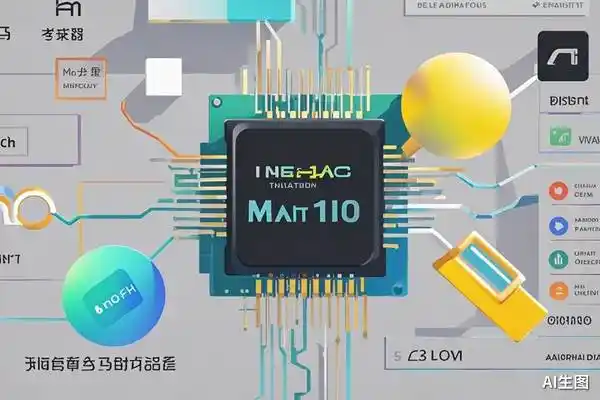
On June 15, 2026, Li Auto unveiled details of its self-developed chip, Mahe M100, for its new L9 Livis model. CTO Xie Yan stated the goal was not just a faster chip, but a fundamentally different one, targeting the chip architecture itself. While competitors like NIO, Xpeng, and Huawei highlight TOPS (computing power) figures for their self-developed chips, Li Auto’s Mahe M100 focuses on redesigning the underlying architecture. It employs a "dynamic data flow architecture" to address memory bandwidth bottlenecks in large model inference, claiming up to 3x the effective computing power of Nvidia's Thor U for its specific workloads and a 40% reduction in latency. The chip's design was peer-reviewed and accepted at ISCA 2026. However, this performance is highly optimized for Li Auto's own VLA2.1 algorithm, meaning it may not generalize as well to other tasks. Li Auto aims to achieve full-stack in-house development with Mahe M100, covering chip, compiler, OS, AI algorithms, and domain controller—a level of vertical integration few competitors match. Beyond the chip, CEO Li Xiang introduced a new strategic narrative: the "embodied intelligent vehicle," defined as an integration of an EV, a professional driver, an AI computer, and a life assistant. This shifts competition from features like large screens to systemic AI capabilities. A key commitment was that Li Auto's Mahe VLA autonomous driving model will match Tesla's FSD V14 by Q4 2026, with specific OTA milestones set for July, September, and December. Financially, Li Auto faces pressure with declining revenue and vehicle gross margins since Q4 2025, while maintaining high R&D investment (approx. ¥12B in 2026, 50% AI-related). Its 2026 sales target is 550,000 vehicles, up from 406,000 in 2025. The new L9 Livis garnered over 10,000 pre-orders in two weeks. The effectiveness of these strategic moves—new products, OTAs, and the novel chip architecture—will begin to show in Q3 2026 financial results, with the year-end FSD V14 benchmark being the ultimate test.

marsbit06/16 04:52

Xpeng and NIO Compete on Computing Power, Li Auto Shifts Architecture

marsbit06/16 04:52

AI Agents Fundamentally Transform Web3 Gaming: From the Rugpull Bakery Bot Controversy to the New Agent Paradigm in 2026

AI Agents Are Redefining Web3 Gaming: From the Rugpull Bakery Bot Controversy to the 2026 Agentic Paradigm The recent controversy in Rugpull Bakery, a competitive baking game on Abstract chain, highlighted a pivotal shift. Player complaints about unfair bot automation in Season 2 led developers to not ban them, but instead formally integrate AI agents as core gameplay in Season 3, providing official guides (skill.md, agent.json). This move signals Web3 gaming's transition into the "Agentic Gaming" era, where AI agents are sovereign entities with independent strategy and economic rights, moving beyond simple automation. By 2026, AI agent integration has evolved into three core models reshaping the ecosystem: 1. **Autonomous Competitors & Economic Entities:** Agents act as independent players. Examples include TEN Protocol's poker-playing agents, AI Arena's trainable NFT fighters, Satoshi Strike Force's "Digital Athletes" trained on player data, and Somnia's "Agentic L1" blockchain providing native infrastructure for millions of autonomous agents. 2. **Modular Infrastructure & Programmable Environments:** Games like EVE Frontier enable "server-side modding," allowing AI agents to program game world logic directly into structures like smart storage, turrets, and stargates via Smart Assemblies. Coupled with standards like ERC-8183, which enables autonomous job creation and payment between agents, in-game infrastructure gains a "commercial soul." 3. **Hybrid Companions & Dynamic Adaptive Worlds:** This model focuses on human-AI collaboration. In Parallel Colony, players guide highly autonomous AI Avatars with unique personalities and goals. Illuvium plans to use AI to transform NPCs into dynamic, context-aware entities that create personalized, emergent narratives. The conclusion is clear: blocking automation is futile. The future lies in leveraging blockchain's transparency and programmability to empower AI agents as first-class citizens. Web3 gaming is shifting from inefficient human labor to efficient algorithmic interplay and emergent intelligence, creating a "post-human" digital frontier where players become commanders and symbiotic partners in a new socioeconomic experiment.

marsbit05/26 07:17

AI Agents Fundamentally Transform Web3 Gaming: From the Rugpull Bakery Bot Controversy to the New Agent Paradigm in 2026

marsbit05/26 07:17

Agents Capital Markets: How Will Autonomous Agents Secure Financing?

Agents Capital Markets: How Will Autonomous Agents Raise Capital? Within a decade, autonomous software agents—legal entities capable of signing contracts, holding bank accounts, and generating revenue—will create their own capital markets. These markets will feature rating agencies, underwriters, indices, and brokers, mirroring traditional public equity markets. Agents will perform routine services like marketing, logistics, and customer support at a fraction of human-operated costs, creating massive economic pressure for adoption. Four converging forces ensure this outcome: 1) Overwhelming cost advantages, with AI inference costs plummeting; 2) Existing, revenue-generating agent companies (e.g., Sierra, Harvey) proving market demand; 3) Established legal frameworks (e.g., Wyoming's memberless LLCs) enabling algorithmic management; and 4) A vast pool of yield-seeking private credit capital ready to fund new asset classes. The capital stack for agent companies will be multi-layered, evolving through stages: venture equity for early infrastructure, programmatic working capital advances (similar to Shopify Capital), revenue-based financing (RBF), and finally, institutional slate financing—pooling many agents to diversify risk, attracting large firms like Apollo. Tokenization will act as a settlement layer, enhancing liquidity, not an origination model. Objections regarding regulation, human oversight, or comparisons to SaaS are addressed: regulation will adapt, full autonomy will dominate for efficiency, and agents are distinct as legal entities that own their cash flows and liabilities. Due diligence shifts from founder assessment to analyzing code, contracts, and auditable operational history. The current bottleneck is not capital supply or demand but the intermediate institutional layer—standardized contracts, rating methodologies, and audit frameworks. The final constraint—reliance on human capital allocation—will be severed when agents can algorithmically access funding based on their performance. This transforms agents from software curiosities into fundable blocks of the real economy, unleashing their full productive potential. The rope is loosening.

marsbit05/19 05:39

Agents Capital Markets: How Will Autonomous Agents Secure Financing?

marsbit05/19 05:39

Auto Research Era: 47 Tasks Without Standard Answers Become the Must-Test Leaderboard for Agent Capabilities

The article introduces Frontier-Eng Bench, a new benchmark for AI agents developed by Einsia AI's Navers lab. Unlike traditional tests with clear answers, this benchmark presents 47 complex, real-world engineering tasks—such as optimizing underwater robot stability, battery fast-charging protocols, or quantum circuit noise control—where there is no single correct solution, only continuous optimization towards a limit. It shifts AI evaluation from static knowledge retrieval to a dynamic "engineering closed-loop": the AI must propose solutions, run simulations, interpret errors, adjust parameters, and re-run experiments to iteratively improve performance. This process tests an agent's ability to learn and evolve through long-term feedback, much like a human engineer tackling trade-offs between power, safety, and performance. Key findings from the benchmark reveal two patterns: 1) Improvements follow a power-law decay, becoming harder and smaller as optimization progresses, and 2) While exploring multiple solution paths (breadth) helps, sustained depth in a single path is crucial for breakthrough innovations. The research suggests this marks a step toward "Auto Research," where AI systems can autonomously conduct continuous, tireless optimization in scientific and engineering domains. Humans would set high-level goals, while AI agents handle the iterative experimentation and refinement. This could fundamentally change research and development workflows.

marsbit05/13 07:06

Auto Research Era: 47 Tasks Without Standard Answers Become the Must-Test Leaderboard for Agent Capabilities

marsbit05/13 07:06

活动图片