# Anxiety Related Articles

HTX News Center provides the latest articles and in-depth analysis on "Anxiety", covering market trends, project updates, tech developments, and regulatory policies in the crypto industry.

The Illusion of a Prodigy

The Illusion of the "Genius Youth" The article discusses the recent interview incident involving Li Bojie, a former "Huawei Genius Youth," and AI company DeepSeek. It highlights the core conflict not as a simple case of suspected cheating during a coding test, but as a profound mismatch in expectations. Li, with an impressive background including entrepreneurship, a role at Huawei, and a position as a chief scientist, was deeply affected by a standard remote interview where the interviewer questioned his actions. The key point is his stated view of DeepSeek as the "pinnacle of the Chinese tech world." For him, the interview was a quest for identity validation—proof he belonged at the center of the new AI era. For DeepSeek, it was a routine skills assessment. The article argues that Li, while publicly rejecting the "genius" label, subconsciously expected to be treated as a peer for discussion, a courtesy extended by other companies like MiniMax and Xiaomi. DeepSeek, however, adhered strictly to its standardized process, prioritizing consistent, merit-based evaluation over individual prestige. This clash symbolizes a larger shift in the tech industry. The core thesis is that the AI era is dismantling the old system where past titles, companies, and accumulated experience guaranteed status. Now, with rapid knowledge obsolescence, "excellence is calculated in real-time." Li's anxiety—waiting weeks for the DeepSeek interview despite other offers—stems from the fear that rejection means being left behind by technological progress. The article concludes that this incident is a harbinger; soon, everyone will face a constant, implicit "interview" with the AI age itself, asking: "You were excellent yesterday. What about today?"

marsbit07/09 09:55

The Illusion of a Prodigy

marsbit07/09 09:55

Korean Youth, Making a 'Last Stand' in an Epic Bull Market

South Korea is experiencing an unprecedented stock market boom in the first half of 2026, with the KOSPI index doubling in six months, driven primarily by tech giants Samsung Electronics and SK Hynix. This "epic bull run," tied to the semiconductor cycle, has sparked a nationwide frenzy for stock trading. The country, with a population of just over 50 million, now has over 105 million securities accounts. The article, from the perspective of a Chinese national living in Seoul, explores how this speculative fever reflects deeper societal anxieties among Korean youth. Facing stagnant wages, high costs of living, housing pressures, and rigid social stratification, many young people see the volatile market as a "last chance" to alter their predetermined life trajectories and escape financial precarity. Stories include a young office worker investing her meager savings, a couple delaying marriage due to financial pressures, and a seasoned trader navigating exclusive social circles where market information is currency. However, the boom also exposes and exacerbates existing inequalities. While some achieve windfalls, others face devastating losses, with borrowing to invest reaching record highs. The narrative contrasts the illusion of equal opportunity with the harsh reality that the ability to absorb risk is unevenly distributed. Ultimately, the market frenzy is portrayed not as a solution, but as a symptom of a generation's struggle against a system offering limited upward mobility, where daily life is a precarious balance of bills, debts, and societal expectations.

marsbit06/11 06:39

Korean Youth, Making a 'Last Stand' in an Epic Bull Market

marsbit06/11 06:39

Wang Chuan: How to Avoid Anxiety When the Neighbor, Lao Wang, Made Thirty Times His Investment in Storage Stocks (7) - A Quarter-Century Cycle

Wang Chuan: Reflections on a Quarter-Century Cycle – How to Stay Calm After a 30x Gain on Storage Stocks (Part 7) This article continues the discussion on investment pitfalls. It highlights the deceptive use of metrics like the "Annualized Net Dollar Retention Rate" by some companies to inflate growth projections. The core analysis focuses on the "reflexivity" present in both product demand and financial markets during boom periods. In a bubble, speculative and fear-driven demand in the real economy interacts with speculative, leveraged buying in financial markets, creating a powerful upward feedback loop. This dynamic reverses sharply when faced with physical or liquidity constraints, leading to a cascading downturn. The hardware and semiconductor sectors face unique risks. Unlike assets with defined cycles, there's no guarantee of a swift recovery post-crash. Historical examples like Micron, Intel, and Cisco show it can take decades to surpass previous peaks after severe drawdowns (80-95%). This is due to the "bullwhip effect" in supply chains—demand vanishes quickly while过剩产能 persists—and the migration of speculative capital and growth narratives to new sectors once momentum slows. Companies may have stronger fundamentals years later, but the speculative "soul" of extreme valuations is long gone. The author warns of psychological traps for new investors: mistaking temporary, intense demand for permanent growth, and believing that making quick, large profits is easy. Citing Buffett, the piece cautions that easy money erodes rationality. The current phase presents an asymmetric risk-reward scenario: potential for further gains versus the risk of an 80%+ drawdown and a multi-decade recovery wait—an outcome reflexive speculators cannot endure. The hypothetical "Lao Wang" who made 30x may be wiped out by leverage or, driven by the "get-rich-quick" mindset, may repeatedly try to recover losses until exhausted, failing to recognize that the high-growth narrative has ended. The piece concludes with Schopenhauer's analogy: those who've seen multiple cycles are like an audience watching the same magic trick repeatedly—the illusion no longer works.

链捕手06/09 02:02

Wang Chuan: How to Avoid Anxiety When the Neighbor, Lao Wang, Made Thirty Times His Investment in Storage Stocks (7) - A Quarter-Century Cycle

链捕手06/09 02:02

Interview with 7 Ordinary Professionals: After AI Arrived, How Are You Doing?

This article interviews seven professionals from diverse fields like Web3, bulk chemical trading, digital agriculture, and traditional wholesale to examine the impact of AI on their work. Key themes emerge from the discussions. AI has become integral to their workflows, primarily for increasing efficiency in tasks such as coding, content creation, research, and data analysis. Individuals across roles, from developers to managers, report that AI tools like ChatGPT and Claude have significantly reduced workloads and accelerated learning, creating opportunities for "super individuals" or one-person teams. However, this efficiency comes with a double-edged sword. It intensifies competition, pushing professionals to constantly learn new tools and adapt, leading to widespread anxiety about job security and a heightened pressure to keep pace. Interviewees anticipate significant job reductions in roles like administrative support, finance, HR, customer service, and some creative fields. A recurring view is that AI acts as a "great equalizer," amplifying the capabilities of those who use it effectively while leaving others behind, potentially deepening polarization. Despite AI's capabilities, interviewees identify enduring human strengths. AI struggles with tasks requiring deep contextual understanding, complex judgment in areas like risk assessment and system stability (especially in finance/Web3), nuanced human communication, and handling exceptions in logistics and manufacturing. These areas remain firmly in the human domain. Consequently, many professionals are refocusing their career strategies. They plan to evolve from task executors into "complex system owners," "super coordinators" managing AI agents, or specialists in high-level areas like business context, risk control, product design, and personal branding. In summary, the article portrays AI not as an optional tool but as a transformative force reshaping job demands. While it automates routine work, it also creates new forms of pressure and competition. The future, as seen by these professionals, belongs to those who can strategically integrate AI to augment uniquely human skills like judgment, responsibility, and strategic oversight.

marsbit06/01 08:17

Interview with 7 Ordinary Professionals: After AI Arrived, How Are You Doing?

marsbit06/01 08:17

Google CEO Admits Lagging Behind in Coding

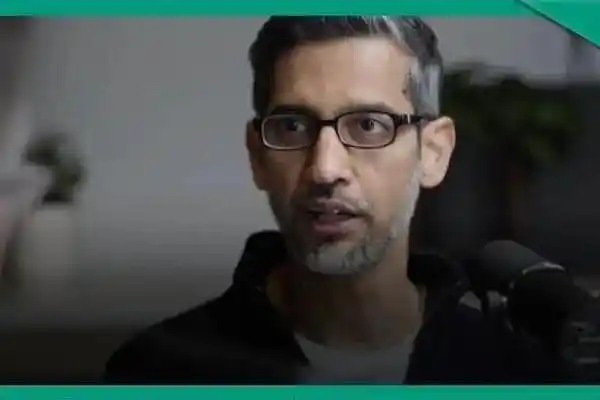
Google CEO Sundar Pichai acknowledged in a recent interview that Google's Gemini AI models are currently "lagging behind" in coding capabilities, particularly for complex, long-horizon tasks requiring advanced developer expertise. He noted the field is advancing at an "unprecedented" pace, where 30-60 days now brings changes equivalent to five years in the past. Pichai expressed that achieving Artificial General Intelligence (AGI) now seems closer than previously imagined due to rapid progress. While highlighting strengths in text, multimodal, and reasoning tasks, Pichai admitted competitors like Anthropic and OpenAI have focused more intently on coding. He emphasized Google's commitment to catching up, citing internal tools like Antigravity 2.0 and the newly released Gemini 3.5 Flash, which aims to address previous shortcomings. Regarding Google Search's AI-driven overhaul, Pichai stated changes will be gradual to align with user needs, not disrupt the core search experience or its advertising model. He addressed public AI anxiety as understandable, given the technology's potential to reshape jobs and society, but remained optimistic about AI augmenting human capabilities and creating new opportunities. Pichai stressed the need for broad societal dialogue and responsible development as AI approaches more advanced, potentially recursive self-improvement stages. He affirmed Google's long-term commitment to leading in AI while navigating its profound implications responsibly.

marsbit05/24 08:28

Google CEO Admits Lagging Behind in Coding

marsbit05/24 08:28

OpenClaw Gold Rush: The Shovel Sellers Never Anxious

OpenClaw, an open-source AI agent framework, has sparked a massive wave of commercialization in China, creating a lucrative industry built on user anxiety and the desire to adopt cutting-edge technology. While the software itself is free, a full ecosystem has emerged to monetize the complexity of its deployment and operation. Hardware manufacturers, including former crypto mining machine producers, now sell specialized OpenClaw-optimized devices, with some like iPollo's Claw PC retailing for $439. Others offer white-label OEM solutions, capitalizing on users' unwillingness to configure standard hardware like Mac Minis. A significant market has also emerged for discounted API tokens required to run OpenClaw. Many providers offer heavily discounted, and sometimes fraudulent, access to models like Claude or GPT. Research indicates nearly half of these third-party APIs are deceptive, often substituting expensive models with cheaper, local alternatives. Beyond the markup, the core business for some token resellers is collecting high-quality user prompts and responses to sell as valuable training data to large model companies. Furthermore, a service industry thrives on information asymmetry. Consultants travel nationwide to install and configure OpenClaw for small business owners, charging thousands per installation. An extreme example is RoofClaw in the US, which ships pre-configured MacBooks to roofing contractors for $5,000 each, generating over $1.8 million in revenue. The model has become so popular that major platforms like Meituan and JD.com now offer remote deployment services. The article concludes that the real winners are not those developing the technology but the "shovel sellers"—those providing the tools, services, and infrastructure to ease adoption. They profit not from technological advancement itself, but from the consistent and predictable human fear of being left behind.

marsbit03/11 12:08

OpenClaw Gold Rush: The Shovel Sellers Never Anxious

marsbit03/11 12:08

活动图片