# Altman Related Articles

HTX News Center provides the latest articles and in-depth analysis on "Altman", covering market trends, project updates, tech developments, and regulatory policies in the crypto industry.

Apple Sues OpenAI Sparking Feud, Musk Slams Altman for Fraud, Altman Retorts with 'Space Data Center' Boast

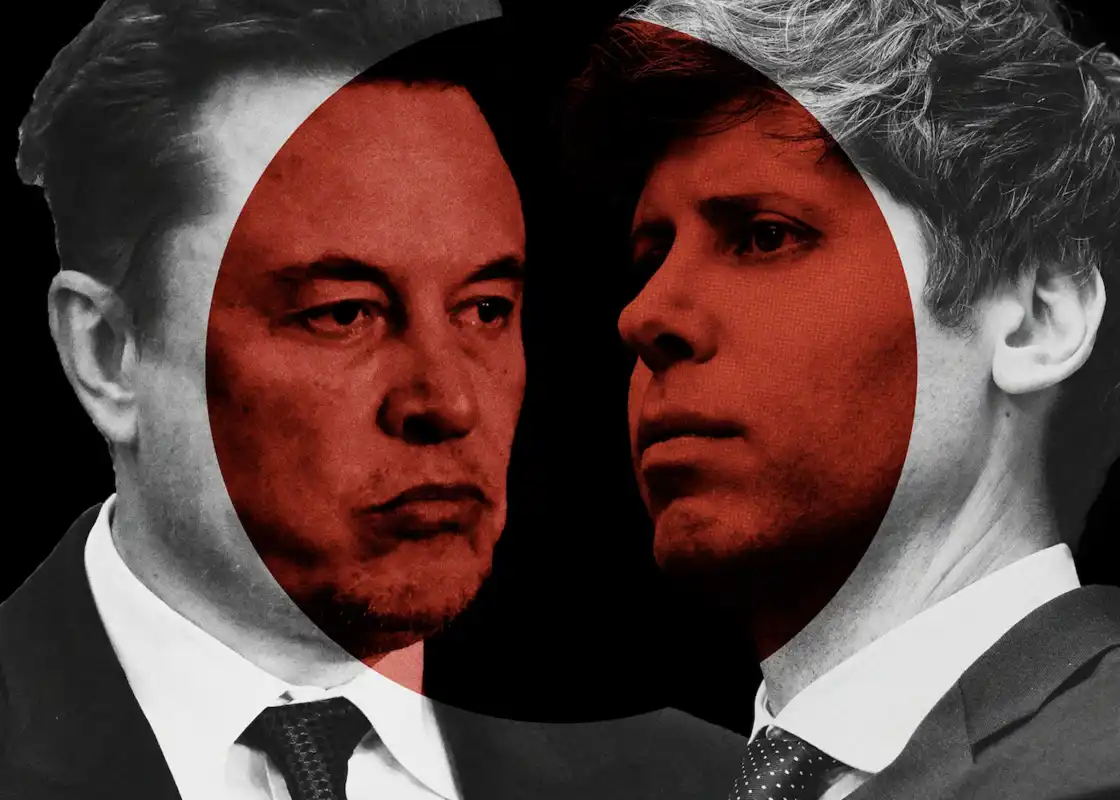
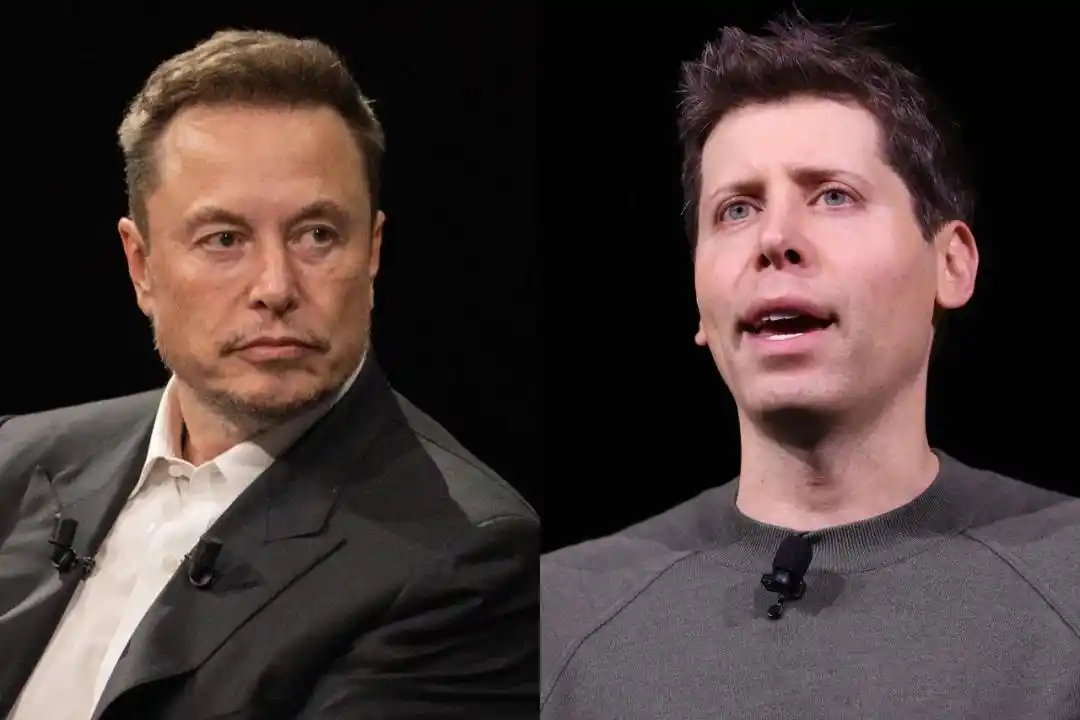
Apple Sues OpenAI as Musk-Altman Feud Escalates The public feud between Elon Musk and OpenAI CEO Sam Altman intensified, coinciding with their respective AI companies launching flagship models in the same week, highlighting fierce competition. On July 11, Musk posted on X, accusing Altman of taking "fraud to the next level" regarding OpenAI's commercial practices. Altman fired back, sarcastically suggesting Musk was the one selling "short-term space datacenter" concepts to public market investors. Musk countered with allegations that Altman "stole an open-source AI charity" and, amid Apple's recent lawsuit, "stole all of Apple's phone tech." He mockingly referenced Altman needing a "parole officer's" approval to travel. This exchange occurred against the backdrop of a significant legal development: Apple filed a lawsuit against OpenAI in a California federal court, alleging the AI company deliberately solicited Apple employees to leak confidential information on unreleased products to aid its own hardware plans. Apple demands OpenAI cease this activity, destroy proprietary materials, and redesign upcoming products. OpenAI responded, stating it has no interest in other companies' trade secrets and remains focused on innovation. This lawsuit could profoundly impact their two-year partnership where OpenAI provides key tech for Apple Intelligence and Siri. The rivalry extended to product releases. OpenAI launched GPT-5.6, while Musk's SpaceXAI unveiled Grok 4.5. Both are positioned as AI agents capable of multi-step tasks. GPT-5.6 is noted for strengths in broad reasoning, business workflows, and cybersecurity. Grok 4.5 is highlighted for higher efficiency in autonomous programming and developer workflows, with lower usage costs than GPT-5.6, though OpenAI's model reportedly still leads in areas like abstract reasoning. The differing strengths offer distinct choices for enterprises and developers based on their specific needs.

marsbit07/12 08:56
Apple Sues OpenAI Sparking Feud, Musk Slams Altman for Fraud, Altman Retorts with 'Space Data Center' Boast

marsbit07/12 08:56

Surging 108% on Debut! The Biggest AI Dark Horse of 2026 is Born, Altman Profits 'Passively' Again

Cerebras, an AI chip company known for its wafer-scale "dinner plate-sized" WSE-3 processor, completed a landmark IPO on the NASDAQ in 2026. Its shares surged 108% on the first day of trading, with the valuation reaching approximately $100 billion at its peak. The offering raised $5.55 billion, marking one of the largest U.S. tech IPOs since Uber in 2019. The company's dramatic turnaround was a key driver, moving from a $482 million loss to a $238 million profit in 2025, with revenue growing 76% to $510 million. Major new contracts, including a multi-year deal with OpenAI potentially worth over $20 billion and a deployment agreement with AWS, boosted investor confidence. Founder Andrew Feldman emphasized to investors the coming explosion in AI inference demand, the viability of non-GPU compute, and the perceived overestimation of NVIDIA's CUDA ecosystem moat. The IPO created substantial returns for early investors like Foundation Capital (76x return) and Benchmark (12x return). OpenAI, through a strategic agreement linked to future compute purchases, secured an estimated $1.8 billion in paper gains, while Sam Altman's personal 2017 investment grew roughly tenfold to around $30 million. Cerebras' success is positioned as the opening act for a wave of massive AI-focused IPOs expected in 2026, including potential listings from SpaceX (targeting a $1.75 trillion valuation), OpenAI ($1 trillion), and Anthropic ($900 billion), collectively representing over $3 trillion in potential market value. The article concludes that these moves signal capital is placing foundational bets on the immense compute infrastructure required for the future development of Artificial Superintelligence (ASI).

marsbit05/15 11:20

Surging 108% on Debut! The Biggest AI Dark Horse of 2026 is Born, Altman Profits 'Passively' Again

marsbit05/15 11:20

Altman Drops Bombshell While Musk is Away: He Once Wanted His Children to Inherit OpenAI

In a California court, Sam Altman testified for the first time in the ongoing legal battle between Elon Musk and OpenAI. Altman made a striking claim: Musk once suggested that control of OpenAI could one day be passed down to his children. This statement reframes the long-standing conflict not as a simple governance dispute but as a foundational power struggle. Altman sought to counter the narrative that OpenAI betrayed its original non-profit, idealistic mission. He argued that from the beginning, it was Musk who sought increasing control over the organization, including a larger equity stake and ultimate decision-making authority. Altman opposed this, citing OpenAI's core principle that AGI should not be controlled by any single individual. He also addressed the key point of contention about OpenAI's shift to a for-profit structure, claiming Musk was aware of and initially supportive of exploring such a model to secure the massive funding needed for advanced AI research. Altman framed the change as a practical necessity, not a betrayal. Further testimony revealed internal concerns after Musk left OpenAI's board, with worries he might take retaliatory action. Altman critiqued Musk's management style as unsuitable for a research lab, damaging morale and culture. Throughout his testimony, Altman's focus appeared to shift from technological idealism to the realities of organizational governance and resource requirements. Regarding his brief ouster in 2023, Altman stated he seriously considered joining Microsoft but ultimately returned because OpenAI was too important to abandon.

marsbit05/13 04:11

Altman Drops Bombshell While Musk is Away: He Once Wanted His Children to Inherit OpenAI

marsbit05/13 04:11

The New Yorker In-Depth Investigation Analysis: Why Do OpenAI Insiders Believe Altman Is Untrustworthy?

"The New Yorker investigation, based on internal documents and interviews with over 100 sources, reveals deep internal distrust in OpenAI’s leadership, particularly toward CEO Sam Altman. Key allegations include a pattern of dishonesty, undermining safety protocols, and prioritizing commercial interests over OpenAI’s original non-profit mission to develop AI safely. Chief Scientist Ilya Sutskever compiled a 70-page dossier accusing Altman of repeatedly lying to the board—for instance, falsely claiming GPT-4 features had passed safety reviews. Anthropic co-founder Dario Amodei’s private notes further detail how Microsoft’s investment deal effectively neutered OpenAI’s safety commitments. The report also highlights unfulfilled promises, such as allocating only 1-2% of promised computing resources to critical safety teams. Internal conflicts extend to CFO Sarah Friar, who opposed Altman’s aggressive IPO timeline amid financial concerns. Microsoft executives compared Altman to fraudsters like SBF, citing a tendency to distort facts and renege on agreements. Critics argue that Altman’s unchecked authority and alleged disregard for transparency pose significant risks given OpenAI’s powerful, potentially dangerous AI technology. The company’s transformation from a safety-first non-profit to a profit-driven entity raises fundamental questions about its governance and ethical commitments."

marsbit04/07 03:40

The New Yorker In-Depth Investigation Analysis: Why Do OpenAI Insiders Believe Altman Is Untrustworthy?

marsbit04/07 03:40

70-Page Confidential Document's First Allegation: 'Lying', Altman Told the Board 'I Can't Change My Character'

In a major investigation, Pulitzer winner Ronan Farrow and Andrew Marantz reveal two previously undisclosed documents: a ~70-page confidential file compiled by former OpenAI chief scientist Ilya Sutskever and over 200 pages of internal notes by Anthropic CEO Dario Amodei from his time at OpenAI. Sutskever’s file, which opens with the accusation that Sam Altman exhibited a "pattern of lying," alleges he misled executives and the board on safety protocols and corporate matters. Amodei’s notes similarly claim “the problem at OpenAI is Sam himself,” citing instances like Altman denying agreed-upon terms in Microsoft’s $1 billion deal. Key revelations include: - No written report was produced from the post-reinstatement independent investigation into Altman. - OpenAI’s superalignment team received only 1-2% of the promised computing resources, mostly on outdated clusters. - In 2018, executives considered a "National Plan" to auction AI tech to nations including China and Russia. - Microsoft executives expressed strong distrust toward Altman, with one comparing his risk profile to figures like Bernie Madoff. During a board call after his firing, Altman reportedly said, "I can’t change my personality," which a director interpreted as an admission of persistent dishonesty. Altman denies intentional deception, attributing his behavior to "well-intentioned adaptation" and conflict avoidance.

marsbit04/06 14:24

70-Page Confidential Document's First Allegation: 'Lying', Altman Told the Board 'I Can't Change My Character'

marsbit04/06 14:24

活动图片