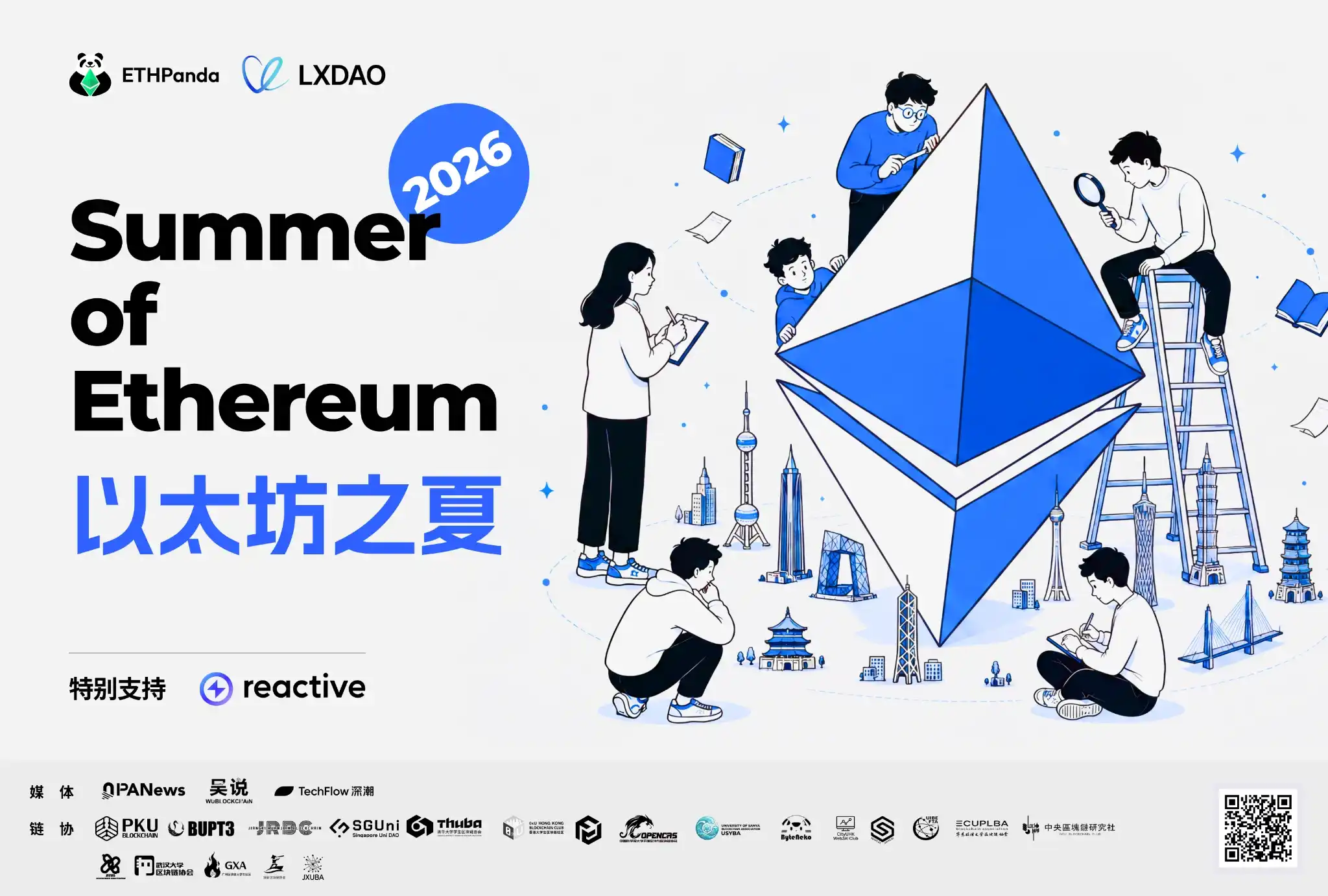
Some Issues Are Better Discussed in Person: Summer of Ethereum 2026 Is Here!

marsbitPublished on 2026-05-15Last updated on 2026-05-15

Abstract

Summer of Ethereum 2026 is returning, focused on bringing crucial discussions about Ethereum's long-term development to in-person meetups across multiple cities. Organized by LXDAO and ETHPanda, the initiative aims to move beyond online discourse and event scheduling by addressing Ethereum's systemic challenges through real-world connections. The core question this year is the value of offline gatherings for the Ethereum community. While online discussions on topics like the roadmap, L2, account abstraction, and governance are abundant, they often lack depth and alignment. The goal is to bring these fragmented, complex issues—such as UX, developer tools, public goods, and local community building—into shared physical spaces to foster deeper understanding, trust, and actionable collaboration. The program will not follow a rigid format but will adapt to each city's context, potentially including talks, panels, workshops, and community gatherings. Key discussion areas include protocol evolution, Ethereum UX/account abstraction, real-world applications, developer tools, and sustainable community governance. The aim is for each event to leave behind clearer problems, stronger personal connections, and tangible follow-up actions. The call is open to developers, researchers, students, community members, local organizers, projects, and media partners. Participation is encouraged whether one brings deep expertise or just genuine curiosity. For Ethereum's ecosystem—built on principl...

Summer of Ethereum 2026 is setting sail once again. This year, LXDAO × ETHPanda aims to bring the discussion about Ethereum's long-term development to more cities on-site: not just by scheduling a series of events, but by focusing on the key challenges Ethereum is currently facing, connecting developers, researchers, community organizers, project teams, and ecosystem partners. Together, we aim to clarify the issues, connect people, and genuinely foster new collaborations.

The preparations for Summer of Ethereum 2026 have been underway for some time. The further we go, the more we realize: this isn't just about slotting a few events into the calendar, nor is it about finding a few speakers, making some posters, and opening a few registration links, and then calling it a day.

The real difficulty lies in answering a more fundamental question:

What is the actual value of offline gatherings for the Ethereum community this year?

Over the past few years, the discussion around Ethereum has been extremely dense. Roadmaps, L2, Account Abstraction, wallet UX, public goods, governance, application adoption, developer growth... every topic is important, and every topic is complex. But often, these discussions remain confined to articles, Twitter, meeting notes, online calls, and chats within small circles. There's a lot of information, but making sense of it is hard; there are many opinions, but not necessarily many people sitting down together to align.

Once an issue is identified, the next step is to bring the discussion from online back to the physical world.

It's not about creating a new event brand, nor is it about adding a few more lively gatherings to the summer calendar. More importantly, we hope to bring those long-standing, yet often fragmented discussions into real city venues: enabling developers and researchers to meet, letting project teams hear community feedback, helping local organizers find each other, and giving more people who haven't yet entered the core discussions a chance to start with a real-life encounter, to genuinely get closer to what's happening in Ethereum.

Why Focus on "Ethereum's Key Challenges"?

Because Ethereum has reached a stage where it cannot advance solely on singular narratives.

Focusing only on technology easily overlooks real users and application scenarios; focusing only on applications underestimates the importance of protocol, infrastructure, and security boundaries; focusing only on growth pushes issues like public goods, governance, and long-term collaboration to the back burner.

These issues aren't separate items on a checklist; they are systemic challenges intertwined. Wallet UX affects application adoption; L2 and cross-chain UX affect user retention; developer tools affect the entry of new builders; public goods and governance affect whether the ecosystem can sustain open collaboration in the long term.

Therefore, this year's Summer of Ethereum aims to use "Ethereum's Key Challenges" as the central theme. It's not a pre-written, standard answer, but a way to ask questions together:

What are the most pressing issues worth serious discussion for Ethereum's next phase? Which challenges have been repeatedly mentioned but not thoroughly examined? What real experiences, counter-examples, and constructive pathways should be heard by more people?

What's the Most Evident Feeling During Preparation?

The most evident feeling is: the Ethereum community isn't short of ideas or people who care about it, but these people are often scattered across different cities, projects, communities, and contexts.

Some are more concerned with protocol and roadmaps; some care more about wallets, accounts, and UX; some work daily on developer tools; some organize the first Web3 sharing sessions in universities; some deal with very specific user problems in projects; and some are persistently investing effort into public goods, community governance, and local organizational capacity.

If these people only "see" each other online, the connection is superficial. Real change often happens after a specific in-person meeting: a problem gets re-interpreted, a collaboration gets initiated on the spot, a local community realizes they are not an isolated island, a new builder discovers that it's not just about grand narratives but also about tangible work they can get involved in.

These connections might not be as eye-catching as a major launch event, but they are arguably closer to the way the Ethereum community has always grown: slower, more distributed, relying on the continuous building of trust between people.
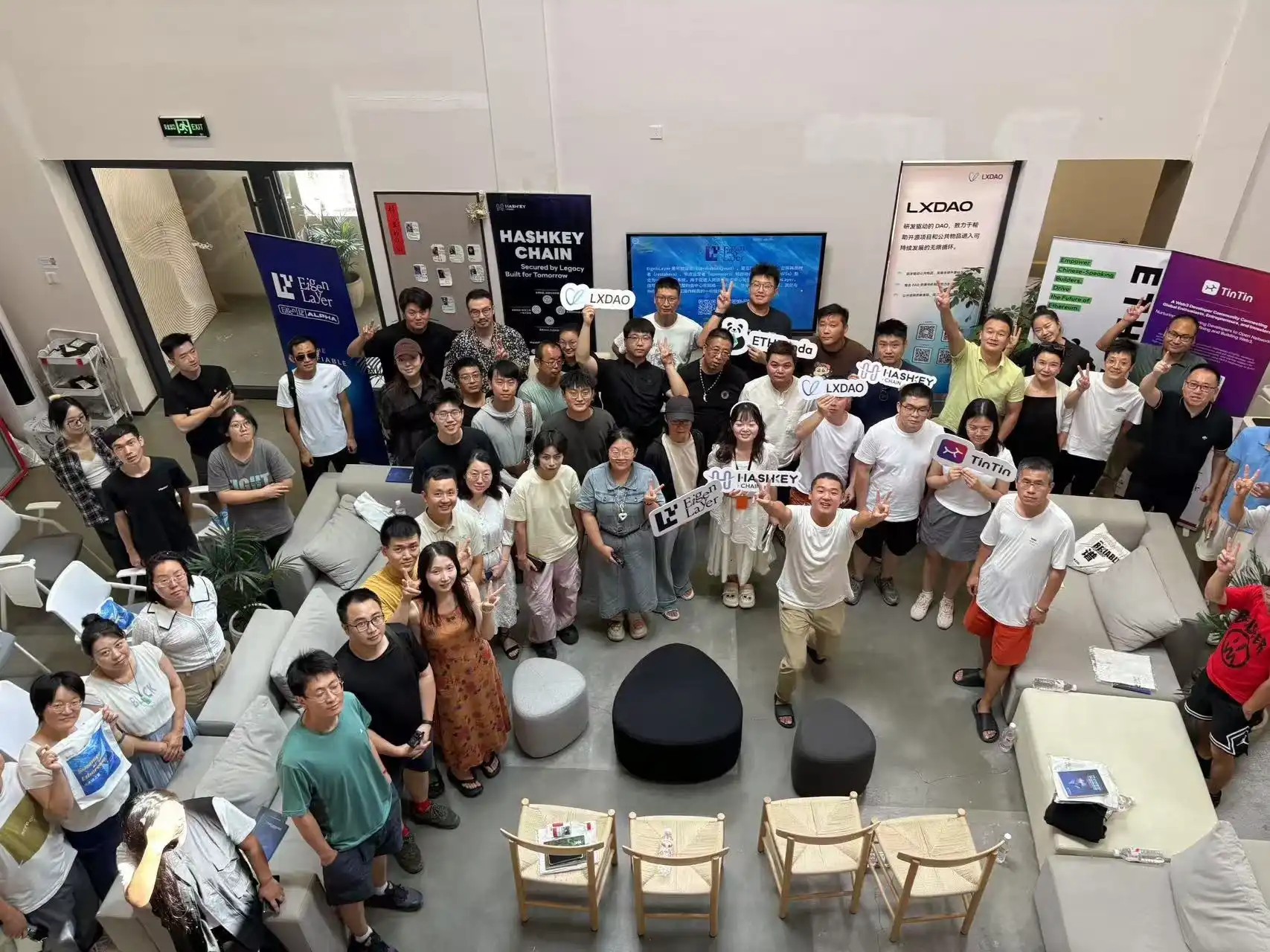
Summer of Ethereum 2025 · Xi'an Station
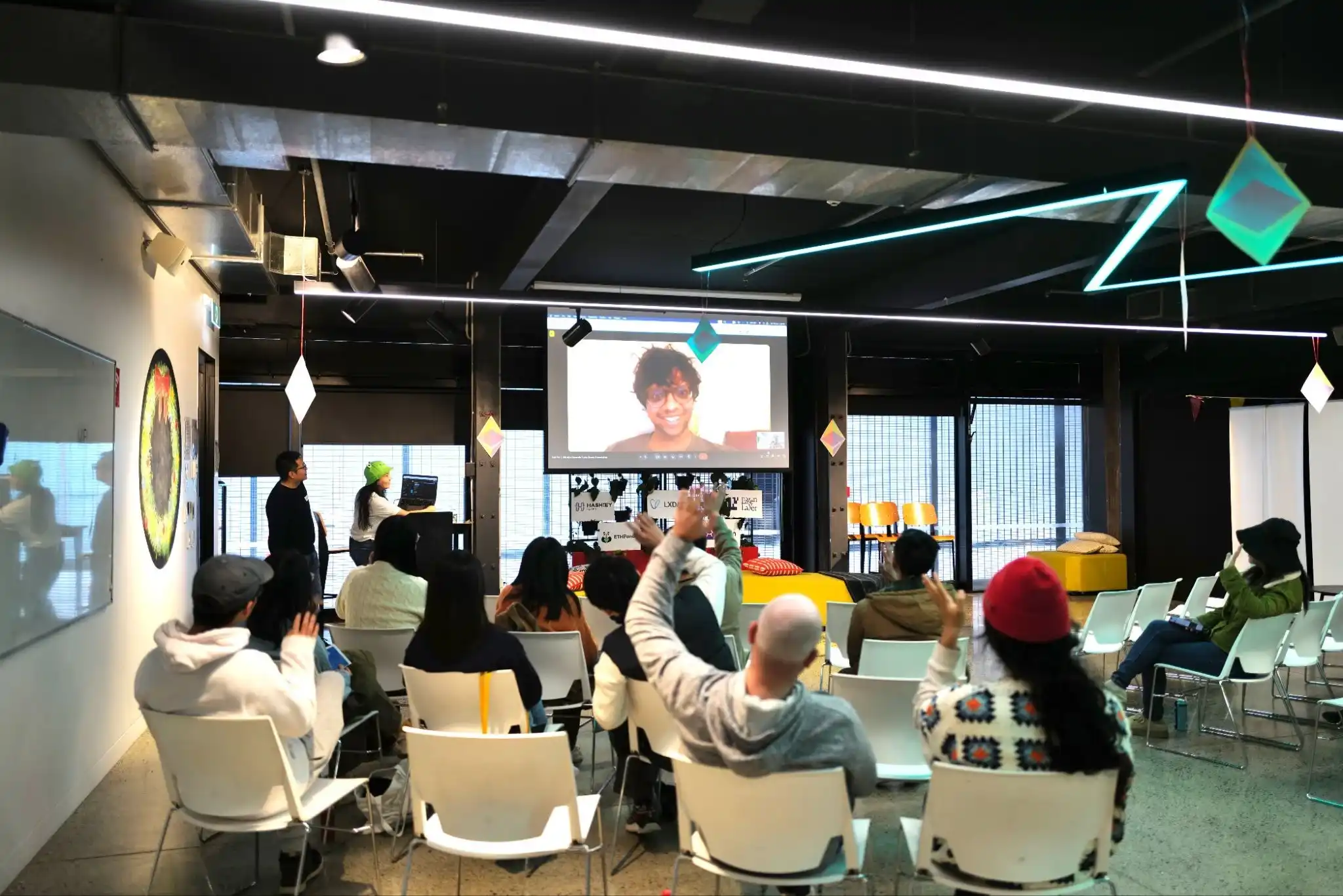
Summer of Ethereum 2025 · Auckland Station

What Will Happen This Year?

Summer of Ethereum 2026 will revolve around multi-city offline events. The event formats in different cities won't necessarily be identical; they could be keynote talks, panels, workshops, local community gatherings, project showcases, developer exchanges, or smaller, more in-depth closed-door discussions.

We hope each event doesn't simply end once it's "done," but leaves behind a few things: clearer problems, more specific connections between people, more credible resource links, and collaborative leads that can be pursued further.

Potential directions currently include:

  • Protocol Evolution & Roadmap: How these long-term topics can be genuinely understood by more builders;

  • Ethereum UX: How wallet, Gas, signing, account recovery, and cross-L2 experiences can become more usable;

  • Account Abstraction, Smart Wallets & Security Boundaries: How to find balance between convenience, permissions, and trust;

  • Stablecoins, Payments & Real-World Applications: How the on-chain world enters more concrete usage scenarios;

  • Developer Tools & Application Building: How to lower the barrier to entry, enabling more people to build sustainably;

  • Public Goods, Governance & Community Collaboration: How an open ecosystem develops longer-term organizational capacity;

  • Cities & Local Community Networks: How builders in different places can be connected, supported, and seen.

These directions won't be treated as a fixed agenda to be covered all at once. They are more like a gradually unfolding map of issues: each city, with its own resources, context, and community foundation, can find the most suitable entry point for local engagement.

Who Is Welcome to Participate?

If you are a developer, researcher, student, community member, or simply someone who has been following Ethereum, you're welcome to attend. Coming with questions is great; there's no need to start from a position of being an "expert." Many truly valuable discussions begin with a simple yet concrete question.

If you are a city lead or local organizer, welcome to bring Summer of Ethereum to your city. You might know local developers, can connect with university clubs, know suitable venues, or simply feel strongly about bringing Ethereum builders in your city together for a meetup. These are all very important starting points.

🐼 Local organizers are welcome to apply to become city co-organizers 👉 https://tally.so/r/pb01Mq

If you are a project team, ecosystem partner, or co-building partner, you're also welcome to participate. We hope collaboration goes beyond being just a name on a logo wall, but involves bringing real issues, technical practices, developer resources, workshops, case studies, and problems to the events.

If you are a media, content, venue, or resource partner, your help is also welcome. Good discussions, if not recorded, organized, and disseminated, easily remain confined to a single evening. We hope these on-site interactions can ultimately be distilled into more reusable content, relationships, and follow-up collaborations.

Why Is This Non-Negotiable?

Because the most important aspect of Ethereum has never been just a technology stack. Behind it, there have always been people who believe that open networks, public goods, verifiable rules, long-term collaboration, and a global community are worth serious building.

But this belief cannot forever stay confined to screens.

When discussions only happen online, people are easily swept along by information flow; when problems only exist in documents, they easily become the specialized language of a few. However, for Ethereum to move forward, it needs more real people to enter the discussions, understand the issues, form judgments, find their place, and then start taking action.

This is also that kind of "non-negotiable" support: not because offline events are inherently important, but because certain trust, judgment, and collaboration only begin to emerge when people truly meet people, and when problems truly land in a physical setting.

It might not be the most grandiose answer, but it can be a very concrete beginning: gathering a group of people who care about Ethereum in one city; putting different perspectives around the same table regarding a real challenge; enabling previously scattered people to have a follow-up because of one meeting.

If this summer, more cities establish new connections because of Summer of Ethereum; more builders enter longer-term collaborations because of an on-site discussion; more key issues transform from abstract concepts into actionable leads that can be pursued further, then this endeavor will have been worthwhile.

All subsequent city events, registration links, and schedule updates will be synchronized on the Luma Calendar. Welcome to follow and subscribe to get the latest event information as soon as possible: https://luma.com/SummerOfEthereum

Welcome to join Summer of Ethereum 2026.

This summer, let's bring the discussion about Ethereum's future back to the real world.

Trending Cryptos

Related Questions

QWhat is the core purpose of the Ethereum Summer 2026 initiative, and why is an in-person format emphasized?

AThe core purpose is to move critical discussions about Ethereum's long-term development from online platforms to in-person settings across multiple cities. It's emphasized because the organizers believe that deep trust, nuanced judgment, and real collaboration on complex, systemic challenges (like UX, L2 interoperability, public goods, and governance) are best forged when people meet face-to-face, allowing for alignment and the start of new, distributed collaborations.

QWhat are the 'Ethereum Key Challenges' mentioned as the thematic focus for 2026, and why are they described as 'systemic'?

AThe 'Ethereum Key Challenges' include protocol evolution, Ethereum UX (wallets, gas, signatures), account abstraction, real-world applications (stablecoins, payments), developer tools, public goods/governance, and local community building. They are described as systemic because they are deeply interconnected, not isolated issues. For example, wallet and L2 UX directly impact user adoption and retention, while developer tools and public goods funding affect the ecosystem's long-term sustainability and ability to attract new builders.

QAccording to the article, what was a key insight during the preparation for Ethereum Summer 2026 regarding the community's state?

AA key insight was that while the Ethereum community is full of ideas and dedicated individuals, these people are often dispersed across different cities, projects, and circles (e.g., protocol researchers, UX developers, local organizers). Online visibility creates only shallow connections. Real change and trust-building happen more effectively after specific in-person meetings, which can lead to clarified problems, spontaneous collaborations, and a sense of community for local builders.

QWho is invited to participate in Ethereum Summer 2026, and what roles are they expected to play?

AMultiple groups are invited: 1) Attendees: Developers, researchers, students, community members, and long-time observers are welcome to join discussions. 2) City Organizers/Local Hosts: Individuals or groups who can bring the event to their city by connecting local networks and securing venues. 3) Project Partners: Projects and ecosystem partners are encouraged to contribute real-world issues, technical workshops, and case studies. 4) Resource Partners: Media, content creators, and venue providers are needed to help document, amplify, and sustain the discussions and connections formed.

QWhat does the article suggest is the 'non-negotiable' reason for holding these in-person gatherings, beyond just organizing events?

AThe 'non-negotiable' reason is that the fundamental beliefs underpinning Ethereum—in open networks, public goods, verifiable rules, and long-term global collaboration—cannot remain confined to screens. For Ethereum to progress, more people need to genuinely understand its challenges, form their own judgments, and find their role in the ecosystem. This level of engagement, trust, and actionable insight is something the organizers believe truly begins when 'people meet people and problems land on the ground' in real-life settings.

Related Reads

After Three Consecutive Quarters of Decline, Can the Crypto Market Find a Window for Stabilization in Q3?

The cryptocurrency market has just concluded its worst-performing quarter since 2022, with total capitalization dropping 12.6% to $2.1 trillion. All core metrics indicate capital is leaving the sector, not just rotating within it. Bitcoin fell 14.2% and Ethereum dropped 25.4% in Q2, breaking their previous correlation with US tech stocks. A key driver is the reversal in US spot Bitcoin ETF flows, which saw a net outflow of approximately $4.67 billion in Q2, including a record monthly outflow near $4.5 billion in June. While recent data suggests long-term holders are accumulating again, sustained ETF outflows mean continued selling pressure. Market focus is now singularly on the Federal Reserve. The upcoming July FOMC meeting is seen as the most critical event for Q3. A dovish signal could support Bitcoin reclaiming a $68,000-$84,000 range, while a hawkish stance might establish a new trading band around $50,000-$56,000. Additionally, regulatory uncertainty persists, with the progress of the crucial *CLARITY Act* stalling in the Senate, reducing its perceived 2026 passage probability to 40-45%. Despite the broad downturn, a few sectors showed growth. Prediction markets saw nominal volume surge 48.7% year-over-year to $113.8 billion, and tokenized collectibles transaction volume rose 143% quarterly to $1.4 billion. The Real-World Asset (RWA) tokenization sector also continued steady growth, now representing ~$28.1 billion in on-chain value. The market's foundation for an extreme crash appears limited, with Bitcoin price hovering near its 200-week moving average. However, the trading paradigm has shifted from narrative-driven speculation to decisions based on price action, policy developments, and interest rate expectations, making a broad sentiment-driven rally unlikely in the near term.

marsbit4h ago

After Three Consecutive Quarters of Decline, Can the Crypto Market Find a Window for Stabilization in Q3?

marsbit4h ago

BIT Trading Moment: BTC Still Suppressed by Weekly 200 EMA, Rejection May Restart Decline; Storage and Semiconductors that Surged Last Night Begin Falling in Evening Trading

**Crypto & Stock Market Wrap: Bitcoin Tests Resistance, Stocks Retreat After AI Surge** Bitcoin consolidates around $66,000, facing key resistance near $68,000—an area seen as a major psychological and technical hurdle where previous rallies have failed. Analysts note the cryptocurrency is caught between its 200-week moving average (~$63,333) and 200-week EMA (~$68,328). A clear break above $68k is needed to signal a stronger bullish trend, while a rejection could lead to a retest of $63k support. Market sentiment remains cautious, with low futures open interest pointing to a low-liquidity rebound rather than a full bull market. Bitcoin spot ETFs saw another $203 million inflow. US stock futures pointed lower after a strong Tuesday session led by a massive rebound in semiconductors and memory stocks. The rally was fueled by renewed optimism about AI-driven hardware demand, with Micron, SanDisk, and SK Hynix surging. However, those gains reversed in pre-market trading. Super Micro Computer (SMCI) soared over 20% after hours on strong guidance and a record backlog. Other standouts included Rocket Lab and nuclear energy plays Oklo and X-Energy. Rising oil prices (Brent above $91) and climbing Treasury yields (10-year near 4.64%), however, are reigniting inflation concerns and acting as a headwind for equities. In Asia, markets were mixed. South Korea's KOSPI pared early gains to close slightly higher as semiconductor stocks like SK Hynix gave back initial surges. Japan's Nikkei edged lower as the yen hit a fresh 38-year low against the dollar, raising fears of potential market intervention. Key events to watch include the Samsung Galaxy launch, AMD's AI event, and a slew of major tech earnings from Alphabet, Tesla, and IBM after the close on Wednesday, followed by the ECB meeting and Intel's earnings on Thursday.

marsbit5h ago

BIT Trading Moment: BTC Still Suppressed by Weekly 200 EMA, Rejection May Restart Decline; Storage and Semiconductors that Surged Last Night Begin Falling in Evening Trading

marsbit5h ago

Former CFTC Chairman, Circle President Tarbert: Preaching Long-Termism While Cashing Out $30 Million Himself

Former CFTC Chairman and Circle President Heath Tarbert has consistently advocated for a long-term vision in public, urging patience from investors as Circle’s stock price has fallen significantly from its peak. However, it has been revealed that since Circle’s IPO, Tarbert has continuously sold his CRCL shares through pre-arranged trading plans, cashing out approximately $30 million, without making any public market purchases. This contrast between his public messaging and personal actions has drawn criticism. Tarbert joined Circle in July 2023 as Chief Legal Officer, leveraging his regulatory experience to help guide the company through its IPO and expansion. Despite promoting stablecoins as long-term infrastructure, he established a 10b5-1 trading plan just before Circle went public, leading to substantial stock sales over the following year. In March 2026, he initiated another plan to sell more shares. His career trajectory highlights a pattern of moving between high-level regulatory roles and influential positions in the financial sector. After resigning as CFTC Chairman in early 2021, he joined Citadel Securities as Chief Legal Officer just 27 days later, during a period of intense regulatory scrutiny for the firm. He later joined Circle, aiding its efforts to navigate regulatory challenges for its public listing. While Tarbert's expertise in policy and compliance is valuable to companies like Circle, his actions—advocating long-term confidence while personally divesting—raise questions about the alignment between his public statements and his private financial decisions, leaving investors who followed his advice to bear the market risks.

marsbit5h ago

Former CFTC Chairman, Circle President Tarbert: Preaching Long-Termism While Cashing Out $30 Million Himself

marsbit5h ago

Gate Research Institute: The 'Wall Street-ization' Wave of Crypto Financial Products – Competition or Integration?

The article titled "Gate Research Institute: Are Crypto Financial Products Sparking a 'Wall Street' Wave—Competition or Convergence?" explores the evolving relationship between the crypto ecosystem and traditional finance (TradFi). The piece begins by reflecting on Bitcoin's original 2009 vision of decentralization, disintermediation, and moving away from banks. It then contrasts this with the 2024 landscape, where key crypto assets like Bitcoin are increasingly held through Wall Street products like ETFs issued by giants like BlackRock. The article questions whether this signifies that TradFi is systematically taking over the rights to issue, price, custody, and distribute crypto financial assets. The core argument is that this is not a zero-sum takeover but rather a bidirectional convergence where each side addresses the other's weaknesses. Crypto offers 24/7 global markets, programmable settlement, and open access but lacks compliant channels, institutional-grade custody, deep fiat liquidity, and mainstream distribution. TradFi possesses these but is constrained by legacy systems, limited operating hours, and slow settlement. Two primary convergence paths are highlighted: * **Path A (CEX to TradFi):** Exemplified by Gate, which has progressed from offering tokenized stocks and CFDs to providing direct, real stock trading (US, Hong Kong, South Korea) within its platform, using USDT. * **Path B (TradFi to Crypto):** Exemplified by Robinhood, which has integrated crypto trading, acquired exchanges like Bitstamp, and is moving traditional assets like stocks onto the blockchain via tokenization and its own Layer 2. Both paths are ultimately competing to become the next-generation, unified financial account—a "super account" where users can seamlessly trade cryptocurrencies, stocks, ETFs, RWA (Real World Assets), and tokenized treasury products in one interface. The growth of RWA and tokenized treasuries (e.g., BlackRock's BUIDL) is presented as the asset-layer fusion, providing stable, yield-bearing assets on-chain and acting as a bridge between the two worlds. In conclusion, the "Wall Street-ization" of crypto is framed as a mutual transformation. Decentralized ideals persist in the protocol layer, while at the application layer, a more efficient, global, and accessible unified capital market is emerging from this convergence. The future competition lies not between crypto exchanges and stockbrokers, but between platforms vying to offer the most comprehensive asset coverage, liquidity, and user experience within a single account.

marsbit5h ago

Gate Research Institute: The 'Wall Street-ization' Wave of Crypto Financial Products – Competition or Integration?

marsbit5h ago

Trading

Spot

Hot Articles

Discussions

Welcome to the HTX Community. Here, you can stay informed about the latest platform developments and gain access to professional market insights. Users' opinions on the price of ETH (ETH) are presented below.

活动图片















