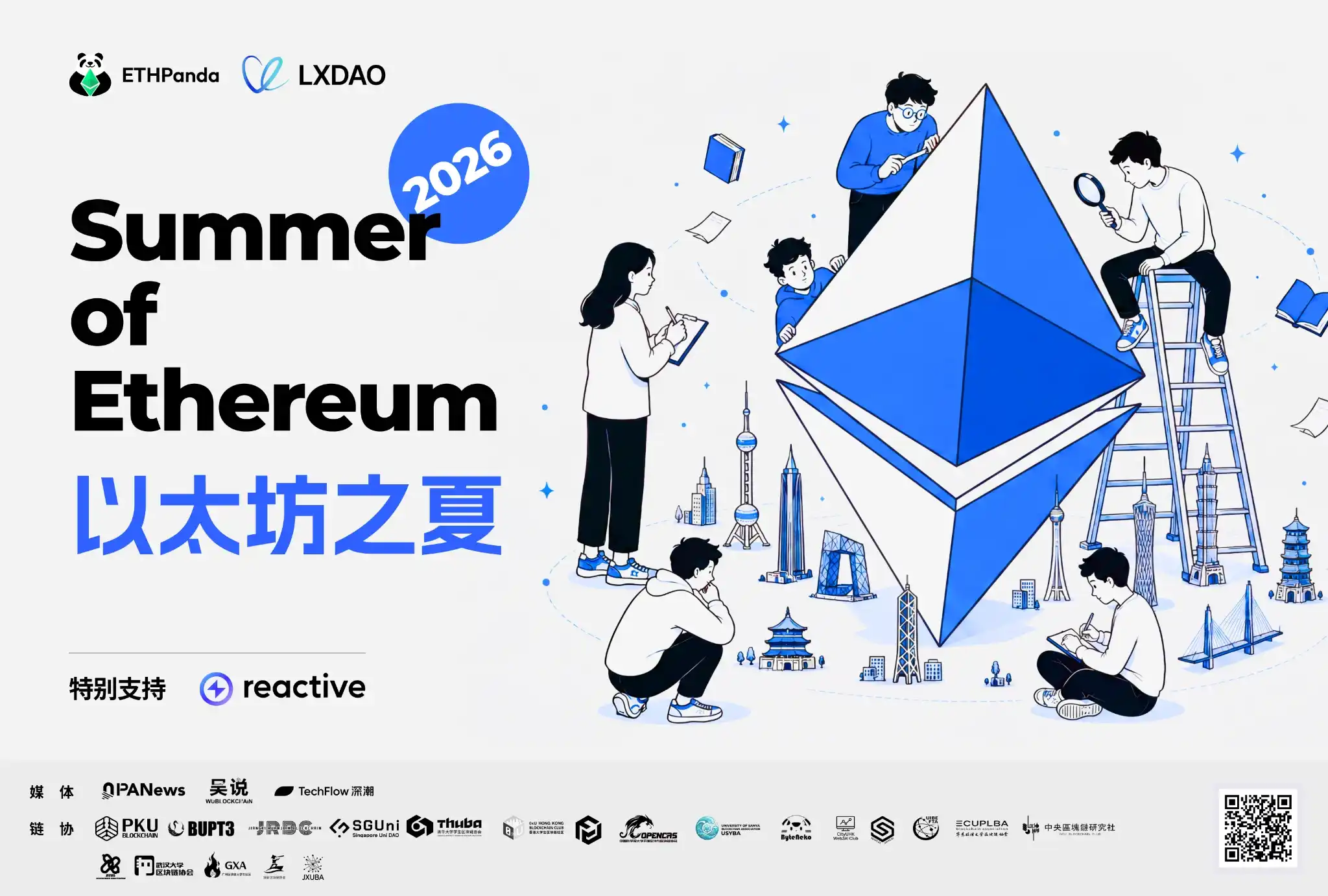
Summer of Ethereum 2026 is setting sail once again. This year, LXDAO × ETHPanda aims to bring the discussion about Ethereum's long-term development to more cities on-site: not just by scheduling a series of events, but by focusing on the key challenges Ethereum is currently facing, connecting developers, researchers, community organizers, project teams, and ecosystem partners. Together, we aim to clarify the issues, connect people, and genuinely foster new collaborations.
The preparations for Summer of Ethereum 2026 have been underway for some time. The further we go, the more we realize: this isn't just about slotting a few events into the calendar, nor is it about finding a few speakers, making some posters, and opening a few registration links, and then calling it a day.
The real difficulty lies in answering a more fundamental question:
What is the actual value of offline gatherings for the Ethereum community this year?
Over the past few years, the discussion around Ethereum has been extremely dense. Roadmaps, L2, Account Abstraction, wallet UX, public goods, governance, application adoption, developer growth... every topic is important, and every topic is complex. But often, these discussions remain confined to articles, Twitter, meeting notes, online calls, and chats within small circles. There's a lot of information, but making sense of it is hard; there are many opinions, but not necessarily many people sitting down together to align.
Once an issue is identified, the next step is to bring the discussion from online back to the physical world.
It's not about creating a new event brand, nor is it about adding a few more lively gatherings to the summer calendar. More importantly, we hope to bring those long-standing, yet often fragmented discussions into real city venues: enabling developers and researchers to meet, letting project teams hear community feedback, helping local organizers find each other, and giving more people who haven't yet entered the core discussions a chance to start with a real-life encounter, to genuinely get closer to what's happening in Ethereum.
Why Focus on "Ethereum's Key Challenges"?
Because Ethereum has reached a stage where it cannot advance solely on singular narratives.
Focusing only on technology easily overlooks real users and application scenarios; focusing only on applications underestimates the importance of protocol, infrastructure, and security boundaries; focusing only on growth pushes issues like public goods, governance, and long-term collaboration to the back burner.
These issues aren't separate items on a checklist; they are systemic challenges intertwined. Wallet UX affects application adoption; L2 and cross-chain UX affect user retention; developer tools affect the entry of new builders; public goods and governance affect whether the ecosystem can sustain open collaboration in the long term.
Therefore, this year's Summer of Ethereum aims to use "Ethereum's Key Challenges" as the central theme. It's not a pre-written, standard answer, but a way to ask questions together:
What are the most pressing issues worth serious discussion for Ethereum's next phase? Which challenges have been repeatedly mentioned but not thoroughly examined? What real experiences, counter-examples, and constructive pathways should be heard by more people?
What's the Most Evident Feeling During Preparation?
The most evident feeling is: the Ethereum community isn't short of ideas or people who care about it, but these people are often scattered across different cities, projects, communities, and contexts.
Some are more concerned with protocol and roadmaps; some care more about wallets, accounts, and UX; some work daily on developer tools; some organize the first Web3 sharing sessions in universities; some deal with very specific user problems in projects; and some are persistently investing effort into public goods, community governance, and local organizational capacity.
If these people only "see" each other online, the connection is superficial. Real change often happens after a specific in-person meeting: a problem gets re-interpreted, a collaboration gets initiated on the spot, a local community realizes they are not an isolated island, a new builder discovers that it's not just about grand narratives but also about tangible work they can get involved in.
These connections might not be as eye-catching as a major launch event, but they are arguably closer to the way the Ethereum community has always grown: slower, more distributed, relying on the continuous building of trust between people.
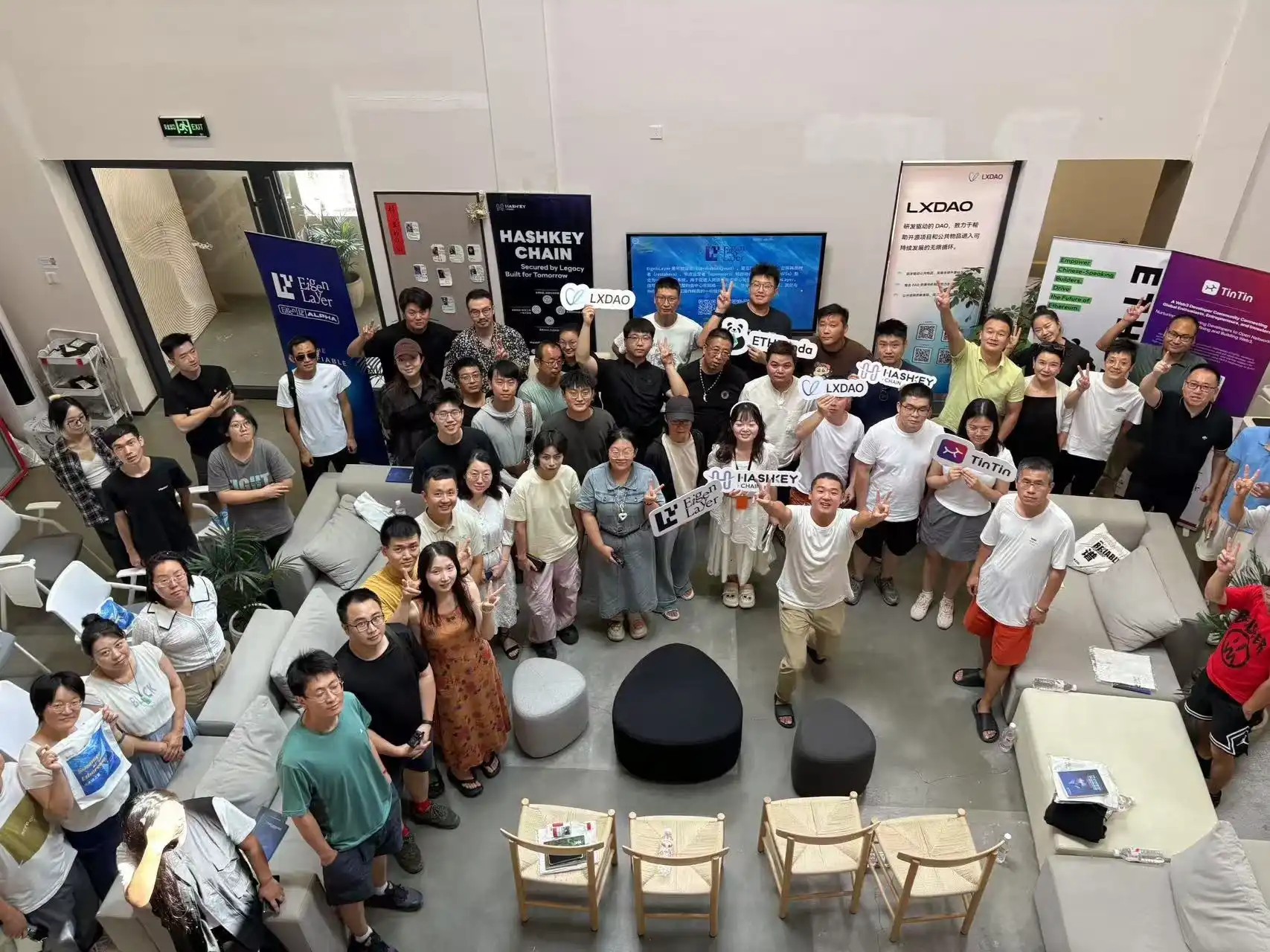
Summer of Ethereum 2025 · Xi'an Station
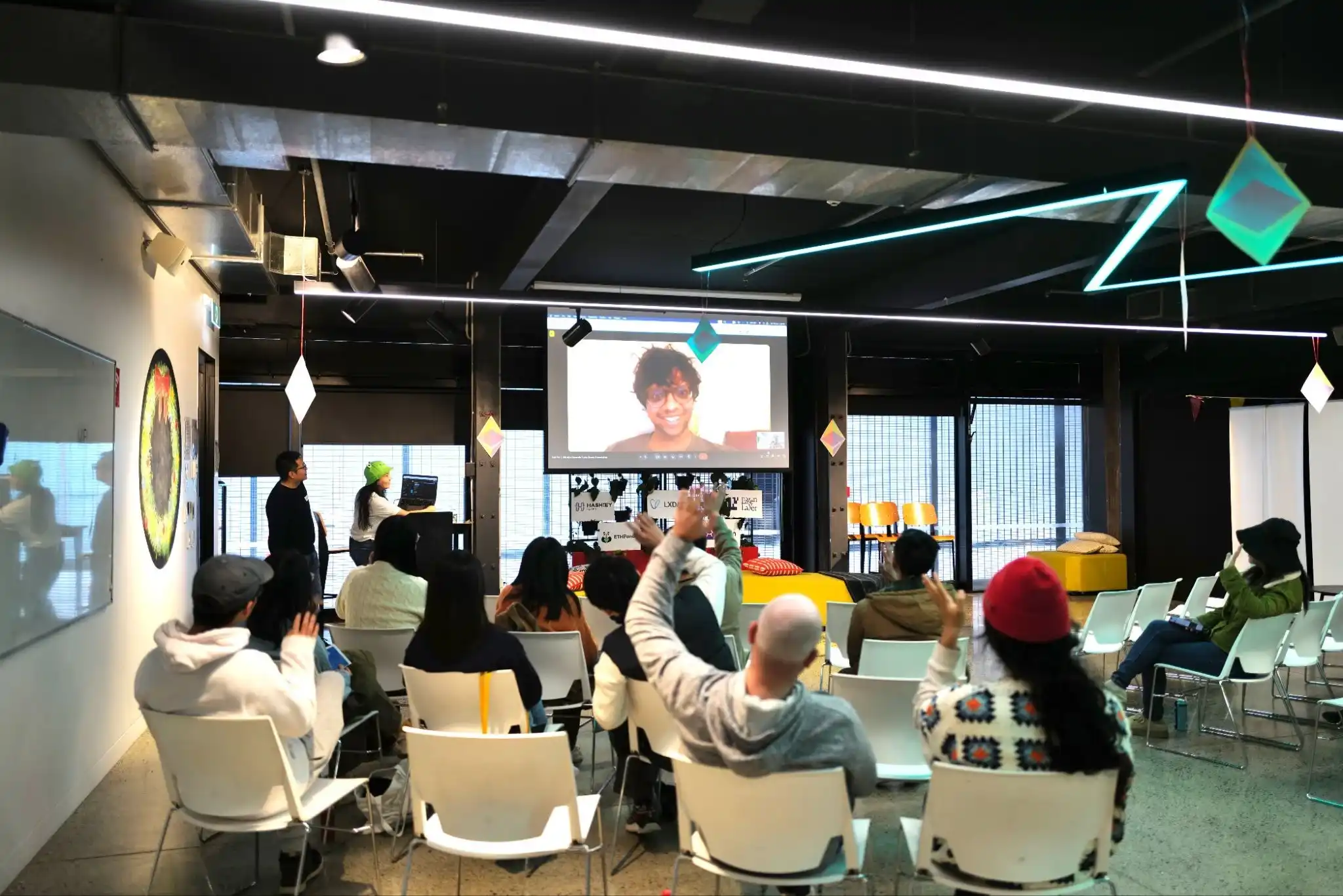
Summer of Ethereum 2025 · Auckland Station
What Will Happen This Year?
Summer of Ethereum 2026 will revolve around multi-city offline events. The event formats in different cities won't necessarily be identical; they could be keynote talks, panels, workshops, local community gatherings, project showcases, developer exchanges, or smaller, more in-depth closed-door discussions.
We hope each event doesn't simply end once it's "done," but leaves behind a few things: clearer problems, more specific connections between people, more credible resource links, and collaborative leads that can be pursued further.
Potential directions currently include:
-
Protocol Evolution & Roadmap: How these long-term topics can be genuinely understood by more builders;
-
Ethereum UX: How wallet, Gas, signing, account recovery, and cross-L2 experiences can become more usable;
-
Account Abstraction, Smart Wallets & Security Boundaries: How to find balance between convenience, permissions, and trust;
-
Stablecoins, Payments & Real-World Applications: How the on-chain world enters more concrete usage scenarios;
-
Developer Tools & Application Building: How to lower the barrier to entry, enabling more people to build sustainably;
-
Public Goods, Governance & Community Collaboration: How an open ecosystem develops longer-term organizational capacity;
-
Cities & Local Community Networks: How builders in different places can be connected, supported, and seen.
These directions won't be treated as a fixed agenda to be covered all at once. They are more like a gradually unfolding map of issues: each city, with its own resources, context, and community foundation, can find the most suitable entry point for local engagement.
Who Is Welcome to Participate?
If you are a developer, researcher, student, community member, or simply someone who has been following Ethereum, you're welcome to attend. Coming with questions is great; there's no need to start from a position of being an "expert." Many truly valuable discussions begin with a simple yet concrete question.
If you are a city lead or local organizer, welcome to bring Summer of Ethereum to your city. You might know local developers, can connect with university clubs, know suitable venues, or simply feel strongly about bringing Ethereum builders in your city together for a meetup. These are all very important starting points.
🐼 Local organizers are welcome to apply to become city co-organizers 👉 https://tally.so/r/pb01Mq
If you are a project team, ecosystem partner, or co-building partner, you're also welcome to participate. We hope collaboration goes beyond being just a name on a logo wall, but involves bringing real issues, technical practices, developer resources, workshops, case studies, and problems to the events.
If you are a media, content, venue, or resource partner, your help is also welcome. Good discussions, if not recorded, organized, and disseminated, easily remain confined to a single evening. We hope these on-site interactions can ultimately be distilled into more reusable content, relationships, and follow-up collaborations.
Why Is This Non-Negotiable?
Because the most important aspect of Ethereum has never been just a technology stack. Behind it, there have always been people who believe that open networks, public goods, verifiable rules, long-term collaboration, and a global community are worth serious building.
But this belief cannot forever stay confined to screens.
When discussions only happen online, people are easily swept along by information flow; when problems only exist in documents, they easily become the specialized language of a few. However, for Ethereum to move forward, it needs more real people to enter the discussions, understand the issues, form judgments, find their place, and then start taking action.
This is also that kind of "non-negotiable" support: not because offline events are inherently important, but because certain trust, judgment, and collaboration only begin to emerge when people truly meet people, and when problems truly land in a physical setting.
It might not be the most grandiose answer, but it can be a very concrete beginning: gathering a group of people who care about Ethereum in one city; putting different perspectives around the same table regarding a real challenge; enabling previously scattered people to have a follow-up because of one meeting.
If this summer, more cities establish new connections because of Summer of Ethereum; more builders enter longer-term collaborations because of an on-site discussion; more key issues transform from abstract concepts into actionable leads that can be pursued further, then this endeavor will have been worthwhile.
All subsequent city events, registration links, and schedule updates will be synchronized on the Luma Calendar. Welcome to follow and subscribe to get the latest event information as soon as possible: https://luma.com/SummerOfEthereum
Welcome to join Summer of Ethereum 2026.
This summer, let's bring the discussion about Ethereum's future back to the real world.