Solana’s 90% slowdown: Is quantum-safe security killing SOL’s speed?

ambcryptoPublished on 2026-04-05Last updated on 2026-04-05

Abstract

Solana's recent quantum security testing with Project Eleven has exposed a critical trade-off: implementing quantum-resistant signatures could slow the network by 90%. This is a significant challenge for Solana, as its core advantage has been its high speed and scalability, processing 31x more transactions than Ethereum with 1,191 TPS. This speed has fueled its growth in DeFi and stablecoin adoption, notably for non-USD currencies. The potential 90% slowdown forces Solana to balance its defining speed with future-proof security, risking its competitive edge if it cannot maintain both performance and protection against quantum computing threats.

Can a blockchain achieve both scalability and speed, or is it forced to prioritize one over the other?

Solana’s latest move has put this question in the spotlight for traders and developers. For years, Solana’s high-speed powered growth in its stablecoin market and transaction volume.

Put simply, its fast throughput allowed the network to handle huge transaction loads while maintaining strong on-chain liquidity.

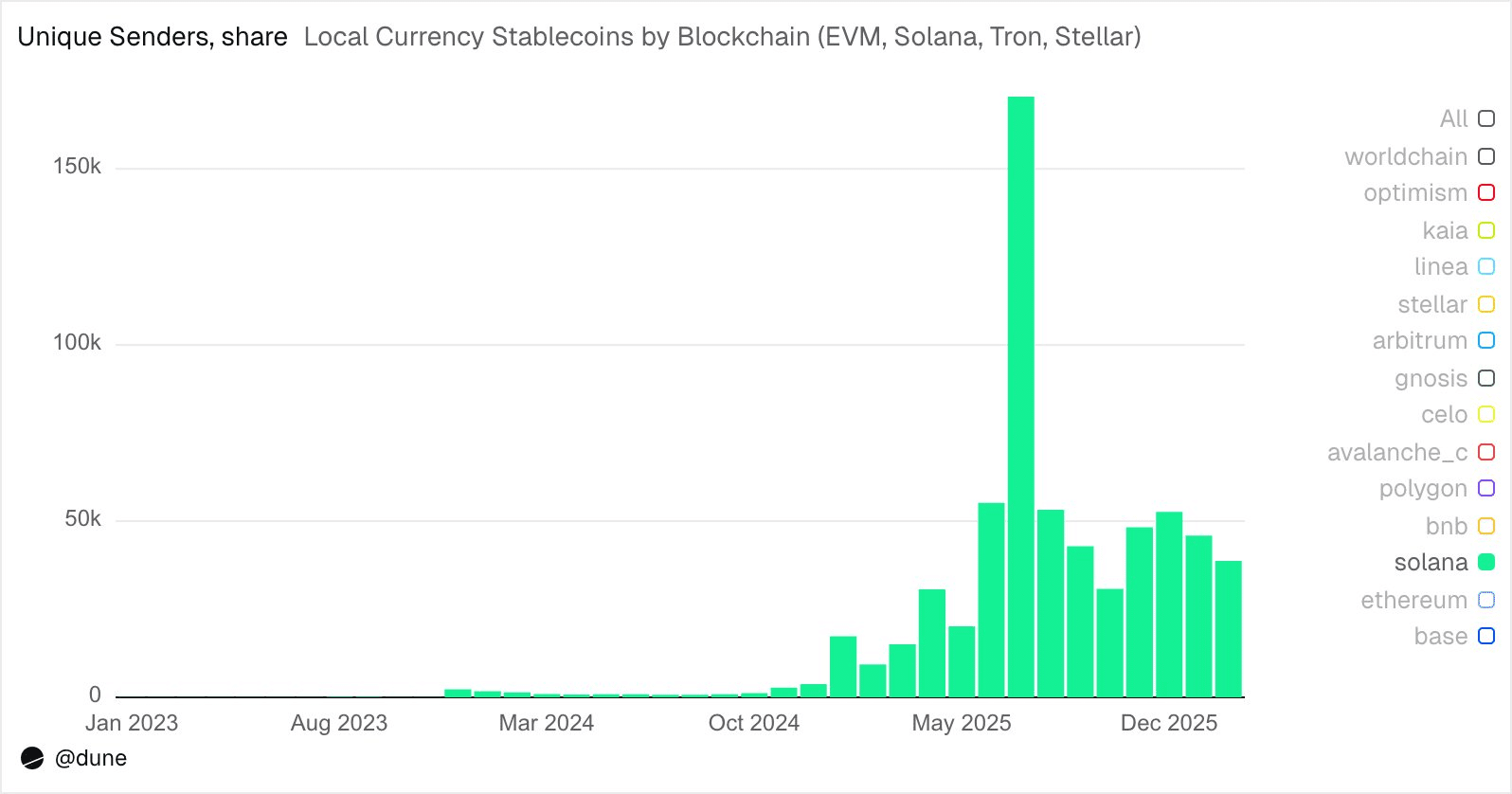
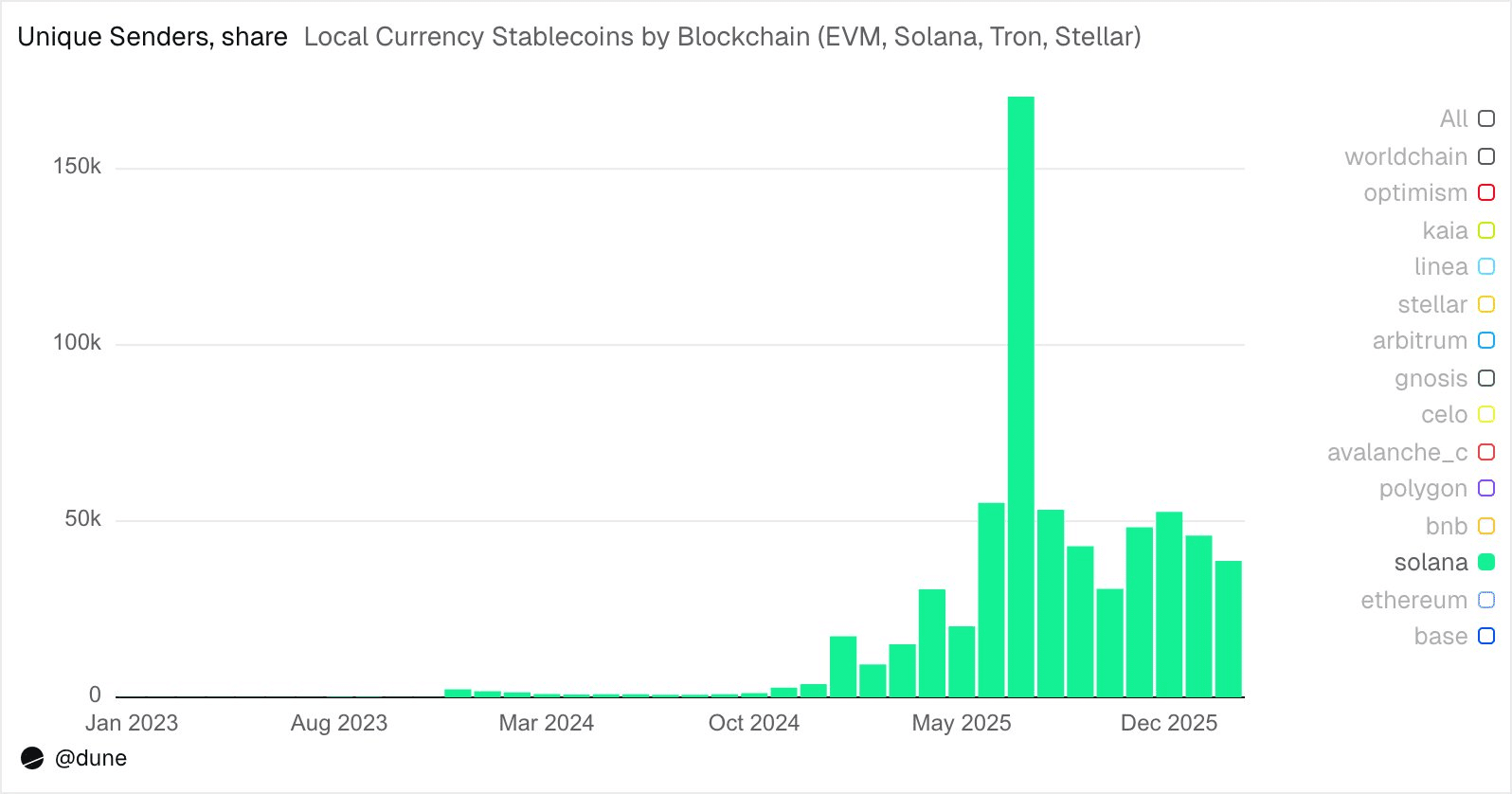
Look at Solana’s de-dollarization push: Dune data, as of press time, showed that Unique Senders of non-USD stablecoins on the network nearly tripled year-on-year, driven by EURC and BRZ adoption.

From a strategic standpoint, the network is clearly diversifying its stablecoin portfolio, laying the groundwork for broader DeFi expansion.
Source: Dune

From a technical perspective, however, this growth highlights Solana’s [SOL] strong underlying network fundamentals. Its high throughput, fast confirmation times, and robust on-chain liquidity have enabled it to support complex financial activity at scale, something that many competing blockchains still struggle with.

However, recent quantum testing revealed a trade-off, raising questions about whether Solana can keep its edge.

For context, Solana is working with Project Eleven to test quantum-safe signatures. Basically, it’s a way to protect the network from potential attacks by future quantum computers.

The catch?

Early tests show some big compromises.

Quantum-safe signatures are up to 40× larger, and the network ran roughly 90% slower. In simple terms, making Solana quantum-resistant could seriously slow down transactions, forcing the network to juggle speed, scalability, and security all at once.

That naturally brings up a tough question: Can Solana stay fast and secure while keeping its edge?

Speed vs security: Solana’s edge over Ethereum faces a critical test

The trade-off is clear: Either lock in security and slow down, or keep speed and take on more risk.

Recent quantum testing exposed this trade-off. To safeguard the network against future quantum attacks, Solana accepted a roughly 90% slowdown in speed.

As AMBCrypto noted, this is particularly challenging for Solana, since speed has long been its defining advantage over other layer-1s, especially Ethereum [ETH].

The impact of that advantage has been enormous.

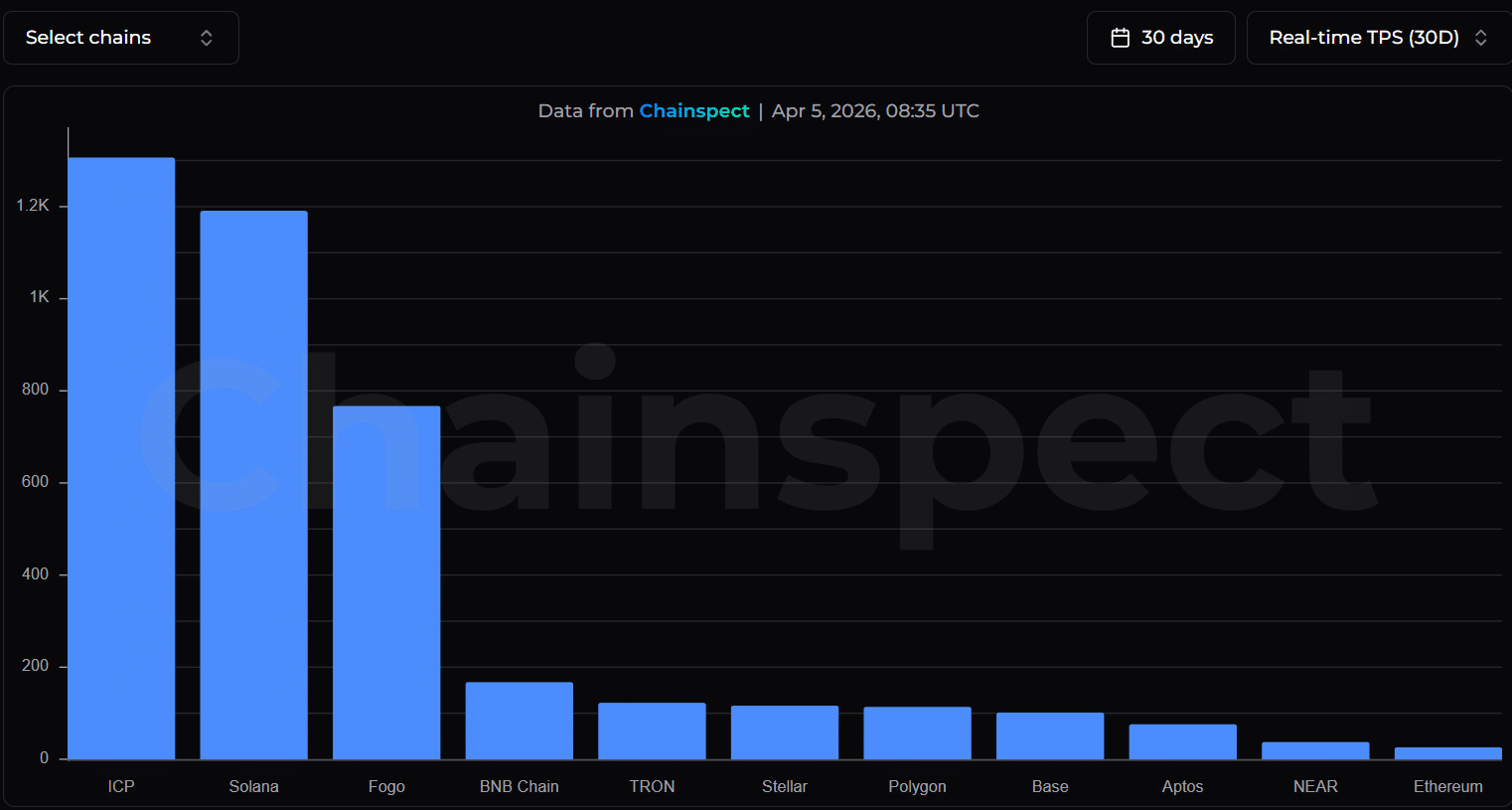
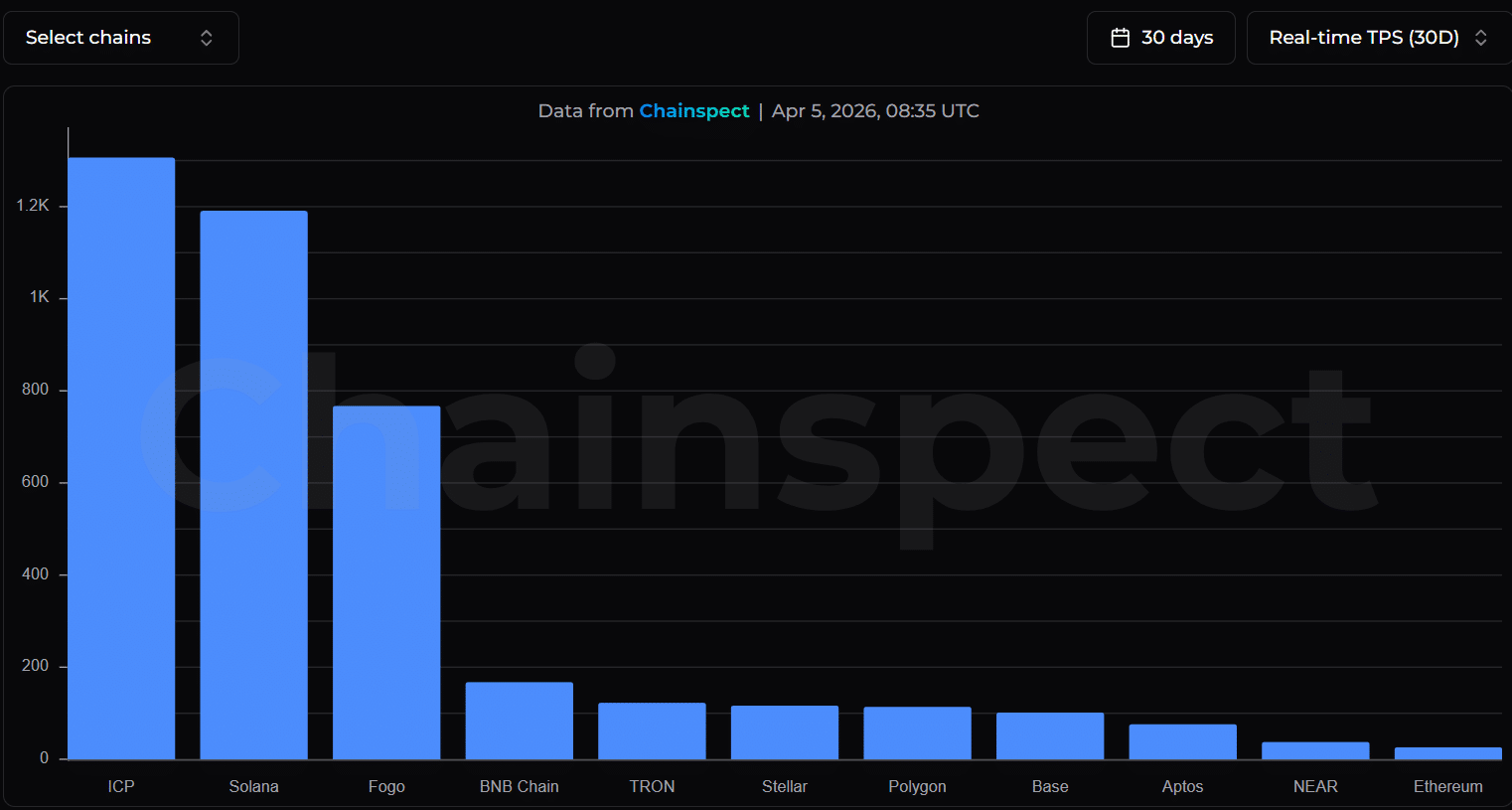
According to Chainspect data, Solana’s high throughput has given it a massive edge over Ethereum across multiple metrics. Look at transaction volume: Solana has processed 31× more transactions than Ethereum, reaching a staggering 106 billion transactions in total.
Source: Chainspect

Notably, this scalability comes straight from Solana’s high speed.

As the chart above shows, Solana ranks second among all blockchains with 1,191 real-time transactions per second (TPS), compared to Ethereum’s 25.99 TPS. This allows Solana to handle massive transaction loads efficiently, giving it a clear edge in DeFi, something slower L1s like Ethereum still struggle with.

According to AMBCrypto, that’s why the recent quantum testing is such a crucial moment.

A 90% slowdown in speed puts Solana’s signature advantage under pressure. Even more, it could slow DeFi growth just as competition from Ethereum is heating up.

This, in turn, forces the network to prove it can stay fast, secure, and ahead of the pack. Otherwise, it risks losing the edge that has long set it apart.


Final Summary

  • High throughput and fast TPS let Solana handle massive transactions, support DeFi growth, and outperform Ethereum across key metrics.
  • Moving toward quantum-safe security slows the network by 90%, forcing Solana to balance speed and security, or risk losing its lead.


Trending Cryptos

Related Questions

QWhat is the main trade-off Solana faces according to the recent quantum testing?

AThe main trade-off is between security and speed. Implementing quantum-safe signatures would make the network roughly 90% slower, forcing Solana to choose between enhanced security against future quantum attacks and maintaining its signature high transaction speed.

QHow does Solana's transaction speed (TPS) compare to Ethereum's, and why is this significant?

ASolana's real-time TPS is 1,191, which is significantly higher than Ethereum's 25.99 TPS. This high speed and scalability have been Solana's defining advantage, allowing it to process 31 times more total transactions and efficiently support complex DeFi activity, which Ethereum struggles with.

QWhat evidence from the article shows Solana is diversifying its stablecoin ecosystem?

ADune data shows that the number of Unique Senders of non-USD stablecoins on Solana, such as EURC and BRZ, nearly tripled year-on-year. This indicates a strategic push to diversify its stablecoin portfolio as part of a broader DeFi expansion.

QWhat is the purpose of Solana's collaboration with Project Eleven?

ASolana is working with Project Eleven to test and implement quantum-safe signatures. The purpose is to protect the network from potential attacks by future quantum computers, thereby future-proofing its security.

QWhat is a key potential consequence for Solana if its network speed is significantly reduced?

AA key potential consequence is that Solana could lose its competitive edge, particularly in DeFi, just as competition from other layer-1s like Ethereum is increasing. A 90% slowdown could hinder its ability to handle massive transaction loads efficiently and support growth.

Related Reads

9.42 Million Retail Investors Compete for Changxin Technology, Who Got Allotted?

Evergreen Technology's IPO subscription results are now available. On July 20, the domestic memory chip giant announced the offline preliminary allotment results and online lottery results for its IPO. A total of approximately 9.43 million retail investors participated in the online subscription, generating 770,000 winning lots with a final winning rate of about 0.4714%, setting a record for new shares on the STAR Market. After triggering a clawback mechanism from institutional to retail investors, the online retail allocation was significantly increased to 3.851 billion shares. Simultaneously, 285 institutional investors participated in the offline subscription, ultimately receiving 2.173 billion shares at an allotment rate of approximately 0.1756%. Leading insurers and public funds were among the major recipients. Notably, Liang Wenfeng, founder of the major AI model company DeepSeek, through his quantitative investment firms Ningbo Huanfang Quantitative and Zhejiang Jiuzhang Asset, secured the largest share among private funds, with a total allotment worth approximately 175 million yuan. Estimates suggest potential profits could reach 730 million yuan if Evergreen Technology's market capitalization reaches 3 trillion yuan post-listing. The company is expected to list on July 27 and could become the highest-valued tech stock on the A-share market, with various brokerages providing valuations ranging from 1 trillion to over 4 trillion yuan. However, recent significant corrections in global tech stocks may impact its post-listing performance. (Character count: 1,196)

marsbit29m ago

9.42 Million Retail Investors Compete for Changxin Technology, Who Got Allotted?

marsbit29m ago

L2 'Recalibration': When L1 Becomes Its Own Rollup, What Is Ethereum's Endgame?

The article discusses the evolving relationship between Ethereum's Layer 1 (L1) and Layer 2 (L2) solutions, moving beyond the initial "L2 for scaling" model. As Ethereum L1 itself scales (increasing Gas Limit, statelessness, zkEVM), the unique value proposition of L2s shifts from merely providing cheap execution to offering differentiated features like application-specific optimization, privacy, and flexible governance. The piece explores three key themes: 1. **L2's New Role:** L2s are transitioning from a pure scaling technology to a spectrum of execution environments with varying degrees of security inheritance from Ethereum L1. 2. **Interoperability as State Trust:** Solving L2 fragmentation is less about cross-chain bridges and more about enabling faster, trust-minimized state verification between environments. This involves initiatives like faster L1 finality, intent-based architectures (Open Intents Framework), and native account abstraction. 3. **Blurring Layers:** With the potential integration of zk-proofs into L1 validation (making L1 akin to its own "Rollup") and the concept of "Native Rollups," the rigid boundary between L1 and L2 may fade. The future could be a unified system with multiple execution domains (for DeFi, gaming, privacy, etc.) sharing a common security, settlement, and state framework. In conclusion, Ethereum's goal is not to abandon L2s or re-centralize everything on L1, but to re-integrate the fragmented user experience—liquidity, accounts, applications—while preserving the scaling benefits of a multi-environment ecosystem. The endgame is a cohesive "one chain" feeling for users, powered by diverse but securely interconnected execution layers.

marsbit1h ago

L2 'Recalibration': When L1 Becomes Its Own Rollup, What Is Ethereum's Endgame?

marsbit1h ago

Trading

Spot

Hot Articles

Discussions

Welcome to the HTX Community. Here, you can stay informed about the latest platform developments and gain access to professional market insights. Users' opinions on the price of SOL (SOL) are presented below.

活动图片