Solana (SOL) and Ripple (XRP) Take a Backseat as This New Coin Emerges as the Next 100x Crypto

TheNewsCryptoPublished on 2026-01-05Last updated on 2026-01-05

Abstract

In a week where Solana (SOL) and Ripple (XRP) saw price declines of 2.5% and 4% respectively, a new contender, Little Pepe (LILPEPE), is gaining significant attention. While SOL faces network instability and XRP grapples with regulatory pressures, both show limited short-term growth potential. Amid this shift, Little Pepe has raised over $27.69 million in its presale, positioning itself as a potential high-growth opportunity. Built on a Layer 2 framework, it offers fast transactions, low fees, and strong security, having been audited by CertiK. The project leverages meme culture and community appeal, with plans for major exchange listings post-presale. Many traders view it as an emerging token with substantial upside potential in the current market cycle.

In​‍​‌‍​‍‌​‍​‌‍​‍‌ the last week, Solana’s price went down by 2.5% and it is still around $137. Meanwhile, XRP also saw a 4% decline in its price and is now trading at $2.19. As both of these are losing steam, people are looking at a new energy that is rapidly getting ​‍​‌‍​‍‌​‍​‌‍​‍‌popular. Little Pepe (LILPEPE) is making strong waves in its presale, having raised $27.69 million, positioning it as the next 100x crypto.

Solana and XRP Are Losing Their Spark

Solana dipping to $137 after a harsh 44% yearly fall signals soft confidence from holders. Even with predictions suggesting a mild rise to $156 by late December, many analysts highlight extreme fear in the market.

Network hiccups continue to cast doubts on its long-term strength. XRP faces a similar cold front. The token has dropped 4% in just one week to its current price of $2.19, and predictions suggest that it may soon fall to $2.17. Its RSI remains neutral, showing little excitement from buyers.

Regulatory complications have also kept XRP pinned down, overshadowing any short-term wins. Both assets recorded only 37% green days in the past month and project modest year-end targets. With SOL expected to cap out between $200 and $250 and XRP hovering near $3 to $4 by December, many traders believe their profitable window may be slowing.

The Stage Clears for New Opportunities

As more investors shift focus from older giants, a new wave of meme-driven innovation is emerging. This shift favors coins with strong communities, fresh technology, and early entry pricing. Little Pepe stands out here with a model that seamlessly blends humor, purpose, and infrastructure in a way that strongly appeals to traders seeking early-stage upside. Its progress has drawn wide attention and has quickly set it apart from other presale tokens this quarter.

Little Pepe is built on a Layer 2 framework that supports fast transactions, strong security fundamentals, and low fees. This setup makes it appealing for users who want convenience without paying high gas costs. The project creates an ecosystem centered around the legendary Pepe culture, providing users with a platform that offers real utility. The idea positions Little Pepe as the rising star under the symbolic leadership of the Pepe legacy. This narrative gains traction as buyers see it as the next big step in meme coin history. The presale success reflects this momentum clearly.

Little Pepe (LILPEPE) Strong Market Interest

Currently in presale stage 13, Little Pepe (LILPEPE) is priced at $0.0022 per token. Although,​‍​‌‍​‍‌​‍​‌‍​‍‌ the project is still in its early stage, it has already managed to gather more than $27.69 million. Such an impressive reaction is a clear signal that the project is expected to proceed smoothly and also reflects the fact that numerous investors consider it one of the best possible performers for this cycle.

Little Pepe has secured its listing on CoinMarketCap even before launch, signaling strong foundational progress. The team also aims for two major centralized exchange listings immediately after presale completion, along with ambitions to reach the largest exchange globally. This plan is already attracting attention from traders who seek early entries ahead of major exchange listings.

The token has been audited by CertiK and achieved a security score of 95.49%. This places it among the safest meme-based tokens on the DeFi side. Many anonymous experts, known for their contributions to top meme tokens, are also supporting the project’s development.

Little Pepe (LILPEPE) Could Achieve Massive Growth

Little Pepe (LILPEPE) is generating interest due to its combination of early pricing, strong presale support, Layer 2 technology, and cultural appeal. Many traders claim it holds potential for large leaps in value, especially as attention shifts from older assets. Its momentum suggests that it could break into higher market rankings once trading goes live. For those tracking new crypto opportunities, Little Pepe stands out as one of the most discussed early-stage tokens this season. Its combination of humor, speed, security, and community vision offers an angle that sets it apart from traditional competitors.

For more information about Little Pepe (LILPEPE) visit the links below:

  • Website: https://littlepepe.com
  • Whitepaper: https://littlepepe.com/whitepaper.pdf
  • Telegram: https://t.me/littlepepetoken
  • Twitter/X: https://x.com/littlepepetoken
  • $777k Giveaway: https://littlepepe.com/777k-giveaway/

Disclaimer: TheNewsCrypto does not endorse any content on this page. The content depicted in this Press Release does not represent any investment advice. TheNewsCrypto recommends our readers to make decisions based on their own research. TheNewsCrypto is not accountable for any damage or loss related to content, products, or services stated in this Press Release.


TagsLittle Pepe (LILPEPE)Press Release

Trending Cryptos

Related Questions

QWhat are the current prices of Solana (SOL) and Ripple (XRP) as mentioned in the article, and what are their recent price movements?

ASolana (SOL) is trading at around $137, having declined by 2.5% in the last week. Ripple (XRP) is trading at $2.19, having seen a 4% decline in its price over the same period.

QWhat is the name of the new cryptocurrency that is presented as an emerging opportunity, and how much has it raised in its presale?

AThe new cryptocurrency is called Little Pepe (LILPEPE). It has raised $27.69 million in its presale.

QAccording to the article, what are some of the key technological features of the Little Pepe (LILPEPE) project?

ALittle Pepe is built on a Layer 2 framework that supports fast transactions, strong security fundamentals, and low fees. It has been audited by CertiK, achieving a security score of 95.49%.

QWhat future plans does the Little Pepe (LILPEPE) team have for exchange listings after the presale?

AThe team aims for two major centralized exchange listings immediately after the presale completion, with ambitions to list on the largest exchange globally. It is already listed on CoinMarketCap.

QWhat reason does the article give for the declining interest in Solana and XRP?

ASolana is experiencing soft confidence from holders due to a 44% yearly price fall and network hiccups. XRP faces regulatory complications and a neutral RSI showing little buyer excitement, with both assets having only 37% green days in the past month.

Related Reads

DRAM ETF Issuer: Samsung, SK Hynix, Micron All Surpass $1 Trillion, the AI Era of Memory Chips Has Only Just Begun

Authors: Dave Mazza, Thomas DiFazio | Source: Deep Tide TechFlow The article, written by Roundhill Investments (issuer of the DRAM ETF), responds to Morningstar's caution about investing in memory chip stocks. Morningstar warns of the sector's history of boom-bust cycles, a lack of economic moats, and potential momentum-driven overvaluation. Roundhill argues the current situation is structurally different due to AI. Key points in Roundhill's rebuttal include: * **Changed Demand & Supply Dynamics:** AI infrastructure, not consumer electronics, is now the primary growth driver for memory demand. New, strict long-term supply agreements with hyperscalers reflect the high capital intensity of advanced manufacturing. * **Existence of a Moat:** High-Bandwidth Memory (HBM), essential for AI, has extremely high manufacturing barriers. The market is dominated by Samsung, SK Hynix, and Micron, with new entrants blocked by technological complexity and long lead times for equipment like ASML's EUV machines. * **Strong Fundamental Outlook:** Analyst consensus projects the three companies will rank among the world's most profitable by 2027, with combined profits of $704 billion on over $1 trillion in revenue. Their operating margins have already reached record highs. * **Valuation Re-rating:** Despite significant stock price gains, memory stocks trade at attractive valuations (e.g., a median NTM P/E of 8.37x for the DRAM ETF) relative to projected explosive EPS growth. Roundhill suggests historical valuation frameworks may no longer apply given the new profitability paradigm. Conclusion: Roundhill contends the rally is justified by fundamentals, marking a structural shift for the memory industry into a new era of sustained, AI-driven demand against constrained supply, rather than a repeat of past cycles.

marsbit17m ago

DRAM ETF Issuer: Samsung, SK Hynix, Micron All Surpass $1 Trillion, the AI Era of Memory Chips Has Only Just Begun

marsbit17m ago

EF's Epic Reorganization: 20% Layoffs, Budget Halved, Is Ethereum Gearing Up for a Leaner Future?

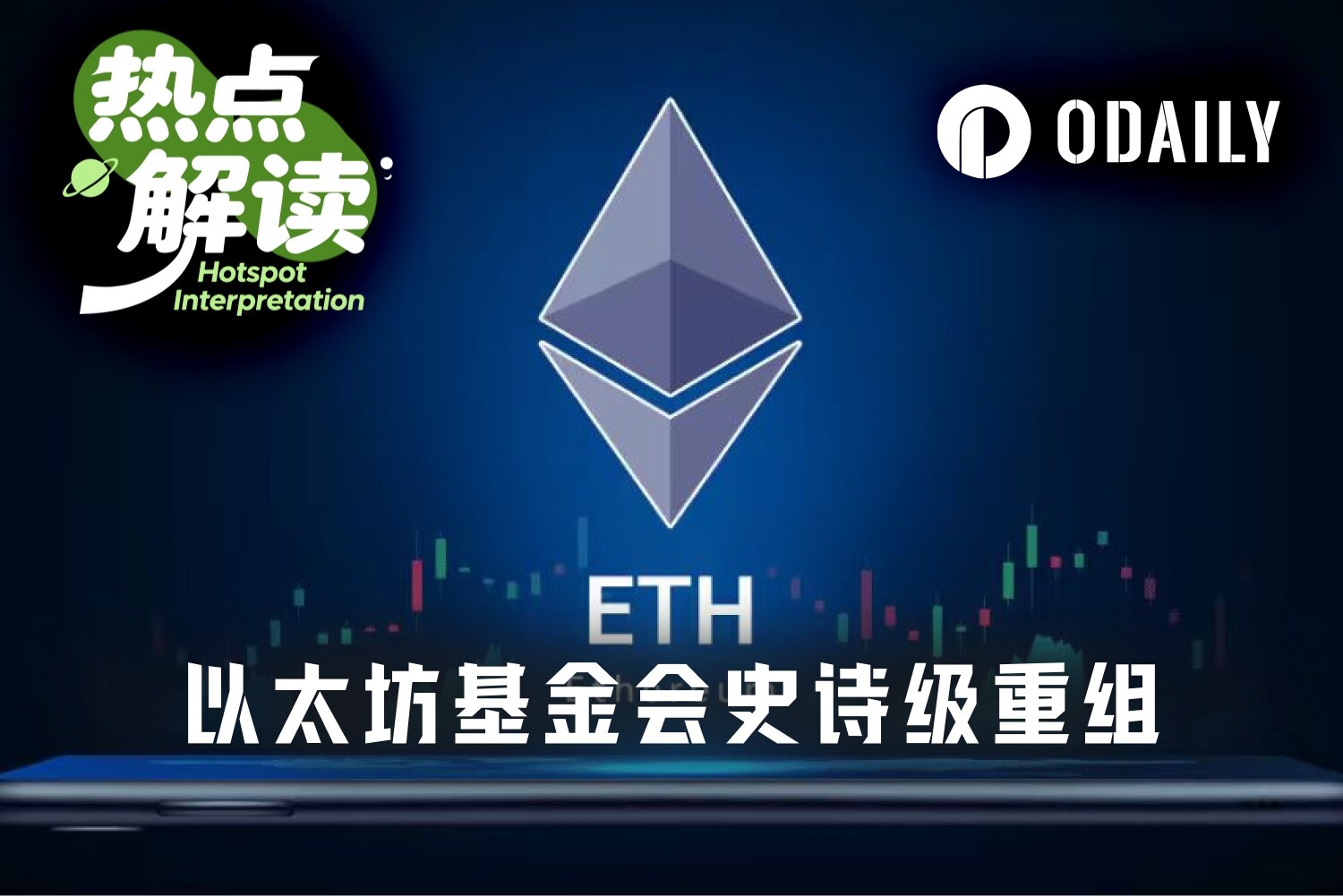
The Ethereum Foundation (EF) has announced a major organizational restructuring, involving a 20% staff reduction (approx. 54 employees) and a division into functional clusters like Protocol, Access, User, Community, and Institutional layers. Co-founder Vitalik Buterin further revealed plans to cut the EF's budget by around 40% over the coming years, aiming to reduce its annual spending rate from about 15% to roughly 5% by 2030, transitioning to an endowment-driven model. This overhaul is seen as a long-overdue correction to the EF's ambiguous role. As Ethereum grew, the foundation faced persistent criticism over ETH sales, perceived lack of execution, and unclear strategy, often becoming a focal point for community frustration amid ETH's price stagnation. The reform aims to redefine the EF's boundaries, narrowing its focus to core protocol research, public goods funding, and ecosystem coordination, while offloading more applied development work to the broader market. Concurrently, ecosystem forces like the newly formed Ethlabs (founded by ex-EF researchers) and other independent groups are stepping in to fill the space, signaling a shift from a centralized model to a more distributed, collaborative ecosystem structure. The move was notably praised by Solana co-founder toly, who viewed a "leaner" EF as potentially more decisive and agile.

Odaily星球日报58m ago

EF's Epic Reorganization: 20% Layoffs, Budget Halved, Is Ethereum Gearing Up for a Leaner Future?

Odaily星球日报58m ago

Dragonfly Partner Haseeb: The Fastest-Growing Companies of the Future May All Get Stuck at 149 Employees

Dragonfly partner Haseeb explores the distorted economics of AI model pricing, drawing parallels to tax policy. He notes that startups and small teams (under 150 users) enjoy heavily subsidized, fixed-price AI subscriptions (like Claude Code), where the marginal cost of an additional token is effectively zero. This creates a powerful incentive for them to maximize token usage ("token-maxxing") and innovate aggressively with AI automation. In contrast, large enterprises (over 150 users) are forced onto "Enterprise" plans, paying per-token API fees with high (~75%) markups. This acts like a steep "tax" on AI-powered labor, disincentivizing marginal automation and experimental use, and encouraging them to retain more human workers. Haseeb argues this pricing creates a "150-person cliff," a regulatory notch similar to labor laws in France that discourage firms from growing past 50 employees. He predicts the fastest-growing future companies may deliberately cap their headcount at 149 to avoid the punitive enterprise pricing. This would foster an "AI-first" management philosophy obsessed with automation and outsourcing to stay lean. While not intentionally designed, this bifurcated pricing could become one of the most influential de facto tax policies, shaping how AI replaces labor—not through mass layoffs at big firms, but through agile, AI-native startups outcompeting them.

marsbit1h ago

Dragonfly Partner Haseeb: The Fastest-Growing Companies of the Future May All Get Stuck at 149 Employees

marsbit1h ago

Trading

Spot
Futures

Hot Articles

Discussions

Welcome to the HTX Community. Here, you can stay informed about the latest platform developments and gain access to professional market insights. Users' opinions on the price of SOL (SOL) are presented below.

活动图片