SoftBank's Son, Bankrupted by Good Stories, Awaits His Next Alibaba

marsbitPublished on 2026-06-09Last updated on 2026-06-09

Abstract

Masayoshi Son is back. After years defined by Vision Fund's massive losses and costly missteps like WeWork—which shattered market confidence and led to billions in write-downs—Son has found redemption through AI. His early, high-conviction bets are paying off handsomely. Arm, acquired for $32 billion in 2016 and once a heavily leveraged burden, has become a gold mine amid the AI compute boom, delivering roughly a 10x return for SoftBank after its 2023 IPO. More crucially, SoftBank has made an enormous, concentrated bet on OpenAI, committing over $64 billion for a roughly 13% stake. This investment is already showing massive paper gains, contributing significantly to SoftBank's soaring valuation and propelling Son back to the top as Asia's richest person. The narrative has shifted from the "fool" who fell for grandiose stories to the visionary who endured a brutal downturn and is now being rewarded for his early faith in artificial intelligence.

Masayoshi Son is back.

In recent years, when people mention SoftBank, they no longer talk about him being Jack Ma's 'benefactor'. More often, they think of the failed investment in WeWork, the massive losses of the Vision Fund, and the Japanese investor who was repeatedly humbled by the market during the tech bubble.

But today, AI assets are being repriced. The value of Son's shares in Arm and OpenAI is rising. SoftBank's stock price has surged, Son's fortune has climbed back to the top, and he is once again Asia's richest person.

Evaporating $70 Billion

People fear the unknown, so someone who hasn't experienced a bubble bursting might be afraid.

But not Masayoshi Son. At 67, he has experienced the peak of the internet 20 years ago and was left bruised when the bubble burst.

Son was first chosen by fortune in the late 1990s. Back then, the internet was like a newly discovered magic. Yahoo, portals, e-commerce, online trading—anything related to the web was believed by the capital markets to be rewriting the world. SoftBank also changed during that time. It was no longer just a Japanese software company but became a massive basket filled with internet stocks. Son bet on Yahoo and Yahoo Japan, and SoftBank's stock price was pushed to dizzying heights by the bubble.

In early 2000, Son's wealth became unreal. At that time, his net worth could increase by about $10 billion in a week, even briefly surpassing Bill Gates to become the world's richest person for three days. A Japanese entrepreneur of Korean descent from Kyushu, relying on extreme belief in the internet, suddenly stood at the pinnacle of global wealth.

After the dot-com bubble burst, SoftBank's stock plummeted, and Son's personal wealth evaporated by about $70 billion from a peak of roughly $76 billion. However, Son wasn't written off as a failure of that bubble era because he still held Alibaba. In the autumn of 2014, Alibaba listed on the NYSE. With the huge success of this single investment, Son's personal wealth exceeded $58 billion. That's equivalent to Warren Buffett's total investment gains over 70 years.

It was the most important and successful venture capital investment in the history of China's internet. This investment forged Alibaba and also made Masayoshi Son.

Around 2017, the Vision Fund was established with a size close to $100 billion. Son became the person tech startups worldwide most wanted to meet and the most powerful money bag in Silicon Valley.

Armed with funds from the Middle East, Apple, Qualcomm, and others, he traveled through Silicon Valley, China, India, and Southeast Asia, pouring money into ride-sharing, food delivery, fintech, autonomous driving, and co-working spaces. Those companies all talked about scale, network effects, winner-takes-all, and changing the world.

Son Felt He Was Getting Old

Son's fall from grace this time started with WeWork.

An ordinary failed investment at most hurts profits, but WeWork damaged the market's trust in Son's judgment and his acumen.


In early 2019, WeWork's valuation was still as high as $47 billion. Its founder, Adam Neumann, was charismatic and wildly ambitious. He never described his company as just an office rental business but as a lifestyle, a community, a future work order.

Son liked this kind of person because he was one himself. He spent his life searching for founders who framed business on a human scale.

But not everyone bought it.

In August 2019, WeWork filed its IPO prospectus. Details previously obscured in the private financing market by grand visions were now under the spotlight, laid bare before investors.

The company was burning massive cash, weighed down by heavy leases, plagued by governance chaos, and had a founder with excessive power. It claimed to be a tech company, but the more Wall Street looked, the more its core business appeared to be leasing office buildings and subdividing and subletting them. This business could hardly support a $47 billion valuation.

The market began to doubt Son's own abilities, forcing him to reflect on his investment style: Were those who could articulate grand visions more likely to get Son's money? Did he value founder charisma too much and financial discipline too lightly? Why was SoftBank willing to give such high valuations? Why believe a company that hadn't proven profitability could burn cash into a future? Could a founder who was good at saying 'change the world' make Son overlook due diligence, valuation, and business models?

Months later, WeWork withdrew its IPO. Adam Neumann resigned as CEO. The valuation plummeted from $47 billion to around $8 billion.

But by then, SoftBank and WeWork were in the same boat, unable to disembark. SoftBank had no choice but to bail it out.

Heaven abhors excess; human affairs avoid perfection. The company once lifted to the clouds by Son suddenly became the most glaring loss on SoftBank's books.

In November 2019, SoftBank posted its first quarterly loss in 14 years. The Vision Fund alone lost nearly $9 billion in a single quarter. Son admitted his misjudgment and that he had turned a blind eye to WeWork's governance issues. Because he wanted so desperately to find the next Alibaba, to replicate that victory of betting early when everyone else couldn't see.

In 2020, the wounds widened. The pandemic hit global markets. Uber underperformed its original myth. Oyo fell into layoffs and governance controversies. OneWeb filed for bankruptcy. Wirecard imploded, and later Greensill collapsed.

The money Son scattered had basically turned into shattered fragments.

Then, in 2021, fortune briefly glanced his way again. DoorDash, Coupang, and others went public. SoftBank's stock surged, and buybacks pushed the price higher. That year, Son returned to the top of Japan's wealth list. For a while, the outside world thought WeWork was just an ugly interlude, and the Vision Fund could eventually cover its losses with a few big wins. Son seemed about to prove once more that he wasn't wrong, just early to the market again.

But it was just a brief recovery. Starting in the second half of 2021, the winds changed. China tightened internet regulations, US inflation heated up, interest rates rose, and global tech stocks receded. The market was no longer willing to pay infinite money for 'will be big in the future.' Companies reliant on financing, scale, and imagination to support their valuations suddenly had to answer the same old question: When exactly will you make money?

Heaven and Earth have cycles; life has its ups and downs. Observing the way of Heaven and acting accordingly—that is all.

In 2022, Son truly fell into the biggest trough of his life.

The SoftBank Vision Fund lost about $27.5 billion in the 2021 fiscal year. In August 2022, SoftBank announced a net loss of about $23.4 billion for a single quarter.

He said he cried for two whole weeks. "For two weeks, I cried every day. I did nothing. I was anxious, didn't know what to do."

Recalling that period later, Son left a sincere monologue: "I thought about how I am already old, my remaining life is limited, but I haven't achieved anything. I cried a lot. I asked myself, am I really going to grow old like this and then die? People call me a successful businessman? Entrepreneur? Business guru? But I really felt sorry for myself."

SoftBank also began to shrink. New investments slowed dramatically. The Vision Fund team faced layoffs. Assets were continuously monetized. Alibaba, the功臣 that once helped Son turn his fortunes, was also gradually sold off by SoftBank to improve its financial structure. Son's business empire was under siege from all sides, and his father was taken by cancer.

In recent years, the companies that excited Son became strings of write-downs and losses. He said, "I would rather accept my own stupidity and ignorance, accept the wrong decisions I made, so I can learn from them." He admitted that he was too happy when he saw huge profits in the past and now felt ashamed. He also said that if he had been more selective and invested better at the time, the damage wouldn't have been so great.

Many said that Son during those years was not like the Son they knew. He grew quiet and rarely reappeared in the public eye.

He said SoftBank would enter "defense mode," and he would focus on Arm in the coming years.

Looking back today, this was another great investment by Son.

AI Has Forgiven Son

But initially, Arm didn't seem like a destined success; the deal put Son under immense pressure.

In the summer of 2016, SoftBank spent a whopping $32 billion in cash to acquire a 90% stake in Arm, a 40% premium.

Arm was, of course, a good company then. But most of the funds for the acquisition came from bank loans—leverage of 1.5 times raised by an already debt-laden SoftBank. Many investors doubted if Arm was really worth it. Even after being taken private by SoftBank, Arm's increased investments led to falling profit margins and severe performance declines at one point. SoftBank nearly sold Arm to Nvidia.

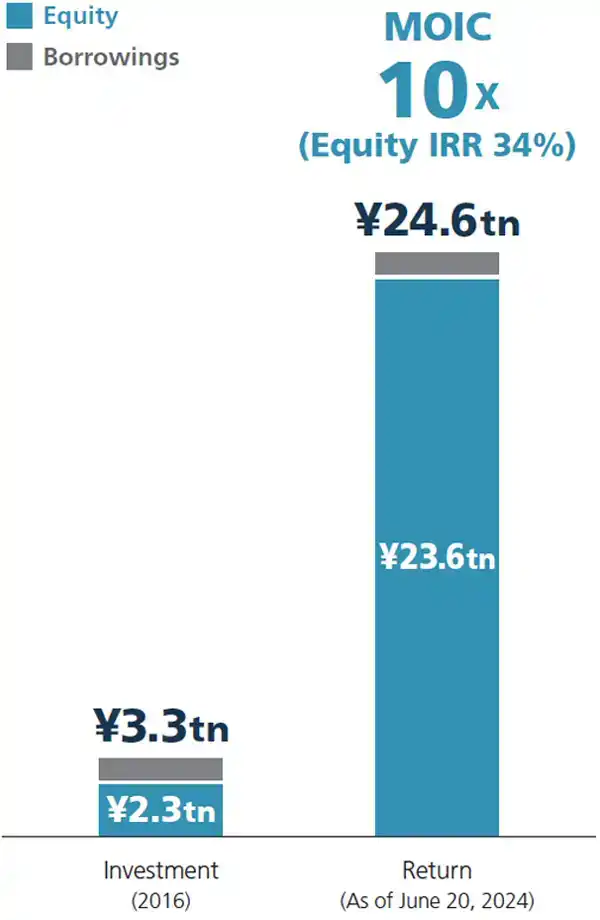
It wasn't until after ChatGPT that the market re-understood computing power. The vast rivers of artificial intelligence made Arm shine brightly. In September 2023, Arm listed on Nasdaq with an IPO valuation of about $54.5 billion. From about 14 trillion yen at the end of March 2023, SoftBank's NAV rose to about 34 trillion yen in June 2024. Arm now constitutes the bulk of SoftBank's shareholding value. SoftBank stated in its annual report that Arm has delivered returns of 24.6 trillion yen to group shareholders, roughly a 10x return.
If Arm gave Son a pull out of the mud, then OpenAI might be his comeback battle.

In January 2025, OpenAI, SoftBank, Oracle, and MGX announced the Stargate project, planning to build large-scale AI infrastructure in the US, with potential investments up to $500 billion over the next four years.

Subsequently, SoftBank's investments in OpenAI became very aggressive.

In 2025, SoftBank completed an investment of about $30 billion in OpenAI. By February 2026, SoftBank signed an additional $30 billion investment agreement with OpenAI. According to SoftBank's announcement, upon completion of the top-up, SoftBank's cumulative investment in OpenAI is expected to reach $64.6 billion for an approximately 13% stake. In April 2026, SoftBank executed the first tranche of this additional investment, amounting to $10 billion.

In March 2026, SoftBank secured a $40 billion bridge loan, primarily for the subsequent OpenAI investment. It is also selling or monetizing other assets, using Arm shares, SoftBank telecom assets, etc., as financing leverage.
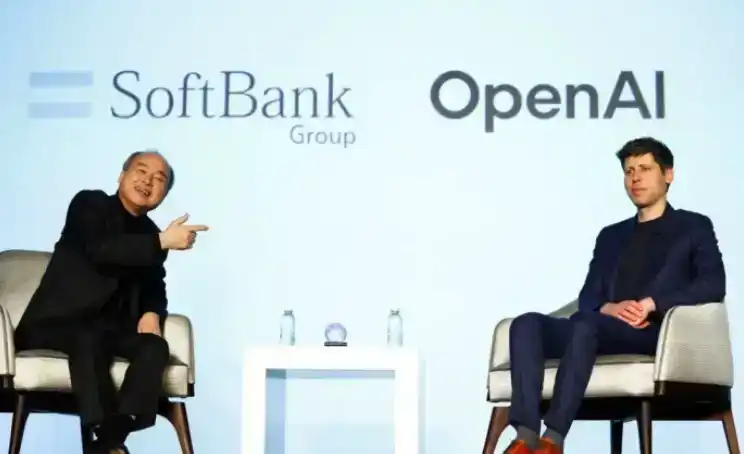
This investment is classic Son. Once again, he is putting SoftBank's most valuable assets on the line to buy a ticket to the next round of the future.

In the internet era, he bet himself on Yahoo and Alibaba; in the mobile internet era, he heavily invested in telecoms, Sprint, Arm; in the Vision Fund era, he scattered money to startups telling huge stories. And in the AI era, he is pushing SoftBank towards OpenAI and AI infrastructure.

At the end of March this year, SoftBank disclosed its OpenAI investment cost at about $34.6 billion, with a fair value of about $79.6 billion, resulting in cumulative investment gains of about $45 billion.

Recently, SoftBank's stock soared, its market cap once surpassing Toyota, making it one of Japan's most sought-after companies. Son also reclaimed his title as Asia's richest person.

Fortune is once again on Son's side.

Trending Cryptos

Related Questions

QWhy did the WeWork failure significantly damage Masayoshi Son's reputation and investment strategy?

AWeWork's failure, from a $47 billion valuation to a collapse before its planned IPO, exposed deep flaws in its business model, financials, and governance. It damaged Son's reputation because it became a symbol of his investment strategy prioritizing grand vision and charismatic founders over rigorous due diligence, financial discipline, and sustainable business models. It led the market to question his judgment and marked the beginning of massive losses for the Vision Fund.

QWhat role did the acquisition and IPO of Arm play in Masayoshi Son's recent financial recovery?

AThe acquisition of Arm in 2016, though initially heavily leveraged and criticized, became a cornerstone of Son's recovery. With the AI boom driving demand for compute power, Arm's value soared. Its successful IPO in 2023 at a $54.5 billion valuation significantly boosted SoftBank's asset value. Arm now constitutes a major part of SoftBank's holdings, delivering an approximately 10x return and helping to restore investor confidence and financial stability.

QHow did Masayoshi Son's investment in OpenAI contribute to his return as Asia's richest person?

ASon made aggressive, large-scale investments in OpenAI, with SoftBank's total commitment reaching around $64.6 billion for a roughly 13% stake. By March 2026, the fair value of this stake was approximately $79.6 billion against a cost of $34.6 billion, generating an unrealized gain of about $45 billion. This massive bet on a leading AI company, coupled with Arm's success, fueled a surge in SoftBank's stock price and market capitalization, propelling Son back to the top of Asia's wealth rankings.

QWhat major factors led to the massive losses of SoftBank's Vision Fund after 2021?

AKey factors include: the collapse of major portfolio companies like WeWork; broader market shifts where rising interest rates and inflation ended the era of cheap capital, forcing unprofitable tech companies to face scrutiny; regulatory tightening in China affecting tech investments; and underperformance or failures of other bets like Uber, Oyo, OneWeb, Wirecard, and Greensill. These combined to create unprecedented losses for the Vision Fund, culminating in a $27.5 billion loss for the 2021 fiscal year.

QHow did Masayoshi Son describe his personal and emotional state during the low point of his career in 2022?

ASon described being deeply distressed, stating he cried for two weeks straight, felt anxious, and did nothing. He questioned his life's achievements, feeling that despite being labeled a successful businessman, he had accomplished nothing meaningful as he grew older. He expressed shame over past mistakes driven by excitement over large profits and acknowledged his 'stupidity and ignorance' in making poor investment decisions, vowing to learn from them.

Related Reads

Bitcoin Mining Farms Are Becoming AI Factories

Bitcoin mines are transforming into AI factories. This shift is driven by the convergence of three key assets from the previous crypto cycle: infrastructure, talent, and capital. Crypto mining companies like Crusoe, CoreWeave, and Bitdeer are repurposing their core competency—securing power, land, and grid connections in remote locations—to build data centers for AI clients. These firms are signing multi-billion dollar, long-term contracts with companies like Anthropic, AWS, and Microsoft, as AI's demand for reliable, high-capacity compute surpasses the profitability of Bitcoin mining. Simultaneously, crypto entrepreneurs and engineers are applying their skills to new AI ventures. Examples include OpenSea's co-founder launching OpenRouter (an AI model aggregator), and former Coinbase engineers building Fal.ai (a generative media infrastructure platform). Their experience in building scalable, global software networks translates effectively to the AI space. Furthermore, capital accumulated during the crypto boom is now fueling AI. Figures like Jed McCaleb (co-founder of Ripple) funded Voltage Park, a large-scale GPU cloud provider. Notably, some crypto investments, like FTX's early bets on Anthropic and Cursor, have generated astronomical paper returns, demonstrating how high-risk crypto capital flowed into AI before it became mainstream. The transition is not just about repurposing hardware, but about redirecting critical resources—power infrastructure, distributed systems expertise, and venture funding—to the next technological frontier: artificial intelligence.

链捕手11m ago

Bitcoin Mining Farms Are Becoming AI Factories

链捕手11m ago

Morpho Launches Fixed-Rate Product Midnight: Lenders and Borrowers Set Their Own Rates, Ending the Era of Interest Rate Models

Morpho Launches Fixed-Rate Product Midnight: Lenders and Borrowers Set Their Own Rates, Ending the Era of Algorithmic Interest Models On-chain lending has grown to $60 billion but remains minuscule compared to traditional finance's $200 trillion annual credit volume. Morpho identifies the lack of fixed rates and maturity dates as key bottlenecks. Institutions need predictability, not the passive floating rates set by algorithmic models. Midnight allows lenders and borrowers to directly quote rates, set terms, and become price makers, not takers. Fixed-rate lending is now viable due to cheaper, faster blockchains and the entry of institutions demanding control and certainty over returns, costs, and duration. Morpho Blue previously gave users control over risk; Midnight adds control over interest rates. Past attempts at on-chain fixed-rate lending failed primarily because they were built on top of floating-rate pools (creating unpredictability) or lacked sufficient active participants. Midnight avoids these pitfalls as a standalone primitive with fixed rates at its core, built upon Morpho Blue's existing large and active user base. Midnight offers distinct value: institutions gain predictable term structures and full control; fintech companies can offer tailored fixed-rate products; lenders/borrowers achieve predictability and efficiency; and curators can now differentiate by configuring both risk and interest rates. Morpho Midnight is not a replacement for Morpho Blue. The Morpho network will now feature two complementary market structures: floating-rate/open-term (Blue) for flexibility and fixed-rate/fixed-term (Midnight) for predictability. Liquidity can flow between them. The launch will be gradual, prioritizing security. Initially, it will support direct lending on Base network with one trading pair (cbBTC/USDC) and limited maturity dates. Advanced features like auto-rollovers will be introduced later.

marsbit11m ago

Morpho Launches Fixed-Rate Product Midnight: Lenders and Borrowers Set Their Own Rates, Ending the Era of Interest Rate Models

marsbit11m ago

human.tech Launches Clean SDK for Privacy-First Web3 Apps

human.tech has launched the Clean SDK, a toolkit enabling developers to build privacy-first Web3 applications with transparent accountability. Released alongside Aztec's version 5, the SDK provides components for integrating zero-knowledge identity verification, sanctions screening, and private transactions, without developers handling sensitive user data or building compliance infrastructure from scratch. It uses zero-knowledge proofs and programmable verification to allow apps to confirm user legitimacy and sanctions compliance while keeping identities confidential. The first application built on the SDK, Shield, a privacy bridge to Aztec, also launched. It allows users to transfer assets privately while proving a unique human is behind each transfer and that funds have passed sanctions checks, as verified by a May 2026 audit. The SDK offers three core verification techniques: Proof of Innocence (sanctions screening against 23 sources), Proof of Personhood (simpler verification via Human Passport), and Proof of Clean Hands (higher-assurance zero-knowledge government ID checks). This allows apps to authenticate users and transactions without exposing personal data. Designed for Aztec builders, the SDK lets developers add programmable privacy to decentralized apps, eliminating the need to create their own verification and ZK infrastructure. Shield demonstrates its practical use for private bridges, but the SDK aims to enable a wider ecosystem of private, accountable financial apps and services. The launch addresses growing demand for infrastructure that balances privacy and accountability. The SDK avoids traditional identity databases, storing encrypted data off-chain, screening at both entry and exit points, and including a gated disclosure mechanism for legal requests. human.tech's products, including the Clean SDK, focus on using zero-knowledge technology to enable verifiable personhood and privacy in digital systems.

TheNewsCrypto48m ago

human.tech Launches Clean SDK for Privacy-First Web3 Apps

TheNewsCrypto48m ago

Unlocking $100 Million in Liquidity? Pump.fun's New Policy Tests the 5-Minute Pump Technique

Pump.fun, a popular meme coin launchpad, has introduced a new standard mechanism called BOOST. It aims to address a significant capital efficiency issue: when a newly launched token graduates from its initial bonding curve to a liquidity pool (LP), roughly 20% of its liquidity becomes permanently locked as "dead liquidity," estimated to waste over $100 million annually. Instead of locking these funds permanently, BOOST repurposes them. Upon a token's migration, approximately 20% of the settlement funds (e.g., 17.6 SOL or ~$2516 USDC) are used to buy back the token on the open market over a 5-minute period via a Time-Weighted Average Price (TWAP) mechanism. All purchased tokens are immediately burned. This creates a brief, systematic buy pressure immediately after migration, potentially generating a short-term price surge ("pump") while permanently reducing the token's circulating supply. The goal is to enhance the immediate post-launch trading experience, potentially increasing trader retention and sustainable protocol revenue, which funds ongoing token buybacks. However, concerns exist that this artificial 5-minute boost could lower the barrier for launching low-quality tokens and lead to steeper price crashes once the buy pressure stops, if followed by large sell-offs. The feature automatically applies to tokens migrating after July 21, 2024, but not to previously migrated tokens or those launched via the Mayhem AI Agent lab.

marsbit55m ago

Unlocking $100 Million in Liquidity? Pump.fun's New Policy Tests the 5-Minute Pump Technique

marsbit55m ago

Trading

Spot

Hot Articles

What is SONIC

Sonic: Pioneering the Future of Gaming in Web3 Introduction to Sonic In the ever-evolving landscape of Web3, the gaming industry stands out as one of the most dynamic and promising sectors. At the forefront of this revolution is Sonic, a project designed to amplify the gaming ecosystem on the Solana blockchain. Leveraging cutting-edge technology, Sonic aims to deliver an unparalleled gaming experience by efficiently processing millions of requests per second, ensuring that players enjoy seamless gameplay while maintaining low transaction costs. This article delves into the intricate details of Sonic, exploring its creators, funding sources, operational mechanics, and the timeline of significant events that have shaped its journey. What is Sonic? Sonic is an innovative layer-2 network that operates atop the Solana blockchain, specifically tailored to enhance the existing Solana gaming ecosystem. It accomplishes this through a customised, VM-agnostic game engine paired with a HyperGrid interpreter, facilitating sovereign game economies that roll up back to the Solana platform. The primary goals of Sonic include: Enhanced Gaming Experiences: Sonic is committed to offering lightning-fast on-chain gameplay, allowing players and developers to engage with games at previously unattainable speeds. Atomic Interoperability: This feature enables transactions to be executed within Sonic without the need to redeploy Solana programmes and accounts. This makes the process more efficient and directly benefits from Solana Layer1 services and liquidity. Seamless Deployment: Sonic allows developers to write for Ethereum Virtual Machine (EVM) based systems and execute them on Solana’s SVM infrastructure. This interoperability is crucial for attracting a broader range of dApps and decentralised applications to the platform. Support for Developers: By offering native composable gaming primitives and extensible data types - dining within the Entity-Component-System (ECS) framework - game creators can craft intricate business logic with ease. Overall, Sonic's unique approach not only caters to players but also provides an accessible and low-cost environment for developers to innovate and thrive. Creator of Sonic The information regarding the creator of Sonic is somewhat ambiguous. However, it is known that Sonic's SVM is owned by the company Mirror World. The absence of detailed information about the individuals behind Sonic reflects a common trend in several Web3 projects, where collective efforts and partnerships often overshadow individual contributions. Investors of Sonic Sonic has garnered considerable attention and support from various investors within the crypto and gaming sectors. Notably, the project raised an impressive $12 million during its Series A funding round. The round was led by BITKRAFT Ventures, with other notable investors including Galaxy, Okx Ventures, Interactive, Big Brain Holdings, and Mirana. This financial backing signifies the confidence that investment foundations have in Sonic’s potential to revolutionise the Web3 gaming landscape, further validating its innovative approaches and technologies. How Does Sonic Work? Sonic utilises the HyperGrid framework, a sophisticated parallel processing mechanism that enhances its scalability and customisability. Here are the core features that set Sonic apart: Lightning Speed at Low Costs: Sonic offers one of the fastest on-chain gaming experiences compared to other Layer-1 solutions, powered by the scalability of Solana’s virtual machine (SVM). Atomic Interoperability: Sonic enables transaction execution without redeployment of Solana programmes and accounts, effectively streamlining the interaction between users and the blockchain. EVM Compatibility: Developers can effortlessly migrate decentralised applications from EVM chains to the Solana environment using Sonic’s HyperGrid interpreter, increasing the accessibility and integration of various dApps. Ecosystem Support for Developers: By exposing native composable gaming primitives, Sonic facilitates a sandbox-like environment where developers can experiment and implement business logic, greatly enhancing the overall development experience. Monetisation Infrastructure: Sonic natively supports growth and monetisation efforts, providing frameworks for traffic generation, payments, and settlements, thereby ensuring that gaming projects are not only viable but also sustainable financially. Timeline of Sonic The evolution of Sonic has been marked by several key milestones. Below is a brief timeline highlighting critical events in the project's history: 2022: The Sonic cryptocurrency was officially launched, marking the beginning of its journey in the Web3 gaming arena. 2024: June: Sonic SVM successfully raised $12 million in a Series A funding round. This investment allowed Sonic to further develop its platform and expand its offerings. August: The launch of the Sonic Odyssey testnet provided users with the first opportunity to engage with the platform, offering interactive activities such as collecting rings—a nod to gaming nostalgia. October: SonicX, an innovative crypto game integrated with Solana, made its debut on TikTok, capturing the attention of over 120,000 users within a short span. This integration illustrated Sonic’s commitment to reaching a broader, global audience and showcased the potential of blockchain gaming. Key Points Sonic SVM is a revolutionary layer-2 network on Solana explicitly designed to enhance the GameFi landscape, demonstrating great potential for future development. HyperGrid Framework empowers Sonic by introducing horizontal scaling capabilities, ensuring that the network can handle the demands of Web3 gaming. Integration with Social Platforms: The successful launch of SonicX on TikTok displays Sonic’s strategy to leverage social media platforms to engage users, exponentially increasing the exposure and reach of its projects. Investment Confidence: The substantial funding from BITKRAFT Ventures, among others, emphasizes the robust backing Sonic has, paving the way for its ambitious future. In conclusion, Sonic encapsulates the essence of Web3 gaming innovation, striking a balance between cutting-edge technology, developer-centric tools, and community engagement. As the project continues to evolve, it is poised to redefine the gaming landscape, making it a notable entity for gamers and developers alike. As Sonic moves forward, it will undoubtedly attract greater interest and participation, solidifying its place within the broader narrative of blockchain gaming.

1.9k Total ViewsPublished 2024.04.04Updated 2024.12.03

What is SONIC

What is $S$

Understanding SPERO: A Comprehensive Overview Introduction to SPERO As the landscape of innovation continues to evolve, the emergence of web3 technologies and cryptocurrency projects plays a pivotal role in shaping the digital future. One project that has garnered attention in this dynamic field is SPERO, denoted as SPERO,$$s$. This article aims to gather and present detailed information about SPERO, to help enthusiasts and investors understand its foundations, objectives, and innovations within the web3 and crypto domains. What is SPERO,$$s$? SPERO,$$s$ is a unique project within the crypto space that seeks to leverage the principles of decentralisation and blockchain technology to create an ecosystem that promotes engagement, utility, and financial inclusion. The project is tailored to facilitate peer-to-peer interactions in new ways, providing users with innovative financial solutions and services. At its core, SPERO,$$s$ aims to empower individuals by providing tools and platforms that enhance user experience in the cryptocurrency space. This includes enabling more flexible transaction methods, fostering community-driven initiatives, and creating pathways for financial opportunities through decentralised applications (dApps). The underlying vision of SPERO,$$s$ revolves around inclusiveness, aiming to bridge gaps within traditional finance while harnessing the benefits of blockchain technology. Who is the Creator of SPERO,$$s$? The identity of the creator of SPERO,$$s$ remains somewhat obscure, as there are limited publicly available resources providing detailed background information on its founder(s). This lack of transparency can stem from the project's commitment to decentralisation—an ethos that many web3 projects share, prioritising collective contributions over individual recognition. By centring discussions around the community and its collective goals, SPERO,$$s$ embodies the essence of empowerment without singling out specific individuals. As such, understanding the ethos and mission of SPERO remains more important than identifying a singular creator. Who are the Investors of SPERO,$$s$? SPERO,$$s$ is supported by a diverse array of investors ranging from venture capitalists to angel investors dedicated to fostering innovation in the crypto sector. The focus of these investors generally aligns with SPERO's mission—prioritising projects that promise societal technological advancement, financial inclusivity, and decentralised governance. These investor foundations are typically interested in projects that not only offer innovative products but also contribute positively to the blockchain community and its ecosystems. The backing from these investors reinforces SPERO,$$s$ as a noteworthy contender in the rapidly evolving domain of crypto projects. How Does SPERO,$$s$ Work? SPERO,$$s$ employs a multi-faceted framework that distinguishes it from conventional cryptocurrency projects. Here are some of the key features that underline its uniqueness and innovation: Decentralised Governance: SPERO,$$s$ integrates decentralised governance models, empowering users to participate actively in decision-making processes regarding the project’s future. This approach fosters a sense of ownership and accountability among community members. Token Utility: SPERO,$$s$ utilises its own cryptocurrency token, designed to serve various functions within the ecosystem. These tokens enable transactions, rewards, and the facilitation of services offered on the platform, enhancing overall engagement and utility. Layered Architecture: The technical architecture of SPERO,$$s$ supports modularity and scalability, allowing for seamless integration of additional features and applications as the project evolves. This adaptability is paramount for sustaining relevance in the ever-changing crypto landscape. Community Engagement: The project emphasises community-driven initiatives, employing mechanisms that incentivise collaboration and feedback. By nurturing a strong community, SPERO,$$s$ can better address user needs and adapt to market trends. Focus on Inclusion: By offering low transaction fees and user-friendly interfaces, SPERO,$$s$ aims to attract a diverse user base, including individuals who may not previously have engaged in the crypto space. This commitment to inclusion aligns with its overarching mission of empowerment through accessibility. Timeline of SPERO,$$s$ Understanding a project's history provides crucial insights into its development trajectory and milestones. Below is a suggested timeline mapping significant events in the evolution of SPERO,$$s$: Conceptualisation and Ideation Phase: The initial ideas forming the basis of SPERO,$$s$ were conceived, aligning closely with the principles of decentralisation and community focus within the blockchain industry. Launch of Project Whitepaper: Following the conceptual phase, a comprehensive whitepaper detailing the vision, goals, and technological infrastructure of SPERO,$$s$ was released to garner community interest and feedback. Community Building and Early Engagements: Active outreach efforts were made to build a community of early adopters and potential investors, facilitating discussions around the project’s goals and garnering support. Token Generation Event: SPERO,$$s$ conducted a token generation event (TGE) to distribute its native tokens to early supporters and establish initial liquidity within the ecosystem. Launch of Initial dApp: The first decentralised application (dApp) associated with SPERO,$$s$ went live, allowing users to engage with the platform's core functionalities. Ongoing Development and Partnerships: Continuous updates and enhancements to the project's offerings, including strategic partnerships with other players in the blockchain space, have shaped SPERO,$$s$ into a competitive and evolving player in the crypto market. Conclusion SPERO,$$s$ stands as a testament to the potential of web3 and cryptocurrency to revolutionise financial systems and empower individuals. With a commitment to decentralised governance, community engagement, and innovatively designed functionalities, it paves the way toward a more inclusive financial landscape. As with any investment in the rapidly evolving crypto space, potential investors and users are encouraged to research thoroughly and engage thoughtfully with the ongoing developments within SPERO,$$s$. The project showcases the innovative spirit of the crypto industry, inviting further exploration into its myriad possibilities. While the journey of SPERO,$$s$ is still unfolding, its foundational principles may indeed influence the future of how we interact with technology, finance, and each other in interconnected digital ecosystems.

155 Total ViewsPublished 2024.12.17Updated 2024.12.17

What is $S$

What is AGENT S

Agent S: The Future of Autonomous Interaction in Web3 Introduction In the ever-evolving landscape of Web3 and cryptocurrency, innovations are constantly redefining how individuals interact with digital platforms. One such pioneering project, Agent S, promises to revolutionise human-computer interaction through its open agentic framework. By paving the way for autonomous interactions, Agent S aims to simplify complex tasks, offering transformative applications in artificial intelligence (AI). This detailed exploration will delve into the project's intricacies, its unique features, and the implications for the cryptocurrency domain. What is Agent S? Agent S stands as a groundbreaking open agentic framework, specifically designed to tackle three fundamental challenges in the automation of computer tasks: Acquiring Domain-Specific Knowledge: The framework intelligently learns from various external knowledge sources and internal experiences. This dual approach empowers it to build a rich repository of domain-specific knowledge, enhancing its performance in task execution. Planning Over Long Task Horizons: Agent S employs experience-augmented hierarchical planning, a strategic approach that facilitates efficient breakdown and execution of intricate tasks. This feature significantly enhances its ability to manage multiple subtasks efficiently and effectively. Handling Dynamic, Non-Uniform Interfaces: The project introduces the Agent-Computer Interface (ACI), an innovative solution that enhances the interaction between agents and users. Utilizing Multimodal Large Language Models (MLLMs), Agent S can navigate and manipulate diverse graphical user interfaces seamlessly. Through these pioneering features, Agent S provides a robust framework that addresses the complexities involved in automating human interaction with machines, setting the stage for myriad applications in AI and beyond. Who is the Creator of Agent S? While the concept of Agent S is fundamentally innovative, specific information about its creator remains elusive. The creator is currently unknown, which highlights either the nascent stage of the project or the strategic choice to keep founding members under wraps. Regardless of anonymity, the focus remains on the framework's capabilities and potential. Who are the Investors of Agent S? As Agent S is relatively new in the cryptographic ecosystem, detailed information regarding its investors and financial backers is not explicitly documented. The lack of publicly available insights into the investment foundations or organisations supporting the project raises questions about its funding structure and development roadmap. Understanding the backing is crucial for gauging the project's sustainability and potential market impact. How Does Agent S Work? At the core of Agent S lies cutting-edge technology that enables it to function effectively in diverse settings. Its operational model is built around several key features: Human-like Computer Interaction: The framework offers advanced AI planning, striving to make interactions with computers more intuitive. By mimicking human behaviour in tasks execution, it promises to elevate user experiences. Narrative Memory: Employed to leverage high-level experiences, Agent S utilises narrative memory to keep track of task histories, thereby enhancing its decision-making processes. Episodic Memory: This feature provides users with step-by-step guidance, allowing the framework to offer contextual support as tasks unfold. Support for OpenACI: With the ability to run locally, Agent S allows users to maintain control over their interactions and workflows, aligning with the decentralised ethos of Web3. Easy Integration with External APIs: Its versatility and compatibility with various AI platforms ensure that Agent S can fit seamlessly into existing technological ecosystems, making it an appealing choice for developers and organisations. These functionalities collectively contribute to Agent S's unique position within the crypto space, as it automates complex, multi-step tasks with minimal human intervention. As the project evolves, its potential applications in Web3 could redefine how digital interactions unfold. Timeline of Agent S The development and milestones of Agent S can be encapsulated in a timeline that highlights its significant events: September 27, 2024: The concept of Agent S was launched in a comprehensive research paper titled “An Open Agentic Framework that Uses Computers Like a Human,” showcasing the groundwork for the project. October 10, 2024: The research paper was made publicly available on arXiv, offering an in-depth exploration of the framework and its performance evaluation based on the OSWorld benchmark. October 12, 2024: A video presentation was released, providing a visual insight into the capabilities and features of Agent S, further engaging potential users and investors. These markers in the timeline not only illustrate the progress of Agent S but also indicate its commitment to transparency and community engagement. Key Points About Agent S As the Agent S framework continues to evolve, several key attributes stand out, underscoring its innovative nature and potential: Innovative Framework: Designed to provide an intuitive use of computers akin to human interaction, Agent S brings a novel approach to task automation. Autonomous Interaction: The ability to interact autonomously with computers through GUI signifies a leap towards more intelligent and efficient computing solutions. Complex Task Automation: With its robust methodology, it can automate complex, multi-step tasks, making processes faster and less error-prone. Continuous Improvement: The learning mechanisms enable Agent S to improve from past experiences, continually enhancing its performance and efficacy. Versatility: Its adaptability across different operating environments like OSWorld and WindowsAgentArena ensures that it can serve a broad range of applications. As Agent S positions itself in the Web3 and crypto landscape, its potential to enhance interaction capabilities and automate processes signifies a significant advancement in AI technologies. Through its innovative framework, Agent S exemplifies the future of digital interactions, promising a more seamless and efficient experience for users across various industries. Conclusion Agent S represents a bold leap forward in the marriage of AI and Web3, with the capacity to redefine how we interact with technology. While still in its early stages, the possibilities for its application are vast and compelling. Through its comprehensive framework addressing critical challenges, Agent S aims to bring autonomous interactions to the forefront of the digital experience. As we move deeper into the realms of cryptocurrency and decentralisation, projects like Agent S will undoubtedly play a crucial role in shaping the future of technology and human-computer collaboration.

822 Total ViewsPublished 2025.01.14Updated 2025.01.14

What is AGENT S

Discussions

Welcome to the HTX Community. Here, you can stay informed about the latest platform developments and gain access to professional market insights. Users' opinions on the price of S (S) are presented below.

活动图片