Sharplink’s 15,464 ETH staking milestone sparks fresh debates: Details

ambcryptoPublished on 2026-03-19Last updated on 2026-03-19

Abstract

Sharplink has reached a significant milestone by earning 15,464 ETH (approximately $36 million) in staking rewards since launching its Ethereum treasury strategy. Unlike simply holding ETH, the firm stakes nearly all its 868,699 ETH to generate yield, creating a compounding effect. This approach differs from Bitmine, which holds a much larger amount of ETH (3.81% of total supply) but focuses on market presence rather than yield generation. The strategy has drawn criticism from some community members who argue that Sharplink is using staking to recover losses rather than attract new capital. Despite this, SharpLink’s stock has risen over 25% in the past month. Meanwhile, Ethereum’s price has seen mixed movement, with strong institutional demand through ETF inflows but conflicting on-chain signals. Ultimately, Sharplink’s model emphasizes reward accumulation over pure price appreciation, though some view it as a short-term recovery tactic rather than sustainable growth.

While much of the market focuses on Ethereum’s price swings, Sharplink is showing that institutional players are increasingly paying attention to yield generation instead.

The firm has crossed an important milestone, earning 15,464 ETH (about $36 million) in total staking rewards since launching its Ethereum [ETH] treasury strategy.

Rather than simply holding ETH, Sharplink is using staking to continuously grow its holdings. In the past week alone, its validators generated 493 ETH, worth over $1.1 million.

This approach allows the company to earn additional ETH over time, creating a compounding effect.

How is Sharplink’s strategy different from Bitmine’s?

The difference in scale between the two companies is significant. Bitmine currently holds 4,595,562 ETH, which is about 3.81% of Ethereum’s total supply.
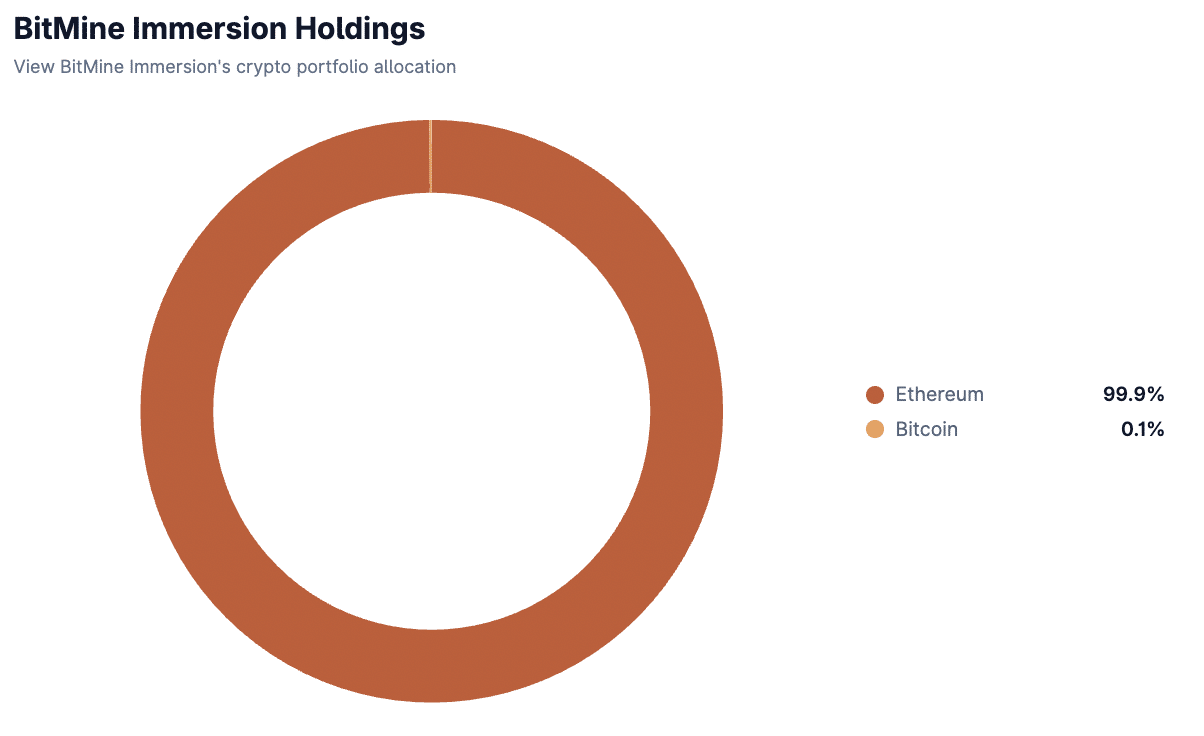
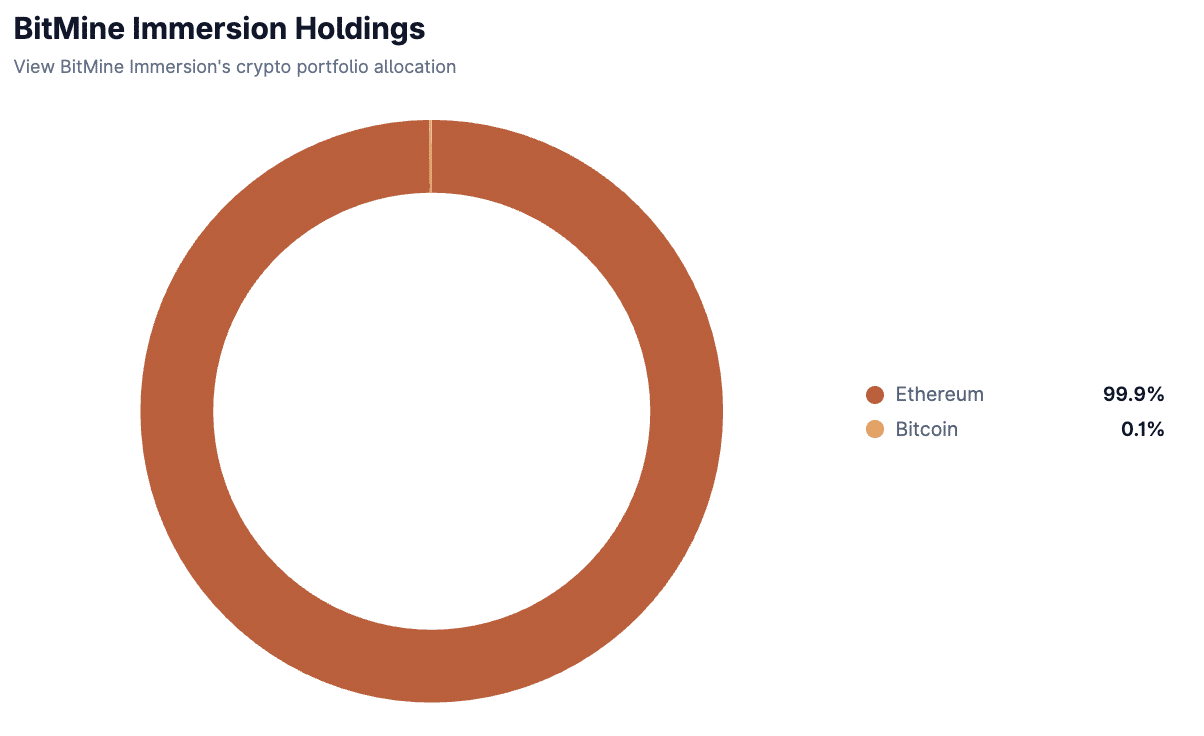
In comparison, Sharplink holds 868,699 ETH, or roughly 0.72% of the total supply, making its treasury much smaller.

However, the key difference is how they use their Ethereum. Bitmine focuses on maintaining a large presence in the market, while Sharplink follows a more aggressive strategy by staking almost all of its ETH to generate yield.

This means Sharplink tries to earn as much reward as possible from its holdings instead of simply holding them.

Community mocks Sharplink

However, this strategy has faced a lot of criticism. Some users on X argue that Sharplink is trying to recover losses through staking rewards rather than bringing in new capital.

Remarking on the same, an X user said,

At this rate, it’ll only take about ~33 years to double their total ETH. But seriously, $SBET has to start thinking out of the box or merge with $BMNR to survive.

Echoing similar sentiments, another user questioned,

Why dont you keep buying eth at these prices?

This coincides with SharpLink’s stock trading at $8.31, reflecting a 1.34% daily increase and a gain of more than 25% over the past month, according to Google Finance data.

Ethereum’s market dynamics

Meanwhile, Ethereum was currently trading around $2,331.06, showing a small 0.81% daily increase but a stronger 17% gain over the past month. At the same time, the market environment around ETH is somewhat mixed.

On the institutional side, demand remains strong. Spot Ethereum ETFs have been recording steady inflows since the 10th of March, including a large $138.2 million inflow on the 17th of March.

However, on-chain data tells a more confusing story. Since mid-2025, exchange netflows have mostly been negative, meaning investors are moving ETH off exchanges and into private wallets.
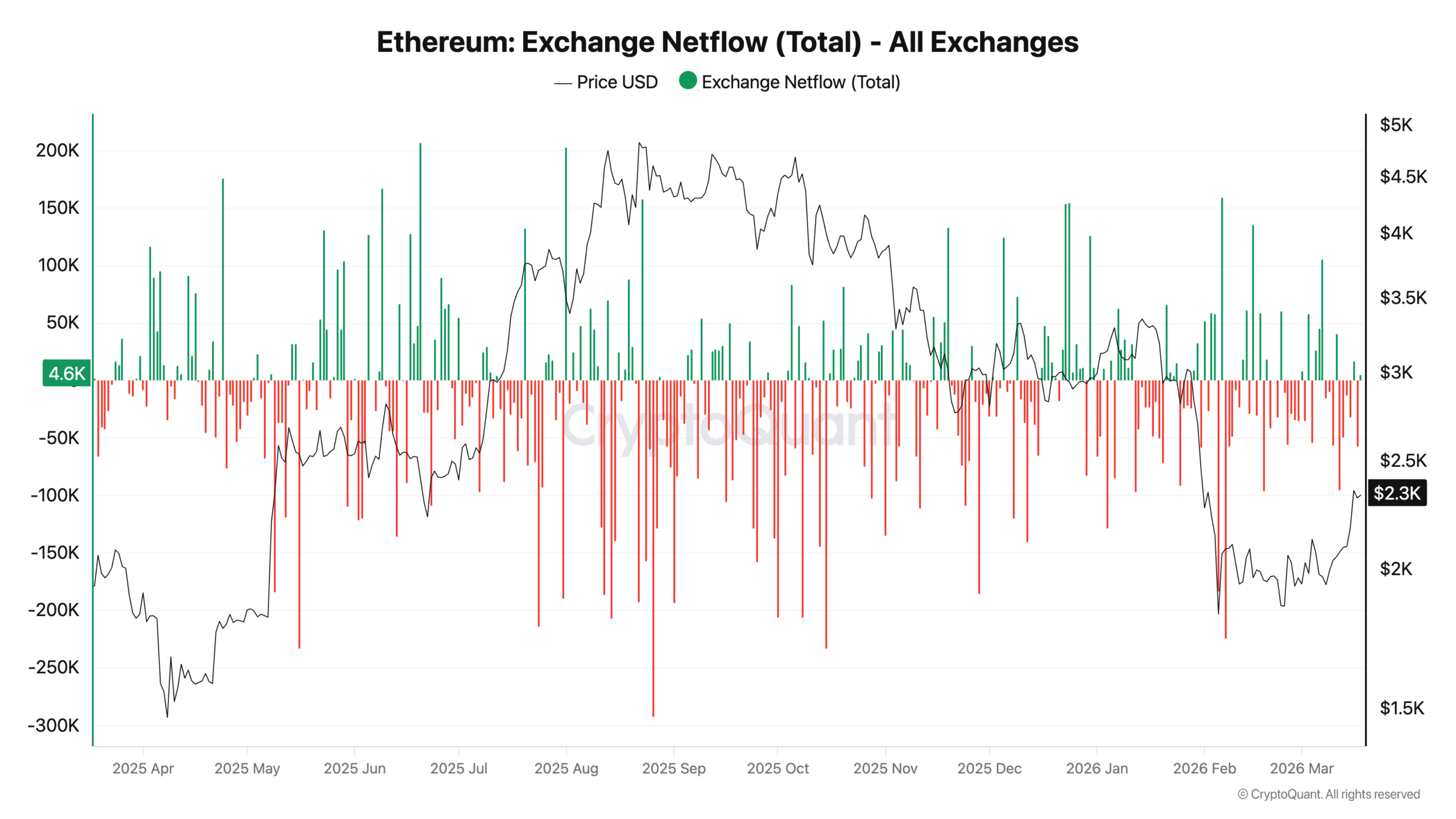
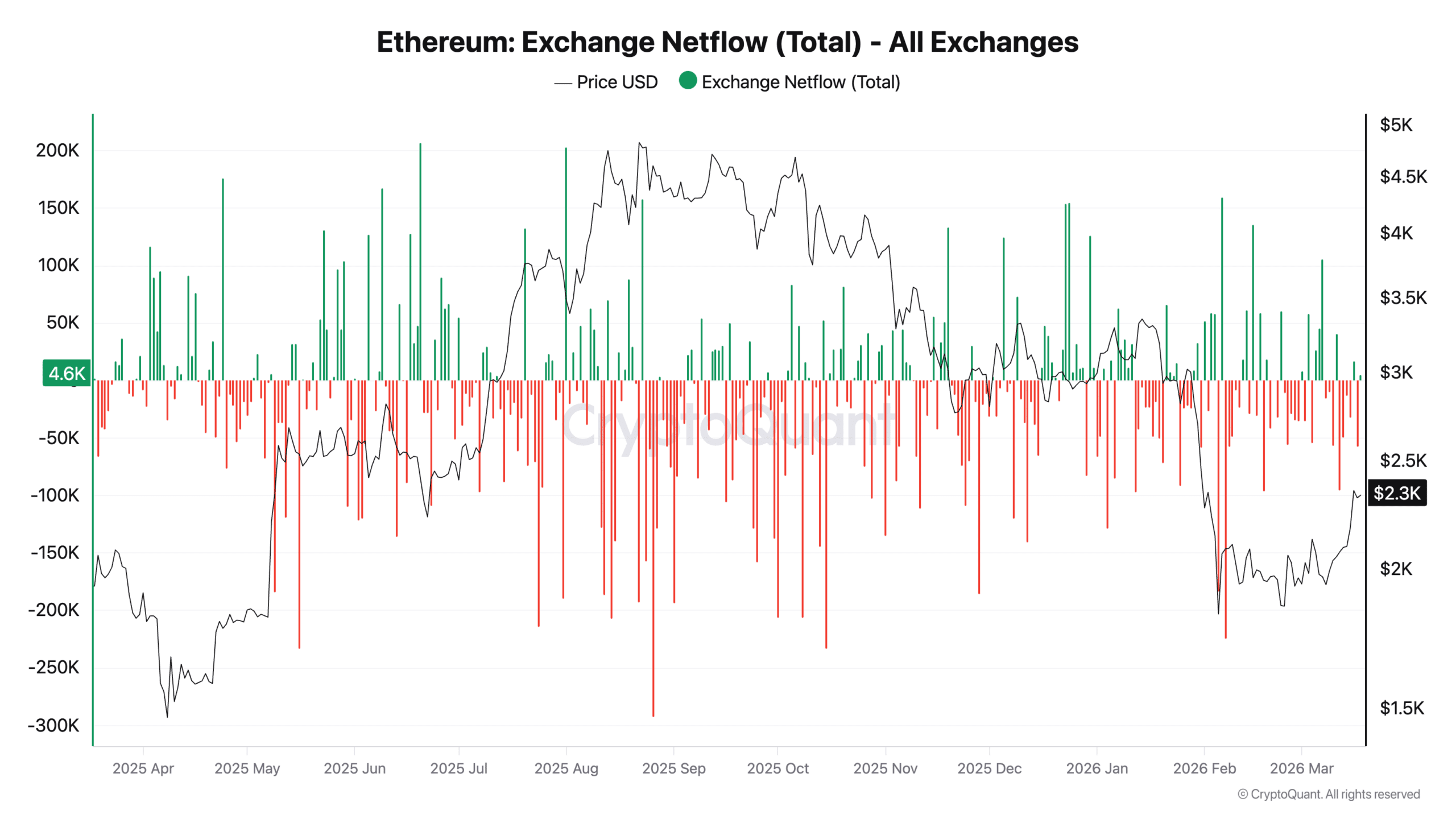
Normally, this is considered bullish because it reduces the amount of ETH available for selling.

But despite these large outflows, ETH’s price fell sharply in early 2026, showing that exchange supply alone is no longer driving price movements.


Final Summary

  • By staking nearly all of its ETH, the firm is trying to grow its holdings through compounding rewards rather than relying only on price appreciation.
  • Some observers believe Sharplink’s staking-heavy strategy may be an attempt to offset a high purchase price rather than a long-term growth model.


Related Questions

QWhat milestone has Sharplink recently achieved with its Ethereum staking strategy?

ASharplink has earned 15,464 ETH (approximately $36 million) in total staking rewards since launching its Ethereum treasury strategy.

QHow does Sharplink's Ethereum strategy differ from Bitmine's approach?

ASharplink follows a more aggressive strategy by staking almost all of its ETH to generate yield and earn rewards, while Bitmine focuses on maintaining a large market presence by holding a significant amount of ETH without staking it all.

QWhat is one major point of criticism from the community regarding Sharplink's strategy?

ASome users on X argue that Sharplink is trying to recover losses through staking rewards rather than bringing in new capital, with one user noting it would take about 33 years to double their total ETH at the current rate.

QWhat does the on-chain data show about Ethereum exchange netflows since mid-2025?

ASince mid-2025, exchange netflows have mostly been negative, meaning investors are moving ETH off exchanges and into private wallets, which is normally considered bullish but has not prevented price declines in early 2026.

QWhat is the current trading price of Sharplink's stock and its recent performance?

ASharplink's stock is trading at $8.31, reflecting a 1.34% daily increase and a gain of more than 25% over the past month.

Related Reads

Super-Rich Hoarded Record Cash in February, Stock Market Hit New Highs Four Months Later: Who's Getting Fooled?

In February, the total assets in US money market funds reached a record high of approximately $8.25 trillion, a trend highlighted by high-net-worth individuals increasing their cash holdings. Notably, Warren Buffett's Berkshire Hathaway amassed a $381.7 billion cash pile ahead of his 2025 retirement, while other prominent figures like Peter Thiel sold tech stocks, fueling narratives of wealthy investors seeking safety. However, by June, the trend reversed. Money market fund assets fell to around $7.87 trillion, indicating a flow of capital back into equities. Concurrently, the S&P 500 and Nasdaq reached all-time highs, with the S&P 500 surpassing 7600 points. This market surge occurred despite the earlier defensive moves, highlighting a potential opportunity cost for those who retreated to cash. Analysis shows that since early 2022, the S&P 500's total return significantly outpaced that of prime money market funds. The capital shifted from equities appears to have been partly reallocated into alternative investments like real estate, art, and private credit, especially among ultra-high-net-worth individuals. Meanwhile, major investment banks like Goldman Sachs and Morgan Stanley have raised their year-end targets for the S&P 500, citing AI-driven earnings growth, while also cautioning about risks including market concentration and economic fragility beneath the surface rally.

marsbit14m ago

Super-Rich Hoarded Record Cash in February, Stock Market Hit New Highs Four Months Later: Who's Getting Fooled?

marsbit14m ago

Robot Vacuums Have Been Competing for 20 Years, So Why Are 90% of Chinese Households Still Hesitant?

The article explores why over 90% of Chinese households are still hesitant to adopt robotic vacuum cleaners despite two decades of industry development, identifying a core "trust gap" as the primary barrier. The central issue is not a lack of need, but user concerns about reliability in dynamic, real-world home environments. Common anxieties include the robot dragging pet waste, colliding with transparent objects, tangling in cords, scattering cat litter, getting stuck on thresholds, missing corners under furniture, and requiring high-maintenance bases that develop odors. The industry's past focus on competing on technical specs (suction power, mopping functions) has not adequately addressed these practical usability and trust problems. The piece then examines DJI's entry into the market with its ROMO 2 model as a potential new approach. Leveraging its expertise in spatial perception and obstacle avoidance from drones, DJI's solution emphasizes "less intervention" through three key principles: less manual re-cleaning, less user rescue missions, and less maintenance. Specific ROMO 2 features highlighted include advanced obstacle recognition (handling transparent objects and small items), adaptive leg mechanisms for climbing thresholds (up to 8.5cm), an extendable arm for reaching under furniture, AI for identifying and appropriately handling different mess types (e.g., avoiding scattering dry debris), and a self-cleaning base designed to minimize user upkeep. The article argues the next phase of competition should shift from a "parameter race" to a "trust race." It draws a parallel to the iPhone's simplification of the smartphone, suggesting that focusing on a reliable, low-hassle user experience—where people feel confident leaving their floors to the machine—is what's needed to finally convince the vast majority of观望ing families. The ultimate test for products like the ROMO 2 will be long-term user adoption, retention, and口碑, not just technical specifications.

marsbit14m ago

Robot Vacuums Have Been Competing for 20 Years, So Why Are 90% of Chinese Households Still Hesitant?

marsbit14m ago

The Unclear American Economy: Resilient or Cooling Down?

**U.S. Economic Outlook: Resilient or Cooling Down?** This analysis examines whether the U.S. economy is heading towards a recession. While still growing, the economy shows significant signs of strain. Key data points include Q1 2026 GDP growth of 1.6% and Q1 PCE inflation at 4.5% (annualized), more than double the Fed's target. The labor market remains resilient but is softening, with unemployment at 4.3%. Critical recession indicators present a mixed picture: the yield curve has normalized after a prolonged inversion (historically a late-cycle signal), and the Conference Board's Leading Economic Index has been declining. Current recession probability for 2026 is estimated at 19%, but rises to 41% for 2027, indicating heightened delayed risks. Major pressures are building: a wall of corporate debt refinancing at higher rates, depleted consumer savings, a contracting housing sector, and an energy price shock. The economy exhibits stagflationary characteristics—high inflation alongside slowing growth—which constrains the Federal Reserve's policy options. Historical patterns show recessions are often preceded by Fed tightening and yield curve inversions. If a recession occurs, it is expected to be mild, similar to 2001 rather than 2008. For investors, a defensive portfolio shift toward staples, healthcare, and short-term high-quality bonds may be prudent, while maintaining a long-term, diversified perspective. Key developments to monitor include upcoming GDP, employment, and inflation data, as well as policy signals from the new Fed Chair.

marsbit21m ago

The Unclear American Economy: Resilient or Cooling Down?

marsbit21m ago

The Most Advanced Large Models Are Now Subject to Export Controls Like Enriched Uranium

In an unprecedented move mirroring the control of enriched uranium, the US Commerce Department has imposed an export control ban on Anthropic's advanced AI models, Fable 5 and Mythos 5, forcing their global shutdown. This marks the first time a purely digital entity—a set of neural network weights—has been subjected to such hardware-like strategic export restrictions, based not on physical scarcity but on its concentrated "capability density." The article draws a direct parallel to the historical control of nuclear technology, arguing that just as uranium ore becomes a controlled substance only when enriched to a critical threshold, AI capabilities become subject to regulation when compressed into a single, potent, and easily accessible interface. This "enriched AI" is seen as crossing a threshold where its aggregated power poses a potential threat. The author predicts three major consequences over the next decade. First, capability auditing will become institutionalized, with governments setting compliance checklists and thresholds for model power, triggering automatic export controls. Second, jurisdictional boundaries will blur as US export controls extend their reach globally, governing any user of American AI services regardless of location, forcing non-US entities to reconsider their AI supply chain dependencies. Third, a technological bifurcation will occur, splitting the AI landscape into a restricted, high-risk track of advanced US proprietary models and a more reliable track of open-source or locally developed alternatives, where guaranteed access may outweigh raw performance. The core crisis exposed is the lack of a legal property rights framework for AI "intelligence." While companies invest heavily in integrating these models into their production systems, legally they only purchase a service that can be revoked at any time, leaving them with no recourse for their sunk investments. The conclusion warns of a permanently fractured digital world where the most capable models may not be the most usable, and clear, unassailable ownership of technology will become paramount.

marsbit34m ago

The Most Advanced Large Models Are Now Subject to Export Controls Like Enriched Uranium

marsbit34m ago

Trading

Spot
Futures

Hot Articles

Discussions

Welcome to the HTX Community. Here, you can stay informed about the latest platform developments and gain access to professional market insights. Users' opinions on the price of ETH (ETH) are presented below.

活动图片